

Sàbaid na Bana-bhuidsich
Sàbaid na Bana-bhuidsich: A’ rannsachadh Allure of Night
Sàbaid na Bana-bhuidsich le Luis Ricardo Falero (1851-1896) na pheantair Spàinnteach a bha ainmeil airson na dealbhan inntinneach aige de chuspairean miotasach agus iongantach, gu tric air a thoirt le mothachadh romansach. Bha an obair aige gu tric a’ sgrùdadh cuspairean os-nàdarrach agus tarraing na h-oidhche, a’ tarraing brosnachadh bho bheul-aithris agus stòran litreachais. “Sàbaid na Bana-bhuidsich," air a pheantadh mun cuairt 1880, a’ seasamh mar aon de na pìosan as cliùitiche aig Falero, a’ glacadh mionaid de itealaich ethereal agus dìomhaireachd oidhcheil. Tha an dealbh na eisimpleir de ealain acadaimigeach le eileamaidean de shamhlachas agus romansachd air an robh fèill mhòr aig deireadh an naoidheamh linn deug.
Clàr-innse
Eileamaidean gu lèirsinneach & Moladh Aithriseach
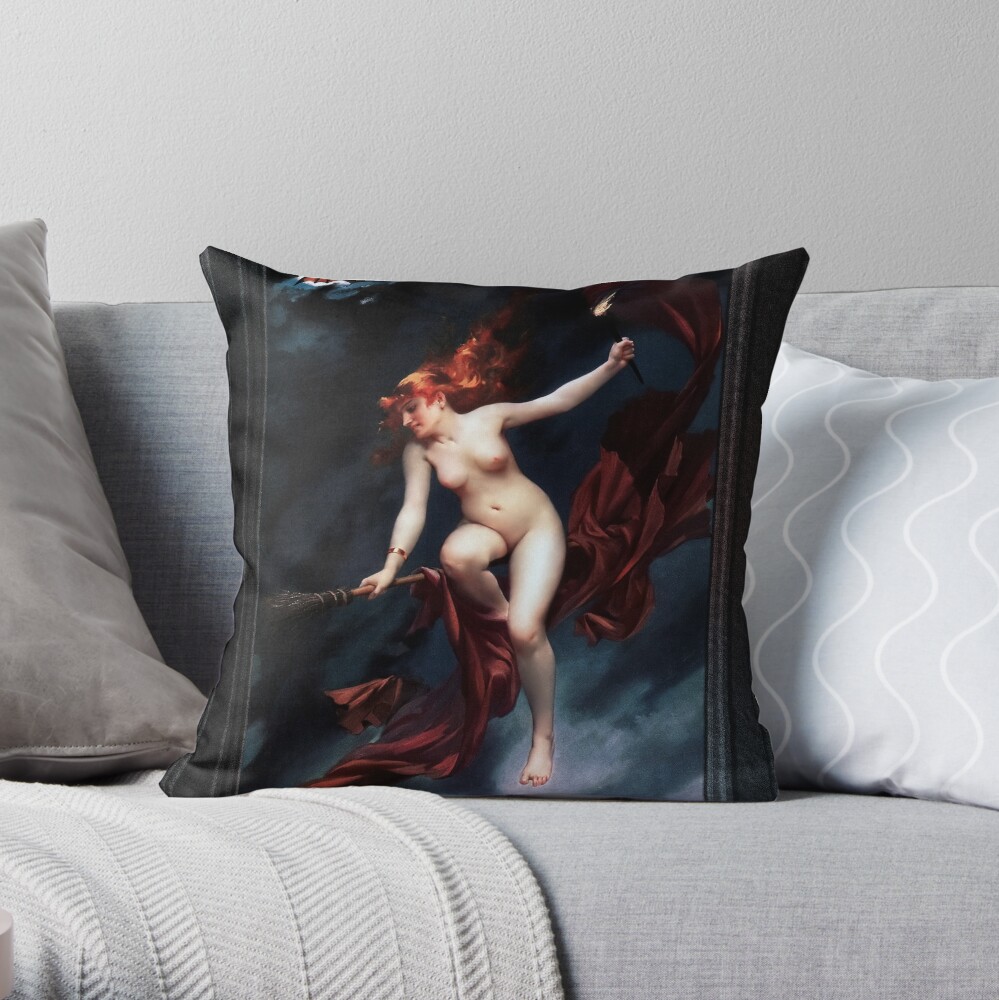
Bidh an sgrìobhadh sa bhad a’ tarraing sùil an neach-amhairc suas gu figear sa mheadhan crochte ann am meadhan an adhair am measg swirling, speuran teinnteach. Am figear seo, boireannach nude le falt ruadh dearg, a tha na mheadhan aig an obair ealain. Tha e coltach gu bheil i an sàs ann an gnìomh itealaich, air a gluasad le brat a bha gu daingeann fodha. Tha an loidhne trastain dhrùidhteach a chruthaich am broom agus a gàirdean sìnte a-mach a’ cur gu mòr ri spionnadh an t-seallaidh, a 'moladh gluasad agus gluasad suas.
Tha cùl-raon air a riaghladh le dorchadas, speur làn de neòil sèididh air an soillseachadh le gealach corran. Tha an cùl-raon celestial seo a’ daingneachadh suidheachadh na h-oidhche agus a’ toirt seachad faireachdainn de dhìomhaireachd agus de shealladh don àile iomlan.. Bidh aon ialtag ag itealaich tarsainn na gealaich, adding another layer of symbolism associated with the supernatural. The artist’s skillful use of chiaroscuro – the contrast between light and dark – further enhances the drama and emphasizes the figure’s form against the shadowy background.
Figear & Innleachd ealanta
Falero’s rendering of the female figure is notable for its anatomical accuracy, a hallmark of academic training. Her pose is graceful yet powerful, conveying a sense of both vulnerability and control. The artist meticulously details her skin tone, highlighting the subtle curves and contours of her body. The flowing red fabric that drapes around her adds to the visual interest, creating a dynamic interplay of light and shadow as it billows in the wind.
Falero’s brushwork is evident throughout the painting, gu h-àraidh ann a bhith a 'toirt seachad na neòil agus falt na boireannaich. Bidh an neach-ealain a 'fastadh sgaoilte, stròcan brìoghmhor gus gluasad agus inneach nan eileamaidean sin a ghlacadh, agus aig an aon àm a’ cumail ìre de mhion-fhiosrachadh san fhigear fhèin. Tha am paileas dath air a riaghladh le tònaichean fionnar - blues, Greys, agus daoine dubha – a tha a’ cur ris a’ mhothachadh iomlan air dìomhaireachd agus lionn-dubh. Ach, tha coltas blàth falt na boireannaich agus an aodach dearg a’ toirt eadar-dhealachadh iongantach, tarraing aire an neach-amharc air na prìomh eileamaidean sin.
Samhlachadh & Mìneachadh
Tha “Sàbaid na Bana-bhuidsich” a’ tarraing gu mòr air beul-aithris Eòrpach agus traidiseanan mu bhuidseachd. Tha ìomhaigh bana-bhuidseach ag itealaich tro speur na h-oidhche air broomstick na motif a tha a’ nochdadh uair is uair ann an aithrisean mar sin, often associated with gatherings of witches performing rituals under the light of the full moon. Falero’s painting taps into this rich cultural heritage, evoking a sense of both fascination and apprehension.
The crescent moon itself carries symbolic weight, representing cycles, atharrachadh, and the feminine principle. The bat, traditionally linked to darkness and the supernatural, further reinforces the painting’s association with the occult. While the artwork doesn’t explicitly depict any ritualistic actions, it suggests a moment of transformation or transcendence – a departure from the mundane world into a realm of magic and mystery.
Buaidh ealain & Dìleab
Falero’s work reflects the influence of several artistic movements prevalent during his time. Tha an trèanadh acadaimigeach a tha follaiseach anns an dòigh mhionaideach aige air cruth daonna a’ co-thaobhadh ri traidiseanan ealain chlasaigeach.. Ach, cuideam an dealbh air faireachdainn, àile, agus tha an os-nàdarrach cuideachd a’ nochdadh ceangal ri Romanticism, a chomharraich mac-meanmna, aonranachd, agus cumhachd nàduir.
Tha “Sàbaid na Bana-bhuidsich” fhathast na dheagh eisimpleir de sgil ealanta Falero agus a chomas a bhith a’ glacadh tarraing na h-ìomhaigh.. Tha an dealbh air ath-riochdachadh gu farsaing agus air a mheas airson a cho-dhèanamh iongantach, faireachdainn brosnachail, agus tagradh maireannach. Tha e na theisteanas air tàlant an neach-ealain agus na chuir e ri obair-ghrèis bheairteach ealain Spàinnteach an naoidheamh linn deug..
Mion-fhiosrachadh Teicnigeach & Ruigsinneachd
Tha an obair-ealain air a chur gu bàs ann an ola air canabhas. Tha e a’ tomhas timcheall air 105 x 74 cm (41.3 x 29.1 òirlich). Tùs an dealbh, no eachdraidh seilbh, air a chlàradh tro dhiofar chruinneachaidhean agus thaisbeanaidhean thar nam bliadhnaichean. Tha e an-dràsta ann an cruinneachadh prìobhaideach. An t-ainm-sgrìobhte “Falero – 1880” ri fhaicinn anns an oisean gu h-ìosal air an làimh dheis den canabhas.
Neach-ealain Bio Derived Wikipedia.org
Rugadh Falero ann an Granada agus an toiseach lean e dreuchd ann an Cabhlach na Spàinne, ach thug e briseadh dùil dha phàrantan; oir chuir e roimhe siubhal gu Paris, far an do rinn e sgrùdadh air ealain, ceimigeachd agus innleadaireachd meacanaigeach.
Rè tha sgrùdaidhean ann an ceimigeachd agus innleadaireachd meacanaigeach; bha e den bheachd gu robh na deuchainnean a dh ’fheumadh e a dhèanamh ro chunnartach, mar sin a ’toirt air aire a chuimseachadh air peantadh leis fhèin.
Mar thoradh air an sin thàinig e gu bhith na oileanach aig Peantair Portrait Frangach agus Orientalist Gabriel-Joseph-Marie-Augustin Ferrier (1847 – 1914). Às deidh Paris, ghluais e a Lunnainn, far an do lean e air le fhoghlam, agus mu dheireadh shocraich e.
Bha ùidh shònraichte aig Falero ann an speuradaireachd agus chuir e a-steach constella celestial ann am mòran de na h-obraichean aige, mar eisimpleir “Pòsadh Comet” agus “Twin Stars”. Mar thoradh air an ùidh agus an eòlas aige air reul-eòlas, sheall e cuideachd obair Camille Flammarion.
Ann an 1896, bliadhna a bhàis, Dhiùlt Maud Harvey Falero airson athair. Bha an deise ag agairt gun do mheall Falero Harvey nuair a bha i 17, an toiseach a ’frithealadh mar mhaighdeann-taighe aige, agus an uairsin a mhodail. Nuair a fhuair e a-mach gu robh i trom, chuir e às dhi.
Bhuannaich i a ’chùis agus fhuair i còig tasdain san t-seachdain mar thaic don leanabh aca. Bhàsaich Falero aig Ospadal Colaiste an Oilthigh, Lunnainn, aig aois 45
Tha The Witches Sabbath na seann mhaighstirean ealain didseatach ath-dhealbhaichte de ìomhaigh raon poblach; agus mar a tha a h-uile obair-ealain a gheibhear air làrach-lìn Xzendor7 ri fhaighinn airson a cheannach air-loidhne ann an caochladh chruthan stuth a’ gabhail a-steach clò-bhualaidhean canabhas, dealbhan acrylic, clò-bhualaidhean meatailt, clò-bhualaidhean fiodha, lèileagan frèam, postairean, agus mar clò-bhualaidhean canabhas rollaichte ann an caochladh mheudan bho 12 òirlich gu 72 òirlich a rèir meud an fhìor obair-ealain agus a’ bhùth clò-bhualaidh air iarrtas a thaghas tu airson an ealain a cheannach..