

Boneta Horia
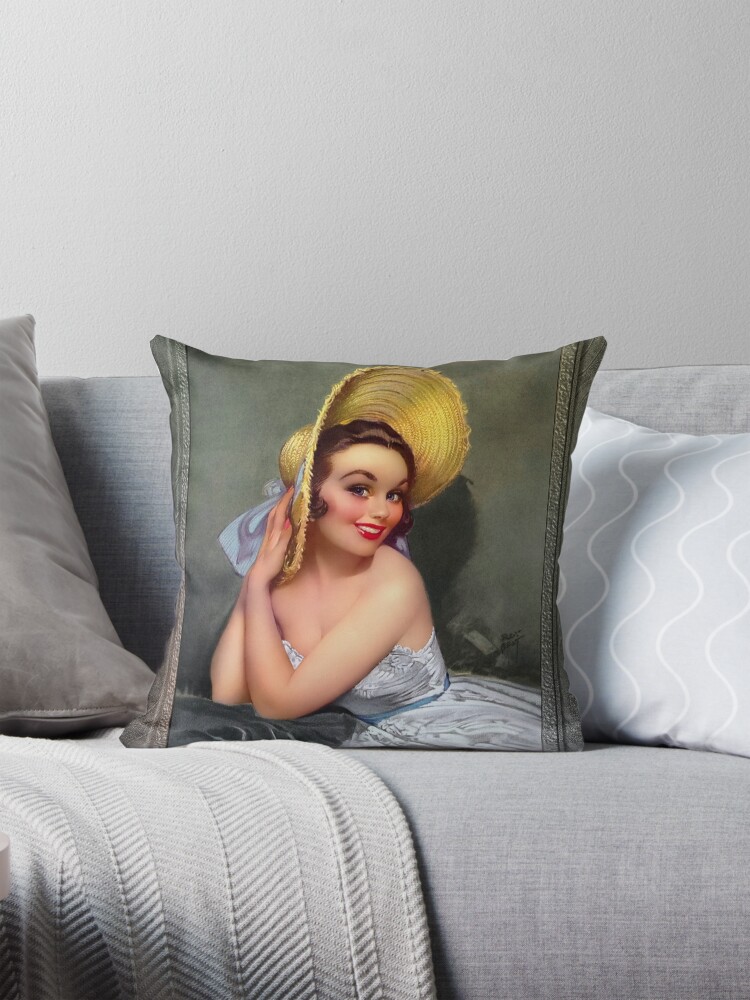
“Boneta Horia,” ilustratzaile estatubatuarrak sortua Roy Best (1892 – ?), mendearen erdialdeko amerikar ilustrazioaren adibide harrigarri bat da, gazteen xarma eta edertasunaren esentzia harrapatzen. Artelan hau zehaztasun trebez margotuta dago, biguna osatzen duen pastel koloreko paleta bat besarkatuz, erretratuaren aldarte etereoa.
Piezan emakume gazte bat ageri da, txano hori handi batekin apaindua, bere leuna, irribarre distiratsua konfiantza eta berotasuna darioz, bere gogotsu, berriz, apur bat koy posek ikuslearekin lotura bat gonbidatzen du. Gaia erdialdean kokatzen da konposizioaren barruan, arreta-foku bizia eskainiz leunez inguratuta dagoen bitartean, delikatua iradokitzen duten tonu lausoak, ia ametsezko giroa.
Edukien taula
Estiloa eta Teknika
Roy Best ezaguna zen errealismoaren elementuak XX. mende hasierako ilustrazio mugimenduaren estilizazio dotorearekin nahasteko gaitasunagatik.. Bere lanek feminitate uneak jaso zituzten askotan, giza formaren leuntasuna nabarmenduz, eta koadro honek ezin hobeto adierazten ditu ezaugarri horiek. urtean erabiltzen den teknika “Boneta Horia” artistak kolorearen eta argiaren gaineko kontrol finaren isla da, Emakumearen aurpegiaren eta arroparen irudikapenean sakontasun eta ehundura sentsazioa emanez.
Pintura leunki aplikatzeak akabera ia belusatua sortzen die azalari eta ehunari, piezaren berotasun orokorra hobetzen duen distira leun bat gehituz. Argi jolasa, bereziki boneta horian, is masterfully handled, drawing attention to the most prominent feature of the artwork. The subtle highlights on the woman’s face, especially around her eyes and lips, add a dimension of realism that contrasts beautifully with the simplicity of the background.
Gaia eta Aldartea
The theme of the painting revolves around beauty, intzamen, eta xarma. The woman in the artwork is presented as a figure of innocence and allure, captured in a moment of serene elegance. The bonnet she wears, a symbol of a bygone era, suggests a connection to a more traditional, rural aesthetic, evoking nostalgia for a time when such accessories were commonplace in women’s fashion.
The lighthearted mood of the portrait is enhanced by the soft, pastel colors used throughout, which create a serene environment around the subject, inviting the viewer to bask in the quiet beauty of the scene. There is no sense of urgency or harshness in the artwork; horren ordez, the woman gazes softly towards the viewer with a subtle smile, allowing her presence to fill the space with a calm, peaceful atmosphere.
Materialak eta euskarria
“Boneta Horia” was created using traditional painting materials typical of the time period. The artist’s use of oil paints allowed him to achieve a rich depth in color, especially in the woman’s skin tone and the delicate folds of her dress. The smoothness of the brushwork suggests that Best worked with a technique that emphasized blending, rather than distinct, visible brushstrokes, to create a soft, almost luminous finish.
Atzealdea, a muted blend of soft greys and greens, further elevates the main subject by providing a gentle contrast, ensuring that the viewer’s attention remains focused on the woman in the yellow bonnet. The gold and yellow hues of her hat stand out as the central visual element, symbolizing both warmth and hope.
Gaia eta osaera
The subject of “Boneta Horia” is a young woman, likely in her late teens or early twenties, whose facial features are rendered with great care. Bere iluna, wavy hair is tucked beneath a large, wide-brimmed yellow bonnet, which forms a striking contrast with her light complexion. The bonnet itself, made of straw or similar material, is intricately detailed, with a light ribbon tied at the back. The playful use of blue ribbon in the woman’s attire provides a subtle contrast against the warm yellow of the bonnet, adding a touch of delicacy to the overall composition.
The woman’s pose is soft and inviting, her hand gently resting against the side of her head, as if adjusting the bonnet. This posture conveys a sense of elegance and grace, with the subject appearing both poised and approachable. The subtle tilt of her head adds to the overall impression of grace, as if she is caught in a moment of quiet contemplation or engaging in a pleasant conversation with the viewer. Atzealdea, which is softly blurred and non-descriptive, ensures that the focus remains solely on the figure of the woman, emphasizing her delicate beauty.
Bukaera
In “Boneta Horia,” Roy Best masterfully captures a moment of timeless beauty, showcasing his exceptional skill in blending realism with a gentle, idealized aesthetic. The artwork evokes feelings of nostalgia, berotasuna, and serenity, inviting viewers to appreciate the softness and elegance of a moment frozen in time. With its harmonious composition, argiztapen leuna, and delicate color palette, this portrait remains a remarkable example of American illustration from the early 20th century.
Hau arte digitala ukituta dagoen domeinu publikoko irudi baten erreprodukzioa da.
Artistaren biografia
Informazioa Behean Deribatua Wikipedia.org
Roy was a student of the Art Institute of Cincinnati, and then he later attended the Art Institute of Chicago; and at the beginning of his career he was represented by American artist in New York City in the 1920s.
During his time in New York he painted several covers for The Saturday Evening Post which was established in 1897 and is still published as of this writing.
Gero sartu 1931, Roy was creating pinup girl calendar art for the Joseph C. Hoover & Sons calendar company; and later in that same year he was commissioned by the Whitman Publishing Company to illustrate The Peter Pan Picture Book, based on J. M. Barrie’s play Peter Pan.
This led to him illustrating many other children’s books, barne “Little Friends from Many Lands” by Mary Windsor (Whitman Publishing Company, 1935).
In 1942 the Treasury’s Section of Painting and Sculpture commissioned Roy to paint a post office mural, called Arrival of Packet, in his hometown of Waverly, Ohio.
In that same year he was hired by Brown and Bigelow the famous publishing company, which lead him into a career producing calendar pin-ups.
In his career he would also paint a number of well known actresses, such as Grace Kelly; and in his later years he became known for his corporate commissioned oil portraits and watercolor landscapes of Cape Cod.