

Arrosa batekin andereñoa c1916
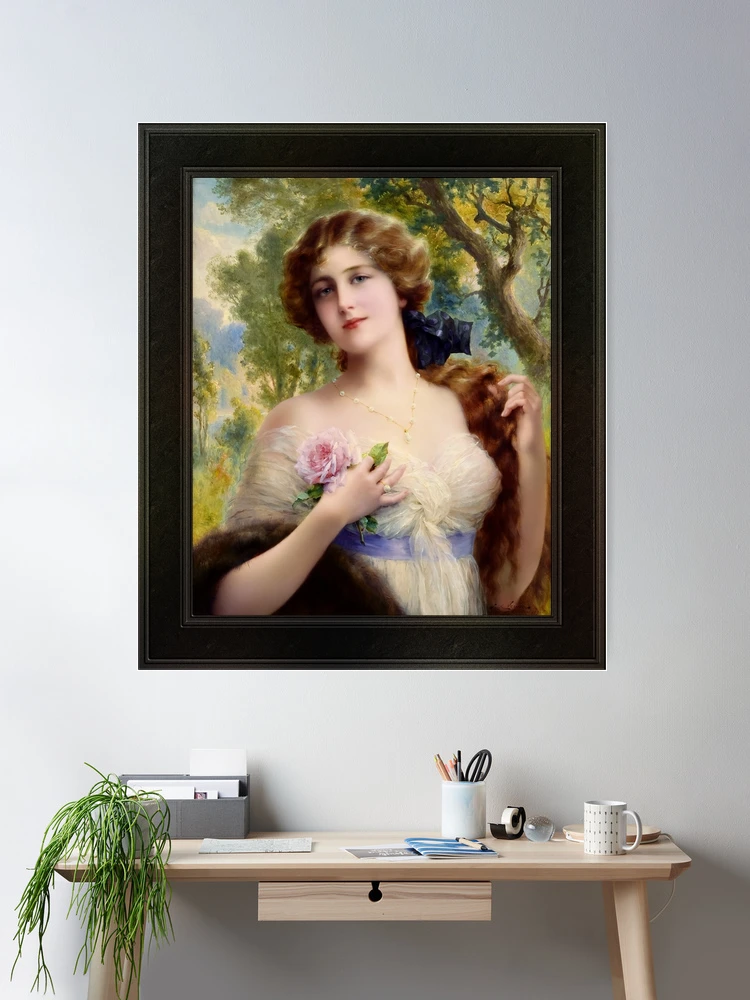
“Arrosadun Dama Gaztea,” sortua 1916 margolari frantsesaren eskutik Emile Vernon (1872 – 1919), mende hasierako Frantziako artearen testuinguruan kokatutako edertasun femeninoaren erretratu erakargarria da.. Vernon, emakumeen irudikapen erromantiko eta idealizatuengatik ezaguna, grazia eta fintasun ikuspegia azaleratzen du, bere lanaren adibide nagusi gisa. Margolanak lasaitasun lasaia dakar, gaia leun batez harrapatzea, presentzia ia etereoa. Pieza hau Vernonek argiaren maisutasunaren lekuko da, ehundura, eta adierazpen emozionalaren ñabardura sotilak, ikusleak betiko dotoreziako une intimo batera erakarri.
Edukien taula
Gai nagusia eta osaera
Margolanaren erdiko figura emakume gazte bat da, elegantly poised, holding a large, soft pink rose in her left hand. She gazes directly at the viewer with a slight, inviting smile. Bere begiak, tender and soft, convey an air of warmth and gentleness, and the soft folds of her golden-brown hair, casually arranged, complement her serene expression. The woman’s attire consists of a delicate off-white gown, partially draped over her shoulders, with a light lavender-blue sash that adds an element of color contrast and sophistication.
The rose she holds is a symbol of beauty, intzamen, eta fintasuna. Its large, soft petals almost seem to vibrate with life, captured with an almost tactile precision. Vernon’s skillful rendering of the rose and its accompanying greenery provides a beautiful contrast to the woman’s pale complexion and light dress. The flower’s natural, arrosa kolore leuna gazteen edertasunaren adierazpen lasaia da, gaiaren garbitasuna eta grazia are gehiago azpimarratuz.
Ezarpena eta atzeko planoa
Emakume gaztearen atzean, hondoak paisaia lasai eta oparoa erakusten du. Zuhaitzetatik iragazten den eguzki-argia zikinduta dagoen baso eszena leun batek leun bat sortzen du, ia ametsezko giroa. Hostoa berde kolore aberatsez margotuta dago, landa- edo lorategi lasaia iradokiz, litekeena da herrialdeko erretiro idiliko bat iradokitzea. Eguzki-argiaren tonu beroek itzal freskoekin kontrajartzen dute sotilki, gaiaren hiru dimentsioa areagotuz eta eszenari lasaitasun-aireaz txertatuz.
Vernonek halako natural hautua, ingurune baketsuak gaiaren gazte xalotasuna osatzen du. Ezarpenak ez du konposizioa menderatzen, baizik eta lasaitasun eta kontenplazio giro orokorra onartzen du. The soft brushwork used to depict the trees and distant landscape further deepens the sense of depth and space within the work.
Estiloa eta Teknika
Émile Vernon was influenced by the Symbolist movement, and his works often carried elements of romanticism and realism. “Arrosadun Dama Gaztea” exemplifies his ability to blend these influences into a harmonious and elegant style. His painting technique is marked by a delicate handling of light and color, zeina, in this instance, creates an atmosphere of softness and subtle elegance. Vernon’s expert use of light, particularly the gentle illumination of the young woman’s face and figure, creates a glowing effect, drawing the viewer’s eye to the subject and enhancing the overall ethereal mood of the piece.
The brushwork in the painting is both smooth and detailed, azalaren ehundurak azpimarratuz, ehuna, eta loreak. Emakumearen soineko tolestura bakoitza arretaz modelatzen da leuntasuna eta mugimendua iradokitzeko, bere ezaugarri delikatuak, berriz, —bere begiak eta ezpainak batez ere— formari arreta zehatza ematen diote, hala ere, gehiegizko enfasia saihesten duen sotiltasun batekin. Arrosa eta bere petaloak maneiatzea bereziki trebea da, Vernonek lorearen egitura delikatua ia argazki-kalitatearekin harrapatu baitu, eszenan presentzia ia ukigarria emanez.
Gaia eta Aldartea
Margolanaren gaia gazteen edertasuna eta feminitatean oinarritzen da, emakume gaztearen irudikapenaren bidez transmititzen da, aldi berean, miresmenaren gai eta graziaren ikur gisa. Eskuan daukan lorea, bere kolore leunekin, maitasunaren gaiekin lotu ohi da, edertasuna, eta garbitasuna, aligning with the serene and delicate expression she carries.
The mood of the artwork is one of quiet contemplation and serenity. The young woman is not portrayed as an object of desire, but as a figure that embodies gentleness and a sense of inner peace. Her expression and posture suggest an intimate moment of grace, evoking a sense of tranquility and timelessness. Epela, golden light, paired with the natural beauty of the surroundings, contributes to an atmosphere that feels both nostalgic and enduring. Leuna, harmonious palette further enhances the overall calm and peaceful tone of the piece.
Materialak eta Azalera
“Arrosadun Dama Gaztea” is painted using traditional oil on canvas. The surface is smooth yet textured in places, such as in the fabric of the woman’s gown and the detailed rendering of the rose. Vernon’s precise use of oils allows for the creation of soft gradients of color that are integral to the mood of the painting. The painting is rich in detail, yet retains a fluidity that makes the work feel effortless, emphasizing the natural beauty of the subject and her environment.
The overall presentation of the painting, from the subject’s soft skin to the details in the foliage, reflects the high level of skill and attention to detail that Vernon applied throughout his career. Materialak, teknika, and color choices all work together to create a work of art that remains timeless and evocative.
Bukaera
In “Arrosadun Dama Gaztea,” Émile Vernon has created an artwork that combines romance, dotorezia, and serenity in a single frame. The soft palette, the graceful depiction of the young woman, and the serene landscape combine to create a work that speaks of beauty and calm, making it a quintessential example of Vernon’s style. Arrosa, a central motif, serves as both a literal and symbolic reminder of the delicate nature of femininity, while the painting as a whole speaks to the enduring power of beauty, captured in a moment of peace.
Hau arte digitala ukituta dagoen domeinu publikoko irudi baten erreprodukzioa da.
Artistaren biografia
Beheko informazioa Galeria Ary Jan
Émile Vernon Tourseko Arte Ederren eskolan ikaslea zen eta bertan marrazketako lehen saria irabazi zuen 1888; ondoren, William Bouguereau eta Auguste Truphèmeren tutorea izan zen.
Gero sartu 1898 Arte Ederretako eta Arte Dekorazioko Tours erakusketan parte hartu zuen eta urte horretan bertan, Frantziako Artisten Erakusketan eta maiz bertan erakutsi zituen bere lanak 1898 to 1913; erretratuak aurkezten, paisaiak, Bretainiako eszenak, akuarelaz margotu zituen bodegoien sortak, baita figura femeninoak ere, gerora espezialitate bihurtu zena.
Émile nabarmendu zen argiztaturiko margolanetan, Haurren eta emakume gazte dotoreen figura adoragarriak, harekin maiz lotzen zuen maskota bat, adibidez, katua, txakurra edo txoria, eta bere irudiak garlandaz edo lore-sortaz apaindu zituen, bere ibilbide osoan; baina oso artista polifazetikoa ere bazen, zorroztasunez eta indarrez margo zezakeena, bere lanetan Madame Vernon eta Sous la Lamperen erretratua bezala. (Lanpara azpian).