

Am Bonnet Buidhe
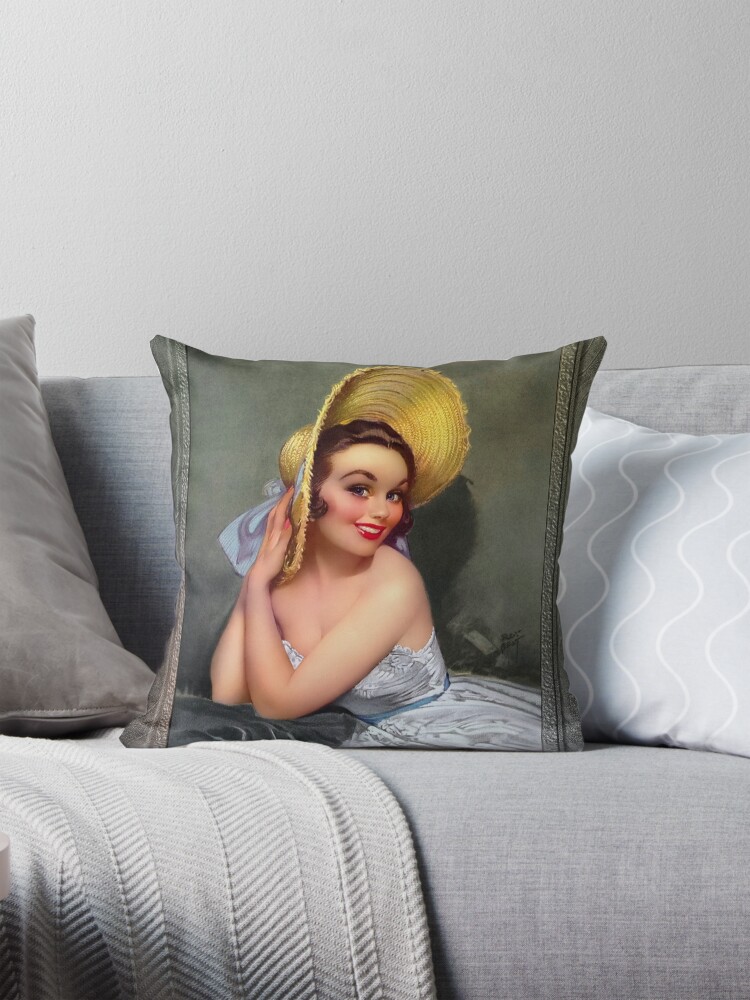
“Am Bonnet Buidhe,” air a chruthachadh leis an dealbhadair Ameireaganach Roy as fheàrr (1892 – ?), na dheagh eisimpleir de dhealbh Ameireaganach meadhan an 20mh linn, a’ glacadh brìgh seun is bòidhchead na h-òige. Tha an obair-ealain seo air a pheantadh le mionaideachd sgileil, a’ gabhail a-steach paileas dath pastel a chuireas ris a’ bhog, faireachdainn ethereal an dealbh.
Anns a’ phìos tha boireannach òg air a sgeadachadh le bonaid mhòr bhuidhe, a chaoin, gàire radanta a’ togail misneachd agus blàths, fhad 's a bha i mì-mhodhail, tha suidheachadh beagan coy a’ toirt cuireadh do cheangal ris an neach-coimhead. Tha an cuspair suidhichte sa mheadhan taobh a-staigh an t-suidheachaidh, a’ tabhann fòcas beòthail aire fhad ‘s a tha e air a chuairteachadh le bog, dathan neo-shoilleir a tha a’ nochdadh fìnealta, àile cha mhòr bruadar.
Clàr-innse
Stoidhle agus innleachd
Roy Best was known for his ability to blend elements of realism with the graceful stylization of the early 20th century illustration movement. His works often captured moments of femininity, highlighting the softness of the human form, and this painting exemplifies those qualities perfectly. The technique employed in “Am Bonnet Buidhe” is reflective of the artist’s fine control over color and light, rendering a sense of depth and texture in the depiction of the woman’s face and clothing.
The smooth application of paint creates an almost velvety finish to the skin and fabric, adding a soft glow that enhances the overall warmth of the piece. Cluich an t-solais, particularly on the yellow bonnet, is masterfully handled, drawing attention to the most prominent feature of the artwork. The subtle highlights on the woman’s face, especially around her eyes and lips, add a dimension of realism that contrasts beautifully with the simplicity of the background.
Cuspair agus mood
The theme of the painting revolves around beauty, boireannachd, agus seun. The woman in the artwork is presented as a figure of innocence and allure, captured in a moment of serene elegance. The bonnet she wears, samhla den linn a dh’ fhalbh, suggests a connection to a more traditional, rural aesthetic, evoking nostalgia for a time when such accessories were commonplace in women’s fashion.
The lighthearted mood of the portrait is enhanced by the soft, pastel colors used throughout, which create a serene environment around the subject, inviting the viewer to bask in the quiet beauty of the scene. There is no sense of urgency or harshness in the artwork; an àite sin, the woman gazes softly towards the viewer with a subtle smile, allowing her presence to fill the space with a calm, àile shìtheil.
Stuthan agus meadhanach
“Am Bonnet Buidhe” was created using traditional painting materials typical of the time period. The artist’s use of oil paints allowed him to achieve a rich depth in color, especially in the woman’s skin tone and the delicate folds of her dress. The smoothness of the brushwork suggests that Best worked with a technique that emphasized blending, rather than distinct, visible brushstrokes, to create a soft, almost luminous finish.
An cùl-raon, a muted blend of soft greys and greens, further elevates the main subject by providing a gentle contrast, ensuring that the viewer’s attention remains focused on the woman in the yellow bonnet. The gold and yellow hues of her hat stand out as the central visual element, symbolizing both warmth and hope.
An cuspair agus an sgrìobhadh
The subject of “Am Bonnet Buidhe” 's e boireannach òg, likely in her late teens or early twenties, whose facial features are rendered with great care. Tha i dorcha, wavy hair is tucked beneath a large, wide-brimmed yellow bonnet, which forms a striking contrast with her light complexion. The bonnet itself, made of straw or similar material, is intricately detailed, with a light ribbon tied at the back. The playful use of blue ribbon in the woman’s attire provides a subtle contrast against the warm yellow of the bonnet, adding a touch of delicacy to the overall composition.
The woman’s pose is soft and inviting, her hand gently resting against the side of her head, as if adjusting the bonnet. Tha an suidheachadh seo a 'toirt seachad mothachadh air eireachdas agus gràs, leis a’ chuspair a’ nochdadh an dà chuid deiseil agus furasta bruidhinn ris. Tha teàrnadh seòlta a cinn a’ cur ri sealladh iomlan nan gràs, mar gum biodh i air a glacadh ann am mionaid de mhothachadh sàmhach no a’ dol an sàs ann an còmhradh tlachdmhor leis an neach-coimhead. An cùl-raon, a tha gu bog doilleir agus neo-mhìneachail, a’ dèanamh cinnteach gu bheil am fòcas fhathast air figear a’ bhoireannaich, a’ cur cuideam air a bòidhchead fìnealta.
Co-dhùnadh
Ann an “Am Bonnet Buidhe,” Bidh Roy Best gu sàr-mhath a’ glacadh mionaid de bhòidhchead gun ùine, a’ taisbeanadh a sgil air leth ann a bhith a’ measgachadh reul-eòlas le socair, bòidhchead air leth freagarrach. Tha an obair-ealain a’ nochdadh faireachdainnean cianalais, blàths, agus serenity, a’ toirt cuireadh do luchd-amhairc a bhith a’ cur luach air bogachd agus eireachdas mionaid reòta ann an tìde. Leis an sgrìobhadh co-chòrdail aige, solais bog, agus paileas dath fìnealta, this portrait remains a remarkable example of American illustration from the early 20th century.
Is e seo ath-riochdachadh seann mhaighstirean ealain didseatach ath-riochdachadh de ìomhaigh raon poblach.
Neach-ealain Bio
Fiosrachadh gu h-ìosal a thàinig bho Wikipedia.org
Roy was a student of the Art Institute of Cincinnati, and then he later attended the Art Institute of Chicago; and at the beginning of his career he was represented by American artist in New York City in the 1920s.
During his time in New York he painted several covers for The Saturday Evening Post which was established in 1897 and is still published as of this writing.
An uairsin a-steach 1931, Roy was creating pinup girl calendar art for the Joseph C. Hoover & Sons calendar company; and later in that same year he was commissioned by the Whitman Publishing Company to illustrate The Peter Pan Picture Book, stèidhichte air J. m. Dealbh-chluich Barrie Peter pan.
Dh’adhbhraich seo gun do sheall e mòran leabhraichean chloinne eile, nam measg “Caraidean beaga bho iomadh dùthaich” le Màiri Windsor (Companaidh Foillseachaidh Whitman, 1935).
Ann an 1942 Bharantaich Roinn Peantadh is Deilbhidh Roinn an Ionmhais Roy gus dealbh-balla oifis a’ phuist a pheantadh, ris an canar Teachd a' Phacaid, anns a’ bhaile aige, Waverly, Ohio.
Anns an aon bhliadhna bha e air fhastadh leis a 'Bhrùnach agus Bigelow a' chompanaidh foillseachaidh ainmeil, a thug air adhart e gu dreuchd a’ toirt a-mach pin-ups mìosachain.
Na chùrsa-beatha bhiodh e cuideachd a’ peantadh grunn bhana-chleasaichean ainmeil, leithid Grace Kelly; agus anns na bliadhnaichean mu dheireadh aige thàinig e gu bhith ainmeil airson na dealbhan-ola a chaidh a choimiseanadh gu corporra agus na seallaidhean-tìre de Cape Cod.