

“Un templo circular anteriormente dedicado” (Un templo circular una vez dedicado)
“Un templo circular anteriormente dedicado” (Un templo circular una vez dedicado) es una obra notable creada por Hubert Robert, a French painter born in 1733 y falleció en 1808. Known for his exceptional ability to convey the magnificence of ancient architecture in a romanticized yet realistic manner, Robert presents a scene of ruin, evoking a deep sense of nostalgia and melancholy for the forgotten splendor of ancient structures. Painted during the 18th century, this work reflects Robert’s fascination with classical ruins and his ability to merge art and history in ways that celebrate both the grandeur of the past and the inexorable passage of time.
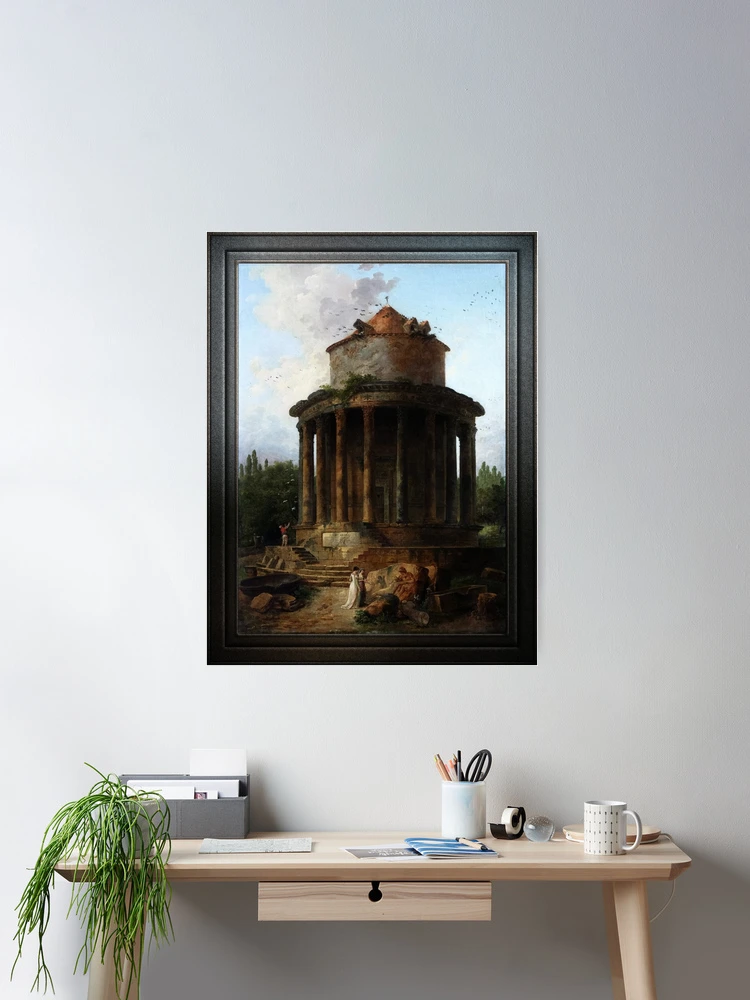
Tabla de contenido
The Composition and Architecture
The artwork presents a dilapidated, yet awe-inspiring circular temple set amidst a landscape that has been overtaken by nature. The temple is the central focus, its grand columns rising against a backdrop of cloud-filled skies. The circular nature of the structure and its symmetrical form are distinct elements, emphasizing the classical architectural style that was revered in the 18th century. The temple’s structure appears to have once been magnificent, but now it is crumbling, with parts of the walls showing clear signs of age, wear, and neglect. The roof, once ornate, is now partially missing, and the remaining columns, some of which are damaged, stand as silent witnesses to time’s relentless passage.
The temple’s ruins, while deteriorated, still retain their grandeur. The artist captures the texture of the weathered stone, with moss creeping up the sides of the columns and cracks visible in the structure. This juxtaposition of ancient beauty and decay evokes a timeless theme, celebrating both the achievements of the past and the inevitable return to nature. las columnas, arranged in a circular pattern, give the composition a rhythmic harmony, each pillar a symbol of the history that the structure once embodied.
Figures and Human Interaction
en primer plano, human figures are depicted in varying degrees of engagement with the ruin. A group of three figures, two women and a man, stand by the broken remnants of the temple. las mujeres, dressed in flowing, classical attire, sit gracefully on the stone blocks scattered around the temple. Their garments are painted with great attention to detail, showing the textures and folds of the fabric as they interact with the surrounding environment. One of the women is looking towards the man, who is standing a little farther away and appears to be in a more active stance, perhaps contemplating the temple or its past.
The women’s serene presence contrasts with the looming ruin behind them, and their posture suggests a reverence for the place they inhabit, as if they are visitors to a sacred site now lost to time. This sense of respectful admiration for the ancient structure mirrors the broader theme of the painting: el paso del tiempo, the fading of civilizations, and the respect we continue to give to the remnants of our history.
encima de ellos, a man stands slightly elevated on the steps of the temple. He is engaged in an action—he is perhaps releasing birds into the air, symbolizing freedom, or possibly suggesting a ceremonial offering to the once-sacred space. His gesture adds an element of life to the otherwise still scene. Los pájaros, caught in mid-flight, bring a sense of movement and vitality to the composition, which might otherwise feel static due to the heavy presence of ruins and quiet figures.
Natural Landscape and Mood
The surrounding landscape is lush, with greenery overtaking the ruins. Vines snake their way up the columns, and the ground is littered with broken stones and fragments, creating a feeling of nature reclaiming the space. A tree with a twisted trunk grows near the base of the temple, its limbs extending over the stonework. This symbiotic relationship between nature and the built environment is a key theme in Hubert Robert’s work, symbolizing the natural cycle of creation, destruction, y renovación.
The sky above is vast and dramatic, with soft clouds casting shadows across the scene. The birds soaring across the sky add a sense of freedom, lightness, y la eternidad, contrasting with the heaviness of the ruined temple below. The overall mood is one of melancholy mixed with admiration—a recognition of the beauty that once was, but is now lost. The interplay of light and shadow on the weathered stones further enhances this somber reflection on the passage of time.
The Style and Symbolism
The painting is done in a classical style, characteristic of Hubert Robert’s work, with a focus on realism and attention to architectural detail. His masterful handling of light and texture brings the scene to life, creating an immersive experience for the viewer. The ruinous state of the temple is painted with a great degree of realism, showing the wear and tear of centuries. sin emabargo, Robert also imbues the scene with an idealized quality, heightening the emotional impact of the ruins by setting them within a picturesque, almost idyllic landscape.
The symbolic elements in the painting are also deeply important. el templo, once a place of worship and dedication, now lies abandoned, suggesting the transience of human achievements. The figures interacting with the ruins reflect the passage of time, with humanity standing as both a witness to and a participant in the cyclical nature of existence. The temple itself symbolizes both the impermanence of civilization and the enduring beauty that can be found in decay. The birds in flight may represent freedom or the eternal nature of the human spirit, a motif common in romanticized ruins paintings.
Conclusión
“Un templo circular anteriormente dedicado” es una hermosa, melancholic reflection on the themes of ruin, tiempo, and nature’s power to reclaim what human hands have built. Hubert Robert captures the quiet grandeur of a lost world, creating a visual narrative that invites the viewer to contemplate the inevitable erosion of even the most glorious human accomplishments. Through his skillful rendering of both architecture and nature, Robert encourages a deep reflection on the passage of time and the enduring beauty that can be found in the ruins of the past.
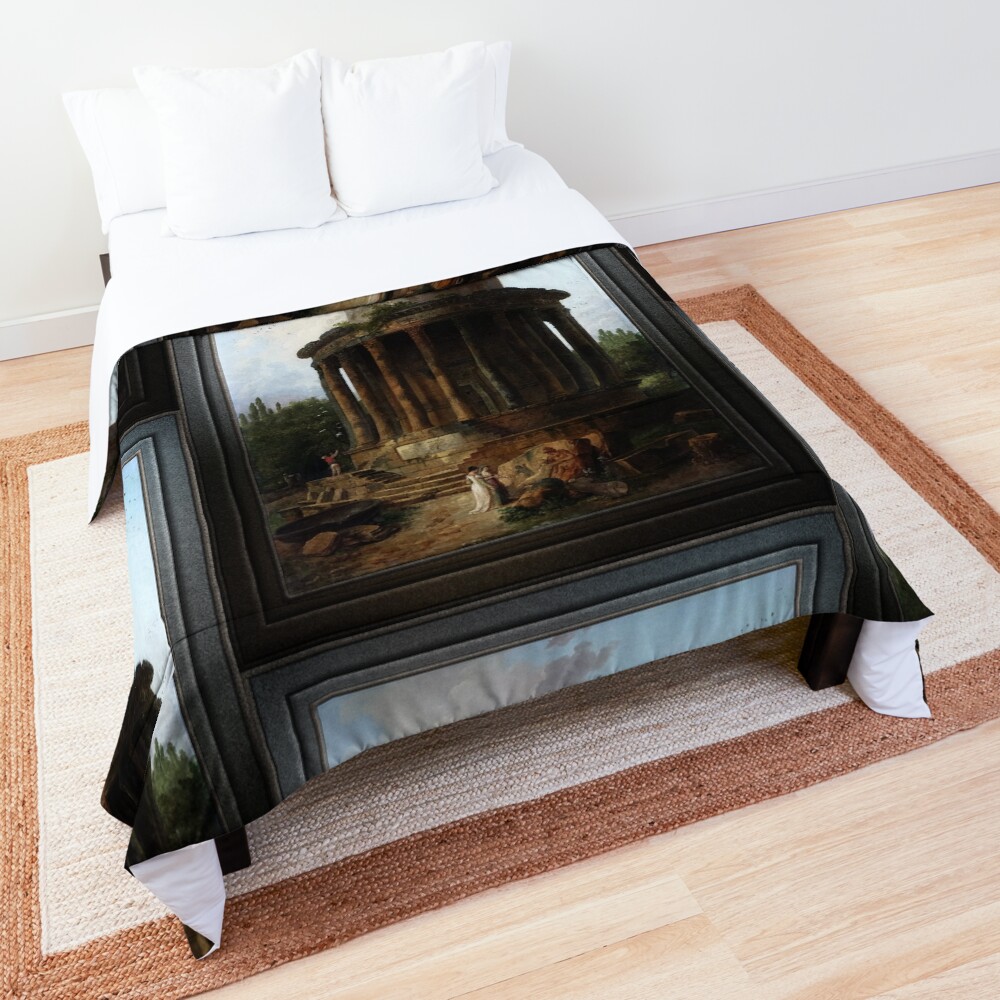
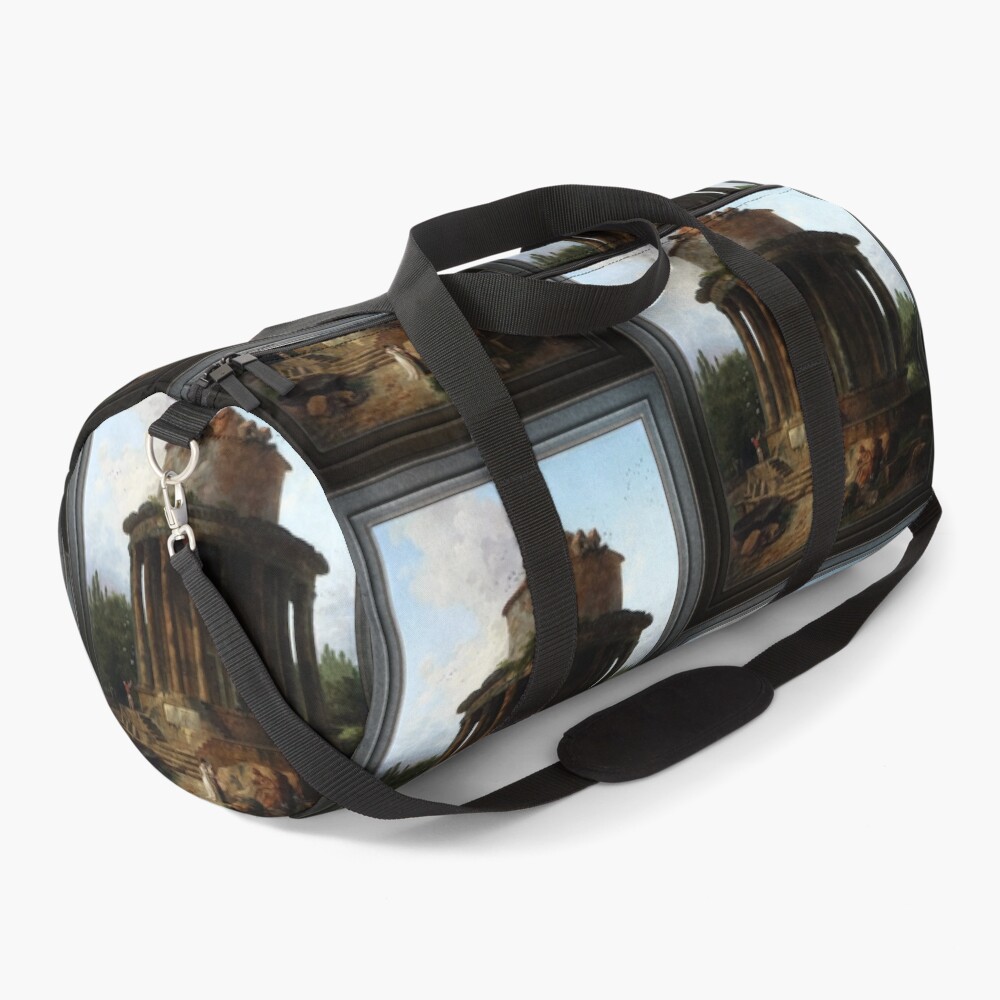
Un Temple Circulaire Jadis Dédié es una reproducción retocada de viejos maestros de arte digital de una imagen de dominio público que está disponible para su compra en línea como lienzo enrollado.
Información debajo de Wikipedia.org
Hubert Robert nació en París en 1733. Su padre, Nicolas robert, estuvo al servicio de François-Joseph de Choiseul, marqués de Stainville, un destacado diplomático de Lorena. El joven Robert terminó sus estudios con los jesuitas en el Collège de Navarre en 1751 y entró en el taller del escultor Michel-Ange Slodtz quien le enseñó diseño y perspectiva pero le animó a dedicarse a la pintura.. En 1754 partió hacia Roma en el tren de Étienne-François de Choiseul, hijo del empleador de su padre, que había sido nombrado embajador de Francia y se convertiría en Secretario de Estado de Relaciones Exteriores de Luis XV en 1758.
Pasó once años en Roma., un período de tiempo notable; después de que se agotara la residencia oficial del joven artista en la Academia Francesa de Roma, se apoyaba en obras que producía para conocedores visitantes como el abad de Saint-Non, que llevó a Robert a Nápoles en abril 1760 visitar las ruinas de Pompeya. El marqués de Marigny, director de los Bâtiments du Roi se mantuvo al tanto de su desarrollo en correspondencia con Natoire, director de la Academia Francesa, que instó a los pensionistas a dibujar al aire libre, de la naturaleza: Robert no necesitaba urgencia; dibujos de sus cuadernos de bocetos documentan sus viajes: Villa d’Este, Caprarola.
Vista del puerto de Rippeta en Roma, C. 1766, mostrando el antiguo panteón romano junto a un puerto imaginario
El contraste entre las ruinas de la antigua Roma y la vida de su tiempo despertó su mayor interés.. Trabajó un tiempo en el estudio de Pannini., cuya influencia se puede ver en la vista imaginaria de la galería en ruinas del Louvre (ilustración). Robert pasó su tiempo en compañía de jóvenes artistas en el círculo de Piranesi., cuyos caprichos de ruinas románticamente cubiertas de vegetación le influyeron tanto que se ganó el apodo de Robert des ruines.[2] Los álbumes de bocetos y dibujos que reunió en Roma le proporcionaron motivos que plasmó en pinturas a lo largo de su carrera..