

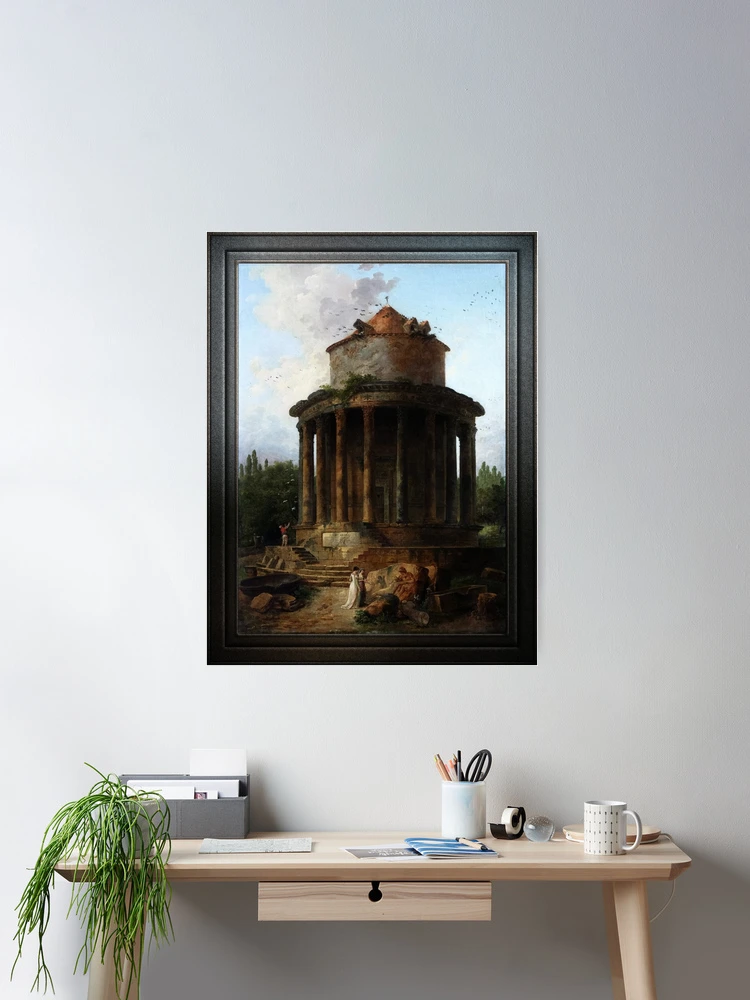
“이전에 헌납된 원형 사원” (한때 헌납된 원형 사원)
“이전에 헌납된 원형 사원” (한때 헌납된 원형 사원) 가 만든 놀라운 작품이다. 휴버트 로버트, a French painter born in 1733 그리고 에 세상을 떠났다. 1808. Known for his exceptional ability to convey the magnificence of ancient architecture in a romanticized yet realistic manner, Robert presents a scene of ruin, evoking a deep sense of nostalgia and melancholy for the forgotten splendor of ancient structures. Painted during the 18th century, this work reflects Robert’s fascination with classical ruins and his ability to merge art and history in ways that celebrate both the grandeur of the past and the inexorable passage of time.
목차
The Composition and Architecture
The artwork presents a dilapidated, yet awe-inspiring circular temple set amidst a landscape that has been overtaken by nature. The temple is the central focus, its grand columns rising against a backdrop of cloud-filled skies. The circular nature of the structure and its symmetrical form are distinct elements, emphasizing the classical architectural style that was revered in the 18th century. The temple’s structure appears to have once been magnificent, but now it is crumbling, with parts of the walls showing clear signs of age, wear, and neglect. The roof, once ornate, is now partially missing, and the remaining columns, some of which are damaged, stand as silent witnesses to time’s relentless passage.
The temple’s ruins, while deteriorated, still retain their grandeur. The artist captures the texture of the weathered stone, with moss creeping up the sides of the columns and cracks visible in the structure. This juxtaposition of ancient beauty and decay evokes a timeless theme, celebrating both the achievements of the past and the inevitable return to nature. 기둥, arranged in a circular pattern, give the composition a rhythmic harmony, each pillar a symbol of the history that the structure once embodied.
Figures and Human Interaction
전경에서, human figures are depicted in varying degrees of engagement with the ruin. A group of three figures, two women and a man, stand by the broken remnants of the temple. The women, dressed in flowing, classical attire, sit gracefully on the stone blocks scattered around the temple. Their garments are painted with great attention to detail, showing the textures and folds of the fabric as they interact with the surrounding environment. One of the women is looking towards the man, who is standing a little farther away and appears to be in a more active stance, perhaps contemplating the temple or its past.
The women’s serene presence contrasts with the looming ruin behind them, and their posture suggests a reverence for the place they inhabit, as if they are visitors to a sacred site now lost to time. This sense of respectful admiration for the ancient structure mirrors the broader theme of the painting: 시간의 흐름, the fading of civilizations, and the respect we continue to give to the remnants of our history.
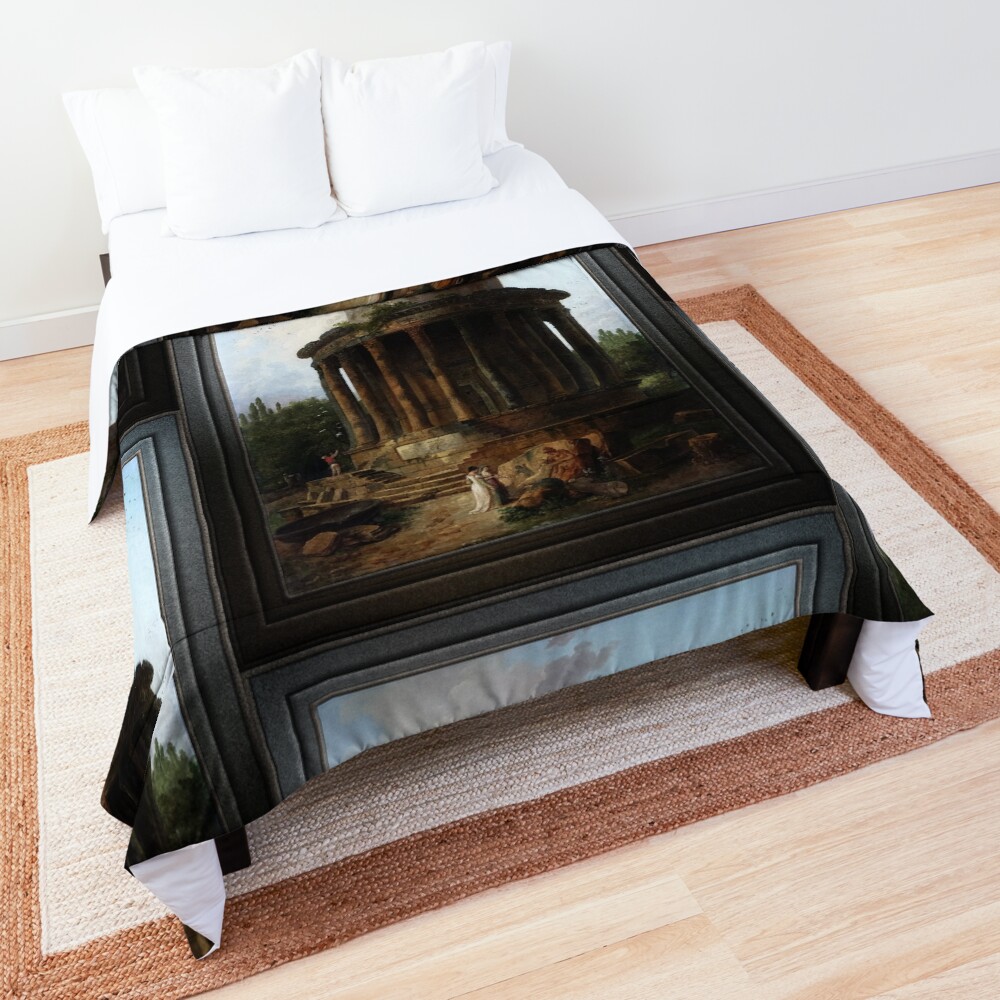
그 위에, a man stands slightly elevated on the steps of the temple. He is engaged in an action—he is perhaps releasing birds into the air, symbolizing freedom, or possibly suggesting a ceremonial offering to the once-sacred space. His gesture adds an element of life to the otherwise still scene. The birds, caught in mid-flight, bring a sense of movement and vitality to the composition, which might otherwise feel static due to the heavy presence of ruins and quiet figures.
Natural Landscape and Mood
The surrounding landscape is lush, with greenery overtaking the ruins. Vines snake their way up the columns, and the ground is littered with broken stones and fragments, creating a feeling of nature reclaiming the space. A tree with a twisted trunk grows near the base of the temple, its limbs extending over the stonework. This symbiotic relationship between nature and the built environment is a key theme in Hubert Robert’s work, symbolizing the natural cycle of creation, 파괴, and renewal.
The sky above is vast and dramatic, with soft clouds casting shadows across the scene. The birds soaring across the sky add a sense of freedom, 가벼움, and eternity, contrasting with the heaviness of the ruined temple below. The overall mood is one of melancholy mixed with admiration—a recognition of the beauty that once was, but is now lost. The interplay of light and shadow on the weathered stones further enhances this somber reflection on the passage of time.
The Style and Symbolism
The painting is done in a classical style, characteristic of Hubert Robert’s work, with a focus on realism and attention to architectural detail. His masterful handling of light and texture brings the scene to life, creating an immersive experience for the viewer. The ruinous state of the temple is painted with a great degree of realism, showing the wear and tear of centuries. 하지만, Robert also imbues the scene with an idealized quality, heightening the emotional impact of the ruins by setting them within a picturesque, almost idyllic landscape.
The symbolic elements in the painting are also deeply important. The temple, once a place of worship and dedication, now lies abandoned, suggesting the transience of human achievements. The figures interacting with the ruins reflect the passage of time, with humanity standing as both a witness to and a participant in the cyclical nature of existence. The temple itself symbolizes both the impermanence of civilization and the enduring beauty that can be found in decay. The birds in flight may represent freedom or the eternal nature of the human spirit, a motif common in romanticized ruins paintings.
결론
“이전에 헌납된 원형 사원” is a beautiful, melancholic reflection on the themes of ruin, 시간, and nature’s power to reclaim what human hands have built. Hubert Robert captures the quiet grandeur of a lost world, creating a visual narrative that invites the viewer to contemplate the inevitable erosion of even the most glorious human accomplishments. Through his skillful rendering of both architecture and nature, Robert encourages a deep reflection on the passage of time and the enduring beauty that can be found in the ruins of the past.
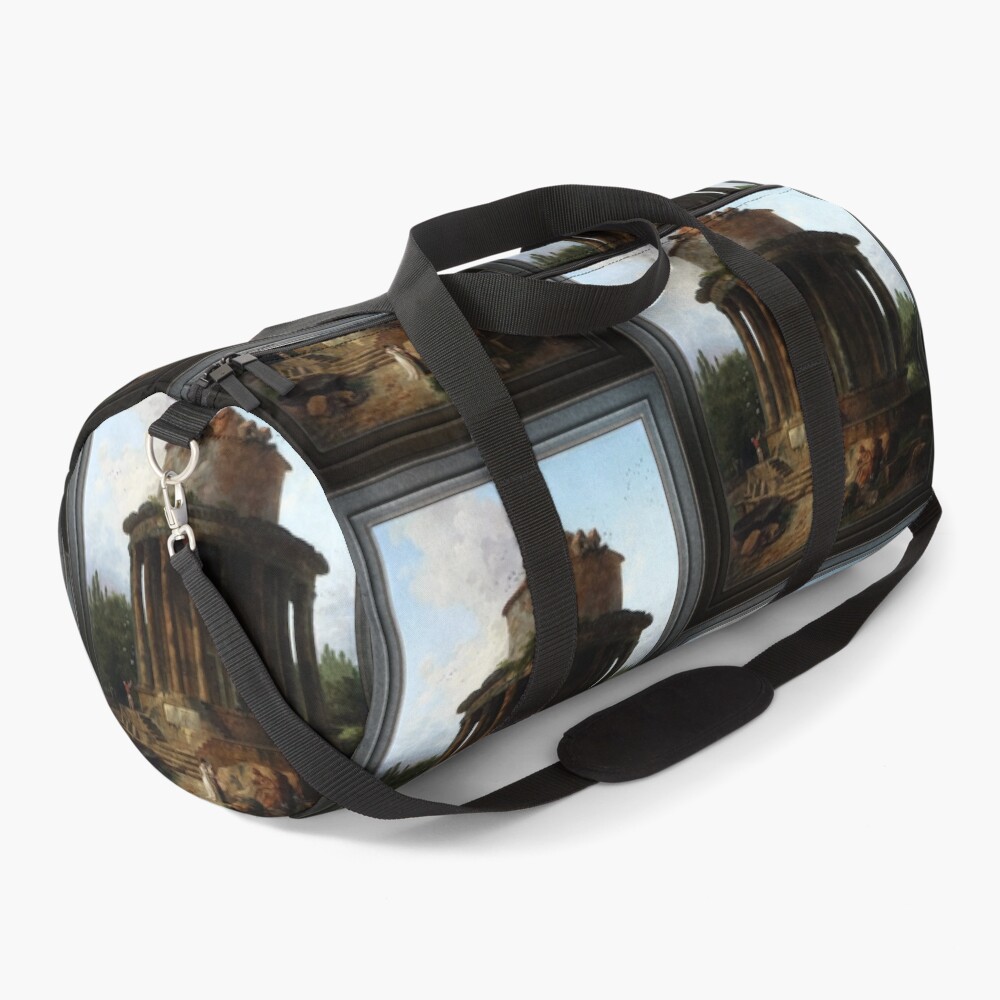
Un Temple Circulaire Jadis Dédié is a retouched digital art old masters reproduction of a public domain image that is available for purchase online as a 압연 캔버스 인쇄.
아래 정보 Wikipedia.org
Hubert Robert는 파리에서 태어났습니다. 1733. 그의 아버지, 니콜라스 로버트, François-Joseph de Choiseul의 서비스에 있었다, 후작 드 스테인빌(Marquis de Stainville)은 로렌(Lorraine)의 주요 외교관. Young Robert는 Collège de Navarre에서 예수회와 함께 공부를 마쳤습니다. 1751 그리고 그에게 디자인과 원근법을 가르쳤지만 그림으로 전향하도록 격려한 조각가 Michel-Ange Slodtz의 아틀리에에 들어갔습니다.. 에 1754 그는 Étienne-François de Choiseul의 기차를 타고 로마로 떠났다., 아버지 고용주의 아들, 그는 프랑스 대사로 임명되었고 루이 15세의 외무장관이 되었다. 1758.
그는 로마에서 완전히 11년을 보냈다, 놀라운 시간; 로마에 있는 프랑스 아카데미에서 젊은 예술가의 공식 거주지가 끝난 후, 그는 abbe de Saint-Non과 같은 방문 감정가를 위해 제작한 작품으로 생계를 유지했습니다., 4월에 로버트를 나폴리로 데려간 사람 1760 폼페이 유적지를 방문하기 위해. 후작 드 마리니, Bâtiments du Roi의 감독은 Natoire와 통신하면서 그의 발전을 따라갔습니다., 프랑스 아카데미 원장, 연금 수급자들에게 야외에서 스케치를 하라고 촉구한 사람, 자연에서: 로버트는 재촉할 필요가 없었다; 그의 스케치북에 있는 그림은 그의 여행을 기록합니다.: 빌라 데스테, 카프라롤라.
로마의 리페타 항구 전경, 씨. 1766, 상상의 항구 옆에 고대 로마 판테온을 보여주는
고대 로마의 폐허와 당대의 삶의 대조는 그의 가장 뜨거운 관심을 불러일으켰습니다.. 그는 Pannini의 스튜디오에서 한동안 일했습니다., 폐허가 된 루브르 박물관의 상상 속의 모습에서 그 영향력을 볼 수 있습니다. (삽화). Robert는 Piranesi 서클의 젊은 예술가 회사에서 시간을 보냈습니다., 낭만적으로 자란 폐허의 변덕이 그에게 큰 영향을 주어 그는 Robert des 폐허라는 별명을 얻었습니다.[2] 그가 로마에서 수집한 스케치와 그림의 앨범은 그가 평생 동안 그림으로 작업한 모티브를 제공했습니다..