

Ragazza Varga 1946 Pin-up Art
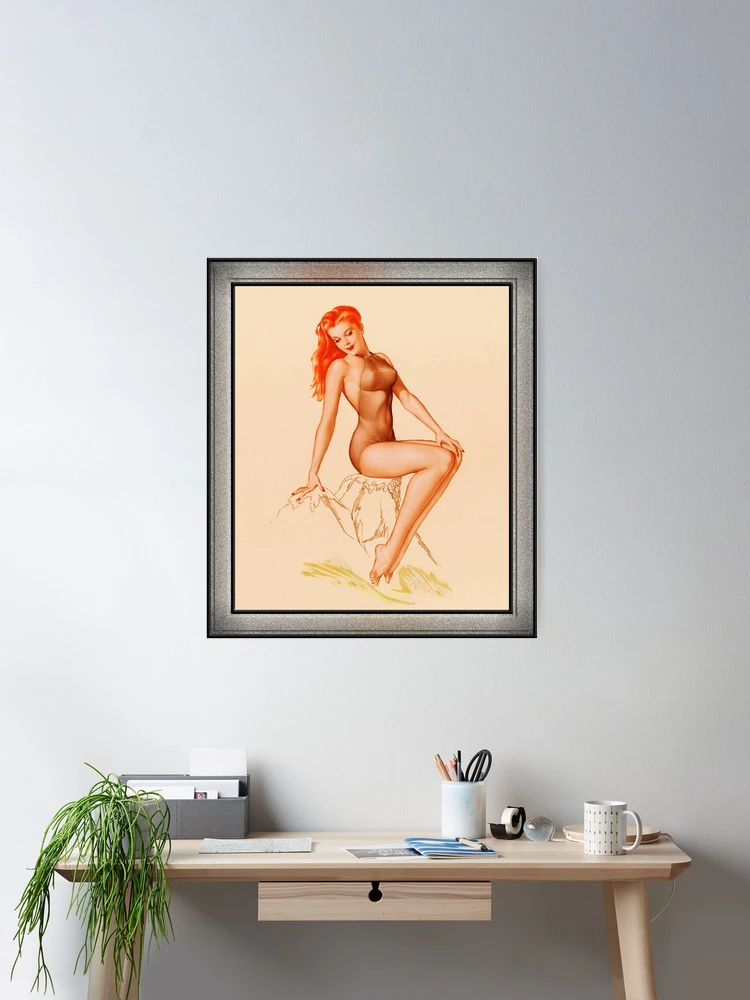
“Ragazza Varga 1946 Pin-up Art” is an iconic creation by the celebrated Peruvian artist Immagine segnaposto Alberto Vargas (1896 – 1982), who is renowned for his elegant depictions of the female form. Questo lavoro, prodotto in 1946, exemplifies the pin-up genre, a style of art that gained immense popularity during the mid-20th century, particularly in the United States. Vargas, whose work became synonymous with the glamorous allure of Hollywood, crafted sensual yet sophisticated portrayals of women. In this particular piece, the artist captures the essence of post-war optimism and the allure of the human body, making it a timeless representation of vintage femininity.
The subject of the painting is a radiant woman, depicted in a seated pose against a softly textured, warm-toned background. Her striking red hair cascades in soft waves, adding a vibrant contrast to her pale skin. The woman’s body is painted with precision and grace, emphasizing her curvaceous form. The pin-up genre typically focuses on the idealized female body, and Vargas does so here with an exquisite balance between realism and stylization. The model’s slender figure is accentuated by her form-fitting swimsuit, a garment that hugs her curves and contributes to the sensual, yet tasteful mood of the piece.
Sommario
Stile e tecnica
Alberto Vargas is known for his mastery of creating sensual yet elegant portraits, and this artwork is no exception. His skillful use of light and shadow gives the painting a three-dimensional quality, allowing the viewer to appreciate the model’s form and delicate features. The soft use of pastels and the warm-toned palette in this piece reinforces the inviting and calming mood of the work. Vargas’ technique is marked by a gentle blend of realism with idealization, creating a balanced composition that feels both dreamlike and grounded in reality.
The woman’s smooth skin is painted with delicate attention to detail, with subtle shifts in color to suggest the contours of her body and the play of light. Her facial expression is serene and confident, contributing to the overall air of calm sensuality. The swimsuit she wears, while simple in design, is rendered with such finesse that it almost seems to shimmer, further enhancing the model’s allure. Vargas uses fine, almost ethereal strokes to suggest the fabric’s texture and the natural curves of her body, adding a layer of sophistication to the piece.
Tema e umore
L'umore di “Ragazza Varga 1946 Pin-up Art” is one of timeless femininity and understated sensuality. Il morbido, warm tones and the model’s composed expression evoke a sense of grace and self-assurance. Il suo corpo, though emphasized in its curves, is not objectified; Piuttosto, it is celebrated as a work of art. The woman’s gaze is directed downward, suggesting a moment of introspection or calm, which contrasts with the overtly sexualized poses often associated with pin-up art. This detail serves to highlight Vargas’ ability to create allure without overt exhibitionism, a hallmark of his work.
The era in which this painting was created, just after World War II, contributed to its theme of optimism. The late 1940s were marked by a resurgence in art, cultura, and fashion, with pin-up art playing a role in capturing the sense of vitality and hope for the future. Il “Ragazza Varga” was often seen as a symbol of youthful beauty and post-war exuberance. In questo dipinto, the model embodies both the sensuality and strength of the post-war era, where women were beginning to gain more social independence and recognition. tuttavia, her pose and demeanor convey a calm, confident energy rather than one of brash or overt empowerment, allowing for a more nuanced interpretation of her character.
Terreno e sfondo
The background of this artwork is as understated as the model herself. It features a muted, almost abstract landscape that is suggestive of nature without being overly detailed. Soft strokes of green and beige at the base imply grass or foliage, but there is no sharp definition of the surroundings. This allows the figure of the woman to stand out as the focal point. The lack of intricate background details directs the viewer’s attention entirely to the subject, allowing the viewer to appreciate the figure’s smooth curves and the gentle contour of the model’s body.
Materiali
While the specific materials used by Vargas in the creation of this artwork are not detailed, his typical medium was oil on canvas or board. Vargas’ paintings are known for their precision in detail, and the use of oils would allow for the blending of hues and the creation of soft, lifelike textures. His brushwork is smooth and controlled, giving the final piece an almost polished, idealized look. The color palette of warm peaches, marroni, and soft greens suggests the use of oil paints, where blending and layering of colors create a rich depth.
Conclusione
“Ragazza Varga 1946 Pin-up Art” by Alberto Vargas is a quintessential example of the pin-up genre that became a symbol of mid-20th century America. Through his technical mastery, Vargas elevates the depiction of the female form into art, infusing it with elegance, sensualità, and a sense of poise. The piece encapsulates the post-war optimism of the era while remaining timeless in its appeal. The harmonious blend of realism and idealization in Vargas’ work ensures that it continues to resonate with audiences today, as it remains an important part of the cultural and artistic heritage of the mid-1900s.
Questa è una riproduzione ritoccata di arte digitale dei vecchi maestri di un'immagine di pubblico dominio.
Bio dell'artista da Wikipedia.org
Nato ad Arequipa, Perù, era il figlio del noto fotografo peruviano Max T. Vargas. Alberto Vargas si è trasferito negli Stati Uniti nel 1916 dopo aver studiato arte in Europa, Zurigo, e Ginevra prima della prima guerra mondiale.
Mentre era in Europa si imbatté nella rivista francese La Vie Parisienne, con una copertina di Raphael Kirchner, che ha detto è stata una grande influenza sul suo lavoro.
La sua prima carriera a New York includeva il lavoro come artista per le Ziegfeld Follies e per molti studi di Hollywood. Ziegfeld ha appeso il suo quadro di Olive Thomas a teatro, ed era considerata una delle prime Vargas Girls.
Vargas’ pezzo più famoso del lavoro cinematografico è stato per il poster del 1933 film Il peccato di Nora Moran, che mostra una Zita Johann quasi nuda in posa disperata. Il poster è spesso nominato uno dei più grandi poster cinematografici mai realizzati.
Divenne ampiamente noto negli anni '40 come il creatore delle iconiche pin-up dell'era della seconda guerra mondiale per la rivista Esquire nota come “Ragazze Vargas.” Tra 1940 e 1946 Vargas prodotto 180 quadri per la rivista.
L'arte del naso di molti aerei americani e alleati della seconda guerra mondiale è stata ispirata e adattata da queste pin-up di Esquire, così come quelli di George Petty, e altri artisti.