

Vase of Flowers c1645
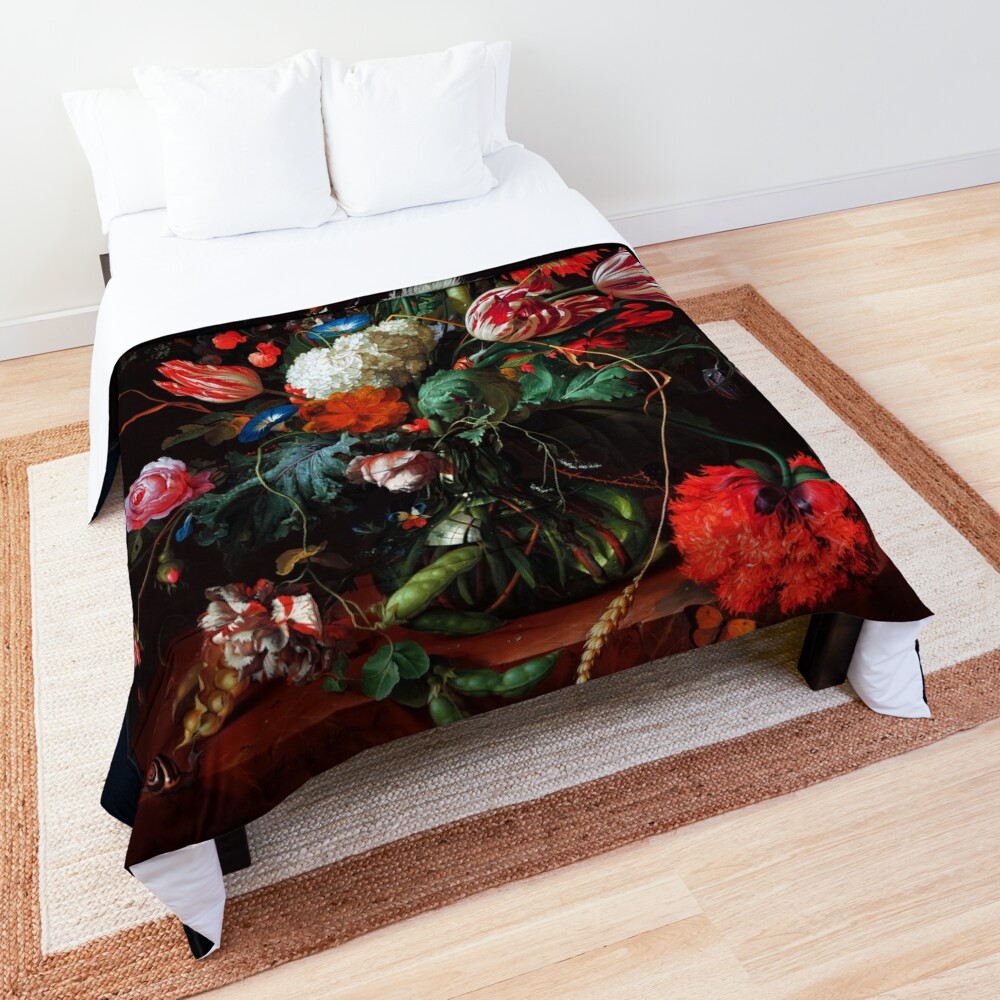
“Maljakko kukkia,” luotu vuonna 1645 by the renowned Dutch Artist Jan Davidsz koti (1606 – 1684), is an exquisite example of the flourishing genre of Dutch still life painting during the Golden Age. Known for his mastery of rendering floral arrangements, de Heem captures the complexity of nature with remarkable detail and technical skill. Maalaus, which depicts an elaborate bouquet of flowers arranged in a fine vase, is a prime representation of the Baroque period, marked by its rich textures, intricate detail, and vibrant use of color.
Sisällysluettelo
Kohde ja koostumus
The focal point of this painting is the large, overflowing vase brimming with an assortment of flowers, which include tulips, roses, peonies, and lilies, among others. De Heem’s ability to present the organic forms of the flowers with such lifelike accuracy reflects his profound understanding of botanical subjects. The flowers in the vase are placed atop a dark, wooden table, and their vivid hues contrast sharply with the deep, almost velvety background. This contrast between the colorful foreground and the dark background draws the viewer’s attention to the flowers’ delicate textures and intricate forms.
To the left of the bouquet, a butterfly flutters above the arrangement, symbolizing the fleeting nature of life, a common theme in Dutch vanitas still life paintings. The butterfly, along with a few insects delicately perched on the petals, adds an element of life to the otherwise serene and static composition. At the lower section of the vase, an assortment of foliage and fruits can be seen spilling over the edge, further emphasizing the opulence and abundance of nature. The way de Heem captures the subtle translucency of the rose petals and the texture of the velvety leaves demonstrates his technical expertise.
Esineet ja symboliikka
The flowers themselves carry layers of symbolic meaning, typical of the period. Tulips, esimerkiksi, were highly prized in the Netherlands during the 17th century, especially during the “Tulip Mania” period, when tulips were considered symbols of wealth and status. The roses and peonies in the bouquet also carry their own symbolism, often associated with love, kauneus, and transience, reinforcing the vanitas theme. The inclusion of fruit and other organic elements serves as a reminder of the cycle of life, kasvu, decay, and death. This combination of luxurious flowers and decaying fruits creates a tension between beauty and the inevitability of mortality, a hallmark of Baroque still life painting.
Maasto ja ympäristö
The flowers in the vase are set against a dark, almost ethereal background, which was a typical technique of Dutch Baroque artists. This dark background, kutsutaan usein nimellä “chiaroscuro,” allows the flowers to stand out in sharp relief, highlighting their vibrant colors and soft textures. The table upon which the vase sits is rendered with remarkable precision, its woodgrain suggesting a sense of stability, grounding the otherwise ethereal beauty of the flowers.
There is a sense of depth in the composition, as the flowers in the foreground appear to spill out of the vase and into the lower part of the painting, with some petals resting on the table’s surface. The background remains a shadowy void, further enhancing the sense of depth and focusing the viewer’s attention entirely on the floral arrangement.
Materiaalit ja tekniikat
Jan Davidsz de Heem was known for his meticulous attention to detail and his ability to render textures with incredible realism. The painting is executed in oil, a medium that allowed him to achieve the rich, luminous quality of the flowers and the subtle gradations of light and shadow. The artist’s use of oil paints enabled him to create delicate layers of color that brought a three-dimensionality to the flowers, making them appear almost tangible. The soft gradients on the petals, the fine details of the veins in the leaves, and the shimmer of light on the dewdrops reflect his thorough understanding of light, rakenne, and materiality.
Tausta, which is painted in deep, almost black tones, creates a striking contrast against the flowers and enhances their brightness. This technique draws attention to the vase’s intricate floral display and emphasizes the symbolism of nature’s beauty amid the darkness of mortality. De Heem’s use of light, varjo, and color is masterful, resulting in a work that seems to glow with vitality, yet carries an underlying sense of impermanence.
Tyyli, Teema, ja mieliala
“Maljakko kukkia” is quintessentially Baroque in style, with its emphasis on detail, rich textures, and the use of chiaroscuro to create dramatic contrast. The opulence of the flowers and the meticulous care with which they are painted speak to the wealth and sophistication of the period, while the symbolic elements suggest deeper reflections on the fleeting nature of life. The mood of the painting is both celebratory and contemplative, evoking awe at the beauty of nature while reminding the viewer of the transience of life.
The Baroque style, with its emotional intensity and attention to minute details, was particularly well-suited to the still life genre, allowing artists like de Heem to explore the interplay of life and death, beauty and decay. Sisään “Maljakko kukkia,” de Heem successfully combines naturalistic representation with a poignant philosophical commentary, a hallmark of the Baroque era’s fascination with both the splendor and fragility of existence.
Johtopäätös
Lopuksi, “Maljakko kukkia” by Jan Davidsz de Heem is a stunning example of Dutch Baroque still life painting. Through his masterful technique and careful selection of flowers, fruits, and symbolic elements, de Heem captures not only the exquisite beauty of nature but also the deeper philosophical reflections on life and death. The painting is both a feast for the eyes and a meditation on the passage of time, inviting the viewer to marvel at the fleeting beauty of life while contemplating its inevitable end.
Tämä on remasteroitu digitaalisen taiteen vanhojen mestareiden kopio julkisessa käytössä olevasta kuvasta, joka on saatavilla a kanvastulostus verkossa.
Taiteilijabio
Alla johdettu Wikipedia.org
Jan syntyi David de Heem vanhemmalle (1570 – 1631), ja opiskeli ensin isänsä kanssa ennen opiskelua hollantilaisen kultakauden asetelmamaalari Balthasar van der Astin johdolla (1593-94 – 1657); sitten sisään 1629 iässä 23 opiskeli hollantilaisen kultakauden taidemaalari David Baillyn johdolla (1584 – 1657).
Kun hän oli 29 hän muutti Etelä-Alankomaihin ja liittyi Guild of Saint Luke porvariin (ylemmän keskiluokan yksilö) siitä kaupungista 1637.
Sitä pidetään usein yhtenä aikansa suurimmista maalareista, hänellä oli aina suuri kysyntä ja hänelle maksettiin hyvin Hollannin kultakauden aikana tuottamastaan taideteoksesta.