

Vase of Flowers c1722
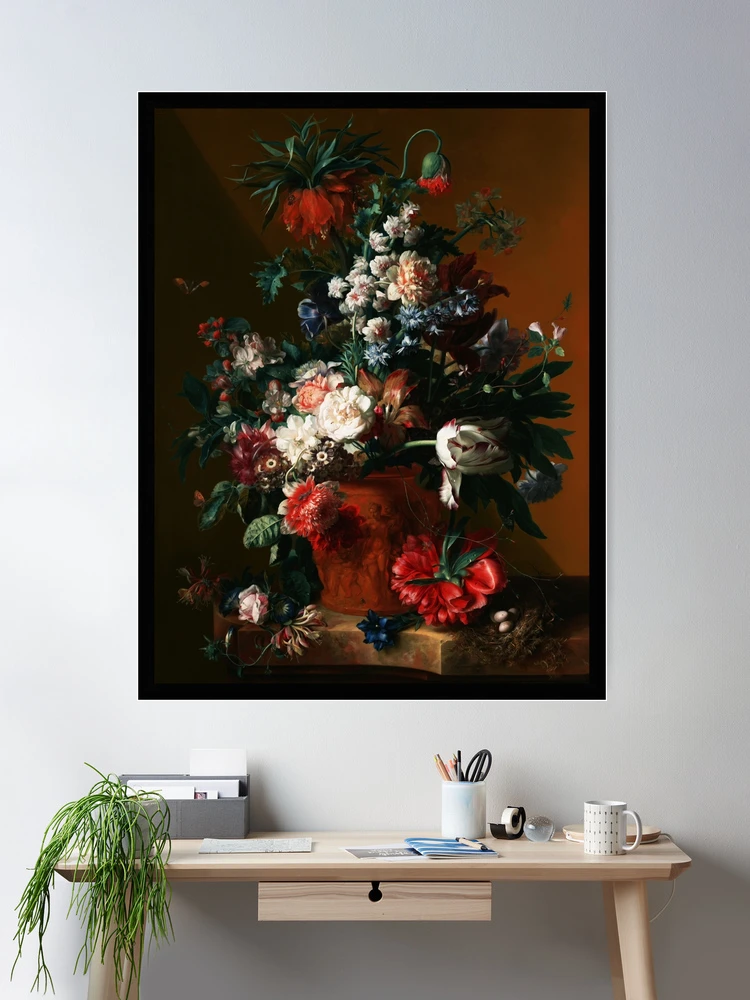
“Vase of Flowers” is a masterpiece of Dutch still life painting created in 1722 by Jan van Huysum (1682 – 1749). Known for his extraordinary skill in capturing the intricate beauty of flowers, van Huysum’s work transports the viewer into a world of lavish naturalism. This painting is a quintessential example of the flourishing Dutch golden age of still life art, celebrated for its meticulous attention to detail, rich color palette, and the celebration of nature’s fleeting beauty. The depiction of flowers, with their delicate textures, varied hues, and sumptuous arrangement, reveals van Huysum’s profound expertise in rendering the natural world with striking precision and vibrancy.
Enhavtabelo
La Ĉefa Temo: A Bountiful Floral Arrangement
At the heart of this painting stands an abundant arrangement of flowers, each carefully selected for their visual and symbolic significance. The central focus of the composition is a large, elaborately decorated vase, brimming with a myriad of blooms. La vazo, adorned with classical motifs, becomes an elegant vessel for the exuberant display of nature’s finest flowers.
The flowers are arranged in a masterful composition that captures their lively yet delicate presence. The painter’s exceptional skill is evident in the vibrant colors and the precise rendering of the individual petals, leaves, and stems. Each flower is presented as if it has just been picked from a garden in full bloom, exuding a sense of freshness and vitality.
The flowers featured include a variety of tulips, carnations, lilies, and roses, each representing different meanings within the language of flowers, which was a popular tradition in Dutch art during the 17th and 18th centuries. The bold red tulips at the foreground capture immediate attention, their vivid color contrasting against the softer tones of the other flowers.
The delicate white roses, which appear to be gently folding into themselves, convey a sense of purity and fragility. The lilies, often symbolic of grace and beauty, add a refined elegance to the composition, while the rich shades of purple and yellow carnations suggest an appreciation of both beauty and affection.
The inclusion of smaller details, such as butterflies fluttering through the composition and a small snail positioned near the bottom of the vase, highlights van Huysum’s keen observational skills and his deep interest in the natural world. These elements serve to enrich the work, creating a sense of movement and life that brings the still life to life.
The Vase: A Classical Touch
The vase in “Vase of Flowers” is not merely a functional object but rather an integral part of the composition. It is intricately designed, showcasing the classical motifs popular during the Baroque period. The vessel itself is decorated with a rich, earthy terracotta color, which contrasts beautifully with the lush tones of the flowers. The craftsmanship of the vase suggests a high level of attention to detail and speaks to the luxurious nature of the painting. Its classical shape and design elevate the entire piece, emphasizing the importance of the vase as both a container and a symbol of human achievement in the arts.
The vase’s ornate decoration, featuring sculpted figures and bas-reliefs, invokes a sense of grandeur and sophistication. It is evident that the artist was deeply influenced by classical antiquity, a theme that was frequently revisited by Dutch still life painters in the 17th and 18th centuries. The vase’s presence anchors the floral arrangement, lending the painting a sense of balance and symmetry.
The Background and Light: Creating Depth and Focus
The background of the painting is a warm, soft gradient of ochre and amber tones, which serves as the perfect backdrop to highlight the vivid colors of the flowers. The light in this composition plays a crucial role in guiding the viewer’s eye towards the vase and its flourishing contents.
La mola, diffused light that illuminates the flowers creates subtle shadows, enhancing their texture and giving the piece a sense of depth. The way the light interacts with the surfaces of the petals and leaves suggests the fleeting nature of the flowers’ beauty, a theme often explored in still life paintings of this period.
Van Huysum’s ability to capture the play of light and shadow, particularly how it emphasizes the three-dimensionality of the flowers and vase, adds an almost lifelike quality to the painting. This technique is characteristic of van Huysum’s style, demonstrating his mastery of the light-dark contrast that brings a sense of realism and richness to the composition.
La Humoro: A Celebration of Nature’s Beauty
La humoro de “Vase of Flowers” is one of both serenity and exuberance. The arrangement of flowers suggests a harmonious balance between nature’s beauty and human artistry. La floroj, while delicate, are rendered with such attention to detail that they appear almost tangible, allowing the viewer to feel as though they could reach out and touch their soft petals. The mood is peaceful, with a sense of quiet contemplation evoked by the flowers’ tranquil beauty.
Samtempe, there is an exuberance in the arrangement’s vibrancy, a sense of celebration that speaks to the wealth and prosperity of the Dutch Golden Age. The lavishness of the flowers, combined with the opulent vessel, conveys a sense of abundance and luxury. There is a clear reverence for nature in this work, as the artist invites the viewer to pause and appreciate the beauty that surrounds us, no matter how fleeting or transient.
The Legacy of Jan van Huysum
Jan Van Huysum “Vase of Flowers” stands as a testament to the artist’s unparalleled skill and his ability to infuse life into inanimate objects. As one of the leading flower painters of the 18th century, van Huysum’s work is celebrated for its technical brilliance and the joy it brings to those who view it. His careful selection of flowers, his attention to detail, and his ability to create a rich, textured composition all contribute to the lasting impact of this painting.
The work reflects the Baroque obsession with opulence and the appreciation of nature’s fleeting beauty. Van Huysum’s ability to freeze a moment in time through his art gives the viewer a chance to appreciate the ephemeral nature of life, a theme that resonates deeply in the context of the 18th century Dutch society, where wealth, Potenco, and the natural world were constantly admired and celebrated.
Ĉi tio estas retuŝita cifereca arta reproduktaĵo de publika domajna bildo.
Artisto Bio derivita de Vikipedio.org kaj Britannica.com
Jan van Huysum estis la plej aĝa filo de nederlanda ora aĝa floro -pentristo Justus Van Huysum (1659 – 1716), kaj venis de familio de artisto.
Lia pli juna frato, kiu mortis en la aĝo de 22 estis ankaŭ plenumebla pentristo kiel estis lia fratino Maria; kaj lia filino Francina Margaretha van Huysum (1707 – 1789) estis ankaŭ floro -pentristo.
Jan studis sub la mentoreco de sia patro kaj estas lerta evoluinta poste superus la kapablojn de sia patro.
Lia specialaĵo estis en la pentraĵo de delikataj floroj, ke li kreis kun ekstrema precizeco kaj delikateco.
He was also a landscape painter, but his unmatched skill in painting lavish floral arrangements is what he is known for and what separated him from others is this genre.