

Vase of Flowers c1722
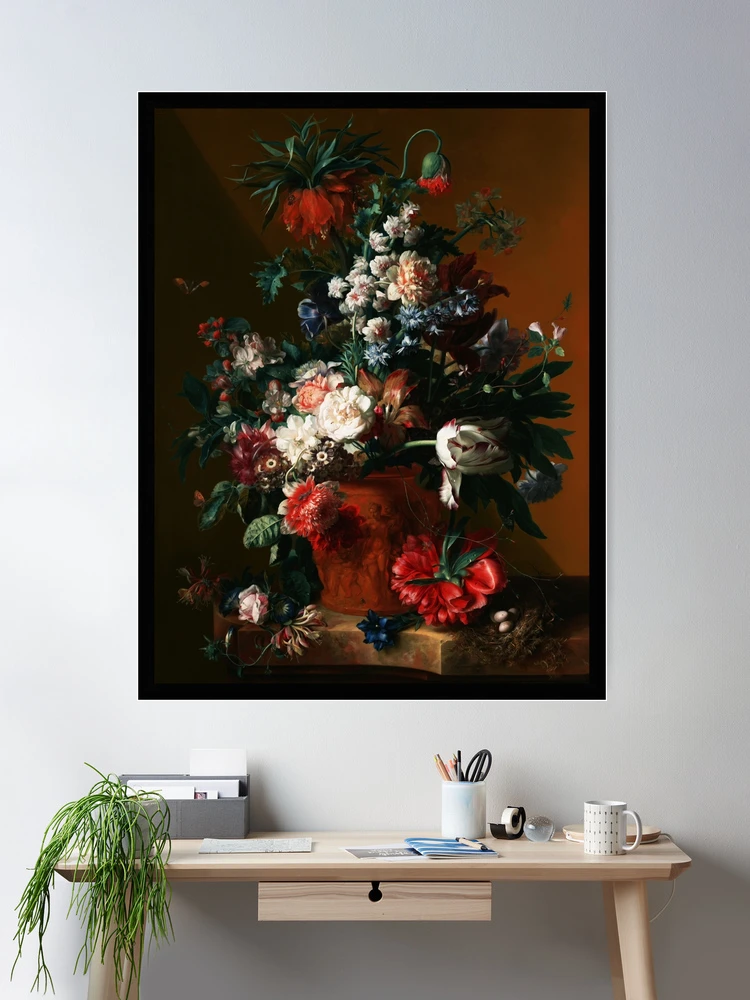
“Vase of Flowers” is a masterpiece of Dutch still life painting created in 1722 by Jan van Huysum (1682 – 1749). Known for his extraordinary skill in capturing the intricate beauty of flowers, van Huysum’s work transports the viewer into a world of lavish naturalism. This painting is a quintessential example of the flourishing Dutch golden age of still life art, celebrated for its meticulous attention to detail, räich Faarfpalette, and the celebration of nature’s fleeting beauty. The depiction of flowers, with their delicate textures, varied hues, and sumptuous arrangement, reveals van Huysum’s profound expertise in rendering the natural world with striking precision and vibrancy.
Inhaltsverzeechnes
D'Haaptthema: A Bountiful Blummenarrangement
Am Häerz vun dësem Bild steet eng reichend Arrangement vu Blummen, all suergfälteg ausgewielt fir hir visuell a symbolesch Bedeitung. Den zentrale Fokus vun der Zesummesetzung ass eng grouss, extensiv dekoréiert Vase, voll mat enger Onmass vu Blummen. D'Vase, mat klassesche Motiver dekoréiert, gëtt en elegant Schëff fir déi exuberant Ausstellung vun de schéinste Blummen vun der Natur.
D'Blummen sinn an enger meesterlecher Kompositioun arrangéiert déi hir lieweg awer delikat Präsenz erfaasst. The painter’s exceptional skill is evident in the vibrant colors and the precise rendering of the individual petals, Baach, and stems. Each flower is presented as if it has just been picked from a garden in full bloom, exuding a sense of freshness and vitality.
The flowers featured include a variety of tulips, carnations, lilies, and roses, each representing different meanings within the language of flowers, which was a popular tradition in Dutch art during the 17th and 18th centuries. The bold red tulips at the foreground capture immediate attention, their vivid color contrasting against the softer tones of the other flowers.
The delicate white roses, which appear to be gently folding into themselves, convey a sense of purity and fragility. The lilies, often symbolic of grace and beauty, fügen eng raffinéiert Eleganz un d'Kompositioun, während déi räich Nuancen vu purpurroude a gieler Nelken eng Unerkennung vu Schéinheet an Häerzenheet proposéieren.
D'Inklusioun vu méi klengen Detailer, wéi Päiperleken, déi duerch d'Zesummesetzung flappen an e klenge Schleeke, deen no ënnen vun der Vase positionéiert ass, beliicht dem Van Huysum seng begeeschtert Observatiounsfäegkeeten a säin déiwe Interesse an der natierlecher Welt. Dës Elementer déngen der Aarbecht ze beräicheren, e Gefill vu Beweegung a Liewen ze kreéieren dat de Stilleben zum Liewen bréngt.
D'Vase: E klassesche Touch
D'Vase an “Vase of Flowers” ass net nëmmen e funktionnellen Objet, mee éischter en integralen Deel vun der Zesummesetzung. Et ass komplizéiert entworf, déi klassesch Motiver déi an der Barockzäit populär waren. D'Schëff selwer ass mat engem Räich dekoréiert, äerdeg Terracotta Faarf, which contrasts beautifully with the lush tones of the flowers. The craftsmanship of the vase suggests a high level of attention to detail and speaks to the luxurious nature of the painting. Its classical shape and design elevate the entire piece, emphasizing the importance of the vase as both a container and a symbol of human achievement in the arts.
The vase’s ornate decoration, featuring sculpted figures and bas-reliefs, invokes a sense of grandeur and sophistication. It is evident that the artist was deeply influenced by classical antiquity, a theme that was frequently revisited by Dutch still life painters in the 17th and 18th centuries. The vase’s presence anchors the floral arrangement, lending the painting a sense of balance and symmetry.
Den Hannergrond a Liicht: Schafen Déift a Focus
The background of the painting is a warm, soft gradient of ochre and amber tones, which serves as the perfect backdrop to highlight the vivid colors of the flowers. The light in this composition plays a crucial role in guiding the viewer’s eye towards the vase and its flourishing contents.
Der mëller, diffused light that illuminates the flowers creates subtle shadows, enhancing their texture and giving the piece a sense of depth. The way the light interacts with the surfaces of the petals and leaves suggests the fleeting nature of the flowers’ beauty, a theme often explored in still life paintings of this period.
Van Huysum’s ability to capture the play of light and shadow, particularly how it emphasizes the three-dimensionality of the flowers and vase, adds an almost lifelike quality to the painting. This technique is characteristic of van Huysum’s style, demonstrating his mastery of the light-dark contrast that brings a sense of realism and richness to the composition.
D'Stëmmung: Eng Feier vun der Schéinheet vun der Natur
D'Stëmmung vum “Vase of Flowers” is one of both serenity and exuberance. The arrangement of flowers suggests a harmonious balance between nature’s beauty and human artistry. D'Blummen, while delicate, are rendered with such attention to detail that they appear almost tangible, allowing the viewer to feel as though they could reach out and touch their soft petals. The mood is peaceful, with a sense of quiet contemplation evoked by the flowers’ tranquil beauty.
Gläichzäiteg, there is an exuberance in the arrangement’s vibrancy, a sense of celebration that speaks to the wealth and prosperity of the Dutch Golden Age. The lavishness of the flowers, combined with the opulent vessel, conveys a sense of abundance and luxury. There is a clear reverence for nature in this work, as the artist invites the viewer to pause and appreciate the beauty that surrounds us, no matter how fleeting or transient.
The Legacy of Jan van Huysum
Jan van Huysum’s “Vase of Flowers” stands as a testament to the artist’s unparalleled skill and his ability to infuse life into inanimate objects. As one of the leading flower painters of the 18th century, van Huysum’s work is celebrated for its technical brilliance and the joy it brings to those who view it. His careful selection of flowers, his attention to detail, and his ability to create a rich, textured composition all contribute to the lasting impact of this painting.
The work reflects the Baroque obsession with opulence and the appreciation of nature’s fleeting beauty. Van Huysum’s ability to freeze a moment in time through his art gives the viewer a chance to appreciate the ephemeral nature of life, a theme that resonates deeply in the context of the 18th century Dutch society, where wealth, Kraaftbeldscht, and the natural world were constantly admired and celebrated.
Dëst ass eng retouchéiert digital Konschtreproduktioun vun engem Public Domain Bild.
Kënschtler Bio ofgeleet vun Wikipedia.org an Britannica.com
Jan van Huysum was the eldest son of Dutch Golden Age flower painter Justus van Huysum (1659 – 1716), and came from a family of artist.
His younger brother who died at the age of 22 was also an accomplished painter as was his sister Maria; and his daughter Francina Margaretha van Huysum (1707 – 1789) was also a flower painter.
De Jan huet ënner der Mentorschaft vu sengem Papp studéiert an ass qualifizéiert entwéckelt wäert spéider d'Fäegkeete vu sengem Papp iwwertreffen.
Seng Spezialitéit war an der Molerei vun iwwerflësseg Blummen Arrangementer, déi hien mat extremer Präzisioun an Delikatesse erstallt huet.
He was also a landscape painter, awer seng oniwwertraff Fäegkeet fir iwwerflësseg Blummenarrangementer ze molen ass wat hien bekannt ass a wat hien vun aneren getrennt ass dëse Genre.