

Venus air na tonnan
Venus air na tonnan: Rococo Dreamscape
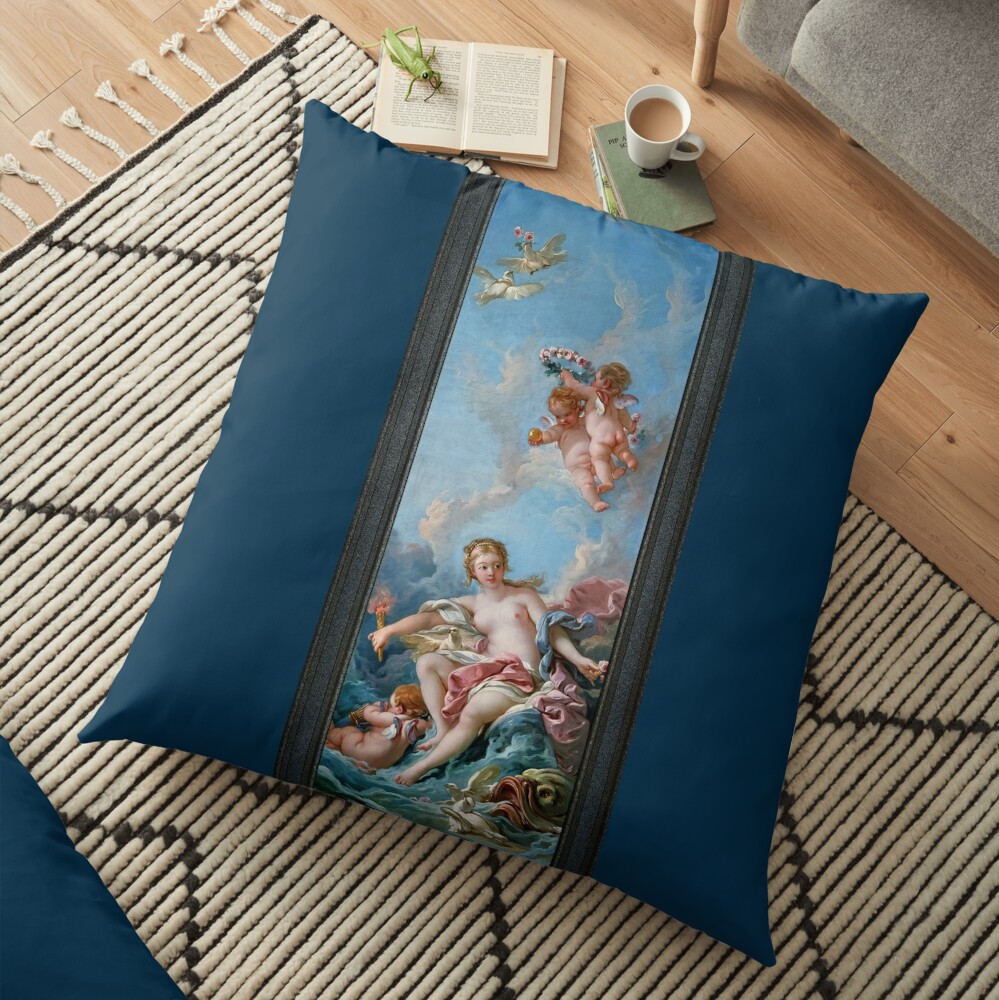
Francois Boucher's (1703 – 1770) “Venus air na tonnan," air a pheantadh mun cuairt 1769, mar eisimpleir den stoidhle Rococo iongantach a bha soirbheachail san Fhraing ann am meadhan an 18mh linn. Tha an dealbh cruth dìreach seo, na theisteanas air maighstireachd Boucher air dath agus sgrìobhadh, a 'sealltainn a' bhan-dia Ròmanach Venus, no Aphrodite mar a tha i aithnichte ann am miotas-eòlas Grèigeach, a’ tighinn a-mach às a’ mhuir am measg sealladh farsaing de sgòthan, cheruban, agus suaicheantais mara. Chaidh an obair a bharantachadh le Madame de Pompadour, Bana-mhaighstir buadhach Louis XV, a’ nochdadh blas na h-ùine airson cuspairean miotasach air an toirt seachad le eireachdas agus mothachadh.
Clàr-innse
Eileamaidean gu lèirsinneach & Neo-làthaireachd aithris
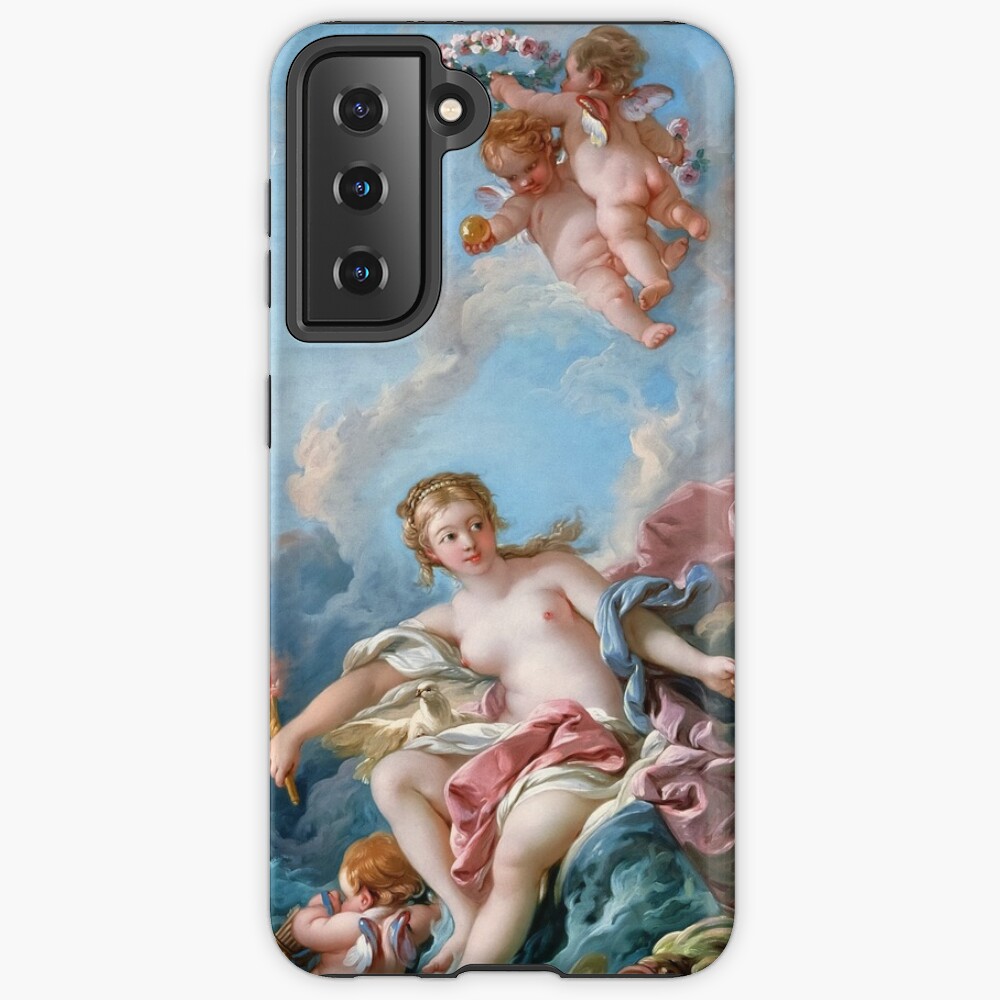
Tha an riochdachadh air a stiùireadh gu dìreach, a’ tarraing sùil an neach-coimhead suas bhon chuan bhuaireasach a dh’ionnsaigh na rìoghachd nèamhaidh gu h-àrd. Tha Venus ann an suidheachadh meadhanach, na shuidhe air structar coltach ri sligean a tha ag èirigh bho na tuinn. Tha i a’ coimhead sàmhach agus sgrìobhte, bha an sealladh aice beagan sìos, mar gum biodh e ag aithneachadh an t-seallaidh mun cuairt ach gun a bhith a’ gabhail pàirt ann. Tha am pàirt as ìsle den dealbh air a riaghladh leis a’ chuan maistreadh, air a thoirt seachad le paileas de blues is uaine, air a phuingeachadh le whitecaps a’ moladh gluasad agus lùth. Os cionn Venus, tha speur siùbhlach làn sgòthan a’ toirt cùl-raon dha grunn dhaoine cherubic a tha an sàs ann an gnìomhachd spòrsail.
Cherubs & Mion-fhiosrachadh samhlachail
Bidh grunn cheruban a’ cruinneachadh an t-seallaidh, gach fear a’ cur ri faireachdainn iomlan an t-solais agus an gràs. Bidh aon cherub a 'seòladh os cionn Venus, a’ sgapadh peatalan ròs – samhla traidiseanta de ghaol is de bhòidhchead co-cheangailte ris a’ bhan-dia. Tha buidheann eile de cheruban air a dhealbhadh a 'fighe garland, a’ cur blas de sheun aoghaireil ris a’ cho-sgrìobhadh. Bidh putto sgiathach ag itealaich os an cionn a’ giùlan bouquet de fhlùraichean, a’ neartachadh cuspair a’ ghràidh agus an t-subhachais tuilleadh. Chan e dìreach sgeadachadh a th’ anns an t-slige air a bheil Venus na shuidhe; tha e na riochdachadh samhlachail air a breith bhon chuan mara - uirsgeul bunaiteach ann am miotas-eòlas clasaigeach.
Stoidhle Rococo Boucher: Dath & Teicneòlas
Tha stoidhle ealanta Boucher aithnichte sa bhad tro bhith a’ cleachdadh bog, dathan pastel agus bruisean fìnealta. Chan eil loidhnichean biorach no eadar-dhealachaidhean iongantach anns an dealbh; an àite sin, tha e an urra ri ìrean dathach seòlta gus faireachdainn de bhòidhchead ethereal a chruthachadh. Tha an dòigh-obrach aige a’ cur cuideam air fluidity agus gluasad, gu sònraichte follaiseach ann an dealbh nan tonn agus nan sgòthan. Tha maighstireachd Boucher air solais cuideachd follaiseach - tha coltas gu bheil Venus air a bhualadh ann am bog, glow sgaoilte a chuireas ri a càileachd aotrom. Is e a’ bhuaidh iomlan aon de shàmhchair bruadar, feart de dh’ ealain Rococo an tòir air toileachas agus teicheadh.
Co-theacs & Cudromach Eachdraidheil
Chaidh “Venus on the Waves” a chruthachadh aig àm nuair a bha cuspairean miotasach gu math fasanta am measg uaislean na Frainge. Tha mìneachadh Boucher air Venus a’ falbh bho dhealbhan na bu thràithe a chuir cuideam air a cumhachd no a h-ùghdarras; an àite sin, tha e ga taisbeanadh mar sgeadachadh maise, gràs, agus mothachadh - feartan a tha measail air cùirt Louis XV. Tha an dealbh a’ nochdadh mar a ghluais àm Rococo air falbh bho mhòrachd a’ Bharoc gu stoidhle nas dlùithe agus nas sgeadaiche.. Bha e a’ frithealadh chan ann a-mhàin mar obair ealain ach cuideachd mar shamhla air blas ath-leasaichte agus taic uaislean.
Mion-sgrùdadh air suidheachadh Venus & Briseadh
Tha Venus air a shealltainn ann an socair, suidheachadh cha mhòr lag. Bidh a corp a 'lùbadh gu socair, a 'moladh an dà chuid bog agus spionnadh. Tha i a’ cumail aon lòchran gu h-àrd, a lasair a' tilgeadh deàrrsadh blàth air a h-aghaidh agus a làmhan. Tha cuideam samhlachail air an lòchran fhèin; tha e a’ riochdachadh sradag dhiadhaidh a’ ghràidh agus na bòidhchead a tha Venus a’ gabhail a-steach. Tha an abairt aice socair agus meòrachail, a’ toirt faireachdainn de shìth a-staigh agus dealachadh bhon ghnìomhachd mun cuairt. Tha an dìth faireachdainn follaiseach seo a’ cur ri faireachdainn iomlan an deilbh de shàmhchair agus de ghràs.
Palet dath & Buaidhean Atmospheric
Tha am paileas dath ann an “Venus on the Waves” fo smachd blues bog, pincain, greens, agus òr. Bidh na dathan sin a’ cur ri càileachd ethereal an deilbh agus a’ togail faireachdainn de bhlàths is solas. Bidh Boucher gu sgileil a’ cleachdadh sealladh àile - a’ toirt seachad nithean fad às le nas lugha de mhion-fhiosrachadh agus dathan nas soilleire - gus faireachdainn de dhoimhneachd agus àite a chruthachadh taobh a-staigh an t-suidheachaidh.. Bidh na sgòthan swirling agus tonnan buaireasach a’ cur spionnadh ris an t-sealladh, fhad ‘s a tha an solas bog a’ cur ris an fhaireachdainn iomlan de bhòidhchead bruadar.
Buaidh ealain & Dìleab
Thug maighstirean na bu thràithe leithid Peter Paul Rubens agus Jean-Antoine Watteau buaidh air obair Boucher, an dà chuid ainmeil airson an cuid dealbhan de chuspairean miotasach agus am maighstireachd air dath agus sgrìobhadh. Ach, Leasaich Boucher an stoidhle sònraichte aige fhèin a thàinig gu bhith co-chosmhail ri gluasad Rococo. “Venus air na tuinn” air a mheas mar aon de na h-obraichean as suaicheanta aige agus tha e air buaidh mhaireannach a thoirt air ealain an Iar, a’ brosnachadh luchd-ealain gun àireamh a bhith ag aithris a bhòidhchead agus a mhothachadh. Tha an dealbh fhathast na eisimpleir chudromach de bòidhchead Rococo agus na theisteanas air sàr-eòlaiche Boucher.
Neach-ealain bi a thàinig bho Wikipedia.org
Rugadh e ann am Paris, B ’e Boucher mac peantair nach robh cho ainmeil Nicolas Boucher, a thug dha a ’chiad trèanadh ealanta aige. Aig aois seachd bliadhna deug, chaidh am peantadh le Boucher fhaicinn leis a ’pheantair François Lemoyne. An dèidh sin chuir Lemoyne Boucher an dreuchd mar phreantas, ach às deidh dìreach trì mìosan, chaidh e a dh ’obair airson an gràbhalaiche Jean-François Cars.
Ann an 1720, bhuannaich e am mionlach Grand Prix de Rome airson peantadh, ach cha do ghabh iad an cothrom mar thoradh air sin sgrùdadh a dhèanamh san Eadailt gu còig bliadhna às deidh sin, air sgàth duilgheadasan ionmhais aig Acadamaidh Rìoghail Peantadh agus Snaidheadh.[1] Nuair a thill e bho bhith ag ionnsachadh san Eadailt chaidh a leigeil a-steach don obair-shnaighte Académie de peinture et de air 24 An t-Samhain 1731. Am pìos fàilteachaidh aige (pìos fàilteachaidh) bha a Rinaldo agus Armida de 1734.
Phòs Boucher Marie-Jeanne Buzeau a-steach 1733. Bha triùir chloinne aig a ’chàraid còmhla. Thàinig Boucher gu bhith na bhall dàimhe ann an 1734 agus luathaich a chùrsa-beatha bhon àm seo oir chaidh àrdachadh gu bhith na Àrd-ollamh aig an àm sin na Cheannard air an Acadamaidh, gu bhith na neach-sgrùdaidh aig an Royal Gobelins Manufactory agus mu dheireadh Premier Peintre du Roi (Ciad Peantair an Rìgh) a-steach 1765. Dealbh de Marie-Louise O’Murphy c. 1752
Bhàsaich Boucher air 30 A 'Chèitean 1770 ann am Paris bho thùs. Ainm, còmhla ri neach-taic Madame de Pompadour, air fàs co-cheangailte ri stoidhle Rococo na Frainge, a ’toirt air na bràithrean Goncourt sgrìobhadh: “Is e Boucher aon de na fir sin a tha a ’riochdachadh blas ceud bliadhna, a tha a ’cur an cèill, pearsanachadh agus cuir a-steach e.”
Tha Boucher ainmeil airson a bhith ag ràdh gu bheil nàdar “ro uaine agus air a lasadh gu dona” (ro uaine agus air a lasadh gu dona).
Bha Boucher co-cheangailte ris an gràbhalaiche gemstone Jacques Guay, a theagaisg e a tharraing. Thug e cuideachd taic don pheantair Moravian-Ostair Martin Ferdinand Quadal a bharrachd air a ’pheantair neoclassical Jacques-Louis David ann an 1767.[4] Nas fhaide air adhart, Rinn Boucher sreath de dhealbhan de dh ’obair le Guay a rinn Madame de Pompadour an uairsin a ghràbhaladh agus a sgaoileadh mar leabhar le ceangal eireachdail ri luchd-cùirte a b’ fheàrr leotha
Is e ath-riochdachadh ealain didseatach a th’ ann an Venus On The Waves de ìomhaigh àrainn poblach a tha ri fhaighinn mar a Clò-bhualadh roilled air-loidhne.