

Wenus na falach
Wenus na falach: A Rococo Dreamscape
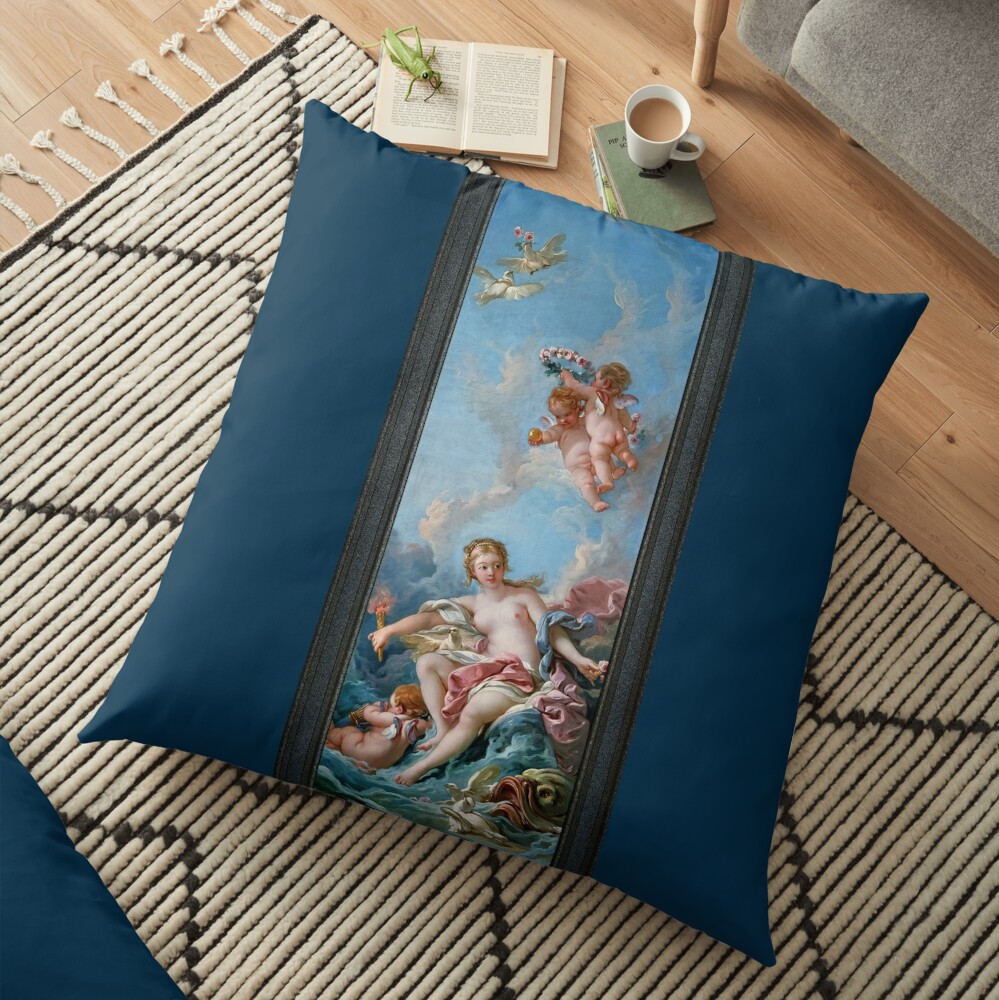
Francois Boucher'S (1703 – 1770) “Venus on the Waves,”Namalował 1769, exemplifies the quintessential Rococo style that flourished in France during the mid-18th century. This vertical format painting, a testament to Boucher’s mastery of color and composition, depicts the Roman goddess Venus, or Aphrodite as she is known in Greek mythology, emerging from the sea amidst a swirling panorama of clouds, cherubiny, and marine motifs. The work was commissioned by Madame de Pompadour, Wpływowa kochanka Ludwika XV, reflecting the era’s taste for mythological subjects rendered with elegance and sensuality.
Spis treści
Elementy kompozycyjne & Narrative Absence
The composition is vertically oriented, drawing the viewer’s eye upwards from the turbulent sea towards the celestial realm above. Venus occupies a central position, seated upon a shell-like structure that rises from the waves. She appears serene and composed, her gaze directed slightly downwards, as if acknowledging the surrounding spectacle but not actively participating in it. The lower portion of the painting is dominated by the churning ocean, rendered with a palette of blues and greens, punctuated by whitecaps suggesting movement and energy. Above Venus, a swirling sky filled with clouds provides a backdrop for several cherubic figures engaged in playful activities.
Cherubs & Symbolic Details
Several cherubs populate the scene, each contributing to the overall atmosphere of lightness and grace. One cherub floats above Venus, scattering rose petals – a traditional symbol of love and beauty associated with the goddess. Another group of cherubs is depicted weaving a garland, adding a touch of pastoral charm to the composition. A winged putto flies overhead carrying a bouquet of flowers, further reinforcing the theme of affection and celebration. The shell upon which Venus sits isn’t merely decorative; it’s a symbolic representation of her birth from the sea foam – a foundational myth in classical mythology.
Boucher’s Rococo Style: Kolor & Technika
Boucher’s artistic style is immediately recognizable through his use of soft, pastel colors and delicate brushstrokes. The painting lacks sharp lines or dramatic contrasts; Zamiast, it relies on subtle gradations of color to create a sense of ethereal beauty. His technique emphasizes fluidity and movement, particularly evident in the depiction of the waves and clouds. Boucher’s mastery of light is also apparent – Venus appears bathed in a soft, diffused glow that enhances her luminous quality. The overall effect is one of dreamy tranquility, characteristic of Rococo art’s pursuit of pleasure and escapism.
Kontekst & Historical Significance
“Venus on the Waves” was created during a period when mythological subjects were highly fashionable among the French aristocracy. Boucher’s interpretation of Venus departs from earlier depictions that emphasized her power or authority; Zamiast, he presents her as an embodiment of beauty, łaska, and sensuality – qualities prized by the court of Louis XV. The painting reflects the Rococo era’s shift away from the grandeur of the Baroque towards a more intimate and decorative style. It served not only as a work of art but also as a symbol of refined taste and aristocratic patronage.
Examination of Venus’s Pose & Wyrażenie
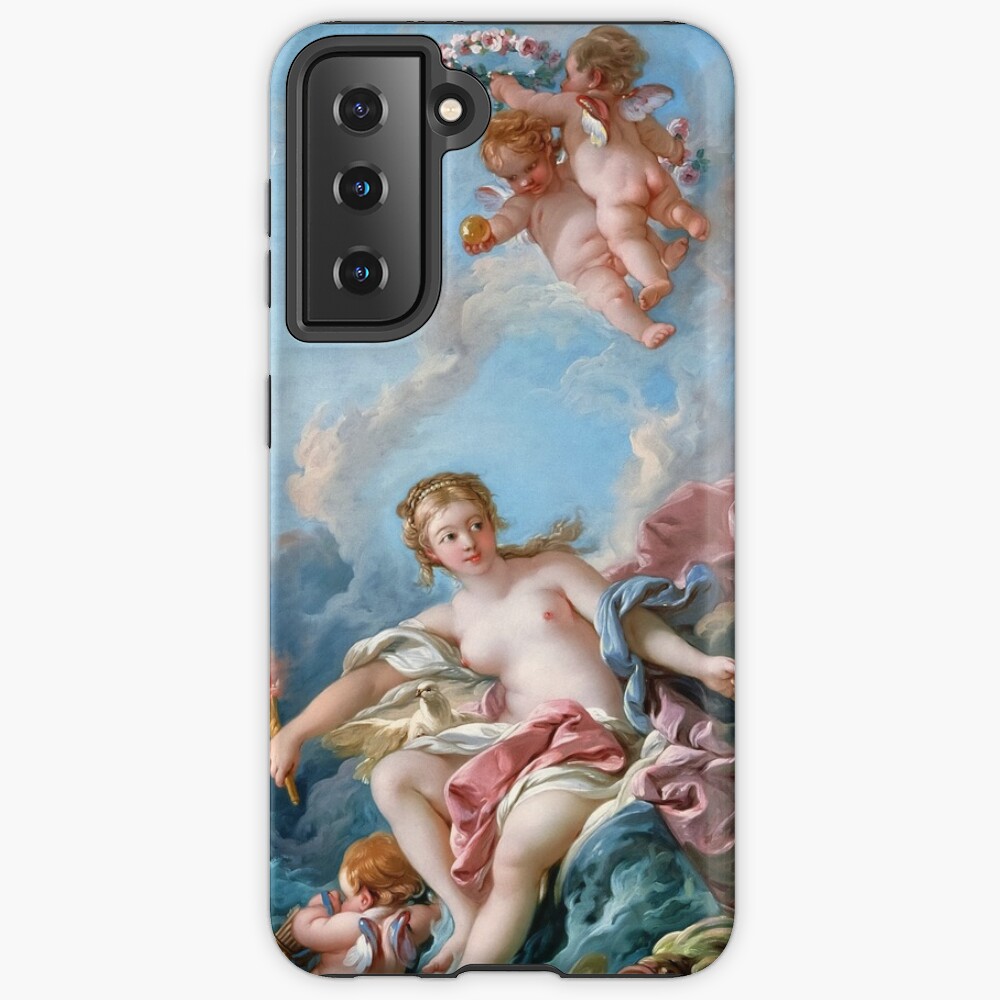
Venus is depicted in a relaxed, almost languid pose. Her body curves gently, suggesting both softness and vitality. She holds a single torch aloft, its flame casting a warm glow on her face and hands. The torch itself carries symbolic weight; it represents the divine spark of love and beauty that Venus embodies. Her expression is serene and contemplative, conveying a sense of inner peace and detachment from the surrounding activity. This lack of overt emotion contributes to the painting’s overall atmosphere of tranquility and grace.
Paleta kolorów & Efekty atmosferyczne
The color palette in “Venus on the Waves” is dominated by soft blues, róże, warzywa, i złote. These colors contribute to the painting’s ethereal quality and evoke a sense of warmth and light. Boucher skillfully uses atmospheric perspective – rendering distant objects with less detail and paler colors – to create a sense of depth and space within the composition. The swirling clouds and turbulent waves add dynamism to the scene, while the soft lighting enhances the overall feeling of dreamlike beauty.
Wpływ artystyczny & Dziedzictwo
Boucher’s work was influenced by earlier masters such as Peter Paul Rubens and Jean-Antoine Watteau, both renowned for their depictions of mythological subjects and their mastery of color and composition. jednak, Boucher developed his own unique style that became synonymous with the Rococo movement. “Venus on the Waves” is considered one of his most iconic works and has had a lasting impact on Western art, inspiring countless artists to emulate its elegance and sensuality. The painting remains an important example of Rococo aesthetics and a testament to Boucher’s artistic genius.
Bio artysty pochodzące z Wikipedia.org
Pochodzący z Paryża, Boucher był synem mniej znanego malarza Nicolasa Bouchera, który dał mu pierwszy trening artystyczny. W wieku siedemnastu lat, obraz Bouchera podziwiał malarz François Lemoyne. Lemoyne mianował później Bouchera swoim uczniem, ale już po trzech miesiącach, poszedł do pracy dla grawera Jean-François Cars.
W 1720, zdobył elitarne Grand Prix de Rome za malarstwo, ale dopiero pięć lat później skorzystał z wynikającej z tego możliwości studiowania we Włoszech, z powodu problemów finansowych w Królewskiej Akademii Malarstwa i Rzeźby.[1] Po powrocie ze studiów we Włoszech został przyjęty do zrefundowanej Académie de peinture et de sculpture na 24 listopad 1731. Jego kawałek recepcji (kawałek recepcji) był jego Rinaldo i Armida z 1734.
Boucher poślubił Marie-Jeanne Buzeau w 1733. Para miała razem troje dzieci. Boucher został członkiem wydziału w 1734 i od tego momentu jego kariera nabrała tempa, gdy został mianowany profesorem, a następnie rektorem Akademii, zostaje inspektorem w Królewskiej Manufakturze Gobelinów i wreszcie premierem Peintre du Roi (Pierwszy malarz króla) w 1765. Portret Marie-Louise O'Murphy c. 1752
Boucher zmarł dnia 30 Móc 1770 w rodzinnym Paryżu. Jego imię, wraz z tym jego patronki Madame de Pompadour, stał się synonimem francuskiego stylu rokoko, prowadząc braci Goncourt do pisania: “Boucher jest jednym z tych mężczyzn, którzy reprezentują smak stulecia, kto wyraża?, personifikować i ucieleśniać go.”
Boucher słynie z tego, że mówi, że natura jest “zbyt zielony i słabo oświetlony” (zbyt zielony i źle oświetlony).
Boucher był związany z grawerem kamieni szlachetnych Jacques Guay, kogo nauczył rysować. Był również mentorem dla morawsko-austriackiego malarza Martina Ferdinanda Quadala oraz neoklasycznego malarza Jacquesa-Louisa Davida w 1767.[4] Później, Boucher wykonał serię rysunków dzieł Guay, które Madame de Pompadour następnie wygrawerowała i rozprowadziła jako ładnie oprawiony tom wśród uprzywilejowanych dworzan
Venus On The Waves to wyretuszowana cyfrowa reprodukcja obrazu z domeny publicznej, która jest dostępna jako rolowany nadruk online.