

Victoria, Herzogin vu Kent (1786 – 1861) c1935
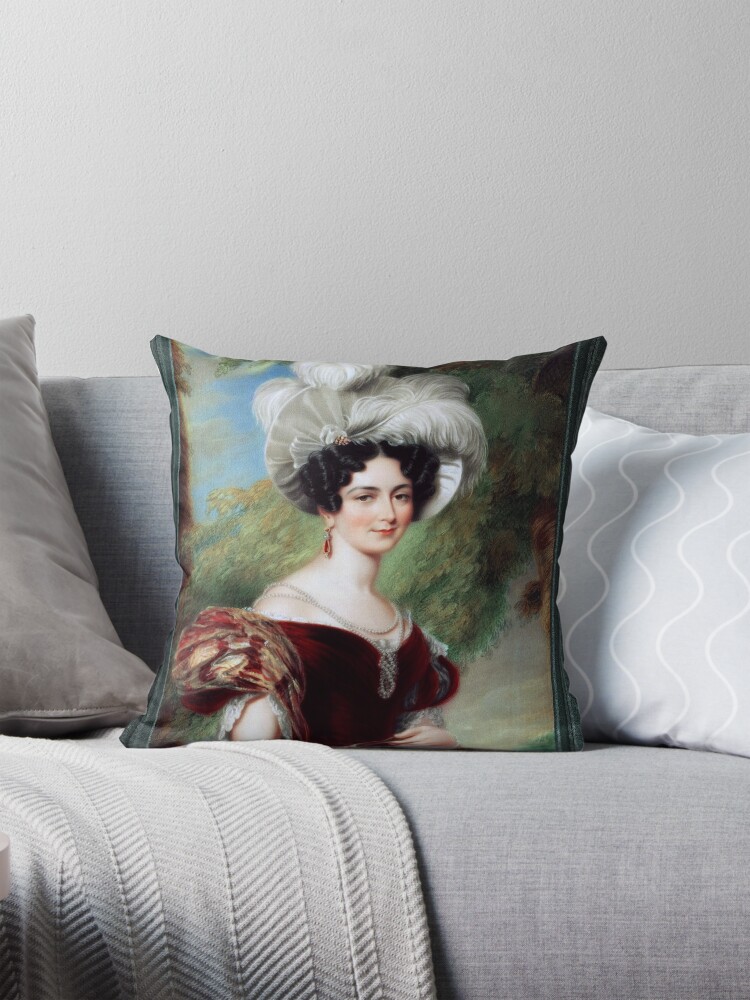
The portrait titled “Victoria, Herzogin vu Kent (1786 – 1861) c1935” was created by the British painter George Hayter (1792 – 1871) during the early 19th century, capturing the likeness of the Duchess of Kent in a dignified and regal fashion. Known for his ability to render portraits with great accuracy and lifelike quality, Hayter’s painting demonstrates his mastery in depicting not just the physical appearance of his subjects, but their character and presence as well. Painted during a pivotal time in British history, this piece serves as a historical record of the Duchess of Kent, the mother of Queen Victoria, and as an artistic reflection of the royal court’s fashion and elegance in the 19th century.
Inhaltsverzeechnes
Sujet a Kompositioun
The central figure in the portrait is Victoria, Herzogin vu Kent, whose refined countenance and noble demeanor are captured in stunning detail. The Duchess is presented in a half-length pose, wearing an elegant gown made of luxurious velvet in a rich shade of crimson. The gown features intricate folds and delicate textures that are indicative of the high-fashion styles of the period. The neckline of the gown is cut low, revealing a soft lace trim and a double row of pearls that encircle her neck, adding a touch of opulence to the overall attire. Her shoulders are draped with a lavish shawl, which flows loosely and elegantly from her arms, accentuating the royal grace and aristocratic finesse of her presence.
The Duchess’ Gesiicht, with its soft yet commanding expression, radiates both warmth and authority. Her features are finely painted with a gentle glow, accentuating her serene yet regal expression. The soft curve of her cheeks, den delikate Bogen vun hire Wenkbrauwen, and the finely detailed curls of her hair all contribute to a sense of aristocratic beauty. Hir Hoer, styled in a voluminous arrangement, is crowned with a large feathered hat, which adds a touch of drama and height, symbolizing the height of fashion and elegance in the royal circles of the time.
The Duchess’ Bijouen, including a pair of red earrings and a multi-strand pearl necklace, further elevate her status and reflect her aristocratic background. The gleaming red of the earrings adds a striking contrast to the rich colors of her gown and the serene background, drawing the viewer’s attention to the details of her ensemble.
Hannergrond a Kader
The background of the portrait features a tranquil natural setting, with soft green foliage and hints of blue sky visible through the trees. The delicate rendering of the landscape contrasts the opulence of the Duchess’ attire and creates a serene and almost dreamlike atmosphere. The natural elements in the background seem to symbolize the Duchess’ connection to both the royal household and the British land, invoking a sense of timelessness and continuity. The balance between the opulent attire and the tranquil scenery adds a sense of harmony, reinforcing the calm yet commanding presence of the Duchess.
Artisteschst Stil an Technik
George Hayter’s style is characterized by his meticulous attention to detail, which is evident in the rendering of fabrics, Bijouen, and facial expressions in the portrait. The artist’s use of light and shadow plays a significant role in bringing the Duchess to life, with soft highlights illuminating her face and gown, contrasting with deeper shadows that give the piece a sense of depth. Hayter’s technique reflects the classical approach of 19th-century portraiture, where realism was emphasized through careful observation of the human form and surroundings.
The fine details of the velvet gown, the textured shawl, and the fluidity of the Duchess’ hair are all rendered with precision, showcasing Hayter’s ability to capture the textures of fabric and the softness of the skin. The careful brushwork on the background foliage adds depth and realism, enhancing the portrait’s three-dimensionality. D'Inklusioun vun esou Hannergrond Detailer suggeréiert eng Verbindung tëscht dem Sujet an hirem Ëmfeld, weider ënnersträicht d'Herzogin’ Verwuerzelt an hirem kinnekleche Kontext.
Thema a Stëmmung
De Portrait erfaasst en Thema vun der kinneklecher Eleganz an der Dignitéit. D'Herzogin vu Kent, als Mamm vun der zukünfteg Queen Victoria, ass mat engem Sënn vu roueger Kraaft a Gnod duergestallt. Hire rouegen Ausdrock a geprägte Haltung reflektéieren hiren aristokratesche Status an hir Roll an der kinneklecher Famill. Et gëtt eng Loft vun Adel an hirer Porträt, vermëttelt net nëmmen de Status vun hirer Positioun, mee och d'Verantwortung déi domat komm ass. D'Stëmmung vum Konschtwierk ass eng vu Rou a komponéierter Eleganz, mat engem subtile Ënnerstroum vu Kraaft vermëttelt duerch hir ausgeglach Ausdrock a regal Kleedung.
D'Stëmmung ass och eng vun Reflexioun, as the portrait seems to capture a moment frozen in time. Der mëller, luminous colors of the gown, the gentle light that falls on her face, and the peaceful background suggest an atmosphere of introspection, as though the Duchess is contemplating the future of her family and her role within the monarchy. This sense of poised reflection adds a layer of emotional depth to the work, making it more than just a visual representation of her physical appearance but also an exploration of her inner dignity and strength.
Materialien an Techniken
The medium used for this portrait appears to be oil on canvas, a common medium for royal portraiture in the 19th century. The smooth texture of the canvas allows Hayter to achieve a high level of detail in both the clothing and facial features of the Duchess. D'Schichten vun Uelegfaarwen ass evident an der Tiefe vun de Faarwen, besonnesch am Samettekleed an der subtiler Modelléierung vun der Herzogin’ Gesiicht. Dem Kënschtler seng delikat Notzung vu Glasuren füügt e Gefill vu Liichtkraaft un d'Bild, d'realistesch Bildung vum Thema ze verbesseren.
Conclusioun
“Victoria, Herzogin vu Kent (1786 – 1861)” vum George Hayter ass e wonnerschéint Beispill vu kinneklechen Portraiten aus dem 19, souwuel déi kierperlech Ähnlechkeet wéi och déi würdeg Präsenz vun enger vun de prominentste kinnekleche Figuren a Groussbritannien erfaassen. De Kënschtler seng kompetent Notzung vu Liicht a Schied, Opmierksamkeet op Stoff Texturen, an déi harmonesch Kombinatioun vu kinneklechen Kleedung a rouegem natierlechen Ëmfeld dréit all zu der zäitloser Qualitéit vum Portrait bäi. D'Herzogin vu Kent ass net nëmmen als Fra vu Schéinheet a Gnod duergestallt, awer och als Figur vu Kraaft an Afloss, reflektéiert hir Roll als Mamm vun der Kinnigin Victoria an hir Plaz an der breeder narrativ vun der britescher Geschicht.
Dëst ass eng retouchéiert digital Konscht al Meeschterreproduktioun vun engem ëffentleche Domain Bild.
Kënschtler Bio Ugedriwwe Wikipedia.org
Den George Hayter war de Jong vum Charles Hayter (1761 – 1835), e Miniaturmoler a populäre Zeechemeeschter a Perspektivprofesser, deen als Professer fir Perspektiv an Zeechnen der Prinzessin Charlotte ernannt gouf an eng bekannte Aféierung an d'Perspektiv an aner Wierker publizéiert huet.
Am Ufank vu sengem Papp geléiert, hien ass fréi an d'Royal Academy Schools gaangen 1808, awer am selwechte Joer, no engem Desaccord iwwer seng Konschtstudien, fortgelaf op d'Mier als Midshipman an der Royal Navy. Säi Papp huet seng Verëffentlechung geséchert, and they came to an agreement that Hayter should assist him while pursuing his own studies.
At the Royal Academy Schools he studied under Fuseli, an an 1815 was appointed Painter of Miniatures and Portraits by Princess Charlotte. Hayter was awarded the British Institution’s premium for history painting for the Prophet Ezra (1815; Downton Castle), purchased by Richard Payne Knight.