

Victoria, Duquesa de Kent (1786 – 1861) c1935
O retrato intitulado “Victoria, Duquesa de Kent (1786 – 1861) c1935” foi criado pelo pintor britânico George Hayter (1792 – 1871) durante o início do século XIX, capturando a imagem da Duquesa de Kent de uma forma digna e majestosa. Conhecido por sua capacidade de renderizar retratos com grande precisão e qualidade realista, A pintura de Hayter demonstra seu domínio em retratar não apenas a aparência física de seus temas, mas seu caráter e presença também. Pintado durante um momento crucial na história britânica, esta peça serve como um registro histórico da Duquesa de Kent, a mãe da rainha Vitória, e como um reflexo artístico da moda e elegância da corte real no século XIX.
Índice
Sujeito e composição
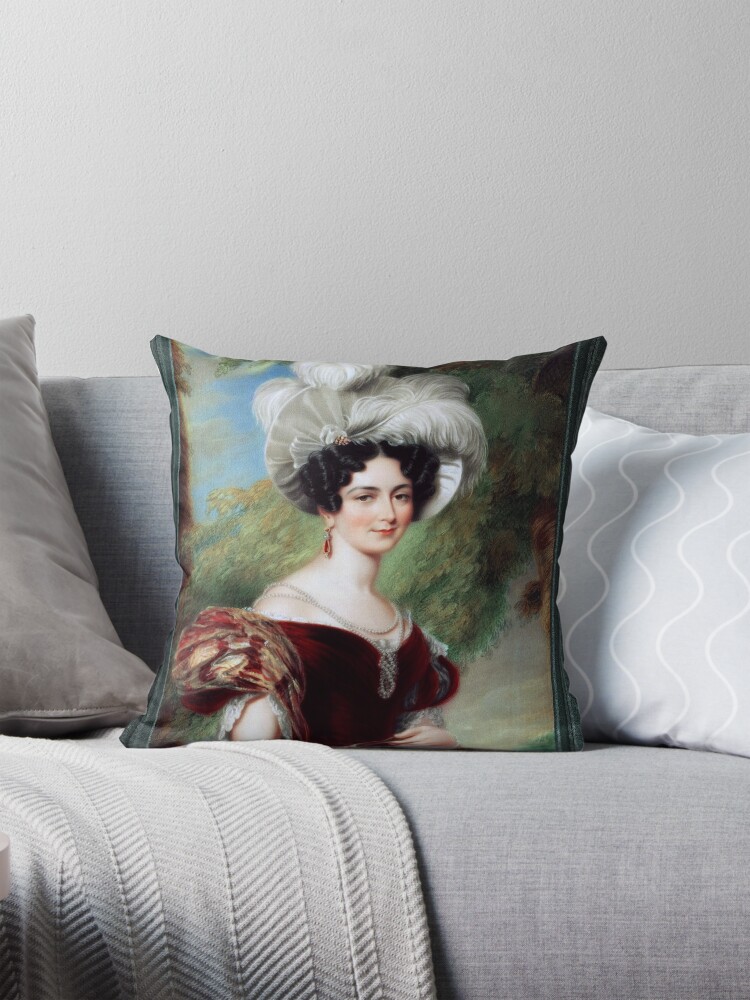
The central figure in the portrait is Victoria, Duquesa de Kent, whose refined countenance and noble demeanor are captured in stunning detail. The Duchess is presented in a half-length pose, wearing an elegant gown made of luxurious velvet in a rich shade of crimson. The gown features intricate folds and delicate textures that are indicative of the high-fashion styles of the period. The neckline of the gown is cut low, revealing a soft lace trim and a double row of pearls that encircle her neck, adding a touch of opulence to the overall attire. Her shoulders are draped with a lavish shawl, which flows loosely and elegantly from her arms, accentuating the royal grace and aristocratic finesse of her presence.
The Duchess’ face, with its soft yet commanding expression, irradia calor e autoridade. Suas feições são finamente pintadas com um brilho suave, acentuando sua expressão serena, mas majestosa. A curva suave de suas bochechas, o delicado arco de suas sobrancelhas, e os cachos finamente detalhados de seu cabelo contribuem para uma sensação de beleza aristocrática. O cabelo dela, estilizado em um arranjo volumoso, é coroado com um grande chapéu de penas, que adiciona um toque de drama e altura, simbolizando o auge da moda e elegância nos círculos reais da época.
The Duchess’ joia, incluindo um par de brincos vermelhos e um colar de pérolas com vários fios, elevar ainda mais seu status e refletir sua origem aristocrática. O vermelho brilhante dos brincos adiciona um contraste marcante às cores ricas de seu vestido e ao fundo sereno., chamando a atenção do espectador para os detalhes de seu conjunto.
Fundo e configuração
The background of the portrait features a tranquil natural setting, with soft green foliage and hints of blue sky visible through the trees. The delicate rendering of the landscape contrasts the opulence of the Duchess’ attire and creates a serene and almost dreamlike atmosphere. The natural elements in the background seem to symbolize the Duchess’ connection to both the royal household and the British land, invoking a sense of timelessness and continuity. The balance between the opulent attire and the tranquil scenery adds a sense of harmony, reinforcing the calm yet commanding presence of the Duchess.
Estilo Artístico e Técnica
George Hayter’s style is characterized by his meticulous attention to detail, which is evident in the rendering of fabrics, joia, and facial expressions in the portrait. The artist’s use of light and shadow plays a significant role in bringing the Duchess to life, with soft highlights illuminating her face and gown, contrasting with deeper shadows that give the piece a sense of depth. Hayter’s technique reflects the classical approach of 19th-century portraiture, where realism was emphasized through careful observation of the human form and surroundings.
The fine details of the velvet gown, the textured shawl, and the fluidity of the Duchess’ hair are all rendered with precision, showcasing Hayter’s ability to capture the textures of fabric and the softness of the skin. The careful brushwork on the background foliage adds depth and realism, enhancing the portrait’s three-dimensionality. A inclusão de tais detalhes de fundo sugere uma conexão entre o sujeito e seu ambiente, enfatizando ainda mais a Duquesa’ enraizamento em seu contexto real.
Tema e humor
O retrato captura um tema de elegância e dignidade real. A Duquesa de Kent, como a mãe da futura Rainha Vitória, é retratado com uma sensação de força e graça silenciosas. Sua expressão calma e postura equilibrada refletem seu status aristocrático e seu papel na família real.. Há um ar de nobreza em sua representação, transmitindo não apenas o status de sua posição, mas também as responsabilidades que a acompanham. O clima da obra de arte é de serenidade e elegância composta, com uma sutil corrente de poder transmitida através de sua expressão equilibrada e traje majestoso.
O clima também é de reflexão, as the portrait seems to capture a moment frozen in time. O macio, luminous colors of the gown, the gentle light that falls on her face, and the peaceful background suggest an atmosphere of introspection, as though the Duchess is contemplating the future of her family and her role within the monarchy. This sense of poised reflection adds a layer of emotional depth to the work, making it more than just a visual representation of her physical appearance but also an exploration of her inner dignity and strength.
Materiais e Técnicas
The medium used for this portrait appears to be oil on canvas, a common medium for royal portraiture in the 19th century. The smooth texture of the canvas allows Hayter to achieve a high level of detail in both the clothing and facial features of the Duchess. As camadas de tintas a óleo ficam evidentes na profundidade das cores, particularmente no vestido de veludo e na modelagem sutil da Duquesa’ face. O uso delicado de esmaltes pelo artista acrescenta uma sensação de luminosidade à pintura, melhorando o retrato realista do assunto.
Conclusão
“Victoria, Duquesa de Kent (1786 – 1861)” de George Hayter é um magnífico exemplo de retrato real do século XIX, capturando a semelhança física e a presença digna de uma das figuras reais mais proeminentes da Grã-Bretanha. O uso habilidoso de luz e sombra pelo artista, atenção às texturas dos tecidos, e a combinação harmoniosa de trajes majestosos e ambiente natural sereno contribuem para a qualidade atemporal do retrato. The Duchess of Kent is depicted not only as a woman of beauty and grace but also as a figure of strength and influence, reflecting her role as the mother of Queen Victoria and her place within the broader narrative of British history.
Esta é uma reprodução retocada dos antigos mestres de arte digital de uma imagem de domínio público.
Artist Bio Courtesy Wikipedia.org
George Hayter was the son of Charles Hayter (1761 – 1835), a miniature painter and popular drawing-master and teacher of perspective who was appointed Professor of Perspective and Drawing to Princess Charlotte and published a well-known introduction to perspective and other works.
Initially tutored by his father, he went to the Royal Academy Schools early in 1808, but in the same year, after a disagreement about his art studies, ran away to sea as a Midshipman in the Royal Navy. His father secured his release, and they came to an agreement that Hayter should assist him while pursuing his own studies.
At the Royal Academy Schools he studied under Fuseli, e em 1815 was appointed Painter of Miniatures and Portraits by Princess Charlotte. Hayter was awarded the British Institution’s premium for history painting for the Prophet Ezra (1815; Downton Castle), purchased by Richard Payne Knight.