

Walk Through The Forest
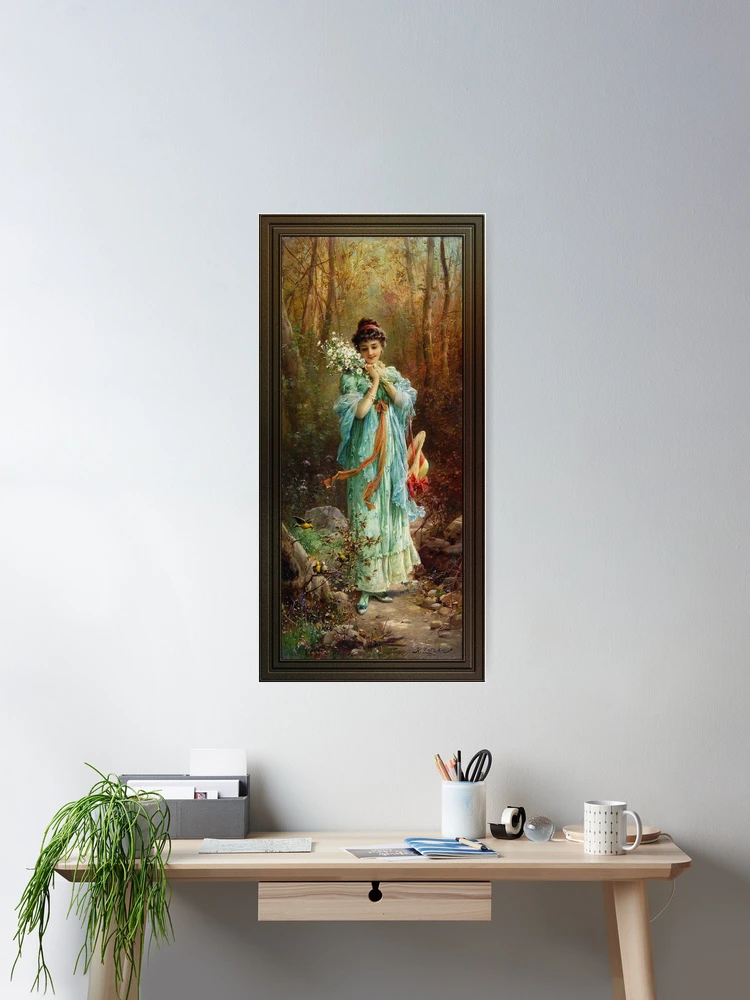
“Walk Through The Forest,” painted by ハンス・ザツカ (1859 – 1945), is a beautiful representation of nature and the human connection to it. Known for his romantic and idealized depictions, Zatzka was an Austrian painter who frequently signed his works with various pseudonyms, including Joseph Bernard, J. バーナード, and P. ロンサール, to navigate the constraints of his contractual obligations. この作品では, Zatzka presents an ethereal scene, where the subject of the painting, 若い女性, walks gracefully through a serene forest landscape. The piece exudes an air of calm and tranquility, inviting the viewer into a timeless moment of contemplation.
目次
主な主題と構成
At the heart of the painting is a young woman dressed in an exquisite flowing gown, adorned with soft, delicate textures that highlight the movement of the fabric. 彼女の服装, a pale green dress with ribbons in rich hues of orange and coral, contrasts beautifully against the earthy tones of the forest. ガウン, which moves effortlessly with the breeze, evokes a sense of ethereal elegance. Her posture is one of peaceful serenity, as she holds a bouquet of daisies tenderly in her hands, her expression soft with a hint of a smile, adding to the harmonious mood of the scene.
彼女の闇, curled hair is styled in an updo, secured with a ribbon, and framed by the soft light filtering through the trees behind her. This light adds a sense of depth to the scene, 温かいものを作成します, glowing atmosphere that encapsulates the viewer in the subject’s world. As she walks down a winding forest path, the woman is surrounded by lush greenery, which is meticulously detailed in the painting. The forest appears both inviting and mysterious, filled with tall trees that stretch upwards, their branches forming a canopy above.
地面に, delicate flora peeks through, their colors harmonizing with the subject’s dress, adding to the overall sense of cohesion. Birds can be seen in the foreground, adding to the sense of movement and life within the piece, subtly emphasizing the connection between the figure and the natural world.
地形と背景
The forest setting is rendered with great attention to detail. The trees that line the path are tall and slender, their trunks slightly curved as if bending towards the young woman. The foliage appears lush, with deep greens and touches of autumn hues suggesting a time of transition, possibly early fall or late spring. The rich colors of the leaves—ranging from olive greens to golds and rusts—convey the vibrancy of the natural world, enhanced by the soft light filtering through the canopy.
The terrain is a gentle, rocky path, where small stones and rocks add texture to the ground, leading the viewer’s eye from the foreground to the distant backdrop. The pathway, framed by clusters of wildflowers, suggests that the woman is walking along a serene forest trail, far removed from the distractions of the modern world. ソフト, dappled light illuminating the scene evokes a dreamlike quality, where the boundaries between reality and fantasy blur.
気分, 雰囲気, and Style
The mood of the painting is undeniably peaceful and serene. The combination of soft colors, 穏やかな照明, and the graceful figure of the woman walking through the tranquil forest creates a sense of quiet contemplation. The atmosphere is one of timelessness, as though the moment could be captured and held forever. The viewer is invited to step into the world of the painting and share in the calm beauty of nature and the woman’s peaceful journey through it.
Zatzka’s style in “Walk Through The Forest c~” reflects his mastery of romanticism and idealization. 彼の細部への注意, particularly in the textures of the woman’s gown and the lush surroundings, is reminiscent of 19th-century academic painting. ソフト, almost ethereal portrayal of the subject highlights Zatzka’s characteristic ability to evoke a sense of innocence and beauty. The color palette is gentle, dominated by pastel greens, soft pinks, and warm golden tones, which harmonize perfectly with the natural elements in the scene.
The technique of using light and shadow plays a critical role in enhancing the atmosphere. The glow of sunlight filtering through the trees creates a luminous effect, giving the scene a soft, inviting warmth. Zatzka’s brushwork is delicate and precise, allowing for subtle gradations of light and shadow to bring depth to the composition. The overall effect is one of harmony between the subject, the landscape, and the mood.
結論
“Walk Through The Forest c~” by Hans Zatzka captures a fleeting moment in nature, where the subject, dressed in flowing garments, finds peace in the embrace of the natural world. The painting’s serene mood, delicate color palette, and attention to detail evoke a sense of timeless beauty. Zatzka’s mastery of romanticism shines through in this work, as he invites the viewer into a world where nature and humanity are in perfect harmony. The piece serves as a reminder of the simple yet profound connection between people and the world around them, a timeless portrayal of beauty, 静けさ, そして時間の経過.
これは、パブリックドメインの画像のレタッチされたデジタルアートオールドマスターの複製であり、 キャンバスプリントオンライン.
アーティスト略歴の由来 Wikipedia.org
ハンス・ザツカは時々Pとして知られています. ロンサール, ピエール・ド・ロンサール, またはH. バッテリー, ジョセフ・バーナードとして彼の作品の多くに署名しました, J. バーナード, またはBernardZatzka.
Zatzkaの膨大な数の仮名の目的は、販売できるアートワークの量を制限する契約違反のペナルティを回避することでした。.
これにより、一部のアートデータベースでは、仮名ジョセフバーナードの下でのザツカの作品と同じ名前のフランスの彫刻家が混同されています。.
ハンス・ザツカは 8 行進 1859 ウィーンで. 彼の父バルトロマウスは建設労働者でした, 彼の母親はマリー・カルピシェク・ザツカでした.
間 1877 そして 1882, 彼は芸術アカデミーで学びました, クリスチャン・グリーペンケルの下で, カール・ウルツィンガー, とカールフォンブラース.
Zatzkaは、教会やその他の機関向けのフレスコ画を制作することで生計を立てることができました。.
に 1885, Zatzkaは、KurhausBadenで天井フレスコ画TheNaiadofBadenの作成を依頼されました.
Zatzkaの作品の多くは、オーストリアのさまざまな教会に捧げられた宗教画や祭壇画でした。.
しかしながら, 彼は女性の絵でもっと知られています, 妖精, と他の幻想的なシーン.
頻繁, 彼はリヒャルト・ワーグナーの作品とグリム兄弟のおとぎ話からインスピレーションを得ました.
19世紀後半から20世紀初頭に, Zatzkaによるいくつかの作品が写真に撮られ、商業的で収集可能なポストカードになりました.
1920年代, Zatzkaのスタイルは、ヨーロッパ全体で選ばれる装飾になりました. 加えて, 過去30年間はZatzkaの復活を開催しました.