

Cé atá ar an Líne
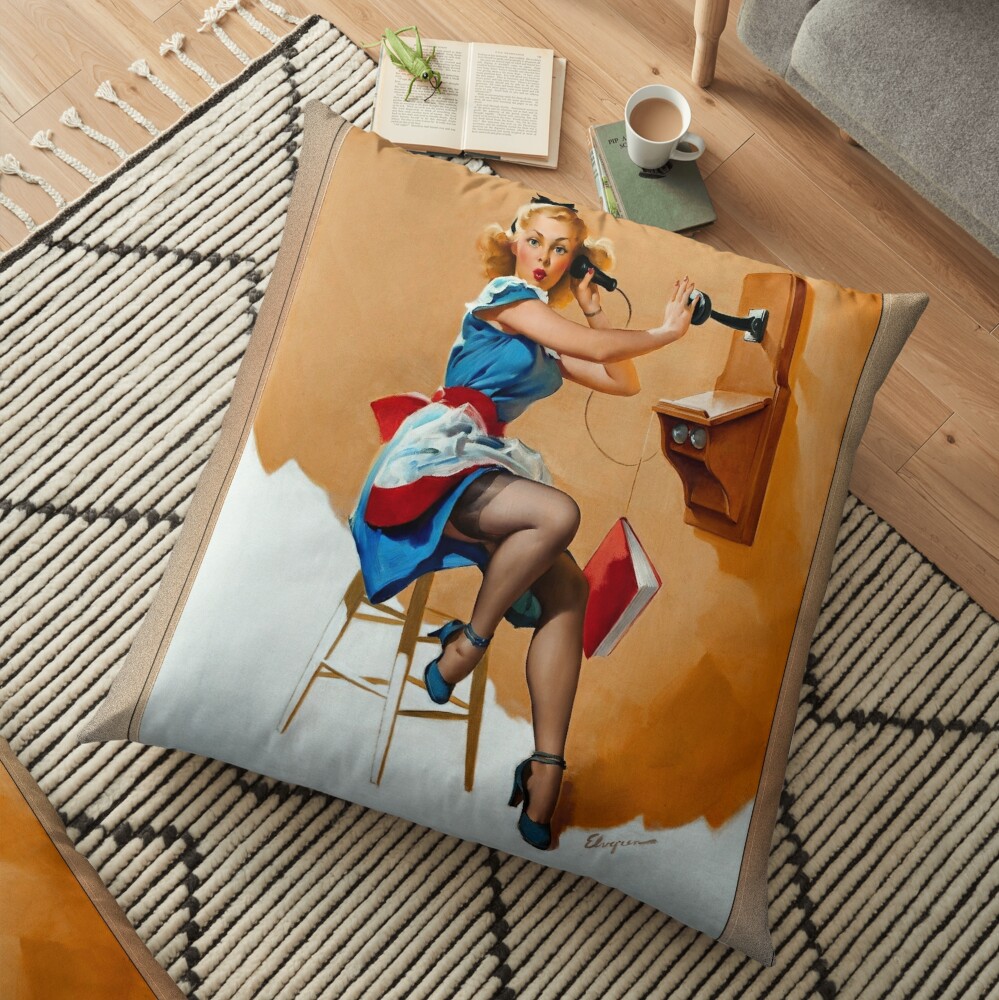
Gil Elvgren (1914 – 1980), maisitheoir Meiriceánach a bhfuil cáil air as a chuid ealaíne pin-up, chruthaigh an píosa íocónach dar teideal “Cé atá ar an Líne,” is dócha i lár an 20ú haois. Léiríonn saothar Elvgren bunbhrí na healaíne bioráin Mheiriceánaigh, seánra a bhí comhchiallach le draíocht na hóige, flirtation, agus mothú spraíúil. Sa phíosa seo, feicimid sampla iontach de mháistreacht Elvgren maidir leis an bhfoirm dhaonna a ghabháil, ag cur béime ní amháin ar allure fisiciúil ach freisin ar an insint agus mothúcháin a chuirtear in iúl trí chuma simplí, fós allabhrach, nóiméad.
Clár na nÁbhar
An príomh -ábhar: A Flirty Young Woman
I gcroílár na “Cé atá ar an Líne” is a youthful and playful woman, a typical subject of Elvgren’s pin-up work. She is positioned in the center of the artwork, striking a dynamic pose that captures her both in motion and caught in a moment of surprise. The woman is dressed in a playful, slightly retro blue dress with a white apron.
The dress is belted at the waist with a bold red ribbon, which creates a lively contrast against her soft skin tone and the surrounding colors. Her pose is flirtatious and casual, yet she exudes an air of mystery, there is a sense that she is either expecting or answering an unexpected phone call. She is perched on a small wooden stool, leaning forward towards the old-fashioned telephone that seems to be a focal point of her attention.
Her expression is one of mock surprise or perhaps confusion, her mouth slightly parted as if caught in mid-conversation. One hand holds the receiver of the telephone, while her other hand rests on her hip, reinforcing the attitude of nonchalance. A cuid gruaige, styled in playful curls, frames her face, adding to the sense of whimsy that defines the artwork. The playful nature of her expression, coupled with the classic pin-up style, imbues the painting with a sense of fun and light-heartedness.
The Telephone: A Symbol of Connection
The telephone itself is an integral part of the narrative in “Who’s On The Line.” Suite go feiceálach ar an mballa in aice leis an mbean, feidhmíonn sé mar dhroichead idir an t-ábhar agus an domhan neamhfheicthe lasmuigh den fhráma. An sean-nós fón, lena dhiailiú rothlacha agus glacadóir láimhe, iarsma ama é roimh chumarsáid nua-aimseartha, ag léiriú cumha agus cumha ar ré níos simplí. Tá an réad péinteáilte go han-chúramach, agus aird ar uigeacht agus ar mhionsonraí, ag cur in iúl a thábhachtaí ní hamháin sa radharc ach freisin i gcomhthéacs níos leithne shaol agus taithí na mná.
Cé go dtugann staidiúir agus feisteas spraíúil na mná le fios tá an saothar éadrom croíúil, cuireann an teileafón gné fionraí. Dealraíonn sé go bhfuil sé beagnach siombalach - b'fhéidir go léiríonn sé nasc le duine i bhfad i gcéin nó comhrá a rabhthas ag súil leis le fada. The lack of clarity about the person on the other end of the line enhances the intrigue, allowing the viewer to project their own narrative onto the scene.
The Terrain and Background: Simplicity and Focus
Cúlra na “Cé atá ar an Líne” is rather minimalistic, yet it serves to highlight the subject without distraction. An bog, beige wall creates a neutral backdrop that emphasizes the vibrant colors of the woman’s dress and the telephone.
There is no intricate furniture or scenic landscape that pulls attention away from the central figures; in áit, the focus is entirely on the woman and the immediate objects around her. The floor appears to be a simple, light-colored surface, with no prominent details other than the stool she sits on, which adds to the sense of modesty and simplicity in the scene.
The lack of ornate surroundings allows the viewer to focus on the interaction between the woman and the phone. The scene could be taking place in a humble domestic setting, reinforcing the narrative of everyday life, but with a touch of glamour, an artifice that pin-up art often aimed to depict. An réidh, clean background provides a canvas for the character to shine, go fisiciúil agus go mothúchánach araon.
An Stíl: Classic Pin-Up Art
Gil Elvgren’s style is immediately recognizable and widely regarded as the epitome of the mid-20th-century American pin-up genre. His works often feature women in moments of playful flirtation or light-hearted mischief, captured with smooth lines and rich colors. “Cé atá ar an Líne” follows this tradition with its clean, polished aesthetic, characterized by an almost idealized depiction of the female form. The curves of the subject are accentuated by the contours of the dress and the way the light interacts with her skin. Elvgren’s careful rendering of the woman’s face, her playful expression, and the softness of her figure demonstrates his skill at capturing both sensuality and innocence in equal measure.
An Meon: Playful and Teasing
An giúmar iomlán de “Cé atá ar an Líne” is playful and teasing. There is a flirtatious energy to the piece, enhanced by the woman’s cheeky pose and curious expression. The painting’s light-hearted nature invites the viewer into a narrative where the subject may be engaging in a flirtatious conversation or perhaps caught off guard by a phone call. The interaction with the telephone suggests an intriguing tension, with the viewer left to wonder about the identity of the person on the other end of the line.
The mood is further emphasized by the color choices in the painting. The combination of the vibrant red ribbon, the soft blues of her dress, and the muted tones of the background creates a balance between warmth and coolness. This harmony adds to the sense of relaxed charm, allowing the viewer to enjoy the scene without feeling overwhelmed by any intense emotions. The subject’s charm and innocent allure are conveyed through her body language and facial expression, inviting the viewer to share in the moment.
Conclúid: A Timeless Snapshot of Playful Femininity
“Cé atá ar an Líne” by Gil Elvgren captures a moment of playful femininity in a beautifully crafted image that balances sensuality with innocence. The painting’s timeless appeal lies in its ability to transport the viewer to a moment of flirtation and curiosity, evoking a nostalgic sense of charm and youth. Through careful attention to detail, Elvgren brings to life a character who is both whimsical and grounded, caught between an era gone by and the timeless nature of the human experience. This piece is a perfect example of Elvgren’s ability to merge art with narrative, capturing the essence of his era with both humor and grace.
Seo atáirgeadh seanmháistrí ealaíne digiteach athmháistrithe d’íomhá fearainn phoiblí atá ar fáil mar a priontáil chanbhás ar líne.
Ealaíontóir Bith Díorthaithe Ó Wikipedia.org
Gillette A.. Rugadh Elvgren i St.. Pól, Minnesota, agus d’fhreastail sé ar Ardscoil na hOllscoile. Tar éis céime, thosaigh sé ag staidéar ealaíne in Institiúid Ealaíon Minneapolis.
Ina dhiaidh sin bhog sé go Chicago chun staidéar a dhéanamh in Acadamh Ealaíne Mheiriceá, agus bhain sé céim amach as an Acadamh le linn an dúlagair mhóir, ag aois a dó is fiche.
Tar éis na céime chuaigh Elvgren isteach i stábla na n-ealaíontóirí ag Stevens agus Gross, An ghníomhaireacht fógraíochta is mó le rá i Chicago, agus rinneadh protégé den ealaíontóir Haddon Sundblom.
I 1937, Thosaigh Gil ag péinteáil pin-ups féilire do Louis F.. Dow, ceann de na cuideachtaí foilsitheoireachta is mó i Meiriceá, le linn an ama a chruthaigh sé thart 60 Oibríonn cailín bioráin ar chanbhás 22 ″ × 28 ″ agus rinne síniú clóite idirdhealú orthu.
Atáirgeadh go leor dá phionnaí mar ealaín srón ar aerárthaí míleata le linn an Dara Cogadh Domhanda; agus bhí sé thart ar an am seo i 1944, go ndeachaigh Cuideachta Foilsitheoireachta Brown agus Bigelow i dteagmháil le Elvgren; gnólacht atá fós chun tosaigh sa réimse maidir le féilirí a tháirgeadh, speisialtachtaí fógraíochta agus earraí poiblíochta.
An bhliain dar gcionn ó 1945 go dtí 1972, Bhí baint ag Elvgren leis an Brown & Cuideachta foilsitheoireachta Bigelow, agus thosaigh sé ag obair le 24 orlach le 30 canbhásanna orlach, formáid a d’úsáidfeadh sé don chéad cheann eile 30 bliana, agus shínigh sé a chuid oibre i cursive.
D'éirigh go tráchtála le Elvgren. Bhí sé ina chónaí in áiteanna éagsúla, agus bhí sé gníomhach ó na 1930idí go dtí na 1970idí. I 1951 thosaigh sé ag péinteáil i stiúideo ina theach, ansin i Winnetka, Illinois, cúntóir a úsáid chun soilsiú a chur ar bun, props agus radhairc a thógáil, tacair grianghraf, agus a chuid péinteanna a ullmhú.
I measc a chliaint bhí cuideachtaí aitheanta mar Brown agus Bigelow, Cóc, General Electric agus an Sealy Mattress Company, cúpla a ainmniú. Freisin, le linn na 1940idí agus na 1950idí léirigh sé scéalta do mhórán irisí, mar The Saturday Evening Post agus Good Housekeeping.
I measc na samhlacha agus na finscéalta Hollywood a phéinteáil Elvgren le linn a gairme bhí Myrna Hansen, Donna Reed, Barbara Hale, Arlene Dahl, Lola Albright agus Kim Novak.