

Gewinner, Ein Mädchen und ihr Hund
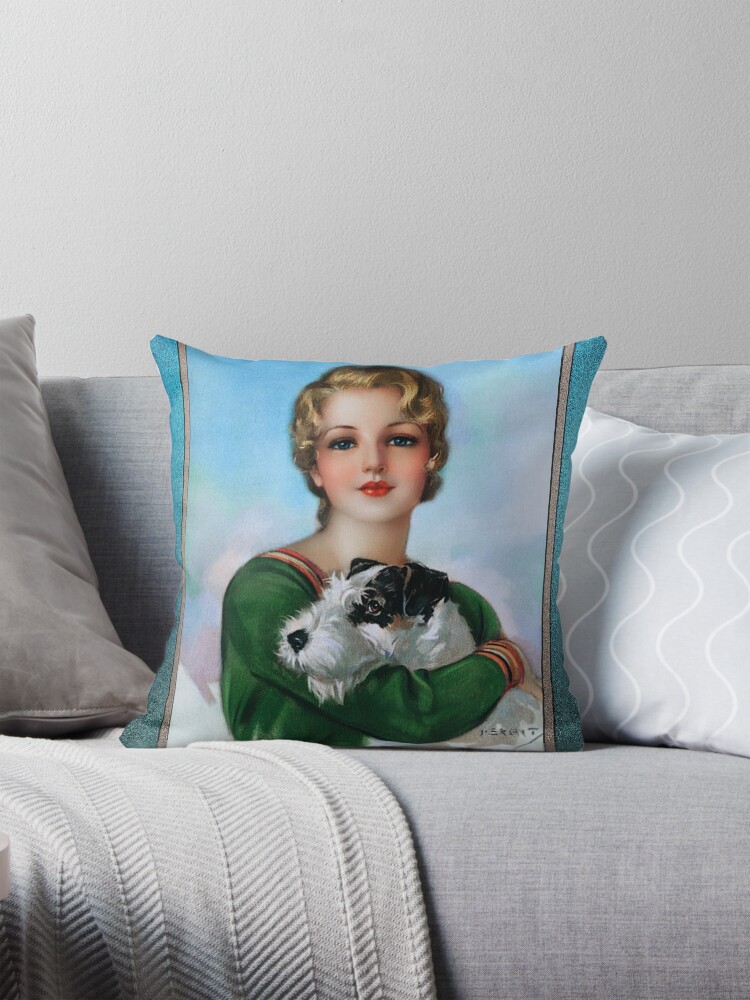
“Gewinner, Ein Mädchen und ihr Hund,” created by Hungarian painter Jules Erbit (1889 – 1968), captures an intimate, joyful moment shared between a young girl and her pet dog. Das Porträt malen, likely from the early 20th century, evokes a sense of warmth, Zuneigung, and innocence. Erbit’s mastery in capturing the delicate nuances of human emotion is evident in this portrait. The girl’s serene and confident expression, paired with the loyal dog nestled comfortably in her arms, creates a harmonious image that exudes both charm and simplicity.
Inhaltsverzeichnis
Das Hauptthema
The central subject of the painting is a young girl, portrayed with striking clarity and grace. Her delicate features are rendered with a soft, Fast ätherische Qualität. The girl has blonde, wavy hair styled in soft waves that fall just past her shoulders, a reflection of the innocence and youth that she embodies. Ihre Augen, wide and inviting, seem to gaze directly at the viewer, exuding a quiet confidence, while her lips, lightly painted, convey a subtle smile that suggests a sense of joy and fulfillment.
The girl is dressed in a vibrant green dress that contrasts beautifully with the soft pastel background. The dress features bold red stripes along the neckline and sleeves, a design choice that not only adds visual interest but also lends a sense of playfulness to the figure. Das Üppige, vivid green of the dress serves as a reminder of the girl’s connection to the natural world, while the red accents bring warmth to the composition. Her posture is relaxed and natural, with her body slightly turned as she cradles her small dog, a smooth-coated terrier, in her arms.
The Dog: A Symbol of Loyalty and Companionship
The dog, positioned in the girl’s arms, is as much a part of the painting as the girl herself. Its presence brings a sense of balance and companionship to the portrait. The terrier, with its distinctive black and white coat, looks up at the viewer with its curious yet content expression. Its head is slightly tilted, and its eyes are wide and attentive, matching the girl’s own serene expression. The dog’s fur is painted with remarkable detail, highlighting the softness of its coat and adding a layer of texture to the artwork. The positioning of the dog suggests a deep bond between the two subjects, reinforcing the theme of loyalty and friendship.
The dog’s presence in the painting is significant not only as a companion to the girl but also as a reflection of the innocence and purity that often accompanies youth. The close relationship between the girl and her dog speaks to the universal theme of unconditional love and the comfort that animals bring to our lives.
Der Hintergrund und die Einstellung
The background of the painting is soft and dreamy, with a gradient of pastel colors that flow from a light blue sky to a soft pinkish hue. This choice of colors creates a gentle atmosphere, invoking feelings of tranquility and calmness. The simplicity of the background allows the viewer’s attention to remain focused on the two main subjects, the girl and her dog. The lack of specific details in the surroundings may suggest a timeless moment, where the bond between the girl and her pet takes precedence over the external world.
There is no discernible terrain or distinct objects in the background, which serves to further isolate the figures of the girl and her dog, elevating their connection as the focal point of the piece. This absence of a defined setting adds to the universality of the image, making it easy for the viewer to relate to the emotions conveyed without the distraction of a specific place or time.
The Artistic Style and Technique
Erbit’s artistic style in “Gewinner, Ein Mädchen und ihr Hund” reflects the influence of early 20th-century European portraiture, with an emphasis on realism and meticulous attention to detail. The painting exhibits smooth, soft brushstrokes that bring out the texture of the girl’s dress and the softness of her skin and hair. The use of light and shadow is subtle, contributing to the sense of depth and realism in the work. The light appears to come from an overhead source, casting gentle highlights on the girl’s face and the dog, which enhances the sense of naturalism.
Erbit also demonstrates a keen understanding of color theory in this work. The harmonious interplay between the green of the dress, the softness of the pastel background, and the delicate rendering of the skin tones speaks to his technical prowess. The vibrant greens, Rottöne, and the terrier’s contrasting black-and-white coat create a lively visual contrast that further emphasizes the warmth and affection between the girl and her dog.
Die Stimmung und das Thema
The mood of the painting is one of contentment, peace, and innocence. The girl’s gentle smile, the calm demeanor of the dog, and the soft background all contribute to a feeling of quiet joy and unspoken affection. The relationship between the girl and her dog seems to transcend words, symbolizing a pure, innocent bond that many can relate to.
The overall theme of the painting revolves around companionship and the emotional bond between humans and animals. It speaks to the enduring nature of such relationships, where love and loyalty are at the forefront. The painting also reflects the timeless theme of childhood, capturing a moment that is both universal and intimate, highlighting the beauty of youth, Unschuld, and the love that connects us to our animal companions.
Abschluss
“Gewinner, Ein Mädchen und ihr Hund” by Jules Erbit is a timeless portrait that celebrates the relationship between a young girl and her dog. With its realistic portrayal, subtle use of color, and the emotional connection between the subjects, the painting evokes a sense of warmth and nostalgia. Erbit’s skillful execution and attention to detail bring life to this heartwarming scene, making it a poignant reminder of the simple joys that come with companionship and affection.
Dies ist eine retuschierte Reproduktion eines gemeinfreien Bildes durch digitale Meister alter Meister.
Künstler Bio abgeleitet von Askart.com
Erbit wurde geboren 1889 in Budapest, Ungarn und studierte an der Budapester Kunstakademie und München, Deutschland und Paris, Frankreich; außerdem arbeitete er mehrere Jahre für den Bildhauer George Zala.
Anschließend schnitzte Erbit mehrere Statuen für die Budapester Parks und schuf auch die Büste des letzten ungarischen Monarchen, König Karl IV.
Während der kommunistischen Machtübernahme in Ungarn floh Erbit nach New York City und gründete ein Porträtstudio; zog dann kurz später nach Kalifornien, wo er weiterhin als Porträtmaler in Hollywood und Santa Barbara arbeitete.
Allerdings sind nicht viele Details über das Leben und Werk von Erbit bekannt; Es ist bekannt, dass er zwischen den 1930er und 1950er Jahren einer der produktivsten Pin-up-Künstler war, spezialisierte sich auf die Verwendung von Pastellfarben und galt als Meister der Pastelle.
Im Gegensatz zu den meisten anderen Künstlern dieser Zeit, wie Alberto Vargas und Gil Elvgrin; Erbits Pin-Ups, konzentrierte sich auf den Glamour-Aspekt des Genres, schöne Frau in Kleidern in eleganten Posen; und wie seine Zeitgenossen, Ein Großteil seiner Kunst wurde von Brown veröffentlicht & Bigelow, C. Moss und andere Verlage.