

Gewënner, E Meedchen an hiren Hond
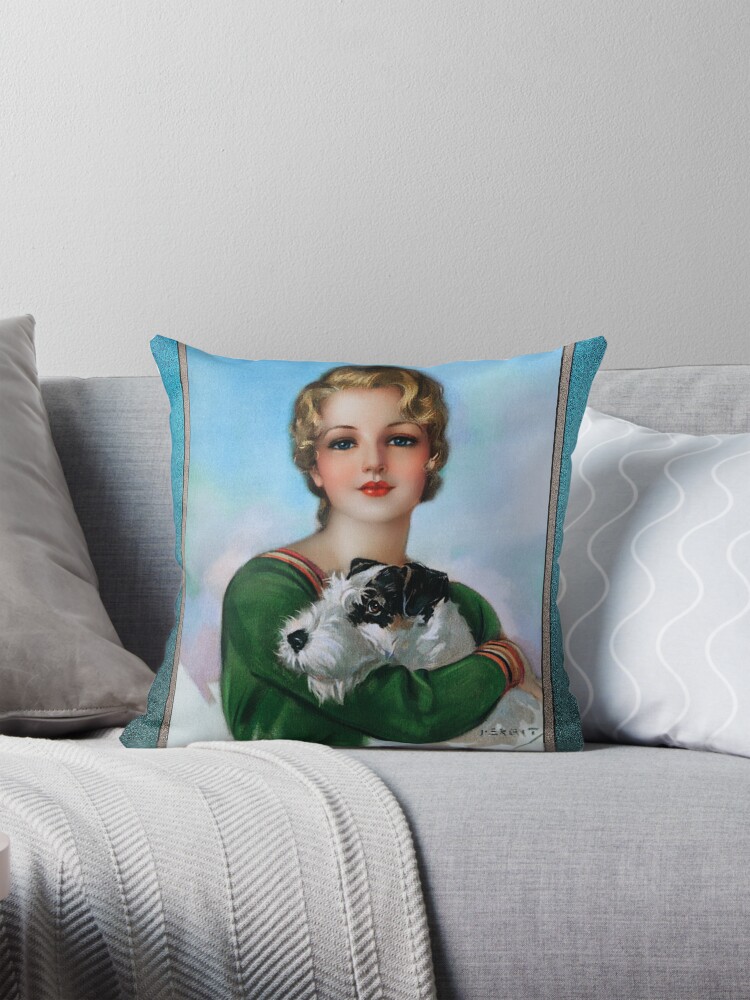
“Gewënner, E Meedchen an hiren Hond,” vum ungaresche Moler Jules Erbit erstallt (1889 – 1968), erfaasst eng intim, e gléckleche Moment tëscht engem jonke Meedchen an hirem Hausdéier gedeelt. Den Portrait molen, wahrscheinlech aus dem fréien 20. Joerhonnert, rifft e Gefill vu Wärter op, Häerzen verbonnen, an Onschold. Dem Erbit seng Meeschterschaft fir déi delikat Nuancen vu mënschlecher Emotioun z'erfaassen ass evident an dësem Porträt. D'Meedchen ass roueg an zouversiichtlech Ausdrock, gepaart mam treien Hond gemittlech an hiren Äerm, schaaft e harmonescht Bild dat souwuel Charme an Einfachheet ausstrahlt.
Inhaltsverzeechnes
D'Haaptthema
Den zentrale Sujet vum Bild ass e jonkt Meedchen, mat opfälleger Kloerheet a Gnod portraitéiert. Hir delikat Fonctiounen ginn mat enger mëller, bal etheresch Qualitéit. D'Meedchen huet blond, wavy hair styled in soft waves that fall just past her shoulders, a reflection of the innocence and youth that she embodies. Hir Ae, wide and inviting, schéngen direkt op den Zuschauer ze kucken, e rouegt Vertrauen ausstrahlt, Wärend hir Lippen, lightly painted, convey a subtle smile that suggests a sense of joy and fulfillment.
The girl is dressed in a vibrant green dress that contrasts beautifully with the soft pastel background. The dress features bold red stripes along the neckline and sleeves, a design choice that not only adds visual interest but also lends a sense of playfulness to the figure. Déi üppig, vivid green of the dress serves as a reminder of the girl’s connection to the natural world, while the red accents bring warmth to the composition. Hir Haltung ass entspaant an natierlech, mat hirem Kierper liicht ëmgedréint wéi si hire klenge Hond kräizt, engem glat-Beschichtete Terrier, an hiren Äerm.
Den Hond: E Symbol vu Loyalitéit a Begleedung
Den Hond, an de Waffen vum Meedchen positionéiert, ass esou vill Deel vum Bild wéi d'Meedchen selwer. Seng Präsenz bréngt e Gefill vu Gläichgewiicht a Begleedung zum Porträt. Den Terrier, mat sengem markanten schwaarz-wäisse Mantel, kuckt op den Zuschauer mat sengem virwëtzeg awer inhaltlechen Ausdrock. Säi Kapp ass liicht gekippt, a seng Ae si grouss an opmierksam, entspriechend dem Meedchen säin eegene rouegen Ausdrock. De Pelz vum Hond ass mat bemierkenswäerten Detail gemoolt, d'Weichheet vu sengem Mantel ervirhiewt an eng Schicht Textur un d'Konschtwierk bäigefüügt. D'Positioun vum Hond suggeréiert eng déif Verbindung tëscht deenen zwee Sujeten, d'Thema vu Loyalitéit a Frëndschaft verstäerken.
The dog’s presence in the painting is significant not only as a companion to the girl but also as a reflection of the innocence and purity that often accompanies youth. The close relationship between the girl and her dog speaks to the universal theme of unconditional love and the comfort that animals bring to our lives.
Den Hannergrond an Astellung
The background of the painting is soft and dreamy, with a gradient of pastel colors that flow from a light blue sky to a soft pinkish hue. This choice of colors creates a gentle atmosphere, invoking feelings of tranquility and calmness. The simplicity of the background allows the viewer’s attention to remain focused on the two main subjects, the girl and her dog. The lack of specific details in the surroundings may suggest a timeless moment, where the bond between the girl and her pet takes precedence over the external world.
There is no discernible terrain or distinct objects in the background, which serves to further isolate the figures of the girl and her dog, elevating their connection as the focal point of the piece. This absence of a defined setting adds to the universality of the image, making it easy for the viewer to relate to the emotions conveyed without the distraction of a specific place or time.
Den artistesche Stil an Technik
Erbit’s artistic style in “Gewënner, E Meedchen an hiren Hond” reflects the influence of early 20th-century European portraiture, with an emphasis on realism and meticulous attention to detail. The painting exhibits smooth, soft brushstrokes that bring out the texture of the girl’s dress and the softness of her skin and hair. D'Benotzung vu Liicht a Schatten ass subtil, contributing to the sense of depth and realism in the work. The light appears to come from an overhead source, casting gentle highlights on the girl’s face and the dog, which enhances the sense of naturalism.
Erbit also demonstrates a keen understanding of color theory in this work. The harmonious interplay between the green of the dress, the softness of the pastel background, and the delicate rendering of the skin tones speaks to his technical prowess. The vibrant greens, rout, and the terrier’s contrasting black-and-white coat create a lively visual contrast that further emphasizes the warmth and affection between the girl and her dog.
D'Stëmmung an d'Thema
The mood of the painting is one of contentment, Fridden, an Onschold. The girl’s gentle smile, the calm demeanor of the dog, and the soft background all contribute to a feeling of quiet joy and unspoken affection. The relationship between the girl and her dog seems to transcend words, symbolizing a pure, innocent bond that many can relate to.
The overall theme of the painting revolves around companionship and the emotional bond between humans and animals. It speaks to the enduring nature of such relationships, where love and loyalty are at the forefront. The painting also reflects the timeless theme of childhood, capturing a moment that is both universal and intimate, highlighting the beauty of youth, Onschëlleg, and the love that connects us to our animal companions.
Conclusioun
“Gewënner, E Meedchen an hiren Hond” by Jules Erbit is a timeless portrait that celebrates the relationship between a young girl and her dog. With its realistic portrayal, subtle use of color, an déi emotional Verbindung tëscht de Sujeten, d'Molerei rifft e Gefill vu Wärterheet an Nostalgie op. Dem Erbit seng kompetent Ausféierung an d'Opmierksamkeet op Detailer bréngen d'Liewen an dës häerzzerräissend Szen, mécht et eng schrecklech Erënnerung un déi einfach Freed déi mat Begleedung an Häerzen verbonnen sinn.
Dëst ass eng retouchéiert digital Konscht al Meeschterreproduktioun vun engem ëffentleche Domain Bild.
Kënschtler Bio ofgeleet vun Stoartart.com
Erbit gouf gebuer an 1889 zu Budapest Ungarn a studéiert op der Budapest Academy of Art a München, Däitschland a Paräis, Skulpturen; hien huet och e puer Joer fir de Sculpteur George Zala geschafft.
Den Erbit huet dunn e puer Statuen fir d'Parken vu Budapest geschnëtzt an huet och d'Büste vum leschte Monarch vun Ungarn skulptéiert, Kinnek Charles IV.
Wärend der kommunistescher Iwwernahm vun Ungarn ass den Erbit op New York City geflücht an e Portraitstudio gegrënnt; duerno kuerz méi spéit zu Kalifornien geplënnert, wou hien als Porträtmoler zu Hollywood a Santa Barbara weidergeet.
Och wann et net vill Detailer iwwer d'Liewen an d'Aarbecht vun Erbit bekannt ass; et ass bekannt datt hien ee vun de produktivste Pin-up Kënschtler tëscht den 1930er an 1950er war, spezialiséiert op de Gebrauch vun Pastellfarben a war bekannt als de Meeschter vu Pastellfarben.
Anescht wéi déi meescht aner Kënschtler vun der Zäit, wéi Alberto Vargas a Gil Elvgrin; Erbit's Pin Ups, konzentréiert sech op de Glamour Aspekt vum Genre mat, schéin Fra a Kleeder an elegante Posen; a wéi seng Zäitgenossen, vill vu senger Konscht gouf Brown publizéiert & Bigelow, C. Moss an aner Editeuren.