

Wäiss Seid
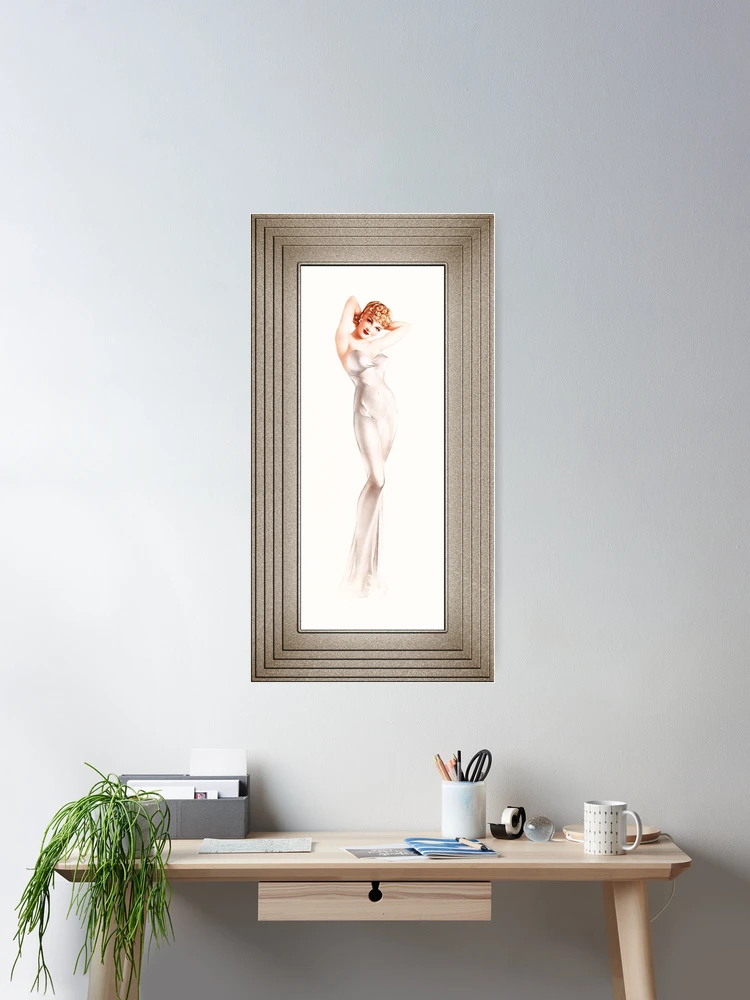
“Wäiss Seid” ass e markant Konschtwierk erstallt vum peruanesche Kënschtler Alberto Vargas placeholder image an der Mëtt vum 20. Joerhonnert, d'Schéinheet vun der Weiblechkeet duerch eng vintage Lens erfaasst. Alberto Vargas placeholder image, gebuer zu 1896 a passéiert an 1982, war bekannt fir säi bemierkenswäerten Talent am Räich vun der Pin-up Konscht, bréngt sensuell Eleganz duerch seng Illustratiounen zum Liewen. Dëst bestëmmt Stéck, “Wäiss Seid,” verkierpert säin eegene Stil, Bestued Raffinesséierung mat Allure. D'Stéck steet als Testament fir dem Vargas seng Meeschterschaft beim Vermëschung vum Glamour vun Hollywood mat klassescher Konschttechniken, weist eng zäitlos an evokativ Porträt vun der Eleganz vun enger Fra.
Inhaltsverzeechnes
Haaptwiel a Zesummesetzung
Um Häerz vun “Wäiss Seid” ass eng beandrockend weiblech Figur, mat mëll duergestallt, graziéis Linnen an eng Loft vun ustrengend Allure. D'Thema ass eng Fra an engem fléissendem drappt, Form-passend wäiss Seid Kleed, déi un hir Kéiren hänken, e Gefill vun Eleganz a Sensualitéit opruffen. Hir Haltung ass entspaant awer zouversiichtlech, mat hiren Äerm iwwer de Kapp opgehuewe, suggeréiert e Moment vun Gnod wéi si hir coiffed ajustéieren, vintage-stil Hoer. Hire Bléck ass liicht op d'Säit, en Element vu Geheimnis an Intrig un d'Bild bäizefügen.
Déi delikat Feature vun der Figur, wéi hir flawless Haut, plump Lippen, an expressiv Aen, ginn duerch déi mëll Beliichtung beliicht, déi hiert Gesiicht a Kierper bascht. Déi mëll Falten vum Kleed kreéieren e schéine Kontrast géint d'Glattheet vun hirer Haut, an de subtile Glanz vum Stoff füügt e Gefill vu Luxus un d'Gesamtkompositioun. Hir Hoer, eng Kaskade vu Curls, ergänzt d'Sophistikatioun vun hirem Look, Highlight Vargas’ Fäegkeet fir Volumen an Textur ze kreéieren.
Astellung an Objeten
Den Hannergrond vun “Wäiss Seid” ass einfach awer bewosst, déi eng neutral, bal äthereschen Raum, deen d'Opmierksamkeet vum Betrachter ganz op d'Thema riicht. De Mangel vun externen Objeten erlaabt de Betrachter op d'Form an d'Schéinheet vun der Fra ouni Oflenkung ze fokusséieren. Dës minimalistesch Approche, heefeg am Vargas senger Aarbecht, verbessert d'Stëmmung vun der Eleganz a Glamour wärend eng onkloer a raffinéiert Ästhetik behält.
D'Feele vun engem detailléierten Hannergrond ass net nëmmen eng Ausso, mee éischter eng berechent Entscheedung vum Vargas fir eng zäitlos ze kreéieren, universell Atmosphär. De Fokus op d'Schéinheet vum Thema an de luxuriéise Stoff vun hirem Kleed gëtt betount duerch déi staark Einfachheet vum Raum ronderëm hatt, Evokéiert de Glamour vum fréien bis Mëtt vum 20..
Stil, Tocikuen, a Materialien
Den Alberto Vargas ass bekannt fir seng ikonesch Pin-up Konscht, dacks vermëschen realistesch Portraite mat engem mëllen, romantesch Approche zu senge Sujeten. An “Wäiss Seid,” hie beschäftegt eng virsiichteg Technik, benotzt déi mëll Mëschung vu Faarwen an detailléierte Schatten fir e liewegt Erscheinungsbild z'erreechen. Déi glat Iwwergäng vu Liicht a Schiet verbesseren d'Sensualitéit vum Thema, besonnesch an der Aart a Weis wéi de Kleed d'Kéiren vun hirem Kierper ëmkreest.
Vargas 'Benotzung vu Faarf ass en anere bemierkenswäerten Aspekt vun dësem Stéck. Der mëller, bal ätherescht Wäiss vum Seidekleed kontrastéiert mat de waarme Téin vun der Haut vum Thema, eng delikat awer lieweg Kompositioun ze kreéieren. Dat glänzend Wäiss vum Kleed steet am Géigesaz zu den subtile Hauttéin eraus, erlaabt dem Betrachter seng Aen op d'Flëssegkeet vun der Figur ze zéien. Dëst gëtt duerch de mëllen Hannergrond ausgeglach, déi neutral an onopfälleg bleift, allowing the figure to take center stage in the composition.
Vargas’ ability to capture the texture of materials is another hallmark of his style, an an “Wäiss Seid,” this is evident in the realistic rendering of the gown’s fabric. The way light plays on the silk, creating subtle reflections and shadows, demonstrates his technical expertise in portraying textures with depth and precision.
Thema a Stëmmung
D'Stëmmung vum “Wäiss Seid” can be described as one of timeless elegance and understated sensuality. De Sujet, with her perfect posture and quiet confidence, exudes a sense of grace that transcends any specific time period, giving the artwork a universal appeal. There is an air of mystery about the subject, with her gaze turned away, suggesting a private world that is not fully accessible to the viewer.
Dëst Thema vu rouegem Vertrauen an onerreechbarer Schéinheet war charakteristesch vum Vargas senger Aarbecht, déi dacks Frae portraitéiert hunn op eng Manéier déi hir Sensualitéit gefeiert huet, wärend e Gefill vun Dignitéit an Allure behalen. Der mëller, fléissend Natur vum wäisse Seidekleed füügt d'dreemlech Qualitéit vum Bild bäi, gëtt et e Gefill vun äthereschen Schéinheet déi souwuel faszinéierend wéi enigmatesch ass. Déi graziéis Haltung vum Thema, kombinéiert mat dem luxuriéise Kleed, schaaft eng Atmosphär vu raffinéierter Schéinheet an zäitloser Allur.
Legacy an Afloss
“Wäiss Seid” ass net nëmmen e Konschtwierk, mee och eng Reflexioun vum kulturellen a artistesche Klima vun der Zäit. D'Bild vun der idealiséierter Fra, déi an dësem Stéck portraitéiert gouf, war emblematesch vun der Faszinatioun vun der Mëtt vum 20. Joerhonnert mat Glamour, eleganzwannen, an den Hollywood Starlet. Vargas’ contributions to the world of pin-up art have had a lasting impact on both commercial illustration and fine art, influencing not only other artists but also the way women were portrayed in popular media. His ability to combine beauty with realism made his work stand out and contributed to the enduring popularity of the pin-up genre.
Op ville Weeër, “Wäiss Seid” captures the spirit of an era when femininity, Schéinheet, and elegance were celebrated in a way that was both bold and sophisticated. D'Benotzung vu Liicht, Texture, and form in this piece highlights Vargas’ skill as a painter and his ability to capture the essence of a moment in time, making this work an iconic representation of his artistic legacy.
Dëst ass eng retouchéiert digital Konscht al Meeschterreproduktioun vun engem ëffentleche Domain Bild.
Kënschtler Bio
Info Ënnen Vun Wikipedia.org
Gebuer zu Arequipa, Peru, hie war de Jong vum bemierkenen peruanesche Fotograf Max T. Vargas. Den Alberto Vargas ass an d'USA geplënnert 1916 nom Konscht an Europa studéiert hunn, Zürich, a Genf virum Éischte Weltkrich. Wärend hien an Europa war koum hien op d'franséisch Magazin La Vie Parisienne, mat engem Cover vum Raphael Kirchner, déi hie gesot huet e groussen Afloss op seng Aarbecht.
Seng fréi Karriär zu New York enthält Aarbecht als Kënschtler fir den Ziegfeld Follies a fir vill Hollywood Studios. Den Ziegfeld hänkt säi Bild vum Olive Thomas am Theater, a si gouf als eng vun den eelste Vargas Girls ugesinn. Vargas’ dat bekanntst Stéck Filmwierk war fir d'Plakat vum 1933 Film The Sin of Nora Moran, déi weist eng bal plakeg Zita Johann an enger Pose vun der Verzweiflung. D'Plakat gëtt dacks als ee vun de gréisste Filmplakater genannt, déi jeemools gemaach gi sinn.
Hie gouf wäit bemierkt an de 1940er Joren als Ersteller vun ikonesche Weltkrich-II Ära Pin-ups fir den Esquire Magazin bekannt als “Vargas Girls.” Tëscht 1940 an 1946 Vargas produzéiert 180 Biller fir de Magazin. D'Nueskonscht vu ville amerikaneschen an alliéierten Zweete Weltkrich Fligeren gouf inspiréiert an adaptéiert vun dësen Esquire Pin-ups, wéi och déi vum George Petty, an aner Kënschtler.