

Winter Landscape With Travelers
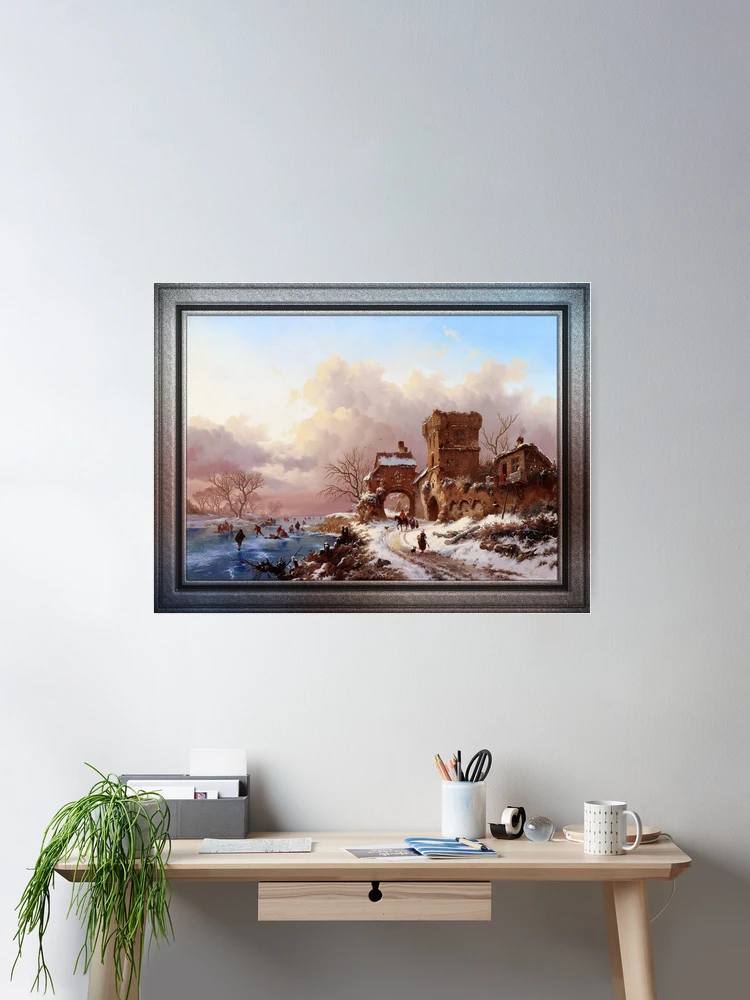
に Winter Landscape With Travelers Near The Town Gate, painted by Frederik Marinus Kruseman (1816 – 1882), the viewer is transported to a serene winter’s day in the 19th century, where the tranquility of the frozen landscape is punctuated by the movements of travelers. This stunning piece, dating from around 1857, exemplifies the Dutch Romanticism style, characterized by its detailed naturalistic approach, its emphasis on the landscape as both a subject of beauty and contemplation, and its carefully composed atmosphere. The artist presents a rich narrative of rural life in the cold months, capturing both the splendor and harshness of winter in a northern European town.
目次
主な主題と構成
At the heart of the painting is a town gate, acting as the focal point of the composition. This structure, grand and imposing, stands against the backdrop of a serene but somewhat desolate winter scene. The gate leads into a quaint village or town, which is implied but not directly shown in the artwork. On either side of the entrance, towering bare trees stretch their limbs into the cold air, their gnarled branches reaching out toward the sky, their starkness enhanced by the absence of leaves. これらの木, mostly without foliage, evoke a sense of dormancy, signifying the depth of winter’s grip.
Just outside the town gate, the ground is blanketed in a layer of snow, its purity highlighted by the faint tinge of sunset light that reflects off its surface. The snow is soft and undisturbed near the gate, but as it stretches farther into the scene, the untouched white is interrupted by travelers on foot, creating dynamic movement within the otherwise still landscape.
これらの数字, bundled in winter coats and cloaks, traverse the icy terrain, their heads lowered against the cold wind, adding a sense of realism and humanity to the scene. The scene thus tells a story of daily life during winter, where travel and movement persist despite the frozen conditions.
オブジェクトと資料
The painting’s attention to detail is evident in its depiction of materials. The stone structure of the town gate is textured and weathered, with intricate architectural features that reflect the period’s craftsmanship. The gate itself serves as a symbolic barrier between the bustling life of the town and the expansive, icy wilderness outside. The faint glow from the window of the building atop the gate hints at warmth within, contrasting the harsh cold of the outside world.
The snow is not just a passive element in the scene; Kruseman skillfully uses it to highlight the light effects of the setting sun. 雪, with its delicate, powdery texture, reflects the amber and pale colors of the sky, which gently fade into a soft pinkish hue near the horizon.
水, visible in the foreground, has a frozen sheen to it, allowing travelers and skaters to glide across its surface. There are figures visible on the ice, engaged in the sport of skating—a pastime synonymous with cold winters in the Low Countries during the 19th century. 数字’ motion contrasts with the stillness of the trees and the looming town gate.
地形と周囲
The surrounding terrain consists of a variety of textures and layers, from the soft snow that covers the ground to the frozen river in the foreground, which adds depth and intrigue to the scene. 川, partially frozen, reflects the cloudy sky above, while thin cracks in the ice hint at the fragile nature of the winter landscape. 遠くに, the horizon is dominated by the fading light of the sunset, casting a warm glow across the scene that contrasts with the cool tones of the snow and ice.
The snow-covered path that leads to the town gate is marked by the footprints of the travelers, whose dark forms stand out against the pale ground. This path draws the viewer’s eye toward the gate, enhancing the sense of movement within the otherwise quiet scene. Kruseman captures the meticulous nature of winter in the Dutch countryside, using natural elements such as the icy river and leafless trees to convey the quiet solitude of the moment.
スタイルとテクニック
Kruseman’s mastery of light and shadow is evident in this painting, as he effectively contrasts the warm tones of the sunset against the cooler shades of the winter landscape. The brushwork is delicate, with Kruseman’s attention to detail in the depiction of trees, 雪, and architecture creating a harmonious balance between realism and artistic expression.
The artist’s use of light plays a significant role in setting the mood of the painting. ソフト, diffused light suggests the end of a day, evoking a peaceful and contemplative atmosphere. The viewer is invited to imagine the quiet of the countryside as the sun sets, with the only sounds being the crunch of snow underfoot and the distant voices of the travelers.
The figures in the painting are rendered with a great deal of realism, with Kruseman capturing the naturalistic details of their clothing and movements. The traveler’s cloaks and hats evoke the practical fashion of the time, as they were meant to shield the wearer from the biting cold of winter. The posture of the travelers also adds a sense of realism—heads lowered against the wind, bodies slightly bent as they move through the snow.
テーマと雰囲気
The predominant mood in Winter Landscape With Travelers Near The Town Gate is one of quiet solitude, tempered by the presence of life and motion. The scene captures the interplay between nature and humanity, showing how the people in the painting are subject to the forces of nature, yet continue to move forward despite the harsh winter conditions. There is a sense of resilience in the travelers’ purposeful strides, contrasting with the stillness of the frozen landscape.
This is a portrayal of a community enduring the winter season, yet finding a certain peacefulness within it. The town gate acts as both a literal and symbolic threshold, representing the boundary between the warmth and security of the town and the harshness of the world outside. The traveler’s presence suggests a world beyond the gate, one of movement and passage, yet still part of the larger natural landscape.
本質的には, Kruseman’s work reflects a deep reverence for the natural world, capturing the stark beauty of winter while also suggesting the enduring spirit of those who live within it. The painting invokes themes of endurance, 時間の経過, and the quiet beauty found in the often-overlooked details of daily life.
Winter Landscape With Travelers is a retouched digital art old masters reproduction of a public domain image.
このデジタルアート作品は、, Xzendor7 Web サイトにあるすべてのアートワークと同様に、キャンバス プリントを含むさまざまな素材形式でオンラインで購入できます。, アクリルプリント, メタルプリント, 木版, 額入りプリント, ポスター, ロール状のキャンバス プリントとしてさまざまなサイズでご利用いただけます。 12 インチから 72 インチは、実際のアートワークのサイズと、アートを購入するために選択したオンデマンド プリント ショップによって異なります。.
このアートワークは、幅広いメンズおよびウィメンズのアパレルでも利用可能です, マグカップ, トートバッグ, スカーフ, ノートや日記帳、その他多くの室内装飾品.
アーティストについて
以下の情報から派生 Wikipedia.org
フレデリックは静物画家のヤン・リーカーズから最初の絵のレッスンを受けました (1790 – 1858), 彼は当時アムステルダム王立芸術アカデミーのディレクターでした; 彼はいとこのヤン・アダムの家庭教師も務めていた[ ハーレムの専門学校に通いながら 1832 に 1833.
に 1833 その後、彼はオランダの画家に絵を学び始めました。, 彫刻家, リトグラファー, 水彩画家、イラストレーターのニコラス・ヨハネス・ローゼンブーム (1805 – 1880).
その後、 1835 彼はオランダの中心部にあるヘット・ゴーイに引っ越しました。, そこで彼はオランダの風景画家ヤン・ファン・ラーフェンスウェイのもとで高度な研究を学びました。 (1789 – 1869); オランダの風景画家で石版画家のバレンド・コルネリス・コエクク氏に短期間学んでいる (1803 – 1862).
その後ハーレムに戻り、そこからドイツ北西部のクレーフェに戻り、そこで風景を描きました。, に帰国する前に 1839.
に 1841 彼はブリュッセルに移り、そこに留まりました。 1852, 彼がパリに行った数ヶ月の短い期間を除いて. に 1852 彼はハーレムの故郷に戻り、そこに4年間滞在しました, その後彼はベルギーへ行った, 彼は死ぬまでそこに留まりました 1882.