

여행자와 겨울 풍경
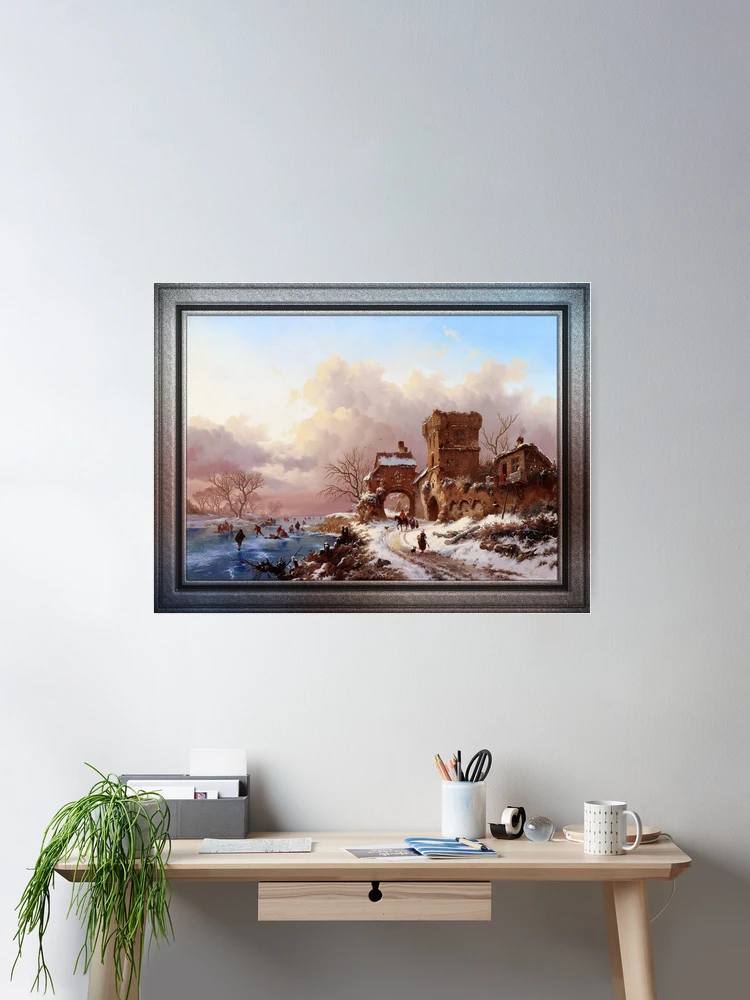
에 타운 게이트 근처 여행자와 겨울 풍경, 프레데릭 마리누스 크루스만(Frederik Marinus Kruseman)이 그린 (1816 – 1882), 관객은 19세기 고요한 겨울날로 이동하게 됩니다., 평온함이 있는 곳 얼어붙은 풍경 여행자의 움직임에 따라 강조됩니다.. 이 놀라운 작품, 주변에서 데이트하기 1857, 네덜란드 낭만주의 스타일을 보여줍니다., 상세한 자연주의적 접근이 특징, 아름다움과 명상의 주제로서 풍경을 강조합니다., 그리고 세심하게 구성된 분위기. 작가는 추운 계절의 농촌 생활에 대한 풍부한 이야기를 제시합니다., 북유럽의 한 마을에서 겨울의 화려함과 혹독함을 동시에 포착하다.
목차
주요 주제 및 구성
At the heart of the painting is a town gate, acting as the focal point of the composition. 이 구조, grand and imposing, stands against the backdrop of a serene but somewhat desolate winter scene. The gate leads into a quaint village or town, which is implied but not directly shown in the artwork. On either side of the entrance, towering bare trees stretch their limbs into the cold air, their gnarled branches reaching out toward the sky, their starkness enhanced by the absence of leaves. 이 나무들, mostly without foliage, evoke a sense of dormancy, signifying the depth of winter’s grip.
Just outside the town gate, the ground is blanketed in a layer of snow, its purity highlighted by the faint tinge of sunset light that reflects off its surface. The snow is soft and undisturbed near the gate, but as it stretches farther into the scene, the untouched white is interrupted by travelers on foot, creating dynamic movement within the otherwise still landscape.
이 수치, bundled in winter coats and cloaks, traverse the icy terrain, their heads lowered against the cold wind, adding a sense of realism and humanity to the scene. The scene thus tells a story of daily life during winter, where travel and movement persist despite the frozen conditions.
물체와 재료
The painting’s attention to detail is evident in its depiction of materials. The stone structure of the town gate is textured and weathered, with intricate architectural features that reflect the period’s craftsmanship. The gate itself serves as a symbolic barrier between the bustling life of the town and the expansive, icy wilderness outside. The faint glow from the window of the building atop the gate hints at warmth within, contrasting the harsh cold of the outside world.
The snow is not just a passive element in the scene; Kruseman skillfully uses it to highlight the light effects of the setting sun. 눈, with its delicate, powdery texture, reflects the amber and pale colors of the sky, which gently fade into a soft pinkish hue near the horizon.
물, visible in the foreground, has a frozen sheen to it, allowing travelers and skaters to glide across its surface. There are figures visible on the ice, engaged in the sport of skating—a pastime synonymous with cold winters in the Low Countries during the 19th century. 그림’ motion contrasts with the stillness of the trees and the looming town gate.
지형 및 주변 환경
The surrounding terrain consists of a variety of textures and layers, from the soft snow that covers the ground to the frozen river in the foreground, which adds depth and intrigue to the scene. The river, partially frozen, reflects the cloudy sky above, while thin cracks in the ice hint at the fragile nature of the winter landscape. 멀리서, the horizon is dominated by the fading light of the sunset, casting a warm glow across the scene that contrasts with the cool tones of the snow and ice.
The snow-covered path that leads to the town gate is marked by the footprints of the travelers, whose dark forms stand out against the pale ground. This path draws the viewer’s eye toward the gate, enhancing the sense of movement within the otherwise quiet scene. Kruseman captures the meticulous nature of winter in the Dutch countryside, using natural elements such as the icy river and leafless trees to convey the quiet solitude of the moment.
스타일과 테크닉
Kruseman’s mastery of light and shadow is evident in this painting, as he effectively contrasts the warm tones of the sunset against the cooler shades of the winter landscape. The brushwork is delicate, with Kruseman’s attention to detail in the depiction of trees, 눈, and architecture creating a harmonious balance between realism and artistic expression.
The artist’s use of light plays a significant role in setting the mood of the painting. 부드러운, diffused light suggests the end of a day, evoking a peaceful and contemplative atmosphere. The viewer is invited to imagine the quiet of the countryside as the sun sets, with the only sounds being the crunch of snow underfoot and the distant voices of the travelers.
The figures in the painting are rendered with a great deal of realism, with Kruseman capturing the naturalistic details of their clothing and movements. The traveler’s cloaks and hats evoke the practical fashion of the time, as they were meant to shield the wearer from the biting cold of winter. The posture of the travelers also adds a sense of realism—heads lowered against the wind, bodies slightly bent as they move through the snow.
테마와 분위기
The predominant mood in 타운 게이트 근처 여행자와 겨울 풍경 is one of quiet solitude, tempered by the presence of life and motion. The scene captures the interplay between nature and humanity, showing how the people in the painting are subject to the forces of nature, yet continue to move forward despite the harsh winter conditions. There is a sense of resilience in the travelers’ purposeful strides, contrasting with the stillness of the frozen landscape.
This is a portrayal of a community enduring the winter season, yet finding a certain peacefulness within it. The town gate acts as both a literal and symbolic threshold, representing the boundary between the warmth and security of the town and the harshness of the world outside. The traveler’s presence suggests a world beyond the gate, one of movement and passage, yet still part of the larger natural landscape.
본질적으로, Kruseman’s work reflects a deep reverence for the natural world, capturing the stark beauty of winter while also suggesting the enduring spirit of those who live within it. The painting invokes themes of endurance, 시간의 흐름, and the quiet beauty found in the often-overlooked details of daily life.
Winter Landscape With Travelers is a retouched digital art old masters reproduction of a public domain image.
이 디지털 아트 창작, Xzendor7 웹사이트에서 찾을 수 있는 모든 예술 작품과 마찬가지로 캔버스 인쇄를 포함한 다양한 재료 형식으로 온라인에서 구매할 수 있습니다., 아크릴 프린트, 금속 지문, 목판화, 액자 인쇄, 포스터, 그리고 압연 캔버스로 다양한 크기로 인쇄됩니다. 12 인치에 72 실제 작품의 크기와 작품을 구매하기로 선택한 주문형 인쇄소에 따라 인치.
이 작품은 다양한 남성복과 여성복에서도 볼 수 있습니다., 머그, 토트백, 스카프, 노트북, 저널 및 다양한 홈 데코 제품.
아티스트 소개
아래에서 파생 된 정보 Wikipedia.org
Frederik은 정물화 화가 Jan Reekers로부터 첫 그림 수업을 받았습니다. (1790 – 1858), 당시 암스테르담 왕립미술아카데미 원장이었던 사람; 그리고 그의 사촌인 Jan Adam을 가르쳤던 사람이기도 했습니다.[ 하를렘의 직업학교에 다니는 동안 1832 NS 1833.
에 1833 그 후 그는 네덜란드 화가와 함께 그림을 공부하기 시작했습니다, 조각사, 석판화가, 수채화가이자 일러스트레이터인 Nicolaas Johannes Roosenboom (1805 – 1880).
그런 다음 1835 그는 네덜란드 중앙에 있는 Het Gooi로 이사했습니다., 그곳에서 그는 네덜란드 풍경화가 Jan van Ravenswaay와 함께 고급 연구를 받았습니다. (1789 – 1869); as well as studying for a brief period of time with Dutch Landscape Painter and Lithographer Barend Cornelis Koekkoek (1803 – 1862).
He later returned to Haarlem and from there to Kleve in northwestern Germany where he painted landscapes, before returning home in 1839.
에 1841 he moved to Brussels and stayed there until 1852, except for a brief period of a few months when he went to Paris. 에 1852 he went back home to Haarlem and stayed there for four years, after which he went to Belgium, where he remained until his death in 1882.