

마을 주변의 활동이 있는 겨울 풍경
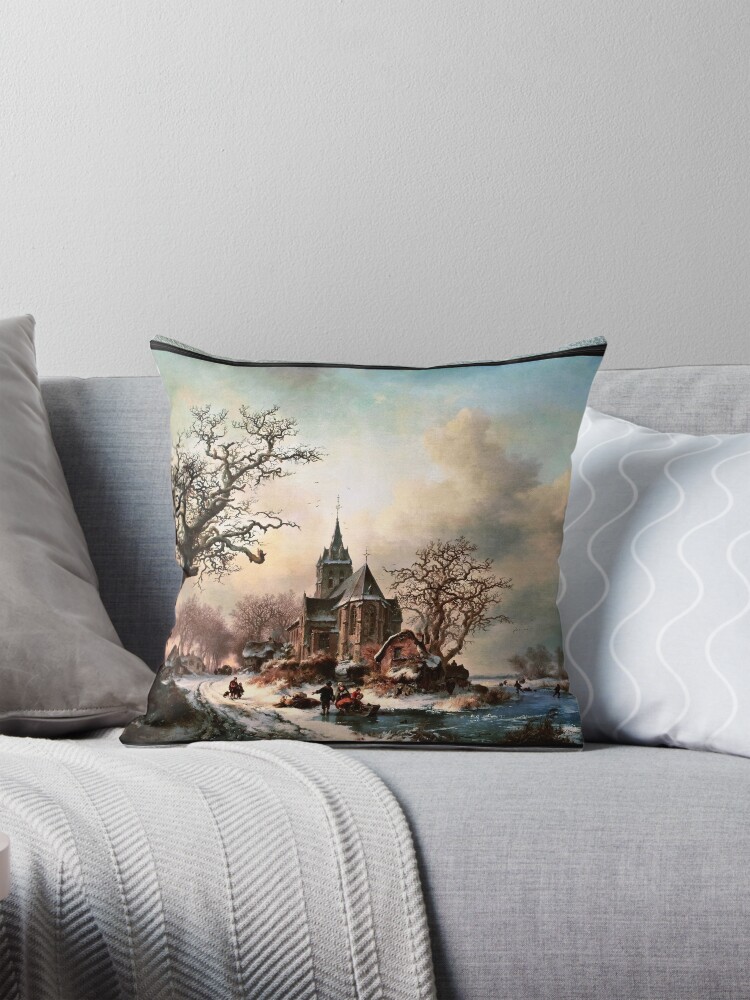
마을 주변의 활동이 있는 겨울 풍경 c1857, 19세기 유명한 네덜란드 화가 프레데릭 마리누스 크루스만(Frederik Marinus Kruseman) (1816 – 1882), 겨울철 농촌 생활의 전형적인 장면을 포착합니다.. 그림은 낭만주의 스타일을 예시합니다., 감정을 강조하는 것으로 유명하다, 자연, 인간과 환경의 관계. Kruseman의 빛의 사용, 색깔, 자연적인 요소가 평온함을 전달합니다., 겨울의 혹독한 아름다움 속에서 일상 활동에 참여하는 마을 사람들의 소박한 삶을 축하합니다.. 구성은 시청자를 상세하고 분위기 있는 세계로 초대합니다., 인간과 주변 풍경의 조화를 보여주는.
목차
장면 개요 및 구성
이 상세한 내용에는 겨울 풍경, 마을은 작품의 중심에 서 있다, 눈 덮인 완만하게 구불구불한 언덕으로 둘러싸여 있습니다.. 저 멀리 교회 첨탑이 부드러운 빛을 배경으로 우뚝 솟아 있다, 소용돌이치는 구름, 겨울날의 차갑지만 평화로운 분위기를 암시하는. 건물, 아마 마을 교회일 거야, 건축학적 세부 사항에 세심한 주의를 기울여 제작되었습니다., 사실주의에 대한 그 시대의 헌신을 나타냅니다.. 아래 그림은 중간 작업에 표시됩니다., 눈 속에서 펼쳐지는 마을의 일상을 포착하다.
전경에는 마을을 통과하는 구불구불한 눈 덮인 도로가 있습니다.. 카트, 말이 끄는, 이 길을 따라 끌려가고 있어요, 그와 함께 몇 가지 인물과 함께. 한 남자가 카트 옆으로 걸어간다, 눈 덮인 길을 따라 안내하는 데 도움이 될 수도 있습니다., 하면서 다른 사람, 아마도 여자일 것이다, 카트 위에 앉아있어요. 이번 국내 활동, 시즌의 어려움을 나타내는, 농촌 생활의 근면성을 표현합니다.. 중간지면에서, 한 무리의 사람들이 길을 따라 걷고 있는 것이 보인다, 따뜻한 코트와 모자를 껴입고, 마을의 겨울 일상을 현실감있게 표현합니다..
테마와 분위기
그림의 주요 주제는 자연 속에서의 인간 경험을 중심으로 전개됩니다., 특히 겨울철에는. Kruseman이 눈 속에서 일하고 움직이는 마을 사람들의 묘사는 금욕적인 인내를 불러일으킵니다., 19세기 농촌생활의 특징. 눈 덮인 풍경, 비록 차갑고 거칠지만, 장애물로 제시되지 않는다, 오히려 마을 사람들이 평화로운 조화 속에서 공존하는 요소로서. 숨막히는 겨울 환경 속에서 매일 노동하는 모습을 담은 이 이미지는 자연의 도전에 맞서는 인간 삶의 회복력과 강인함에 대해 묵상하게 합니다..
작품의 분위기는 평화로우면서도 역동적입니다., Kruseman은 풍경의 고요함과 인물의 움직임의 균형을 맞추었습니다.. 고요한 겨울 환경, 전경의 활동으로 구두점 표시, 평온함과 근면함을 모두 암시합니다.. 하늘의 빛은 은은한 빛을 만들어낸다, enhancing the peacefulness of the scene while also contributing a sense of the day’s fleeting passage. There is a delicate sense of quiet beauty, evoking the stillness and introspective mood typical of winter.
마을 및 지형 세부정보
The village depicted is small but recognizable, with a clear focus on the rural architecture of the time. 건물, some with thatched roofs and others with more structured facades, are arranged in a way that suggests the tight-knit nature of the community. The church, as the tallest building in the composition, acts as the focal point of the village, reinforcing its central role in the daily life and spiritual practice of the inhabitants.
The terrain surrounding the village is dominated by snow-covered fields, trees with sparse foliage, and distant hills. 잎이 없는 나무 가지가 바람에 휘어지고 휘어진다, 정적인 장면에 움직임을 더하는 것. 눈이 땅을 덮고 집 지붕을 덮는 모습에서 계절의 깊이와 겨울의 추위가 무거워짐을 알 수 있습니다.. 눈 위에 드리워진 빛과 그림자에 대한 크루즈만의 세심한 배려는 깊이감과 질감을 선사합니다., 오늘의 추위를 강조. 땅과 하늘 사이에는 상호작용이 있다, 하늘의 색상은 수평선 근처의 부드러운 분홍빛 색조에서 위쪽의 더 깊은 파란색으로 전환됩니다..
재료 사용 및 예술적 스타일
Kruseman이 선택한 유성 페인트는 장면에 생기를 불어넣는 풍부한 질감을 가능하게 합니다.. 빛과 그림자의 활용이 돋보이네요, as it subtly draws attention to the reflective surfaces of the snow and the warmth of the figures against the cool background. The details in the clothing of the figures are finely rendered, showcasing the artist’s skill in capturing both the textures of fabric and the nuances of the human form. The distinct brushwork used in the trees, the clouds, and the snow, conveys the feeling of motion, while maintaining the overall sense of stillness and calm that defines the scene.
The Romantic style is reflected in the composition’s emphasis on nature’s beauty and the connection between humanity and the landscape. The portrayal of the rural village and its people is both a celebration and a tribute to the past, evoking a sense of nostalgia and reverence for simple, agrarian life. There is an underlying celebration of both the quiet beauty of nature and the persistence of life through its seasons, particularly the harshness of winter.
결론
에 마을 주변의 활동이 있는 겨울 풍경, Frederik Marinus Kruseman creates an evocative, timeless depiction of a winter scene that balances the serenity of the landscape with the industriousness of the people who inhabit it. Through his careful rendering of figures and environment, he presents a vision of life that, while rooted in the specific context of 19th-century rural Netherlands, transcends its time and place. The artist invites us to consider not just the cold and stillness of winter, but also the warmth of community, 인내, and connection to the natural world. 이 그림은 농촌 생활의 어려움에 대한 조용한 성찰이자 겨울 자연 세계의 지속적인 아름다움을 기념하는 작품입니다..
마을 주변의 활동이 포함된 겨울 풍경은 공개 도메인 이미지를 수정한 디지털 아트 오래된 거장입니다..
이 디지털 아트 창작, Xzendor7 웹사이트에서 찾을 수 있는 모든 예술 작품과 마찬가지로 캔버스 인쇄를 포함한 다양한 재료 형식으로 온라인에서 구매할 수 있습니다., 아크릴 프린트, 금속 지문, 목판화, 액자 인쇄, 포스터, 그리고 압연 캔버스로 다양한 크기로 인쇄됩니다. 12 인치에 72 실제 작품의 크기와 작품을 구매하기로 선택한 주문형 인쇄소에 따라 인치.
이 작품은 다양한 남성복과 여성복에서도 볼 수 있습니다., 머그, 토트백, 스카프, 노트북, 저널 및 다양한 홈 데코 제품.
아티스트 소개
아래에서 파생 된 정보 Wikipedia.org
Frederik은 정물화 화가 Jan Reekers로부터 첫 그림 수업을 받았습니다. (1790 – 1858), 당시 암스테르담 왕립미술아카데미 원장이었던 사람; 그리고 그의 사촌인 Jan Adam을 가르쳤던 사람이기도 했습니다.[ 하를렘의 직업학교에 다니는 동안 1832 NS 1833.
에 1833 그 후 그는 네덜란드 화가와 함께 그림을 공부하기 시작했습니다, 조각사, 석판화가, 수채화가이자 일러스트레이터인 Nicolaas Johannes Roosenboom (1805 – 1880).
그런 다음 1835 그는 네덜란드 중앙에 있는 Het Gooi로 이사했습니다., 그곳에서 그는 네덜란드 풍경화가 Jan van Ravenswaay와 함께 고급 연구를 받았습니다. (1789 – 1869); as well as studying for a brief period of time with Dutch Landscape Painter and Lithographer Barend Cornelis Koekkoek (1803 – 1862).
He later returned to Haarlem and from there to Kleve in northwestern Germany where he painted landscapes, before returning home in 1839.
에 1841 he moved to Brussels and stayed there until 1852, except for a brief period of a few months when he went to Paris. 에 1852 he went back home to Haarlem and stayed there for four years, after which he went to Belgium, where he remained until his death in 1882.