

Winterliche Stadtansicht c1839
“Winterliche Stadtansicht” (Winter Cityscape) is a winter scene created by Belgian painter Charles Henri Joseph Leickert in 1839. Nacido en 1816 y falleciendo en 1907, Leickert was renowned for his landscape paintings, often capturing the natural world and urban scenes with intricate detail and atmospheric quality. This particular painting is a representation of a cold, snowy day in an old European town, offering a glimpse into the everyday life of the time and the picturesque charm of winter in a historical setting.
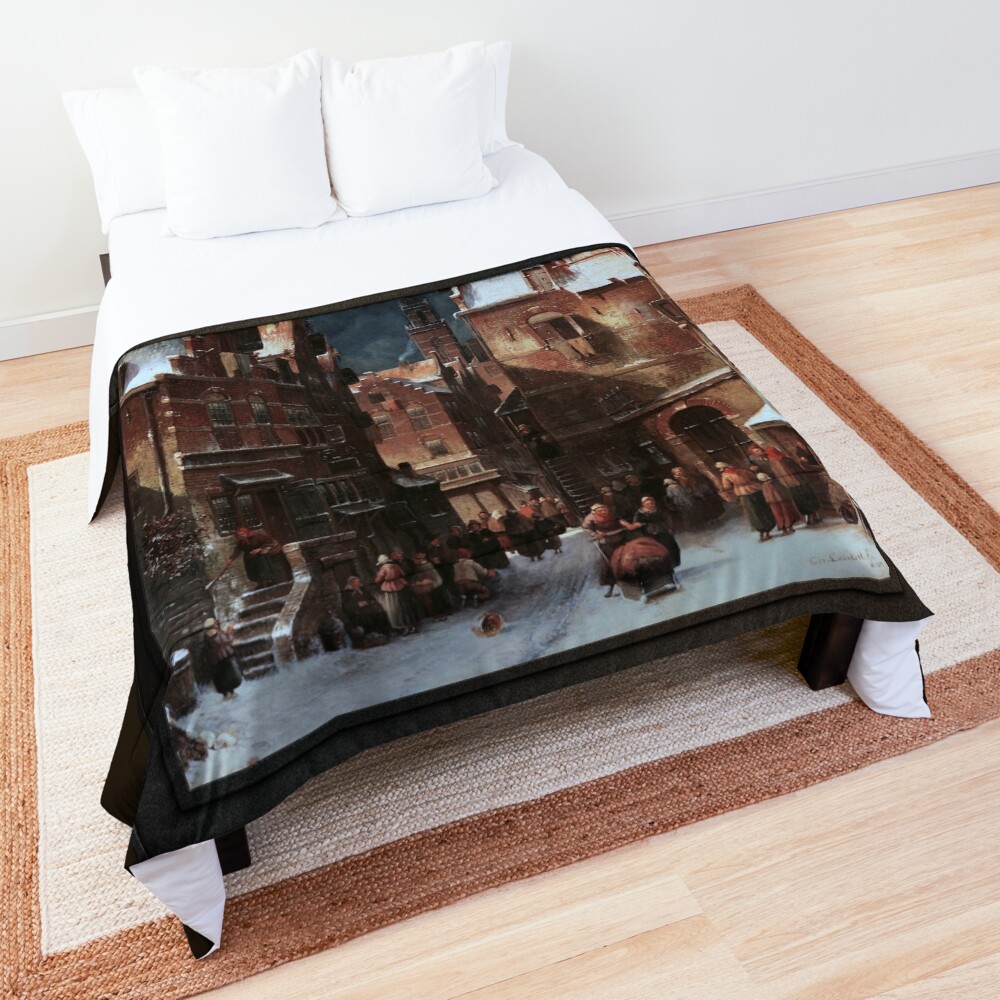
Tabla de contenido
Estilo, Tema, and Mood of the Artwork
La género painting is executed in the Romantic style, with Leickert’s use of light and shadow contributing to a dramatic and emotionally evocative atmosphere. El romanticismo fue un movimiento artístico que se centró en la belleza de la naturaleza., lo sublime, y la experiencia individual, A menudo se utilizan paisajes para transmitir estados de ánimo y sentimientos.. Las calles nevadas y la pintoresca arquitectura de esta escena invernal crean una resonancia emocional., invitando al espectador a reflexionar sobre el paso del tiempo y la serena belleza de la temporada invernal.
El tema de la pieza es un tranquilo día de invierno en una antigua ciudad europea., y el estado de ánimo que transmite es a la vez tranquilo y contemplativo.. Hay una sensación de calma en las calles cubiertas de nieve., que parecen ralentizar el ritmo de vida, Sin embargo, también hay una sutil tensión en el cielo lleno de nubes., insinuando una tormenta inminente. La representación detallada de los edificios., las figuras, y los copos de nieve contribuyen al realismo de la pintura., mientras que los cielos nublados y los tejados llenos de humo añaden un elemento de misterio y anticipación..
El escenario y la composición
Leickert captura magistralmente la esencia de un paisaje urbano invernal, con nieve cubriendo suavemente las calles adoquinadas y los tejados. La escena se desarrolla en un estrecho, Callejón sinuoso típico de las ciudades europeas más antiguas., donde los edificios están muy juntos, sus cimas cubiertas de nieve, creando una sensación de confinamiento y quietud. Se pueden ver las imponentes agujas de iglesias o ayuntamientos distantes elevándose sobre los tejados., sus formas suavizadas por la niebla y la nieve en el aire.
La composición es equilibrada y bien estructurada., con una variedad de características arquitectónicas que guían la mirada del espectador a través de la pintura. En el lado izquierdo, Se puede ver un grupo de casas., their dark brick walls partially illuminated by the diffuse light from the overcast sky. The right side features a narrow street with steps leading up to a door, flanked by more buildings with sharp angles and uneven rooftops, their chimneys puffing out soft plumes of smoke. A lo lejos, a tall clock tower stands, signaling a subtle focal point for the viewer’s attention, while drawing the viewer’s gaze back to the street scene below.
The path leading to the background is lined with figures in winter attire, many carrying bundles or walking in groups. The figures appear as little more than silhouettes, their faces obscured by the hoods and heavy clothing that protect them from the cold. This soft rendering of the human forms against the stark backdrop of buildings and snow adds to the feeling of anonymity, allowing the viewer to project their own thoughts and emotions onto the scene.
The People and Daily Life
The human figures in the painting are central to conveying the everyday life of the period. The people in the foreground are mostly bundled up, carrying out their daily activities amidst the winter weather. In the lower-left corner, one figure stands on a stairway leading up to a door, seemingly lost in thought as they gaze down the street. Cercano, a group of individuals walks along the snow-covered ground, their footsteps leaving faint traces behind them. These figures bring life to the otherwise still scene, adding a sense of movement and interaction in the otherwise quiet, snow-covered town.
Uno de los aspectos más llamativos del cuadro es cómo Leickert captura la textura de la nieve.. Se representa como suave y en capas., con algunas áreas de los adoquines asomando mientras que otras permanecen completamente cubiertas de blanco, dando una sensación de profundidad y contraste. Los ligeros copos de nieve parecen bailar en el aire., atrapado en la brisa y añadiendo una sensación de belleza etérea a la escena invernal.
Materiales y técnica
La técnica de Leickert en esta pintura demuestra su experiencia en capturar la luz y la textura naturales.. El uso de pintura al óleo permite la profundidad del color y los detalles finos que se ven en toda la escena., desde los tonos sutiles del cielo hasta los tonos cálidos de los edificios y los blancos fríos de la nieve. La luz se difunde a través del cielo nublado., creating a soft glow that envelops the entire scene, ensuring that the buildings and figures do not cast harsh shadows but instead are gently shaded. La pincelada es refinada., with delicate strokes used to suggest the soft outlines of people and the rough textures of the buildings.
The snow is skillfully rendered with layered brushstrokes that give it a tangible quality, inviting the viewer to imagine the crispness of the air and the chill that would be felt standing in this very spot. The dark clouds and smoke rising from chimneys contrast with the bright, gleaming snow, drawing attention to the interplay between light and shadow, warmth and cold.
Conclusión
“Winterliche Stadtansicht” by Charles Henri Joseph Leickert is a powerful portrayal of a cold, snowy winter day in an old European town. With his delicate use of color, luz, y sombra, Leickert crea una sensación de serenidad y quietud al mismo tiempo que evoca cierta tensión., como si la ciudad estuviera conteniendo la respiración ante la tormenta. La combinación de arquitectura detallada., figuras humanas, y la atmósfera del invierno hace de esta pintura una instantánea evocadora de una época pasada, capturar la belleza y la tranquilidad del invierno de una manera que resuene en los espectadores a lo largo del tiempo..
Esta es una reproducción de maestros antiguos de arte digital remasterizada de una imagen de dominio público que está disponible como impresión de lienzo en línea.