

Brujas que van a su sábado
Witches Ascending: A Nightly Gathering in Falero’s Allegorical Vision
Witches Going to Their Sabbath c1878 by Luis Ricardo Falero’s (1851 – 1896), (also known as “The Departure of the Witches”), is a striking example of late 19th-century Spanish academic art. The work draws heavily from Romantic and Symbolist influences, depicting a fantastical scene of female figures ascending into a stormy night sky, presumably on their way to a witches’ sabbath. Falero’s painting isn’t merely a depiction of folklore; it is an exploration of the human imagination, miedo, and the allure of the supernatural. The composition is dynamic and theatrical, prioritizing movement and dramatic effect over strict realism.
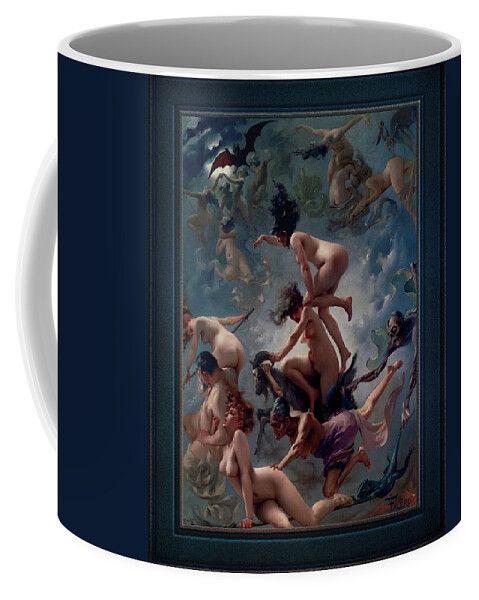
Tabla de contenido
Estructura compositiva & Flujo narrativo
The artwork immediately draws the viewer into a swirling vortex of figures and clouds. The lower portion of the canvas depicts a chaotic gathering of nude women, some prostrate on the ground, others leaping or crawling towards the sky. This base layer establishes a sense of frenzied energy and unrestrained desire for upward movement. Above this tumultuous scene, several female forms are already airborne, suspended in mid-flight amidst swirling clouds and a dramatically lit night sky. The composition isn’t static; it suggests an ongoing process of ascension, with figures transitioning between the earthly realm and the celestial expanse.
The central focus is drawn to a dark horse ridden by a figure who appears to be leading the procession. esta figura, partially obscured in shadow, acts as a focal point, guiding the witches towards their destination. The upward trajectory of the composition creates a sense of anticipation and mystery, inviting the viewer to contemplate the nature of this nocturnal gathering.
Técnica artística & Paleta de colores
Falero’s technical skill is evident in his rendering of the human form and the atmospheric effects. He employs a chiaroscuro technique – the dramatic use of light and shadow – to heighten the sense of drama and mystery. The figures are bathed in an ethereal, resplandor casi de otro mundo, contrasting with the deep shadows that envelop much of the scene. This interplay of light and dark emphasizes the supernatural nature of the subject matter.
The color palette is dominated by cool tones: blues, grises, and purples, which contribute to the painting’s somber and unsettling atmosphere. Hints of warmer colors – yellows and oranges – are strategically placed to highlight key figures and create points of visual interest. The artist’s brushwork is loose and expressive in the lower portion of the canvas, conveying a sense of chaos and movement, while becoming more refined as the eye travels upwards towards the sky.
Simbolismo & Interpretations
The painting’s symbolism is rich and layered. The witches themselves represent not just figures from folklore but also archetypal representations of feminine power and rebellion against societal norms. Their nudity can be interpreted as a rejection of conventional constraints and an embrace of primal instincts. The stormy night sky symbolizes the turbulent emotions and hidden forces that drive human behavior.
The horse, often associated with wildness and untamed energy, further reinforces this theme of liberation and transformation. The presence of a bat in the upper left corner is another traditional symbol of witchcraft and darkness. Falero’s work doesn’t offer a definitive interpretation; en cambio, it invites viewers to engage with their own imaginations and draw their own conclusions about the meaning of the scene.

Contexto & Influencias artísticas
Falero created “Witches Going to Their Sabbath” during a period when interest in folklore, mitología, and the occult was experiencing a resurgence in Europe. The painting reflects the influence of Romanticism, which emphasized emotion, imaginación, y lo sublime, as well as Symbolism, which sought to express abstract ideas through symbolic imagery. Artists like Francisco Goya, with his depictions of fantastical scenes and dark themes, likely influenced Falero’s artistic vision.
The academic art tradition, in which Falero was trained, prioritized technical skill and adherence to classical principles. sin emabargo, Falero’s painting transcends the limitations of academic convention by incorporating elements of fantasy and symbolism that were characteristic of more progressive artistic movements. The work stands as a testament to his ability to blend traditional techniques with innovative ideas.
Legado & Significado
“Witches Going to Their Sabbath” remains an intriguing and captivating artwork, admired for its dramatic composition, technical skill, and symbolic depth. It offers a glimpse into the cultural anxieties and imaginative preoccupations of 19th-century Europe, while also demonstrating Falero’s unique artistic talent. The painting continues to resonate with audiences today, inviting them to explore the enduring power of myth, folklore, and the human imagination.
Biografía del artista de Wikipedia.org
Falero nació en Granada y originalmente siguió una carrera en la Armada española., pero se lo entrego a sus padres’ decepción. Viajó a pie a París, donde estudió arte, química e ingeniería mecánica.
Los experimentos que tuvo que realizar en los dos últimos fueron peligrosos, llevándolo a decidir enfocarse en pintar solo. Fue alumno de Gabriel Ferrier. Después de París, el estudió en londres, donde finalmente se instaló.
Falero tenía un interés particular en la astronomía e incorporó constelaciones celestes en muchas de sus obras., como “El matrimonio de un cometa” y “Estrellas gemelas”. Su interés y conocimiento de la astronomía también lo llevaron a ilustrar las obras de Camille Flammarion..
En 1896, el año de su muerte, Maud Harvey demandó a Falero por paternidad. La demanda alegaba que Falero sedujo a Harvey cuando estaba 17, primero sirviendo como su criada, y luego modelar. Cuando descubrió que estaba embarazada, la despidió.
Ella ganó el caso y recibió cinco chelines por semana en apoyo de su hijo.. Falero murió en el University College Hospital, Londres, a la edad de 45
Esta es una reproducción de maestros antiguos de arte digital retocada de una imagen de dominio público que puede comprar como Esta es una elegante chica de glamour art deco vintage..