

Bruxas indo para o sábado
Bruxas ascendendo: Uma reunião noturna na visão alegórica de Falero
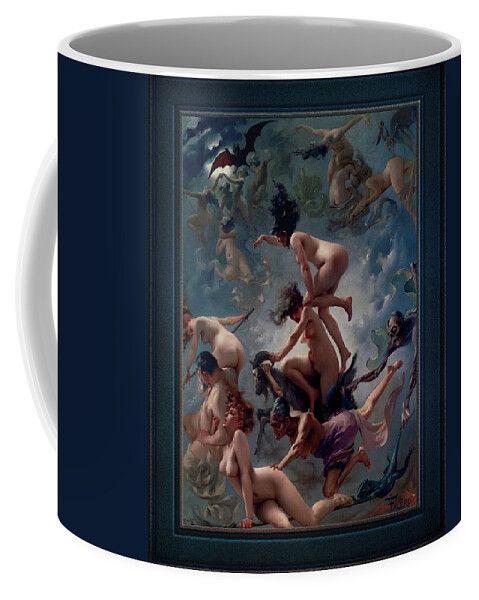
Bruxas que vão para o sábado C1878 por Luis Ricardo Falero's (1851 – 1896), (também conhecido como “a partida das bruxas”), é um exemplo impressionante da arte acadêmica espanhola do final do século XIX. O trabalho se baseia fortemente de influências românticas e simbolistas, representando a cena fantástica de figuras femininas subindo para um céu noturno tempestuoso, presumivelmente a caminho de uma bruxa’ sábado. A pintura de Falero não é apenas uma representação do folclore; É uma exploração da imaginação humana, temer, e o fascínio do sobrenatural. A composição é dinâmica e teatral, Priorizar o movimento e o efeito dramático sobre o realismo rigoroso.
Índice
Estrutura composicional & Fluxo narrativo
A obra de arte atrai imediatamente o espectador para um vórtice rodopiante de figuras e nuvens. A parte inferior da tela descreve uma reunião caótica de mulheres nuas, algum prostrado no chão, outros pulando ou rastejando em direção ao céu. Esta camada base estabelece uma sensação de energia frenética e desejo irrestrito de movimento ascendente. Acima desta cena tumultuada, Várias formas femininas já estão no ar, suspenso no meio do vôo em meio a nuvens em turbilhão e um céu noturno dramaticamente iluminado. A composição não é estática; sugere um processo contínuo de ascensão, Com figuras em transição entre o reino terrestre e a expansão celestial.
O foco central é atraído por um cavalo escuro montado por uma figura que parece estar liderando a procissão. Esta figura, partially obscured in shadow, acts as a focal point, guiding the witches towards their destination. The upward trajectory of the composition creates a sense of anticipation and mystery, inviting the viewer to contemplate the nature of this nocturnal gathering.
Técnica artística & Paleta de cores
Falero’s technical skill is evident in his rendering of the human form and the atmospheric effects. He employs a chiaroscuro technique – the dramatic use of light and shadow – to heighten the sense of drama and mystery. The figures are bathed in an ethereal, almost otherworldly glow, contrasting with the deep shadows that envelop much of the scene. This interplay of light and dark emphasizes the supernatural nature of the subject matter.
The color palette is dominated by cool tones: blues, cinzas, and purples, which contribute to the painting’s somber and unsettling atmosphere. Hints of warmer colors – yellows and oranges – are strategically placed to highlight key figures and create points of visual interest. The artist’s brushwork is loose and expressive in the lower portion of the canvas, conveying a sense of chaos and movement, while becoming more refined as the eye travels upwards towards the sky.
Simbolismo & Interpretações
The painting’s symbolism is rich and layered. The witches themselves represent not just figures from folklore but also archetypal representations of feminine power and rebellion against societal norms. Their nudity can be interpreted as a rejection of conventional constraints and an embrace of primal instincts. The stormy night sky symbolizes the turbulent emotions and hidden forces that drive human behavior.
The horse, often associated with wildness and untamed energy, further reinforces this theme of liberation and transformation. The presence of a bat in the upper left corner is another traditional symbol of witchcraft and darkness. Falero’s work doesn’t offer a definitive interpretation; em vez de, it invites viewers to engage with their own imaginations and draw their own conclusions about the meaning of the scene.

Contexto & Influências artísticas
Falero created “Witches Going to Their Sabbath” during a period when interest in folklore, mitologia, and the occult was experiencing a resurgence in Europe. The painting reflects the influence of Romanticism, which emphasized emotion, imagination, e o sublime, as well as Symbolism, which sought to express abstract ideas through symbolic imagery. Artists like Francisco Goya, with his depictions of fantastical scenes and dark themes, likely influenced Falero’s artistic vision.
The academic art tradition, in which Falero was trained, prioritized technical skill and adherence to classical principles. Contudo, Falero’s painting transcends the limitations of academic convention by incorporating elements of fantasy and symbolism that were characteristic of more progressive artistic movements. The work stands as a testament to his ability to blend traditional techniques with innovative ideas.
Legado & Significado
“Witches Going to Their Sabbath” remains an intriguing and captivating artwork, admired for its dramatic composition, technical skill, and symbolic depth. It offers a glimpse into the cultural anxieties and imaginative preoccupations of 19th-century Europe, while also demonstrating Falero’s unique artistic talent. The painting continues to resonate with audiences today, inviting them to explore the enduring power of myth, folklore, and the human imagination.
Biografia do artista de Wikipedia.org
Falero nasceu em Granada e originalmente seguiu carreira na Marinha Espanhola, mas desistiu para seus pais’ desapontamento. Ele viajou a pé para Paris, onde ele estudou arte, química e engenharia mecânica.
Os experimentos que ele teve que realizar nos dois últimos eram perigosos, levando-o a decidir se concentrar apenas na pintura. Foi aluno de Gabriel Ferrier. Depois de paris, ele estudou em londres, onde acabou se estabelecendo.
Falero tinha um interesse particular em astronomia e incorporou constelações celestes em muitas de suas obras, tal como “O casamento de um cometa” e “Estrelas gêmeas”. Seu interesse e conhecimento de astronomia também o levaram a ilustrar as obras de Camille Flammarion.
Dentro 1896, o ano de sua morte, Maud Harvey processou Falero por paternidade. O processo alegou que Falero seduziu Harvey quando ela era 17, primeiro servindo como sua empregada, e então modelar. Quando ele descobriu que ela estava grávida, ele a dispensou.
Ela ganhou o caso e recebeu cinco xelins por semana em apoio ao filho. Falero morreu no University College Hospital, Londres, na idade de 45
Esta é uma reprodução de antigos mestres de arte digital retocada de uma imagem de domínio público que você pode comprar como um impressão em tela.