

O sábado das bruxas
The Witch’s Sabbath: Exploring The Allure of Night
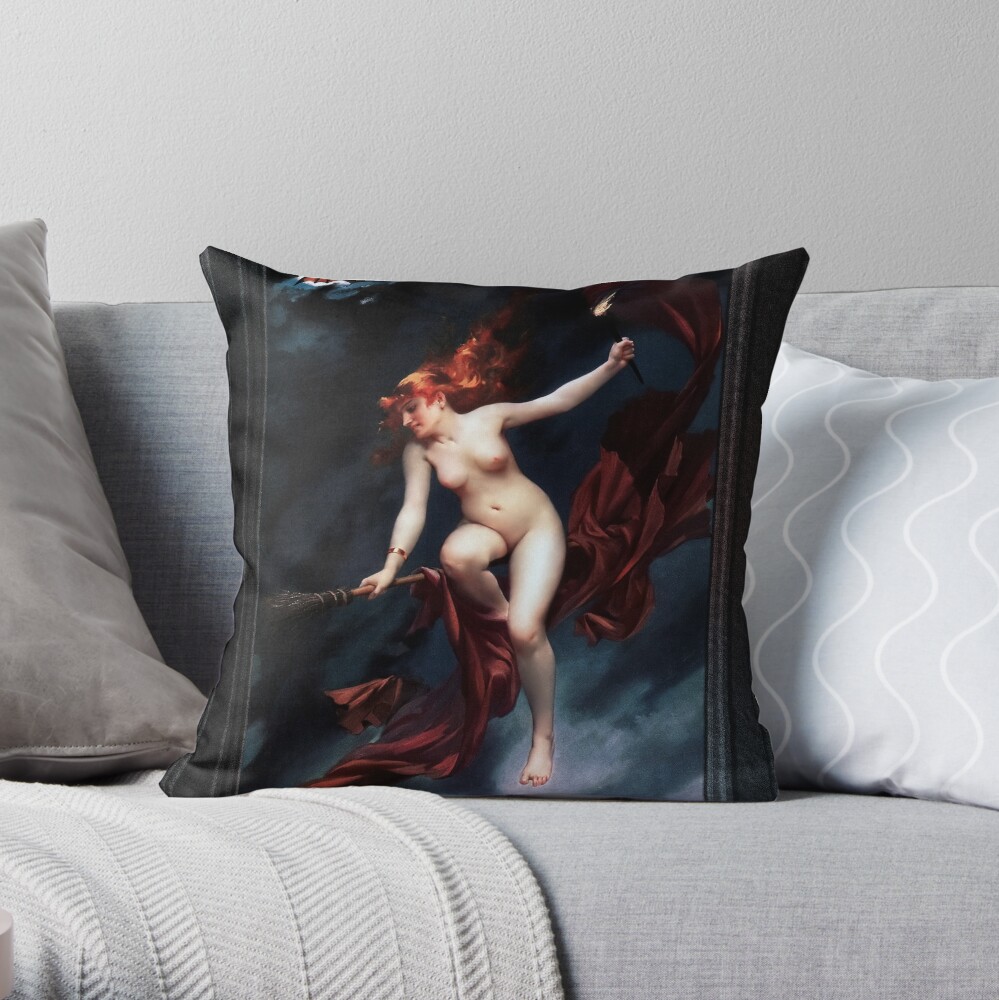
The Witches Sabbath by Luis Ricardo Falero (1851-1896) was a Spanish painter known for his evocative depictions of mythological and fantastical subjects, muitas vezes imbuído de uma sensibilidade romântica. His work frequently explored themes of the supernatural and the allure of the night, drawing inspiration from folklore and literary sources. “The Witch’s Sabbath,”pintado ao redor 1880, stands as one of Falero’s most celebrated pieces, capturing a moment of ethereal flight and nocturnal mystery. The painting is an example of academic art with elements of symbolism and romanticism that were popular during the late nineteenth century.
Índice
Elementos Composicionais & Narrative Suggestion
The composition immediately draws the viewer’s eye upward towards a central figure suspended in mid-air amidst a swirling, tempestuous sky. Esta figura, a nude woman with fiery red hair, is the focal point of the artwork. She appears to be engaged in an act of flight, propelled by a broomstick held firmly beneath her. The dramatic diagonal line created by the broom and her outstretched arm contributes significantly to the dynamism of the scene, suggesting movement and upward momentum.
The background is dominated by a dark, brooding sky filled with swirling clouds illuminated by a crescent moon. This celestial backdrop reinforces the nocturnal setting and lends an air of mystery and foreboding to the overall atmosphere. A single bat flies across the moon, adding another layer of symbolism associated with the supernatural. The artist’s skillful use of chiaroscuro – the contrast between light and dark – further enhances the drama and emphasizes the figure’s form against the shadowy background.
Figure & Técnica artística
Falero’s rendering of the female figure is notable for its anatomical accuracy, a hallmark of academic training. Her pose is graceful yet powerful, conveying a sense of both vulnerability and control. The artist meticulously details her skin tone, highlighting the subtle curves and contours of her body. The flowing red fabric that drapes around her adds to the visual interest, creating a dynamic interplay of light and shadow as it billows in the wind.
Falero’s brushwork is evident throughout the painting, particularly in the rendering of the clouds and the woman’s hair. The artist employs loose, expressive strokes to capture the movement and texture of these elements, while maintaining a level of detail in the figure itself. The color palette is dominated by cool tones – blues, cinzas, and blacks – which contribute to the overall sense of mystery and melancholy. Contudo, the warm hues of the woman’s hair and the red fabric provide a striking contrast, drawing the viewer’s attention to these key elements.
Simbolismo & Interpretação
“The Witch’s Sabbath” draws heavily on European folklore and traditions surrounding witchcraft. The image of a witch flying through the night sky on a broomstick is a recurring motif in such narratives, often associated with gatherings of witches performing rituals under the light of the full moon. Falero’s painting taps into this rich cultural heritage, evoking a sense of both fascination and apprehension.
The crescent moon itself carries symbolic weight, representing cycles, mudar, and the feminine principle. The bat, traditionally linked to darkness and the supernatural, further reinforces the painting’s association with the occult. While the artwork doesn’t explicitly depict any ritualistic actions, it suggests a moment of transformation or transcendence – a departure from the mundane world into a realm of magic and mystery.
Influências artísticas & Legado
Falero’s work reflects the influence of several artistic movements prevalent during his time. The academic training evident in his meticulous rendering of the human form aligns with the traditions of classical art. Contudo, the painting’s emphasis on emotion, atmosfera, and the supernatural also reveals a connection to Romanticism, which celebrated imagination, individualismo, and the power of nature.
“The Witch’s Sabbath” remains a compelling example of Falero’s artistic skill and his ability to capture the allure of the fantastical. The painting has been widely reproduced and admired for its dramatic composition, evocative atmosphere, and enduring appeal. It stands as a testament to the artist’s talent and his contribution to the rich tapestry of nineteenth-century Spanish art.
Technical Details & Provenance
The artwork is executed in oil on canvas. It measures approximately 105 x 74 cm (41.3 x 29.1 polegadas). The painting’s provenance, or history of ownership, has been documented through various collections and exhibitions over the years. It currently resides within a private collection. The signature “Falero – 1880” is visible in the lower right corner of the canvas.
Artist Bio Derived Wikipedia.org
Falero nasceu em Granada e originalmente seguiu carreira na Marinha Espanhola, mas desistiu para a decepção de seus pais; como ele decidiu viajar para Paris, onde ele estudou arte, química e engenharia mecânica.
Durante seus estudos em química e engenharia mecânica; ele considerou os experimentos que ele teve que conduzir muito perigosos, levando-o a concentrar sua atenção apenas na pintura.
Como resultado, ele se tornou um aluno do pintor de retratos e orientalista francês Gabriel-Joseph-Marie-Augustin Ferrier (1847 – 1914). Depois de paris, ele se mudou para Londres, onde ele continuou seus estudos, e eventualmente resolvido.
Falero tinha um interesse particular em astronomia e incorporou constelações celestes em muitas de suas obras, tal como “O casamento de um cometa” e “Estrelas gêmeas”. Seu interesse e conhecimento de astronomia também o levaram a ilustrar as obras de Camille Flammarion.
Dentro 1896, o ano de sua morte, Maud Harvey processou Falero por paternidade. O processo alegou que Falero seduziu Harvey quando ela era 17, primeiro servindo como sua empregada, e então seu modelo. Quando ele descobriu que ela estava grávida, ele a dispensou.
Ela ganhou o caso e recebeu cinco xelins por semana em apoio ao filho. Falero morreu no University College Hospital, Londres, na idade de 45
The Witches Sabbath é uma reprodução retocada dos antigos mestres de arte digital de uma imagem de domínio público; and as with all the artwork that can be found on the Xzendor7 website is available for purchase online in a variety of material formats including canvas prints, impressões acrílicas, estampas de metal, gravuras de madeira, impressões emolduradas, cartazes, e como impressões em tela enrolada em uma variedade de tamanhos de 12 polegadas para 72 inches depending on the size of the actual artwork and the print on demand shop you choose to buy the art from..