

Dona per llum daurada
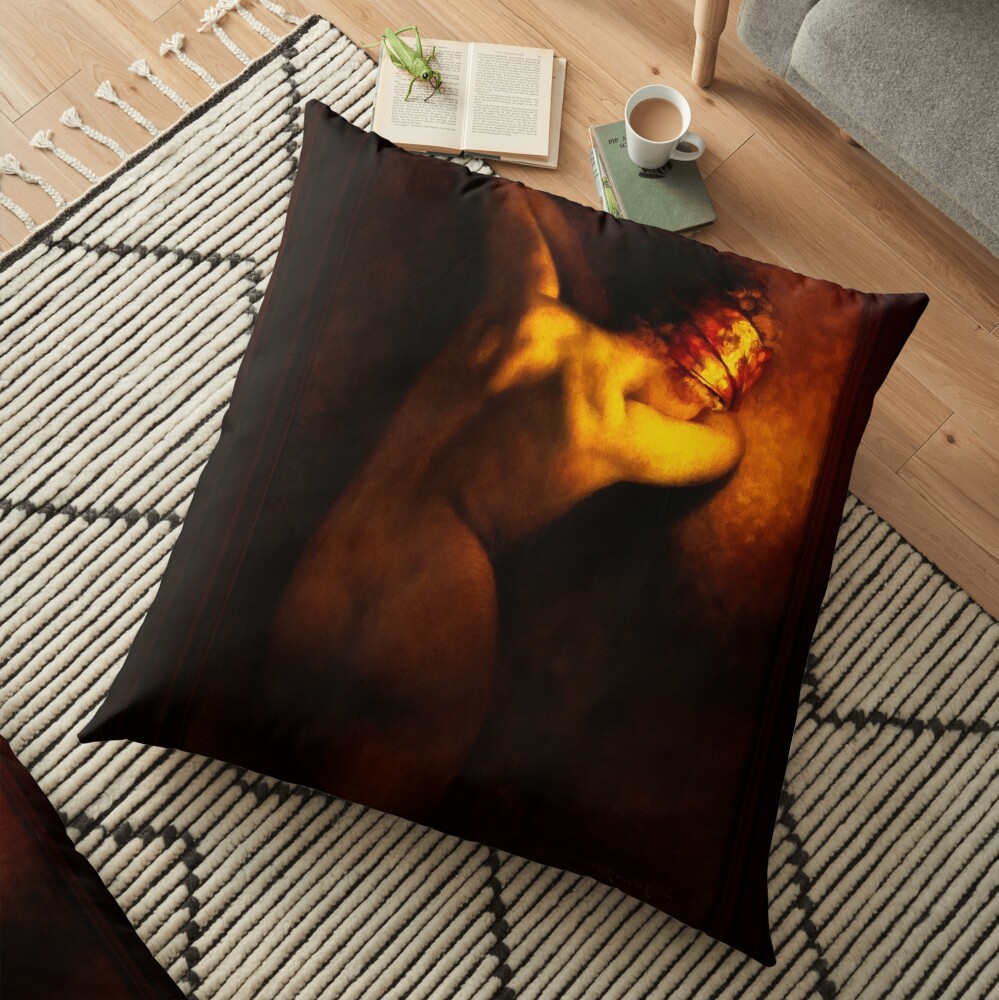
La pintura titulada “Dona per llum daurada” del pintor francès Albert Joseph Pénot (1862 – 1930) captura un moment de profunda introspecció i bellesa. La figura d'aquesta peça evocadora és una dona la forma física de la qual es revela subtilment sobre un teló de fons de calor ombrívol., renderitzat en tons apagats. La imatge es centra al voltant d'una sensació de vulnerabilitat i força tranquil·la, expressat a través de l'ús magistral de la llum i l'ombra per part de l'artista. Aquesta pintura mostra l'habilitat de Pénot per ressaltar la forma humana i l'emoció a través de la suavitat, però potents contrastos, un segell distintiu del seu enfocament per capturar la intimitat, escenes emotives.
Taula de continguts
El tema i la composició
The primary subject of the painting is a woman depicted from behind, her body facing slightly away from the viewer. She is portrayed in an undraped, yet modest pose, her body graceful and sculpted, embodying the natural elegance of the female form. The woman’s shoulders and back are illuminated by a rich, llum daurada, which bathes her skin in a soft, radiant glow, enhancing the contours and muscles of her back, subtly emphasizing the sense of movement and fluidity.
A strip of fabric, perhaps a blindfold or ribbon, encircles her head, casting a mysterious shadow over her face, which remains out of view. This use of a blindfold adds an intriguing layer of ambiguity to the composition, suggesting a theme of restraint or surrender. It invites contemplation of the subject’s inner world, positioning her as an emblem of both vulnerability and strength.
The viewer is drawn into the scene not only by the stark sensuality of the woman’s form but also by the rich interplay of light and shadow. The soft contours of her body are brought into stark contrast with the surrounding darkness, contributing to the mysterious atmosphere of the piece. La foscor, almost velvety background fades into a warm golden hue, which intensifies near her body. This light serves as a symbolic focal point, suggesting a deeper emotional or spiritual resonance, as if the subject is bathed in a moment of personal revelation or an internal struggle that remains unspoken.
Materials i Tècnica
Albert Joseph Pénot’s technical prowess is evident in the depth and texture of the paint, which is rich and tactile. The application of color is layered and nuanced, with the golden light subtly blending into the surrounding shadows. The artist uses this contrast to manipulate the viewer’s focus, leading them from the illuminated body toward the obscured, unseen elements of the composition. Pénot’s characteristic technique of blending light and shadow allows the physical form to almost emerge from the darkness, further emphasizing the sensual nature of the image.
The texture of the canvas seems almost tangible, as though one could run their fingers across the folds of light, feeling the undulating surfaces and contours. The artist’s brushstrokes are deliberate and refined, evoking a sense of intimacy while also conveying a degree of distance, enhanced by the woman’s partially obscured face and the absence of any overt narrative.
Tema i estat d’ànim
L'estat d'ànim de “Dona per llum daurada” is one of enigmatic beauty. The warm golden light suggests a moment of quiet contemplation or possibly a spiritual or emotional revelation. No obstant això, there is a sense of restraint, amplified by the blindfold, which evokes a sense of mystery. The lack of direct engagement with the viewer, through the woman’s turned back and obscured face, creates a sense of isolation and introspection. This distance between the viewer and the subject elevates the feeling of voyeurism, as if we are privy to an intimate and private moment, while also being unable to fully understand the subject’s thoughts or emotions.
The theme of light and shadow is central to this artwork, symbolizing perhaps the tension between inner revelation and outer concealment. The light that embraces the woman’s body can be seen as a metaphor for enlightenment or exposure, contrasting with the dark background that suggests secrecy or concealment. The blindfold only deepens this sense of concealment, posing questions about identity, awareness, and the nature of personal experience. There is a clear tension between revelation and mystery, with the woman’s form as the focal point of this delicate balance.
Estil i influència artística
Pénot’s style is deeply rooted in the tradition of 19th-century academic painting, where the human form was rendered with a focus on anatomical accuracy and expressive depth. La seva atenció als detalls i el seu ús del clarobscur (contrast entre la llum i la foscor) reflecteixen influències dels artistes clàssics., especialment els de l'època barroca i romàntica. La fluïdesa i el realisme amb què l'artista capta el cos humà destaquen el seu mestratge a l'hora de retratar la forma humana, mentre que el seu ús de la llum crea una narració que se sent alhora atemporal i profundament personal.
Mentre que l'ús de la llum en aquesta pintura recorda les obres dels pintors romàntics i acadèmics francesos, Pénot també introdueix una subtil ressonància emocional que transcendeix la mera física. La tranquil·la intensitat de la peça, juntament amb l'obscuritat parcial de la dona, eleva aquesta obra d'art més enllà d'un mer estudi de la forma humana a una que parla de l'experiència humana, emoció, i les capes més profundes de la identitat.
Conclusió
Albert Joseph Pénot “Dona per llum daurada” és una pintura que convida a la contemplació a través del seu delicat equilibri de llum i ombra, el seu evocador ús de la forma, i el seu enigmàtic retrat de la figura humana. La postura modesta però expressiva de la dona, combinat amb la interacció de la il·luminació i l'obscuritat, crea un estat d'ànim alhora íntim i misteriós.
A través del seu ús expert del clarobscur i una comprensió matisada de l'anatomia humana, Pénot presenta una escena profundament emocional i introspectiva que transcendeix la forma física per explorar temes de la identitat., vulnerabilitat, i l'autoconsciència. Aquesta obra d'art, com gran part de l'obra de Pénot, continua captivant l'espectador, oferint capes d'interpretació que es desenvolupen com més s'hi mira.
Es tracta d'una reproducció retocada d'art digital antic d'una imatge de domini públic que està disponible com a impressió enrotllada en línia.
Aquesta creació d'art digital, com amb totes les obres d'art que es poden trobar al lloc web de Xzendor7, es poden comprar en línia en una varietat de formats de material, incloses impressions de llenç, impressions acríliques, estampes de metall, estampes de fusta, impressions emmarcades, cartells, i com impressions de llenços enrotllats en una varietat de mides de 12 polzades a 72 polzades depenent de la mida de l'obra d'art real i de la botiga d'impressió sota demanda on trieu comprar l'art.
L'obra d'art també està disponible en una àmplia gamma de roba d'home i dona, tasses, bosses, mocadors, quaderns i revistes i molts productes de decoració de la llar.
Informació a continuació de Wikipedia.org
Albert Joseph Pénot va ser un pintor francès conegut pels nus i paisatges femenins. Avui, és més reconegut popularment i específicament per un subconjunt de pintures centrades en dones més fosques, temes més macabres.
Pénot es va preocupar en primer lloc per les representacions anatòmicament precises de les dones. Les formes femenines singulars eren el focus implícit de la seva obra, mentre que els mons que envolten els seus personatges poques vegades es realitzen més enllà d'atmosferes boiroses i taques d'ombra i llum.
Els entorns són accidentals i solen estar envoltats de boira, donant prioritat explícita a les figures.
malgrat això, Pénot era més versàtil en el seu art, i no es limitava exclusivament als nus femenins: les figures de l'església van ser un altre dels seus subjectes, a més de composicions ocasionals que representen escenes d'homes i dones de l'alta societat en narracions emmarcades per escenaris més convencionals.