

Woman with Lily
Woman with Lily by American Lithographer Louis Prang (1824 – 1909)
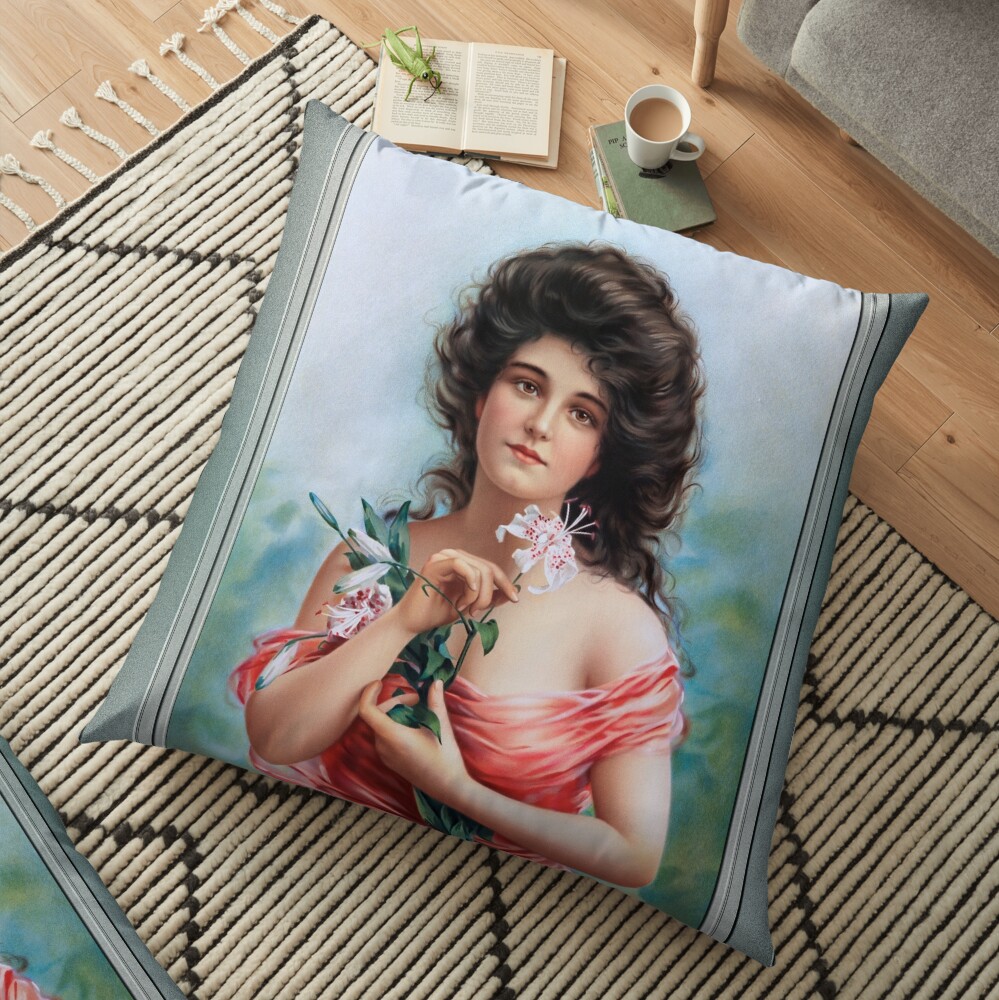
Izenburua duen artelanak “Woman with Lily” was created by American lithographer Louis Prang, jaiotako 1824 eta sartu 1909. Litografia, produced in the late 19th century, exemplifies Prang’s mastery in the detailed and vibrant portrayal of figures in the delicate style typical of the Victorian era. The image portrays a young woman holding a lily, and this piece was part of the popular genre of fine art lithography that Prang specialized in. Known for his skill in the medium of chromolithography, Prang’s work sought to combine naturalism with an idealized form of beauty, creating images that appealed to a wide audience at the time.
Edukien taula
Gai nagusia eta osaera
The central subject of the artwork is a young woman, portrayed with a serene and gentle expression. She is depicted in a soft, flowing pink dress, which contrasts beautifully with the green foliage surrounding her. The woman gazes softly at the viewer, her brown eyes exuding a sense of quiet grace and elegance. Her flowing dark hair is styled in a natural yet polished manner, with soft curls framing her face. Her posture is poised and elegant, as she gently holds a large lily in her right hand. The lily is a key feature of the composition, symbolizing purity and innocence, and its delicate white petals contrast with the soft hues of the woman’s dress and the surrounding background.
The background of the lithograph is a soft blend of light greens and blues, suggesting a tranquil outdoor scene. While the terrain is not explicitly detailed, the hazy green tones give the impression of a lush, Ezarpen naturala. Konposizio orokorra orekatua eta harmoniatsua da, with the woman’s figure positioned centrally within the frame, making her the undeniable focal point. The arrangement emphasizes her graceful demeanor, with her slightly tilted head and gentle hands reinforcing a sense of delicacy and refinement.
Estiloa eta Teknika
Prang’s lithographic technique is evident in the fine detail and vibrant color palette used throughout the piece. The subtle gradients in the woman’s dress, from light pink to deeper rose tones, highlight Prang’s skill in creating depth and dimension. The artist uses delicate shading to suggest the volume and texture of the fabric, adding to the realism of the portrait. The folds in her dress are softly rendered, materialaren fluxu naturala imitatuz.
Argiaren eta itzalen erretratua da artelanaren beste elementu aipagarri bat. Argi iturria goiko ezkerretik datorrela dirudi, emakumearen aurpegian eta besoetan distira leun bat jaurtiz. Horrek bere azala leuna nabarmentzen du, portzelana antzeko kalitatea eta hondoaren eta bere soinekoaren tonu ilunekin kontrastea egiten du. Argiak lilia ere ukitzen du, bere petalo zuriak emakumearen jantziaren arrosa leunaren aurka azpimarratuz.
Prang-en kolorearen erabilera trebeak piezaren aldarte orokorrari ere gehitzen dio. Soineko arrosaren leuntasuna, atzealdearen berdetasun oparoarekin eta tonu urdinekin konbinatuta, lasaitasun eta lasaitasun giroa sortzen du. Koloreak, distiratsua izan arren, leuntasun naturalaren sentsazioa mantendu, giro leuna eten dezaketen kontraste gogorrak saihestuz. Hondoko berde eta urdin isilek lasaitasun sentsazioa areagotzen dute, ikuslea lasaitasun batera garraiatzen ariko balitz bezala, mundu idilikoa.
Gaia eta Aldartea
Gaia “Woman with Lily” inozentziarena da, garbitasun, eta edertasun naturala. Emakume gaztea, bere ezaugarri delikatuekin eta jarrera dotorearekin, mendearen amaieran oso aintzat hartuak ziren feminitatearen idealak gorpuzten ditu. Lilia, garbitasunaren eta bertutearen sinboloa, gai hau indartzen du, irudiaren eta bere inguruko mundu naturalaren arteko harmonia-sentsazioa sortzea. Artelanean denborarik gabeko iradokizun sotil bat dago, emakumea ez baitago denbora-tarte edo ingurune jakin bati loturik, baina, horren ordez, emakumezkoen grazia eta edertasunaren sinbolo unibertsala adierazten du.
Artelanaren aldartea lasaitasuna eta lasaitasuna da. Kolore leunak, emakumearen adierazpen leuna, and the delicate floral element all contribute to a peaceful, ia ametsezko giroa. The viewer is drawn into the image not by a dramatic narrative, but by the quiet elegance of the figure and the serene environment in which she is placed. The woman’s subtle expression, with no discernible emotion other than a soft, tranquil gaze, invites the viewer to engage with her in a contemplative way, suggesting that the true beauty of the piece lies not in grand gestures or action, but in the quiet, graceful presence of the subject.
Materialak eta Exekuzioa
The lithograph was executed with great attention to detail, a hallmark of Louis Prang’s work. Litografiak substantzia koipetsu batekin harri edo metalezko gainazal batean marraztea eta gero irudia paperera transferitzea da.. Artistaren lerro-lan zehatzak eta kolorearen aplikazio arretatsuak teknika honen maisutasuna erakusten du. Prang-en zegoen, kromolitografia bizia ekoizteko metodo ezaguna zen, koloretako estanpatuak, eta bere piezen aldartea eta emozioa hobetzeko kolorea erabiltzeko zuen gaitasuna oso aintzat hartua zen.
Litografiaren kalitateak kalitate handiko paperean inprimatu zuela iradokitzen du, aberatsa ahalbidetzen duen bitartekoa, kolore biziak. Paperaren ehundura litekeena da leuna, gainazal aproposa emanez emakumearen ezaugarrien xehetasun finen eta liliaren erreprodukzio delikatua. Irudian piezaren enkoadraketak bere efektu orokorra gehitzen du, ertz apainduak artelanak transmititzen duen fintasun eta edertasun zentzua indartuz.
Bukaera
“Woman with Lily” Louis Prang-ek XIX.mendeko arte litografikoaren adibide ederra da, artistak kolorearen eta xehetasunen maisutasuna erakutsiz. Piezak edertasun femeninoaren erretratu lasai eta betikoa aurkezten du, leun baten artean emakume gazte baten grazia delikatua harrapatzen, hondo idilikoa. Kolore biziak baina leunak erabiliz, itzal sotila, eta konposizio zaindua, Prang-ek lasaitasun sentimenduak sorrarazten dituen irudi bat sortzen du, garbitasun, eta dotorezia lasaia. Lanak Prang-en trebetasun teknikoaren erakusgarri ez ezik, Victorian garaian ospatzen ziren feminitate eta edertasunaren idealak gorpuzten ditu..
Woman with Lily domeinu publikoko irudi baten erreprodukzioa da, arte digitaleko maisu zaharren erreprodukzioa mihise inprimatu sarean.
Artistari buruz
Hemendik eratorritako informazioa Wikipedia.org
Louis ehungintza fabrikatzaile baten semea zen Breslaun jaio zen Prusiar Silesian (gaur egun Poloniako hego-mendebaldea) urtean 1824 Frantziako jatorri hugonotekoa den Jonas Louis Prang-i, eta Rosina Silverman, nor zen alemaniarra.
Mutikotan Louis bere aitaren ikastun izan zen eta grabatu eta kalico tindatzeko eta inprimatzeko trebetasunak ikasi zituen., eta by 1840 Bohemiara bidaiatu zuen, Txekiar Errepublikan estanpatuak eta ehunak ekoizten zituzten enpresekin lanean.
Europan eta Europan zehar ere bidaiatu zuen 1848 Martxoko Iraultzetan o Alemaniako Iraultzetan parte hartzeko arazoak izan zituen bere burua 1848-49; horrek Alemaniako Estatua ezarri eta Konstituzio Liberala ezarri zuen.
With the Prussian government hot on his heels he traveled to Switzerland in 1850 and then emigrated to the United States; settling in Boston, Massachusetts.
In 1856 Louis along with a partner created a press company called Prang and Mayer, that produced lithographs; with a specialty in producing prints of building and towns in Massachusetts; and four years later brought out Mayer and changed the name of the company to L. Prang & Company.
The new company began work in color printing, producing advertisements and other forms of business material; and became quite successful, being known for the war maps that were distributed by newspapers during the American Civil War (1861 – 1865).
In 1864, Louis decided to leave America and travel back to Europe to learn what was then the cutting edge of German lithography printing; and upon returning home the following year, he began to produce high quality reproduction of major works of art.
Oso ezaguna bihurtu zen album-txartel sorta bat ere ekoizten hasi zen, ebakinen bildumarako bilduma gisa iragartzen zirenak, eszena naturalak eta sinbolo abertzaleak irudikatzen zituena; gero sartu 1873 Britainia Handiko merkatu ezagunerako zorion-txartelak ekoizten hasi zen eta urtebete geroago, Gabonetako Txartela Ameriketan.
Louis Prang Estatu Batuetan arte hezkuntza hobetzeko ahaleginagatik eta didaktiko arte liburuak sortu eta argitaratzeagatik ere ezaguna da.; baita arte irakasleak prestatzeko fundazioa sortzea ere.