

Young John The Baptist (28 – 36 AD) c1890
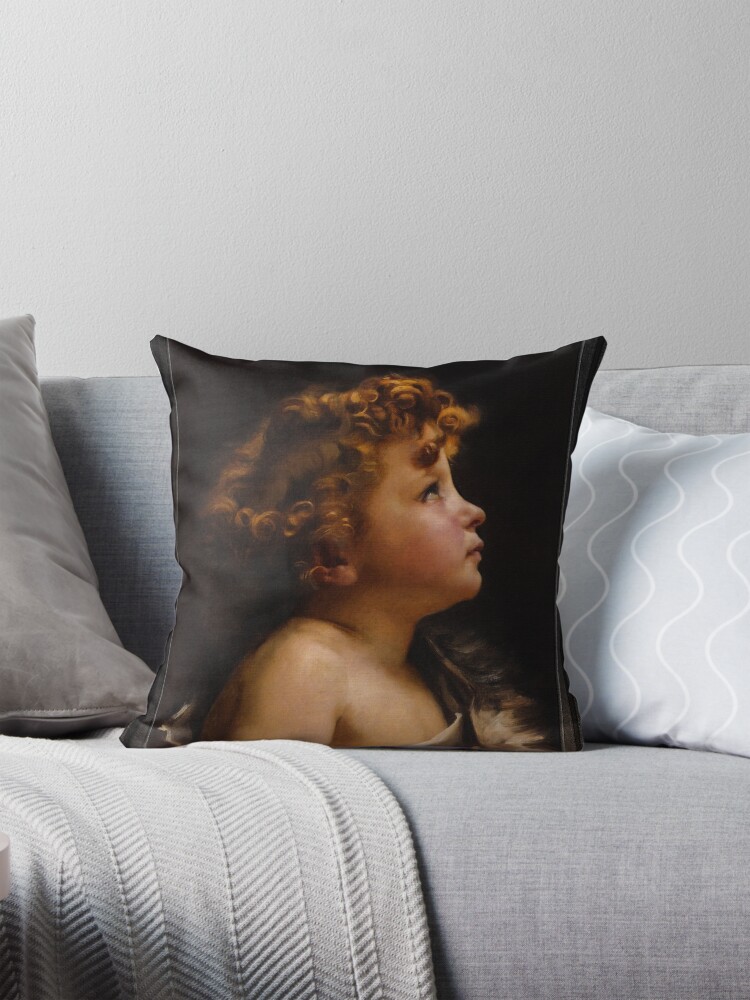
“Young John The Baptist” yn baentiad olew cyfareddol a grëwyd yn 1890 by the renowned French artist William-Adolphe Bouguereau (1825 – 1905). Known for his exceptional skill in depicting the human form with exquisite detail, Bouguereau’s work in this piece exemplifies his mastery in rendering texture, golau, and emotion. This portrayal of John the Baptist, the biblical figure revered as the forerunner of Christ, is remarkable for its tender yet powerful presentation, rooted in both classical and religious themes.
Tabl Cynnwys
Prif Bwnc
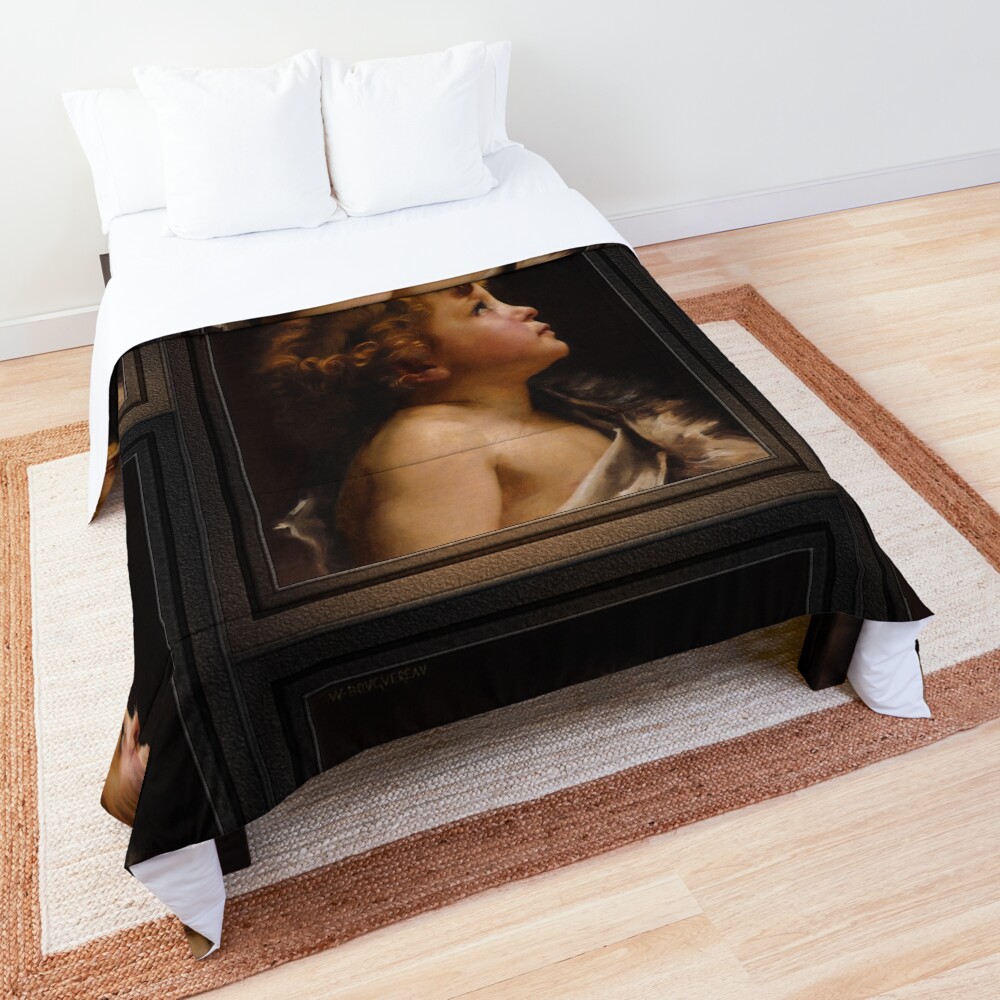
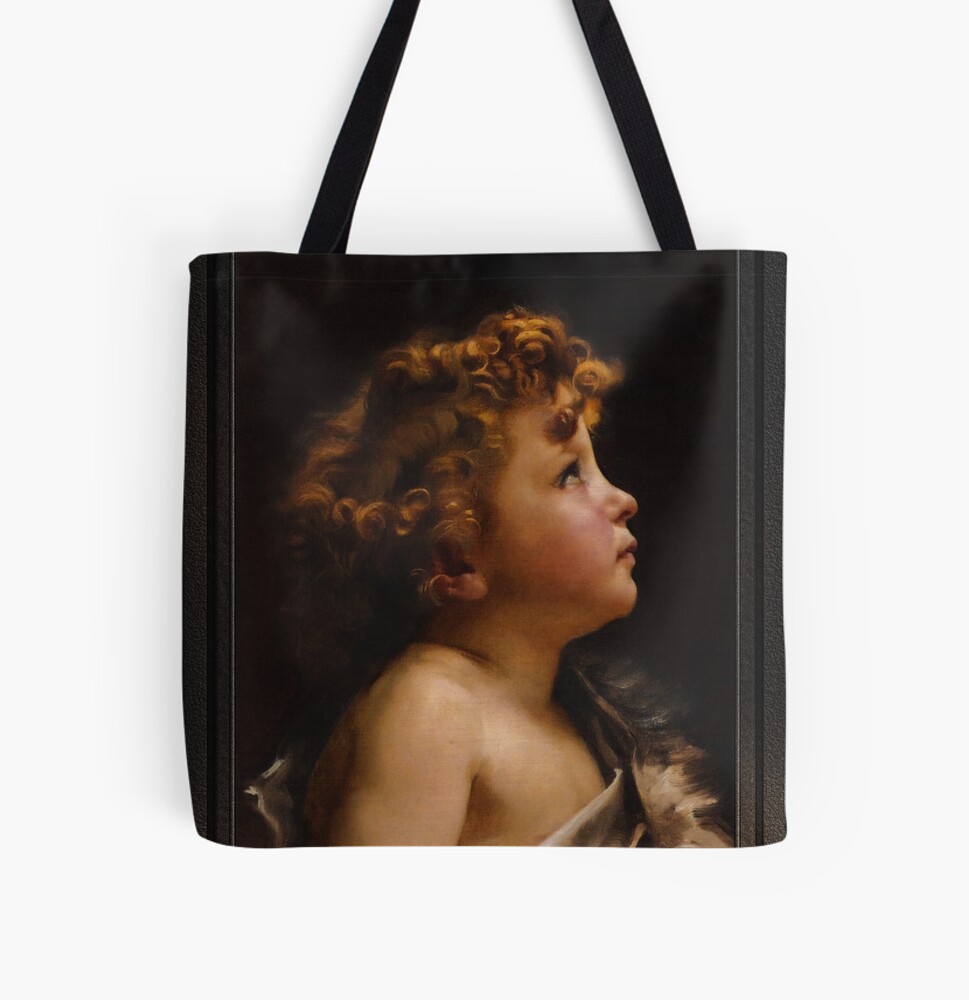
The painting centers on a young boy, who is identified as John the Baptist, depicted in a moment of contemplation or spiritual reflection. His youth, marked by soft, tousled curls, delicate facial features, and an innocent expression, captures the purity and virtue associated with the figure. The child’s upward gaze is subtle yet suggestive of an inner connection with the divine, reinforcing the spiritual nature of the work. His youthful face, framed by wild curls, stands in contrast to his humble attire, which further emphasizes his role as a figure of modesty and piety.
Cyfansoddiad a Gosodiad
Bouguereau carefully arranges the figure of John against a dark, almost ethereal backdrop that suggests a focus on the child alone. This darkened background allows the viewer’s attention to be drawn primarily to the light illuminating the figure’s face, highlighting the soft texture of his skin and the intricate details in his hair. The light serves as a symbolic halo, enhancing the divine essence of the figure while reflecting the religious nature of the painting. The child’s posture is gentle, his right shoulder slightly exposed with the folds of his drapery draped over his left shoulder and across his chest, which brings a fluid, almost graceful quality to the scene.
Deunyddiau a Thechneg
As with much of Bouguereau’s oeuvre, the artist employed oil paints to create a smooth, almost photographic finish. His technique of layering fine glazes of paint allowed him to achieve a luminous quality in the skin tones, with a nearly tangible softness. The rendering of the child’s hair is particularly noteworthy, with each curl meticulously painted to capture the natural movement and texture of the hair. Bouguereau’s application of light is masterful, bwrw cynnes, gentle glow across the subject’s face and neck. The use of soft yet precise brushstrokes contributes to the fluidity and lifelike appearance of the work, particularly in the way the fabric of the drapery folds with a natural flow.
Naws a Thema
Mae naws “Young John The Baptist” is serene and contemplative. The young boy’s expression conveys a sense of quiet reflection, perhaps an inner connection to a higher calling or divine message. Bouguereau’s portrayal of John the Baptist as a vulnerable, innocent child contrasts with the usual depictions of him as a powerful and austere figure in religious iconography. This choice of youth emphasizes the purity of the subject and the potential for great spiritual significance in even the most humble of beginnings. The simplicity of the setting, devoid of any distraction, reinforces the sacredness of the moment.
The theme of the painting ties deeply to Bouguereau’s interest in realism and religious iconography, presenting John the Baptist not as an adult prophet but as an innocent and vulnerable child. The softness and tenderness of the figure reflect a child’s innate connection to spirituality, symbolizing both a literal and figurative embodiment of purity and prophecy. The calmness of the subject also emphasizes the message of faith, highlighting the potential of human spirit and devotion.
Symbolaeth
The young boy’s gaze and delicate posture suggest both innocence and divine insight. His lack of any overt symbols or physical attributes of John the Baptist, such as a lamb or a staff, invites the viewer to focus on his spiritual essence, making the painting not just a representation of the historical figure but a visual exploration of the deeper, more abstract concept of faith and purity. The light illuminating John’s face can also be seen as a subtle reference to the divine, suggesting his importance within the Christian narrative while maintaining the soft naturalism that Bouguereau is celebrated for.
Argraff Gyffredinol
“Young John The Baptist” is a striking blend of realism and religious symbolism, characterized by Bouguereau’s technical precision and emotional depth. The painting transcends a simple portrait of a biblical figure, offering instead an intimate and meditative portrayal of youthful innocence and divine potential. Bouguereau’s work in this painting serves as a poignant reminder of the tender and sacred aspects of human existence, inviting viewers to reflect on the purity and spiritual insight of a child, ac efallai, the deeper spiritual message of faith.
Young John The Baptist (28 – 36 AD) c1890 by French Painter William-Adolphe Bouguereau (1825 – 1905); yn arlunydd Academaidd sy'n adnabyddus am ddefnyddio themâu mytholegol gyda dehongliad modern o ddeunydd pwnc clasurol gyda ffocws ar y ffurf fenywaidd ddynol.
A portrait of John The Baptist as a child looking towards Heaven as the light of GOD illuminates him.
Young John The Baptist is a retouched digital art old masters reproduction of a public domain image that is available online as a print metel.
Gwybodaeth Isod Trwy garedigrwydd Wikipedia.org
Ganed William Adolphe Bouguereau yn La Rochelle, Ffrainc, ymlaen 30 Tachwedd 1825, i mewn i deulu o fasnachwyr gwin ac olew olewydd.[4] Mab Thododore Bouregaua (ngenedig 1800) a Marie Bonnin (1804), a elwir yn Adeline, Magwyd William yn Babydd. Yr oedd ganddo frawd hynaf, Alfred, a chwaer iau, Marie (a elwir Hanna), a fu farw pan oedd hi'n saith.
Symudodd y teulu i Saint-Martin-de-Ré yn 1832. Ganwyd brawd neu chwaer arall yn 1834, Kitty. Yn oed 12, Aeth Bouguereau i Mortagne i aros gyda'i ewythr Eugène, offeiriad a datblygodd gariad at natur, crefydd a llenyddiaeth.
Yn 1839, anfonwyd ef i astudio ar gyfer yr offeiriadaeth mewn coleg Catholig yn Pons. Yma cafodd ei ddysgu i dynnu llun a phaentio gan Louis Sage, a oedd wedi astudio o dan Ingres. Yn anfoddog gadawodd Bouguereau ei astudiaethau i ddychwelyd at ei deulu, yn awr yn preswylio yn Bordeaux.
Yno, cyfarfu ag arlunydd lleol, Charles Marionneau, a chychwyn yn yr Ysgol Ddinesig o Ddarlunio a Phaentio ym mis Tachwedd 1841. Bu Bouguereau hefyd yn gweithio fel cynorthwyydd siop, lithograffau lliwio â llaw a gwneud paentiadau bach a atgynhyrchwyd gan ddefnyddio cromolithograffeg.
Ef yn fuan oedd y disgybl gorau yn ei ddosbarth, a phenderfynodd ddod yn arlunydd ym Mharis. I ariannu'r symudiad, Gwerthodd bortreadau - 33 olewau mewn tri mis. Roedd pob un heb ei arwyddo a dim ond un sydd wedi'i olrhain. Cyrhaeddodd Paris oed 20 ym mis Mawrth 1846.
Cydraddoldeb cyn marwolaeth (Cydraddoldeb Cyn Marwolaeth), 1848, olew ar gynfas, 141 × 269 cm (55.5 × 105.9 yn), Amgueddfa ORSAY, Paris. Cydraddoldeb yw paentiad mawr cyntaf Bouguereau, a gynhyrchwyd ar ôl dwy flynedd yn yr École des Beaux-Arts de Paris yn oed 23.
Daeth Bouguereau yn fyfyriwr yn yr école des Beaux-Arts.[4] I ychwanegu at ei hyfforddiant ffurfiol mewn lluniadu, mynychodd ddyraniadau anatomegol ac astudiodd wisgoedd hanesyddol ac archaeoleg.
Derbyniwyd ef i stiwdio François-Édouard Picot, lle bu'n astudio peintio yn yr arddull academaidd. Dante a Virgil yn Uffern (1850) yn enghraifft gynnar o'i weithiau neo-glasurol.
Gosododd paentio academaidd y statws uchaf ar bynciau hanesyddol a mytholegol, a Bouguereau yn benderfynol o ennill y Prix de Rome, a fyddai'n ennill preswyliad tair blynedd iddo yn y Villa Medici yn Rhufain, Yr Eidal, lle yn ogystal â gwersi ffurfiol gallai astudio'n uniongyrchol artistiaid y Dadeni a'u campweithiau, yn ogystal â Groeg, Etrwsgaidd, a hynafiaethau Rhufeinig.