

Der junge Johannes der Täufer (28 – 36 ANZEIGE) c1890
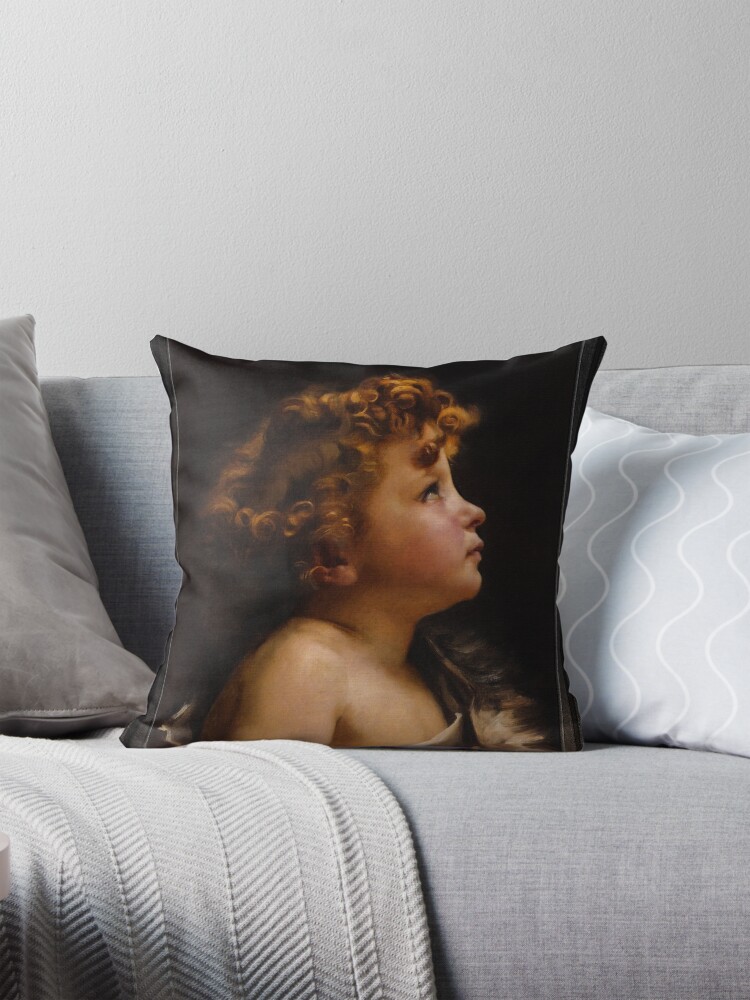
“Der junge Johannes der Täufer” is a captivating oil painting created in 1890 by the renowned French artist William-Adolphe Bouguereau (1825 – 1905). Known for his exceptional skill in depicting the human form with exquisite detail, Bouguereau’s work in this piece exemplifies his mastery in rendering texture, Licht, und Emotion. This portrayal of John the Baptist, the biblical figure revered as the forerunner of Christ, is remarkable for its tender yet powerful presentation, rooted in both classical and religious themes.
Inhaltsverzeichnis
Hauptthema
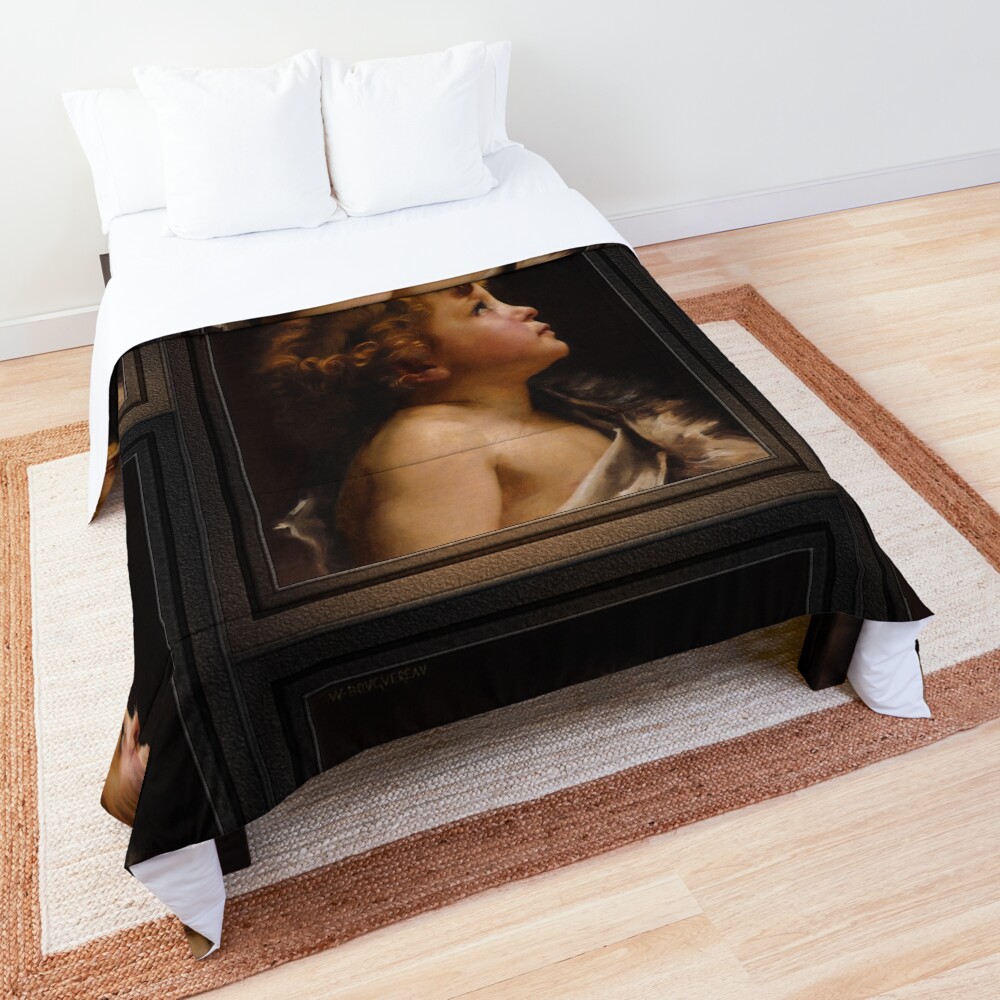
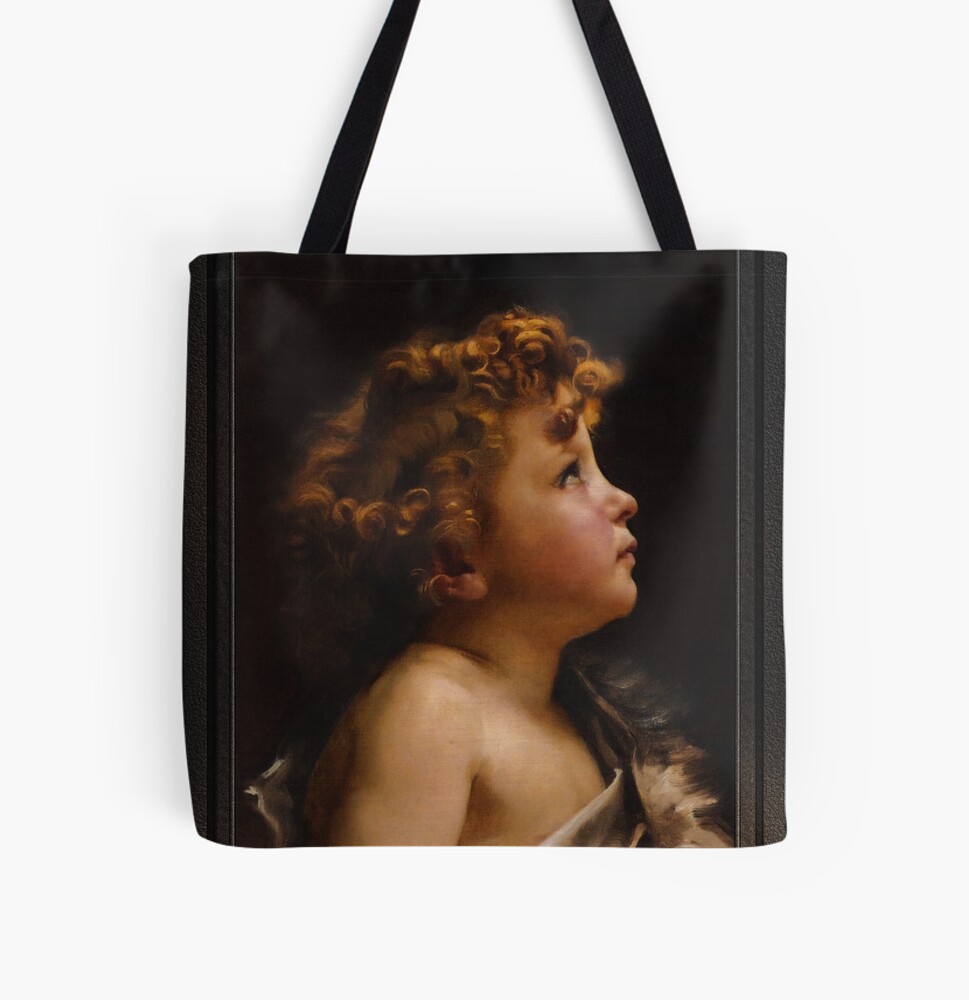
The painting centers on a young boy, who is identified as John the Baptist, depicted in a moment of contemplation or spiritual reflection. His youth, marked by soft, tousled curls, delicate facial features, and an innocent expression, captures the purity and virtue associated with the figure. The child’s upward gaze is subtle yet suggestive of an inner connection with the divine, reinforcing the spiritual nature of the work. His youthful face, framed by wild curls, stands in contrast to his humble attire, which further emphasizes his role as a figure of modesty and piety.
Composition and Layout
Bouguereau carefully arranges the figure of John against a dark, almost ethereal backdrop that suggests a focus on the child alone. This darkened background allows the viewer’s attention to be drawn primarily to the light illuminating the figure’s face, highlighting the soft texture of his skin and the intricate details in his hair. The light serves as a symbolic halo, enhancing the divine essence of the figure while reflecting the religious nature of the painting. The child’s posture is gentle, his right shoulder slightly exposed with the folds of his drapery draped over his left shoulder and across his chest, which brings a fluid, almost graceful quality to the scene.
Materialien und Technik
As with much of Bouguereau’s oeuvre, the artist employed oil paints to create a smooth, almost photographic finish. His technique of layering fine glazes of paint allowed him to achieve a luminous quality in the skin tones, with a nearly tangible softness. The rendering of the child’s hair is particularly noteworthy, with each curl meticulously painted to capture the natural movement and texture of the hair. Bouguereau’s application of light is masterful, ein warmes Gießen, gentle glow across the subject’s face and neck. The use of soft yet precise brushstrokes contributes to the fluidity and lifelike appearance of the work, particularly in the way the fabric of the drapery folds with a natural flow.
Stimmung und Thema
Die Stimmung von “Der junge Johannes der Täufer” is serene and contemplative. The young boy’s expression conveys a sense of quiet reflection, perhaps an inner connection to a higher calling or divine message. Bouguereau’s portrayal of John the Baptist as a vulnerable, innocent child contrasts with the usual depictions of him as a powerful and austere figure in religious iconography. This choice of youth emphasizes the purity of the subject and the potential for great spiritual significance in even the most humble of beginnings. The simplicity of the setting, devoid of any distraction, reinforces the sacredness of the moment.
The theme of the painting ties deeply to Bouguereau’s interest in realism and religious iconography, presenting John the Baptist not as an adult prophet but as an innocent and vulnerable child. The softness and tenderness of the figure reflect a child’s innate connection to spirituality, symbolizing both a literal and figurative embodiment of purity and prophecy. The calmness of the subject also emphasizes the message of faith, highlighting the potential of human spirit and devotion.
Symbolismus
The young boy’s gaze and delicate posture suggest both innocence and divine insight. His lack of any overt symbols or physical attributes of John the Baptist, such as a lamb or a staff, invites the viewer to focus on his spiritual essence, making the painting not just a representation of the historical figure but a visual exploration of the deeper, more abstract concept of faith and purity. The light illuminating John’s face can also be seen as a subtle reference to the divine, suggesting his importance within the Christian narrative while maintaining the soft naturalism that Bouguereau is celebrated for.
Gesamteindruck
“Der junge Johannes der Täufer” is a striking blend of realism and religious symbolism, characterized by Bouguereau’s technical precision and emotional depth. The painting transcends a simple portrait of a biblical figure, offering instead an intimate and meditative portrayal of youthful innocence and divine potential. Bouguereau’s work in this painting serves as a poignant reminder of the tender and sacred aspects of human existence, inviting viewers to reflect on the purity and spiritual insight of a child, und vielleicht, the deeper spiritual message of faith.
Der junge Johannes der Täufer (28 – 36 ANZEIGE) um 1890 von einem französischen Maler William-Adolphe Bouguereau (1825 – 1905); war ein akademischer Maler, der für die Verwendung mythologischer Themen mit einer modernen Interpretation klassischer Themen mit Schwerpunkt auf der menschlichen weiblichen Form bekannt ist.
Ein Porträt von Johannes dem Täufer als Kind, das zum Himmel blickt, während das Licht GOTTES ihn erleuchtet.
Der junge Johannes der Täufer ist eine retuschierte digitale Kunstreproduktion eines gemeinfreien Bildes alter Meister, die online als verfügbar ist Metalldruck.
Info unten mit freundlicher Genehmigung Wikipedia.org
William-Adolphe Bouguereau wurde in La Rochelle geboren, Frankreich, an 30 November 1825, in eine Familie von Wein- und Olivenölhändlern.[4] Der Sohn von Théodore Bouguereau (geboren 1800) und Marie Bonnin (1804), bekannt als Adeline, William wurde katholisch erzogen. Er hatte einen älteren Bruder, Alfred, und eine jüngere Schwester, Marie (bekannt als Hanna), die starb, als sie sieben war.
Die Familie zog nach Saint-Martin-de-Ré in 1832. Ein weiteres Geschwisterchen wurde in . geboren 1834, Kätzchen. Im Alter von 12, Bouguereau ging nach Mortagne, um bei seinem Onkel Eugène . zu bleiben, Priester und entwickelte eine Liebe zur Natur, Religion und Literatur.
Im 1839, er wurde zum Priesterstudium an ein katholisches College in Pons . geschickt. Hier lernte er Zeichnen und Malen von Louis Sage, der bei Ingres studiert hatte. Bouguereau verließ widerwillig sein Studium, um zu seiner Familie zurückzukehren, jetzt wohnhaft in Bordeaux.
Dort lernte er einen lokalen Künstler kennen, Charles Marioneau, und begann im November an der Städtischen Schule für Zeichnen und Malen 1841. Bouguereau arbeitete auch als Verkäuferin, Handkolorieren von Lithographien und Anfertigung kleiner Gemälde, die mit Chromolithographie reproduziert wurden.
Er war bald der beste Schüler seiner Klasse, und beschloss, Künstler in Paris zu werden. Um den Umzug zu finanzieren, er verkaufte Porträts – 33 Öle in drei Monaten. Alle waren unsigniert und nur einer wurde zurückverfolgt. Er kam in Paris im Alter an 20 März 1846.
Gleichberechtigung vor dem Tod (Gleichheit vor dem Tod), 1848, Öl auf Leinwand, 141 × 269 cm (55.5 × 105.9 im), Orsay-Museum, Paris. Gleichheit ist Bouguereaus erstes großes Gemälde, produziert nach zwei Jahren an der École des Beaux-Arts de Paris im Alter von 23.
Bouguereau wurde Student an der École des Beaux-Arts.[4] Zur Ergänzung seiner formalen Ausbildung im Zeichnen, er besuchte anatomische Sektionen und studierte historische Kostüme und Archäologie.
Er wurde in das Atelier von François-Édouard Picot . aufgenommen, wo er Malerei im akademischen Stil studierte. Dante und Virgil in der Hölle (1850) war ein frühes Beispiel seiner neoklassischen Werke.
Die akademische Malerei räumte historischen und mythologischen Themen den höchsten Stellenwert ein, und Bouguereau entschlossen, den Prix de Rome zu gewinnen, was ihm einen dreijährigen Aufenthalt in der Villa Medici in Rom einbringen würde, Italien, wo er neben dem formalen Unterricht die Renaissance-Künstler und ihre Meisterwerke aus erster Hand studieren konnte, sowie Griechisch, Etrusker, und römische Altertümer.