

Young John The Baptist (28 – 36 AD) c1890
“Young John The Baptist” is a captivating oil painting created in 1890 by the renowned French artist William-Adolphe Bouguereau (1825 – 1905). Known for his exceptional skill in depicting the human form with exquisite detail, Bouguereau’s work in this piece exemplifies his mastery in rendering texture, ljocht, en emoasje. This portrayal of John the Baptist, the biblical figure revered as the forerunner of Christ, is remarkable for its tender yet powerful presentation, rooted in both classical and religious themes.
Ynhâldsopjefte
Haad ûnderwerp
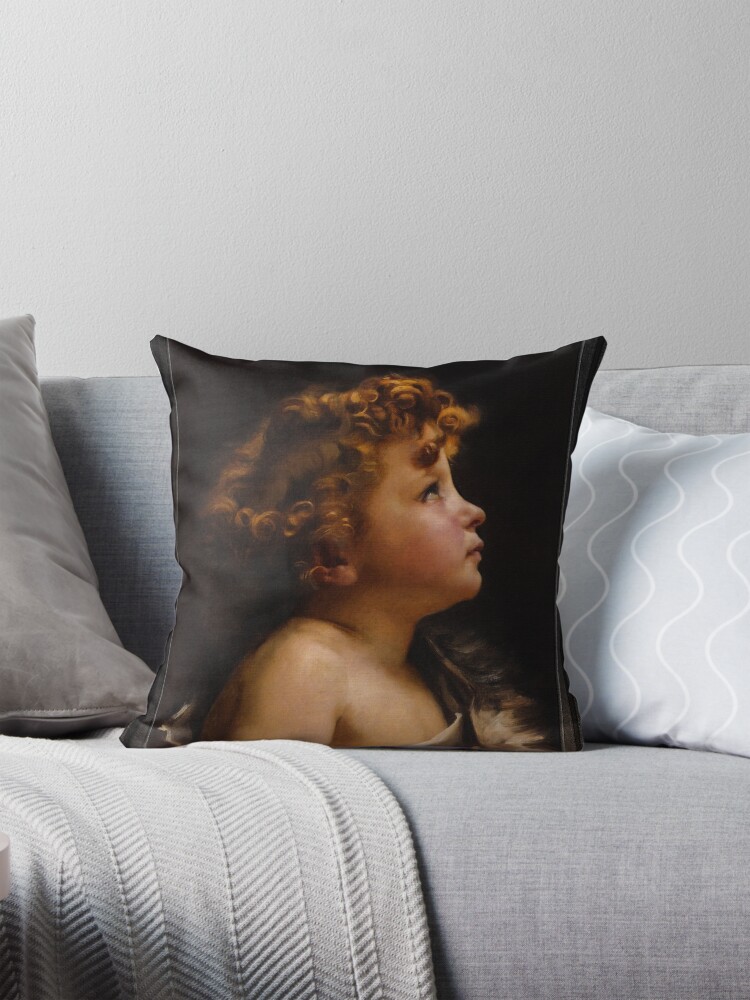
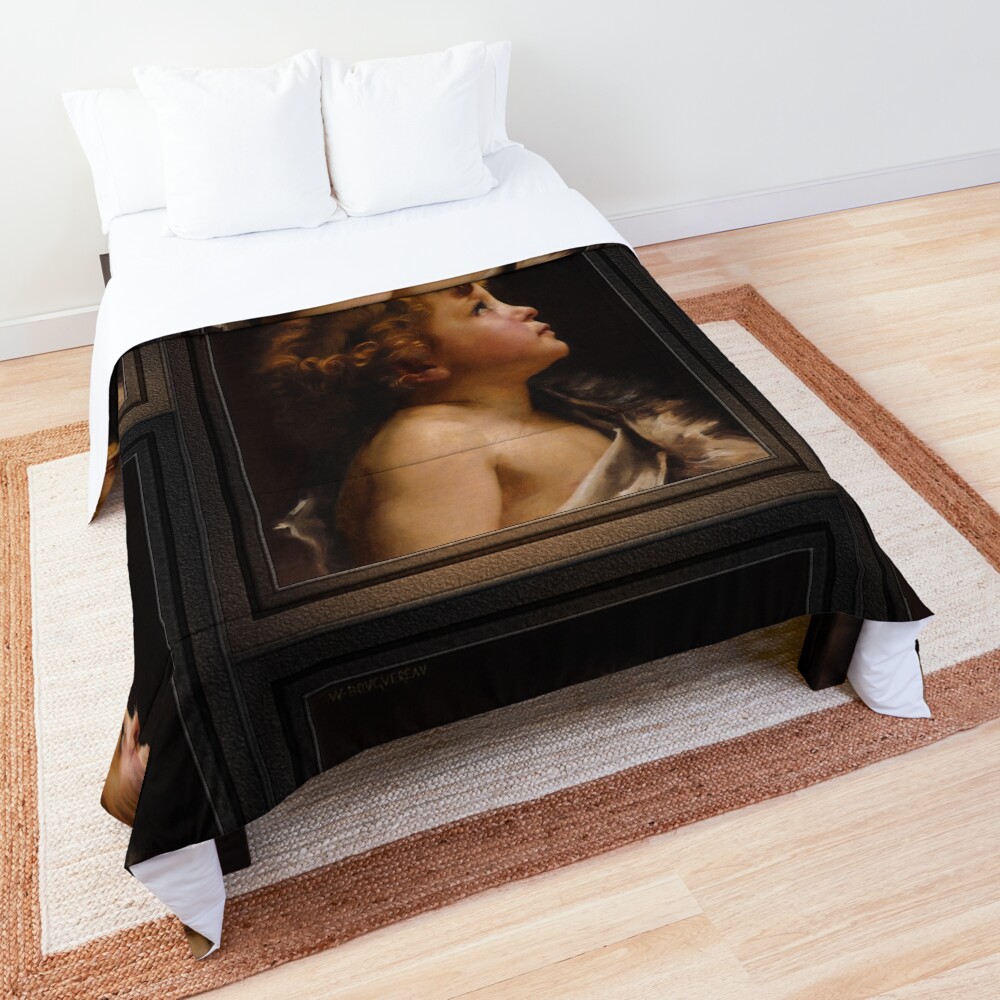
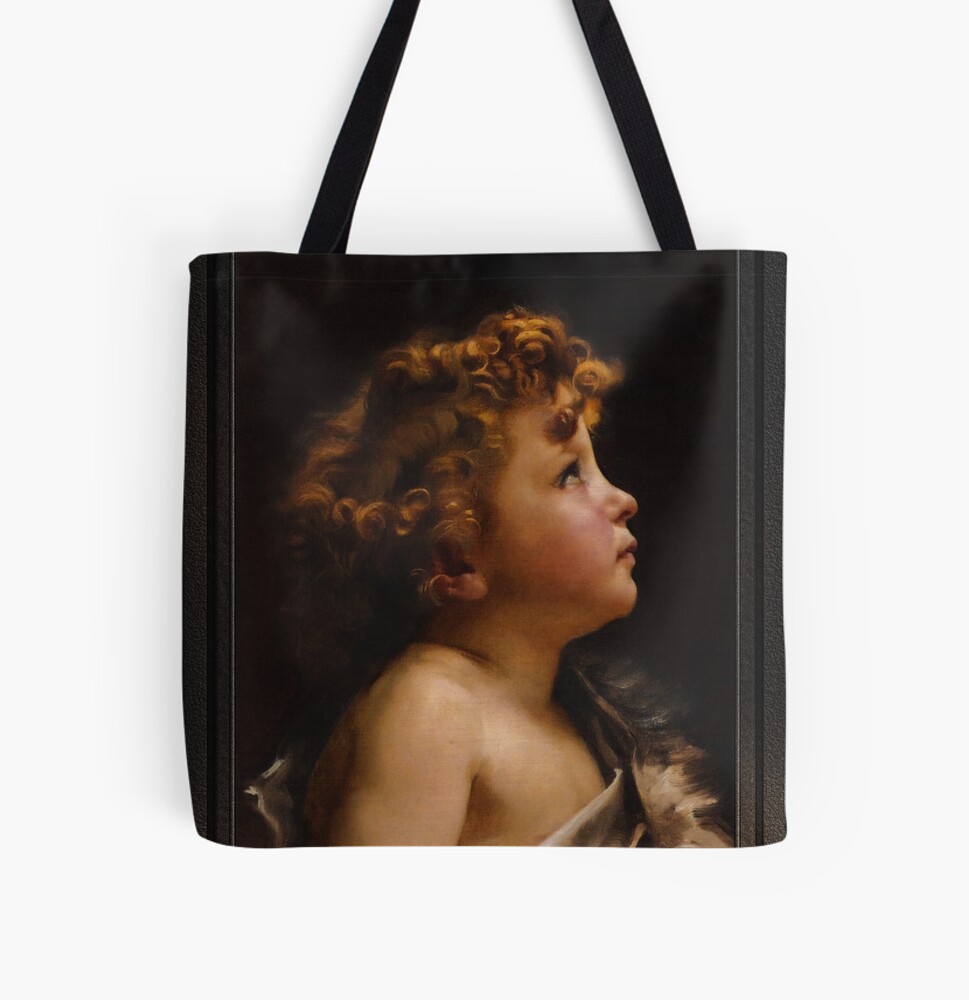
The painting centers on a young boy, who is identified as John the Baptist, depicted in a moment of contemplation or spiritual reflection. His youth, marked by soft, tousled curls, delicate facial features, and an innocent expression, captures the purity and virtue associated with the figure. The child’s upward gaze is subtle yet suggestive of an inner connection with the divine, reinforcing the spiritual nature of the work. His youthful face, framed by wild curls, stands in contrast to his humble attire, which further emphasizes his role as a figure of modesty and piety.
Gearstalling en yndieling
Bouguereau carefully arranges the figure of John against a dark, almost ethereal backdrop that suggests a focus on the child alone. This darkened background allows the viewer’s attention to be drawn primarily to the light illuminating the figure’s face, highlighting the soft texture of his skin and the intricate details in his hair. The light serves as a symbolic halo, enhancing the divine essence of the figure while reflecting the religious nature of the painting. The child’s posture is gentle, his right shoulder slightly exposed with the folds of his drapery draped over his left shoulder and across his chest, which brings a fluid, almost graceful quality to the scene.
Materiaal en technyk
As with much of Bouguereau’s oeuvre, the artist employed oil paints to create a smooth, almost photographic finish. His technique of layering fine glazes of paint allowed him to achieve a luminous quality in the skin tones, with a nearly tangible softness. The rendering of the child’s hair is particularly noteworthy, with each curl meticulously painted to capture the natural movement and texture of the hair. Bouguereau’s application of light is masterful, casting in waarm, gentle glow across the subject’s face and neck. The use of soft yet precise brushstrokes contributes to the fluidity and lifelike appearance of the work, particularly in the way the fabric of the drapery folds with a natural flow.
Moommet en tema
De stimming fan “Young John The Baptist” is serene and contemplative. The young boy’s expression conveys a sense of quiet reflection, perhaps an inner connection to a higher calling or divine message. Bouguereau’s portrayal of John the Baptist as a vulnerable, innocent child contrasts with the usual depictions of him as a powerful and austere figure in religious iconography. This choice of youth emphasizes the purity of the subject and the potential for great spiritual significance in even the most humble of beginnings. De ienfâld fan 'e ynstelling, devoid of any distraction, reinforces the sacredness of the moment.
The theme of the painting ties deeply to Bouguereau’s interest in realism and religious iconography, presenting John the Baptist not as an adult prophet but as an innocent and vulnerable child. The softness and tenderness of the figure reflect a child’s innate connection to spirituality, symbolizing both a literal and figurative embodiment of purity and prophecy. The calmness of the subject also emphasizes the message of faith, highlighting the potential of human spirit and devotion.
Symbolisme
The young boy’s gaze and delicate posture suggest both innocence and divine insight. His lack of any overt symbols or physical attributes of John the Baptist, such as a lamb or a staff, invites the viewer to focus on his spiritual essence, making the painting not just a representation of the historical figure but a visual exploration of the deeper, more abstract concept of faith and purity. The light illuminating John’s face can also be seen as a subtle reference to the divine, suggesting his importance within the Christian narrative while maintaining the soft naturalism that Bouguereau is celebrated for.
Algemiene yndruk
“Young John The Baptist” is a striking blend of realism and religious symbolism, characterized by Bouguereau’s technical precision and emotional depth. The painting transcends a simple portrait of a biblical figure, offering instead an intimate and meditative portrayal of youthful innocence and divine potential. Bouguereau’s work in this painting serves as a poignant reminder of the tender and sacred aspects of human existence, inviting viewers to reflect on the purity and spiritual insight of a child, en miskien, the deeper spiritual message of faith.
Young John The Baptist (28 – 36 AD) c1890 by French Painter William-Adolphe Bouguereau (1825 – 1905); wie in akademyske skilder bekend om it gebrûk fan mytologyske tema's mei in moderne ynterpretaasje fan klassike ûnderwerp mei in fokus op 'e minsklike froulike foarm.
A portrait of John The Baptist as a child looking towards Heaven as the light of GOD illuminates him.
Young John The Baptist is a retouched digital art old masters reproduction of a public domain image that is available online as a metalen print.
Info hjirûnder Courtesy Wikipedia.org
William Adolphe Bouguereau waard berne yn La Rochelle, Frankryk, op 30 novimber 1825, yn in famylje fan wyn- en oliveeljehannelers.[4] De soan fan Théodore Bouguereau (berne 1800) en Marie Bonnin (1804), bekend as Adeline, Willem waard in katolyk grutbrocht. Hy hie in âldere broer, Alfred, en in jongere suster, Marie (bekend as Hanna), dy't stoar doe't se sân wie.
De famylje ferhuze nei Saint-Martin-de-Ré yn 1832. In oare sibling waard berne yn 1834, Kitty. Yn de âldens fan 12, Bouguereau gie nei Mortagne om by syn omke Eugène te bliuwen, in pryster en ûntwikkele in leafde foar de natuer, religy en literatuer.
Yn 1839, hy waard stjoerd om te studearjen foar it prysterskip oan in katolike kolleezje yn Pons. Hjir waard hy leard te tekenjen en te skilderjen troch Louis Sage, dy't ûnder Ingres studearre hie. Bouguereau ferliet mei tsjinsin syn stúdzje om werom te gean nei syn famylje, wennet no yn Bordeaux.
Dêr moete er in pleatslike keunstner, Charles Marioneau, en begûn yn novimber oan de Gemeentelike Skoalle foar Teken en Skilderjen 1841. Bouguereau wurke ek as winkelmeiwurker, lithografy mei de hân ynkleure en lytse skilderijen meitsje dy't mei chromolithografy reprodusearre waarden.
Hy wie al gau de bêste learling yn syn klasse, en besleat keunstner te wurden yn Parys. Om de ferhuzing te finansieren, hy ferkocht portretten - 33 oaljes yn trije moannen. Allegear wiene net ûndertekene en mar ien is opspoard. Hy kaam yn Parys âld 20 yn maart 1846.
Gelikensens foar de dea (Gelikensens foar de dea), 1848, oalje op doek, 141 × 269 cm (55.5 × 105.9 yn), Musée d'Orsay, Parys. Gelikensens is Bouguereau syn earste grutte skilderij, produsearre nei twa jier oan de École des Beaux-Arts de Paris op 'e leeftyd fan 23.
Bouguereau waard studint oan de École des Beaux-Arts.[4] Om syn formele oplieding yn tekenjen oan te foljen, hy besocht anatomyske disseksjes en studearre histoaryske kostúms en argeology.
Hy waard talitten ta it atelier fan François-Édouard Picot, dêr't er skilderjen yn 'e akademyske styl studearre. Dante en Vergilius yn 'e hel (1850) wie in ier foarbyld fan syn neoklassike wurken.
Akademysk skilderjen pleatste de heechste status op histoaryske en mytologyske ûnderwerpen, en Bouguereau besletten om de Prix de Rome te winnen, dy't him in trije jier ferbliuw krije soe yn 'e Villa Medici yn Rome, Itaalje, dêr't er njonken formele lessen út 'e earste hân de keunstners fan 'e Renêssânse en har masterwurken bestudearje koe, likegoed as Gryksk, Etruskysk, en Romeinske âldheden.