

Il giovane Giovanni Battista (28 – 36 ANNO DOMINI) c1890
“Il giovane Giovanni Battista” is a captivating oil painting created in 1890 by the renowned French artist William-Adolphe Bouguereau (1825 – 1905). Known for his exceptional skill in depicting the human form with exquisite detail, Bouguereau’s work in this piece exemplifies his mastery in rendering texture, leggero, ed emozione. This portrayal of John the Baptist, the biblical figure revered as the forerunner of Christ, is remarkable for its tender yet powerful presentation, rooted in both classical and religious themes.
Sommario
Argomento principale
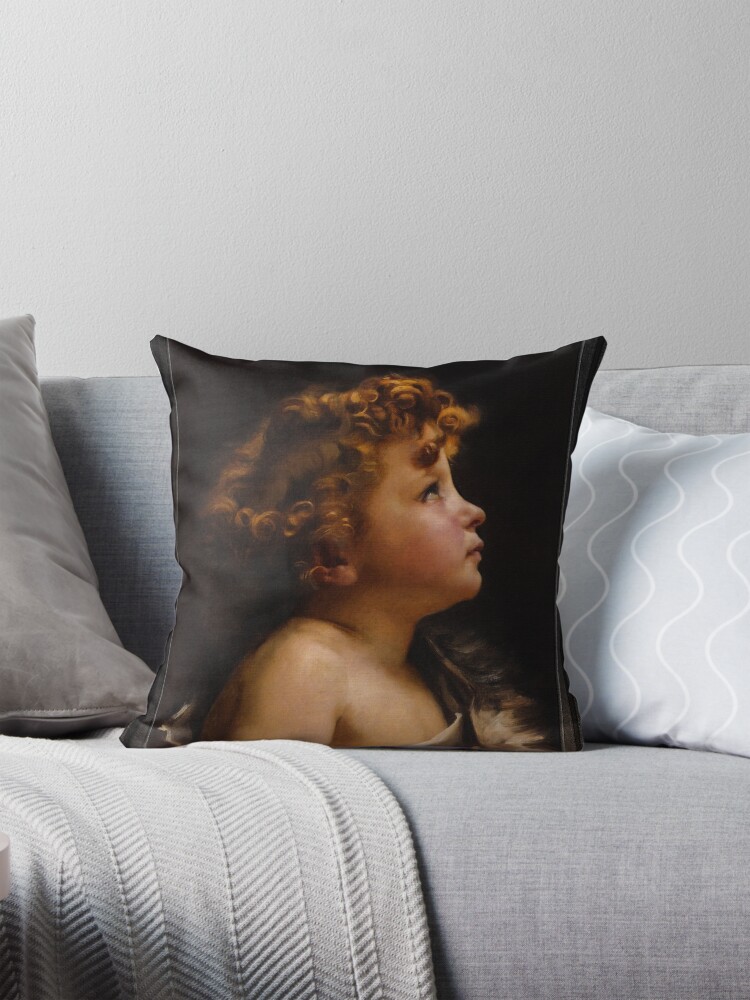
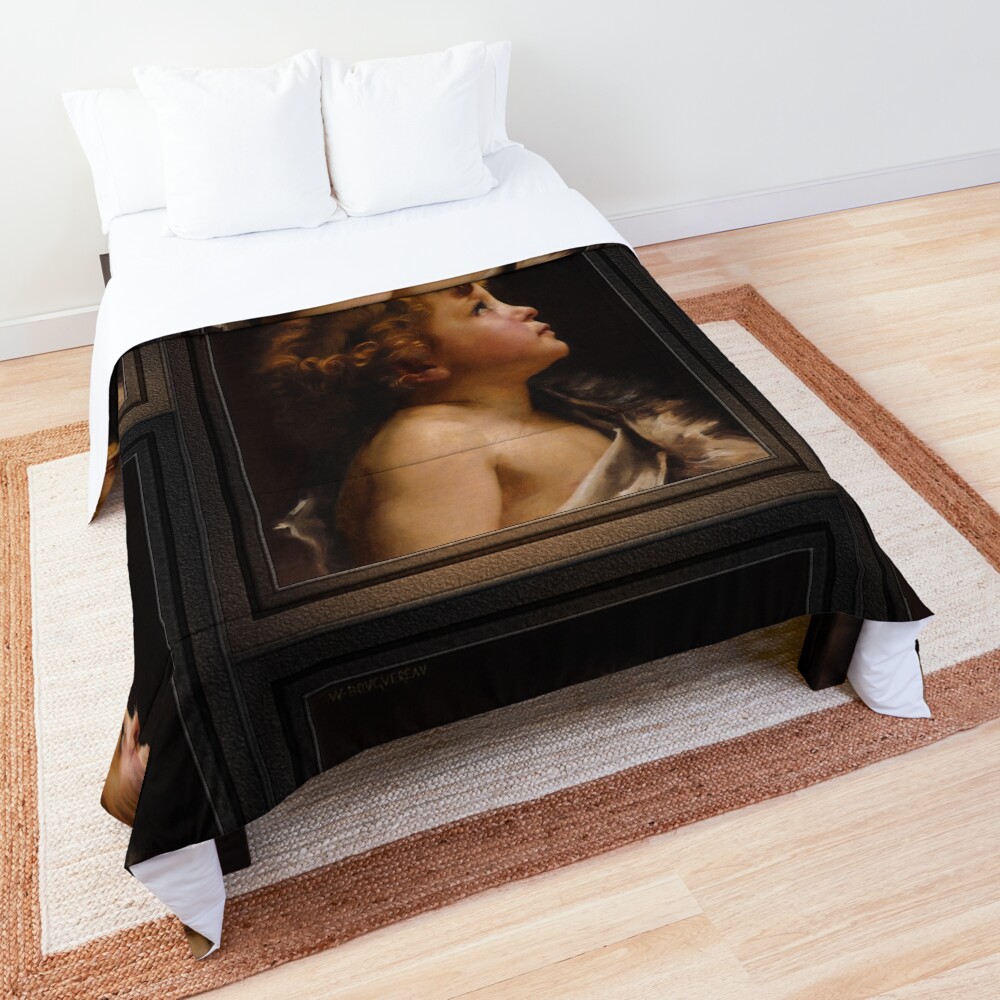
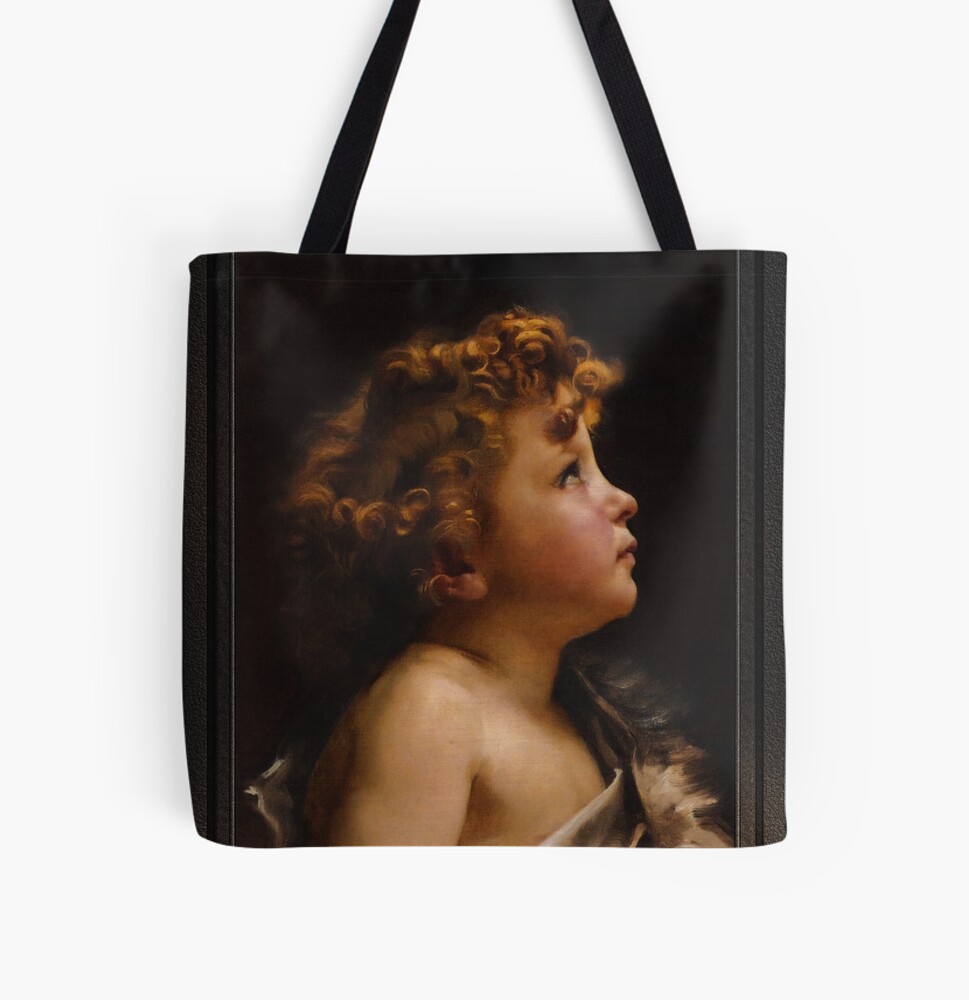
The painting centers on a young boy, who is identified as John the Baptist, depicted in a moment of contemplation or spiritual reflection. His youth, marked by soft, tousled curls, delicate facial features, and an innocent expression, captures the purity and virtue associated with the figure. The child’s upward gaze is subtle yet suggestive of an inner connection with the divine, reinforcing the spiritual nature of the work. His youthful face, framed by wild curls, stands in contrast to his humble attire, which further emphasizes his role as a figure of modesty and piety.
Composition and Layout
Bouguereau carefully arranges the figure of John against a dark, almost ethereal backdrop that suggests a focus on the child alone. This darkened background allows the viewer’s attention to be drawn primarily to the light illuminating the figure’s face, highlighting the soft texture of his skin and the intricate details in his hair. The light serves as a symbolic halo, enhancing the divine essence of the figure while reflecting the religious nature of the painting. The child’s posture is gentle, his right shoulder slightly exposed with the folds of his drapery draped over his left shoulder and across his chest, which brings a fluid, almost graceful quality to the scene.
Materiali e Tecnica
As with much of Bouguereau’s oeuvre, the artist employed oil paints to create a smooth, almost photographic finish. His technique of layering fine glazes of paint allowed him to achieve a luminous quality in the skin tones, with a nearly tangible softness. The rendering of the child’s hair is particularly noteworthy, with each curl meticulously painted to capture the natural movement and texture of the hair. Bouguereau’s application of light is masterful, lanciando un caldo, gentle glow across the subject’s face and neck. The use of soft yet precise brushstrokes contributes to the fluidity and lifelike appearance of the work, particularly in the way the fabric of the drapery folds with a natural flow.
Umore e tema
L'umore di “Il giovane Giovanni Battista” is serene and contemplative. The young boy’s expression conveys a sense of quiet reflection, perhaps an inner connection to a higher calling or divine message. Bouguereau’s portrayal of John the Baptist as a vulnerable, innocent child contrasts with the usual depictions of him as a powerful and austere figure in religious iconography. This choice of youth emphasizes the purity of the subject and the potential for great spiritual significance in even the most humble of beginnings. The simplicity of the setting, devoid of any distraction, reinforces the sacredness of the moment.
The theme of the painting ties deeply to Bouguereau’s interest in realism and religious iconography, presenting John the Baptist not as an adult prophet but as an innocent and vulnerable child. The softness and tenderness of the figure reflect a child’s innate connection to spirituality, symbolizing both a literal and figurative embodiment of purity and prophecy. The calmness of the subject also emphasizes the message of faith, highlighting the potential of human spirit and devotion.
Simbolismo
The young boy’s gaze and delicate posture suggest both innocence and divine insight. His lack of any overt symbols or physical attributes of John the Baptist, such as a lamb or a staff, invites the viewer to focus on his spiritual essence, making the painting not just a representation of the historical figure but a visual exploration of the deeper, more abstract concept of faith and purity. The light illuminating John’s face can also be seen as a subtle reference to the divine, suggesting his importance within the Christian narrative while maintaining the soft naturalism that Bouguereau is celebrated for.
Impressione generale
“Il giovane Giovanni Battista” is a striking blend of realism and religious symbolism, characterized by Bouguereau’s technical precision and emotional depth. The painting transcends a simple portrait of a biblical figure, offering instead an intimate and meditative portrayal of youthful innocence and divine potential. Bouguereau’s work in this painting serves as a poignant reminder of the tender and sacred aspects of human existence, inviting viewers to reflect on the purity and spiritual insight of a child, E forse, the deeper spiritual message of faith.
Il giovane Giovanni Battista (28 – 36 ANNO DOMINI) c1890 dal pittore francese William-Adolphe Bouguereau (1825 – 1905); era un pittore accademico noto per l'uso di temi mitologici con un'interpretazione moderna di soggetti classici con un focus sulla forma femminile umana.
Un ritratto di Giovanni Battista da bambino che guarda al Cielo mentre la luce di DIO lo illumina.
Young John The Baptist is a retouched digital art old masters reproduction of a public domain image that is available online as a metal print.
Informazioni di seguito Cortesia Wikipedia.org
William-Adolphe Bouguereau è nato a La Rochelle, Francia, sopra 30 novembre 1825, in una famiglia di commercianti di vino e olio d'oliva.[4] Il figlio di Théodore Bouguereau (Nato 1800) e Marie Bonnin (1804), conosciuta come Adeline, William è stato allevato cattolico. Aveva un fratello maggiore, Alfredo, e una sorella minore, Marie (noto come Hanna), che è morta quando aveva sette anni.
La famiglia si trasferì a Saint-Martin-de-Ré in 1832. Un altro fratello è nato a 1834, Gattino. All'età di 12, Bouguereau è andato a Mortagne per stare con suo zio Eugène, un prete e sviluppò un amore per la natura, religione e letteratura.
Nel 1839, fu mandato a studiare per il sacerdozio in un collegio cattolico a Pons. Qui gli è stato insegnato a disegnare e dipingere da Louis Sage, che aveva studiato con Ingres. Bouguereau lasciò a malincuore gli studi per tornare dalla sua famiglia, ora residente a Bordeaux.
Lì ha incontrato un artista locale, Carlo Marionneau, e iniziato presso la Scuola Comunale di Disegno e Pittura a novembre 1841. Bouguereau ha lavorato anche come commesso, litografie colorate a mano e piccoli dipinti riprodotti mediante cromolitografia.
Divenne presto il miglior allievo della sua classe, e ho deciso di diventare un artista a Parigi. Per finanziare il trasloco, ha venduto ritratti - 33 oli in tre mesi. Tutti non erano firmati e solo uno è stato rintracciato. È arrivato a Parigi invecchiato 20 a marzo 1846.
Uguaglianza prima della morte (Uguaglianza prima della morte), 1848, olio su tela, 141 × 269 cm (55.5 × 105.9 nel), Museo d'Orsay, Parigi. L'uguaglianza è il primo grande dipinto di Bouguereau, prodotto dopo due anni all'École des Beaux-Arts de Paris all'età di 23.
Bouguereau divenne uno studente all'École des Beaux-Arts.[4] Per completare la sua formazione formale nel disegno, ha frequentato dissezioni anatomiche e ha studiato costumi storici e archeologia.
Fu ammesso allo studio di François-Édouard Picot, dove ha studiato pittura in stile accademico. Dante e Virgilio all'inferno (1850) fu uno dei primi esempi delle sue opere neoclassiche.
La pittura accademica ha posto il più alto status su soggetti storici e mitologici, e Bouguereau determinati a vincere il Prix de Rome, che gli valse una residenza di tre anni a Villa Medici a Roma, Italia, dove oltre alle lezioni formali ha potuto studiare in prima persona gli artisti del Rinascimento e i loro capolavori, così come il greco, etrusco, e antichità romane.