

Young John The Baptist (28 – 36 AD) c1890
“Young John The Baptist” is a captivating oil painting created in 1890 by the renowned French artist William-Adolphe Bouguereau (1825 – 1905). Known for his exceptional skill in depicting the human form with exquisite detail, Bouguereau’s work in this piece exemplifies his mastery in rendering texture, lys, og følelser. This portrayal of John the Baptist, the biblical figure revered as the forerunner of Christ, is remarkable for its tender yet powerful presentation, rooted in both classical and religious themes.
Innholdsfortegnelse
Hovedfag
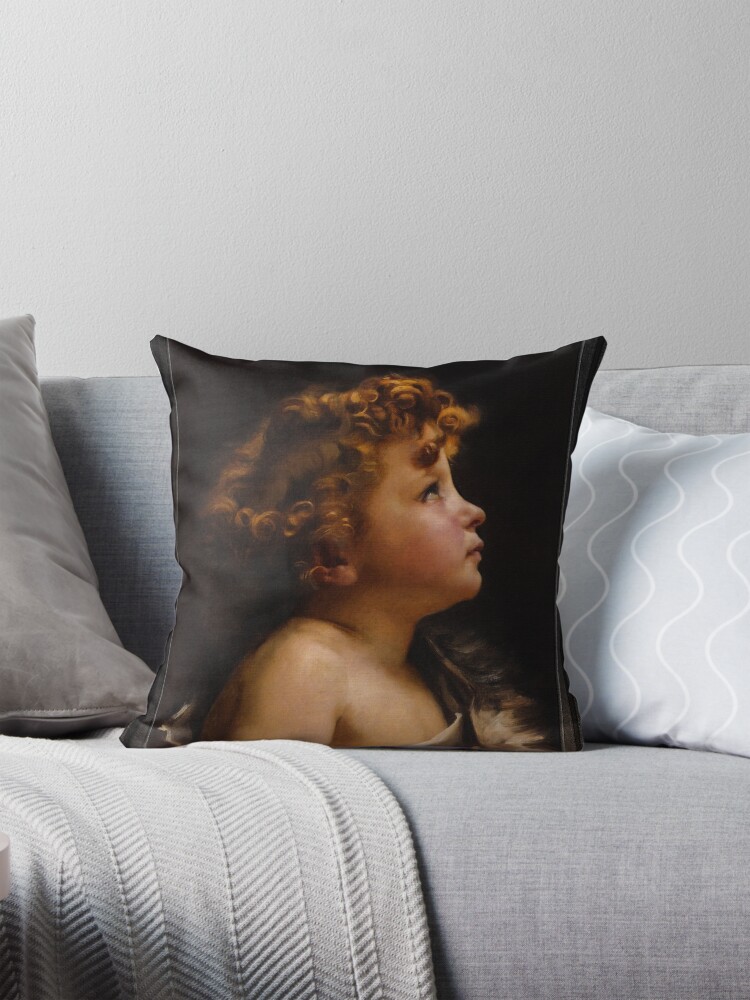
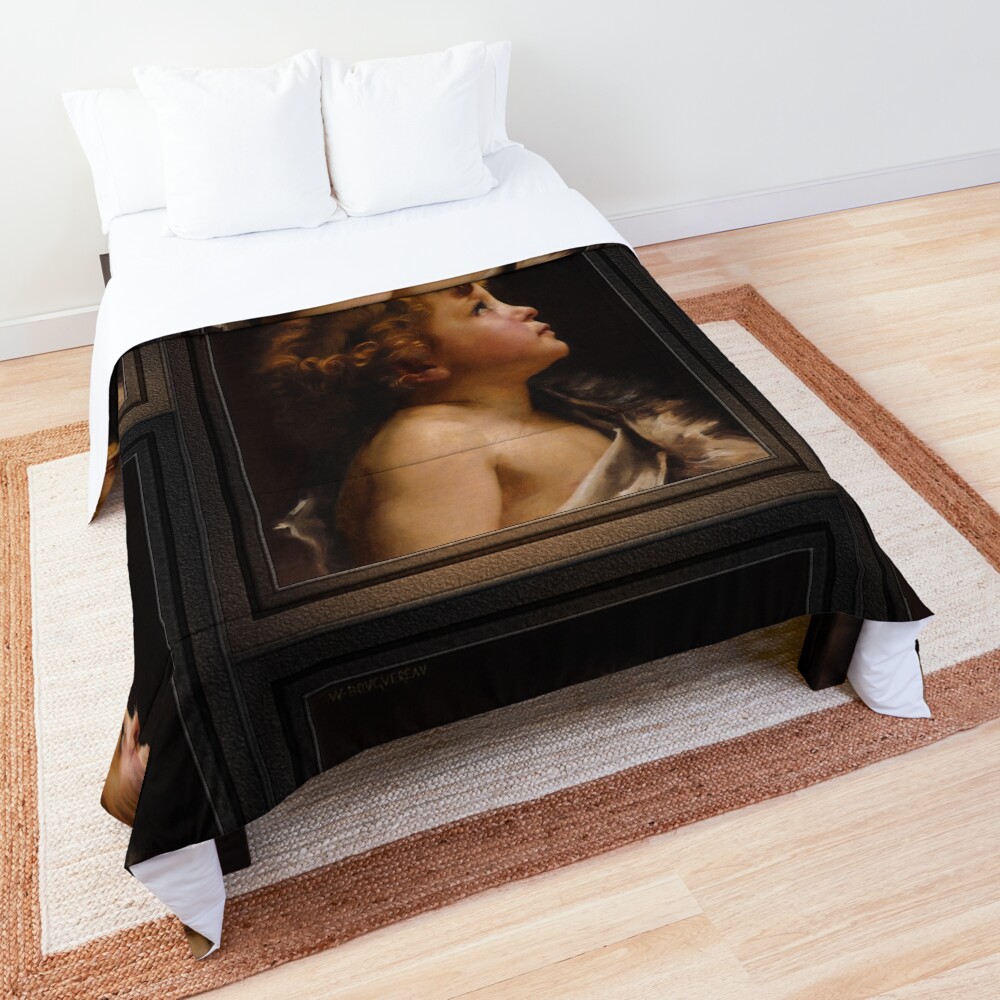
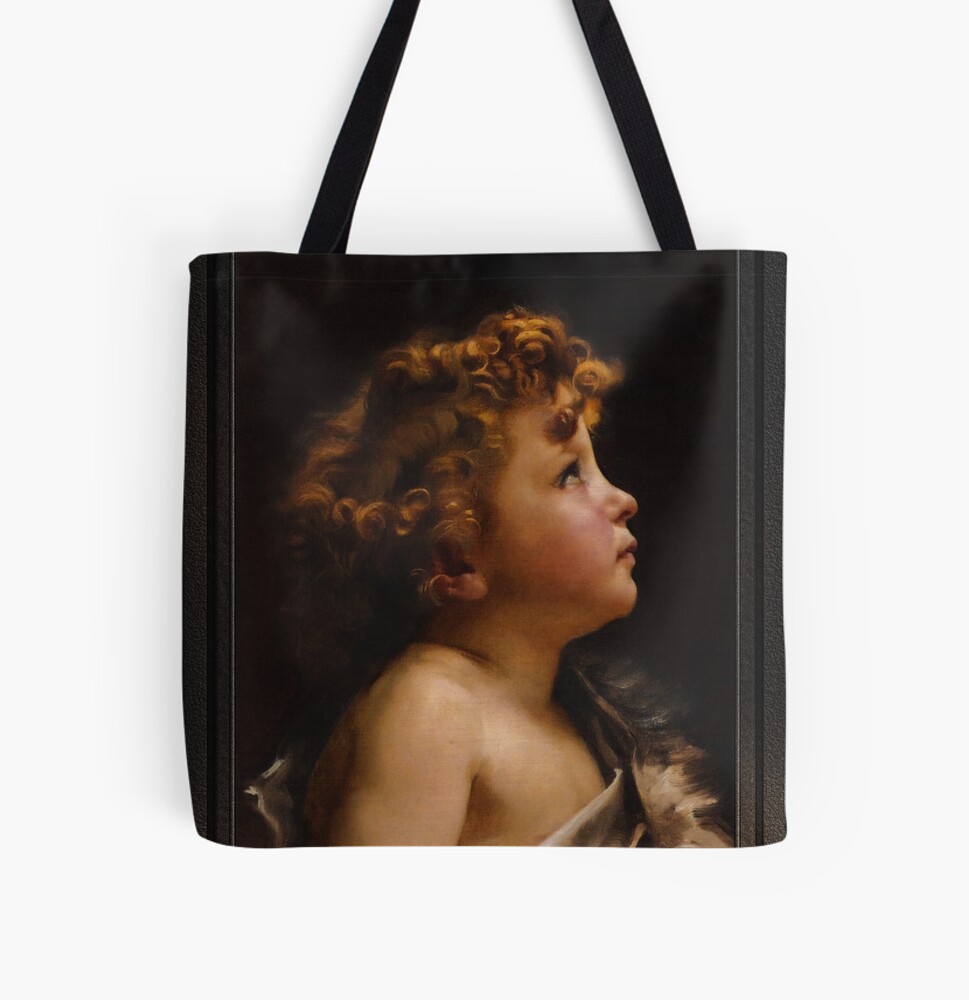
The painting centers on a young boy, who is identified as John the Baptist, depicted in a moment of contemplation or spiritual reflection. His youth, marked by soft, tousled curls, delicate facial features, and an innocent expression, captures the purity and virtue associated with the figure. The child’s upward gaze is subtle yet suggestive of an inner connection with the divine, reinforcing the spiritual nature of the work. His youthful face, framed by wild curls, stands in contrast to his humble attire, which further emphasizes his role as a figure of modesty and piety.
Composition and Layout
Bouguereau carefully arranges the figure of John against a dark, almost ethereal backdrop that suggests a focus on the child alone. This darkened background allows the viewer’s attention to be drawn primarily to the light illuminating the figure’s face, highlighting the soft texture of his skin and the intricate details in his hair. The light serves as a symbolic halo, enhancing the divine essence of the figure while reflecting the religious nature of the painting. The child’s posture is gentle, his right shoulder slightly exposed with the folds of his drapery draped over his left shoulder and across his chest, which brings a fluid, almost graceful quality to the scene.
Materialer og teknikk
As with much of Bouguereau’s oeuvre, the artist employed oil paints to create a smooth, almost photographic finish. His technique of layering fine glazes of paint allowed him to achieve a luminous quality in the skin tones, with a nearly tangible softness. The rendering of the child’s hair is particularly noteworthy, with each curl meticulously painted to capture the natural movement and texture of the hair. Bouguereau’s application of light is masterful, støping en varm, gentle glow across the subject’s face and neck. The use of soft yet precise brushstrokes contributes to the fluidity and lifelike appearance of the work, particularly in the way the fabric of the drapery folds with a natural flow.
Stemning og tema
Stemningen av “Young John The Baptist” is serene and contemplative. The young boy’s expression conveys a sense of quiet reflection, perhaps an inner connection to a higher calling or divine message. Bouguereau’s portrayal of John the Baptist as a vulnerable, innocent child contrasts with the usual depictions of him as a powerful and austere figure in religious iconography. This choice of youth emphasizes the purity of the subject and the potential for great spiritual significance in even the most humble of beginnings. The simplicity of the setting, devoid of any distraction, reinforces the sacredness of the moment.
The theme of the painting ties deeply to Bouguereau’s interest in realism and religious iconography, presenting John the Baptist not as an adult prophet but as an innocent and vulnerable child. The softness and tenderness of the figure reflect a child’s innate connection to spirituality, symbolizing both a literal and figurative embodiment of purity and prophecy. The calmness of the subject also emphasizes the message of faith, highlighting the potential of human spirit and devotion.
Symbolikk
The young boy’s gaze and delicate posture suggest both innocence and divine insight. His lack of any overt symbols or physical attributes of John the Baptist, such as a lamb or a staff, invites the viewer to focus on his spiritual essence, making the painting not just a representation of the historical figure but a visual exploration of the deeper, more abstract concept of faith and purity. The light illuminating John’s face can also be seen as a subtle reference to the divine, suggesting his importance within the Christian narrative while maintaining the soft naturalism that Bouguereau is celebrated for.
Totalinntrykk
“Young John The Baptist” is a striking blend of realism and religious symbolism, characterized by Bouguereau’s technical precision and emotional depth. The painting transcends a simple portrait of a biblical figure, offering instead an intimate and meditative portrayal of youthful innocence and divine potential. Bouguereau’s work in this painting serves as a poignant reminder of the tender and sacred aspects of human existence, inviting viewers to reflect on the purity and spiritual insight of a child, and perhaps, the deeper spiritual message of faith.
Young John The Baptist (28 – 36 AD) c1890 by French Painter William-Adolphe Bouguereau (1825 – 1905); var en akademisk maler kjent for bruk av mytologiske temaer med en moderne tolkning av klassisk emne med fokus på den menneskelige kvinneformen.
A portrait of John The Baptist as a child looking towards Heaven as the light of GOD illuminates him.
Young John The Baptist is a retouched digital art old masters reproduction of a public domain image that is available online as a metal print.
Info nedenfor Hilsen Wikipedia.org
William-Adolphe Bouguereau ble født i La Rochelle, Frankrike, på 30 november 1825, inn i en familie av vin- og olivenoljehandlere.[4] Sønn av Théodore Bouguereau (Født 1800) og Marie Bonnin (1804), kjent som Adeline, William ble oppdratt som katolikk. Han hadde en eldre bror, Alfred, og en yngre søster, Marie (kjent som Hanna), som døde da hun var syv.
Familien flyttet til Saint-Martin-de-Ré i 1832. Et annet søsken ble født i 1834, Kattunge. I en alder av 12, Bouguereau dro til Mortagne for å bli hos onkelen Eugène, en prest og utviklet en kjærlighet til naturen, religion og litteratur.
I 1839, han ble sendt for å studere for prestedømmet ved en katolsk høyskole i Pons. Her ble han lært å tegne og male av Louis Sage, som hadde studert under Ingres. Bouguereau forlot motvillig studiene for å komme tilbake til familien, bor nå i Bordeaux.
Der traff han en lokal kunstner, Charles Marionneau, og begynte på Municipal School of Drawing and Painting i november 1841. Bouguereau jobbet også som butikkassistent, håndfarge litografier og lage små malerier som ble gjengitt ved hjelp av krolitografi.
Han var snart den beste eleven i klassen, og bestemte seg for å bli kunstner i Paris. For å finansiere flytten, han solgte portretter - 33 oljer på tre måneder. Alle var usignerte og bare én er sporet. Han ankom i alder alder 20 i mars 1846.
Likhet før døden (Likhet før døden), 1848, olje på lerret, 141 × 269 cm (55.5 × 105.9 i), Orsay -museet, Paris. Likhet er Bouguereaus første store maleri, produsert etter to år på École des Beaux-Arts de Paris i en alder av 23.
Bouguereau ble student ved École des Beaux-Arts.[4] For å supplere sin formelle opplæring i tegning, han deltok på anatomiske disseksjoner og studerte historiske kostymer og arkeologi.
Han ble tatt opp i studioet til François-Édouard Picot, hvor han studerte maleri i den akademiske stilen. Dante og Virgil i helvete (1850) var et tidlig eksempel på hans nyklassiske verk.
Akademisk maleri plasserte høyeste status på historiske og mytologiske emner, og Bouguereau bestemte seg for å vinne Prix de Rome, som ville skaffe ham en treårig bolig på Villa Medici i Roma, Italia, hvor han i tillegg til formelle leksjoner kunne studere renessansekunstnerne og deres mesterverk fra første hånd, så vel som gresk, Etruskisk, og romerske antikviteter.