

Young Mother Nursing Her Baby
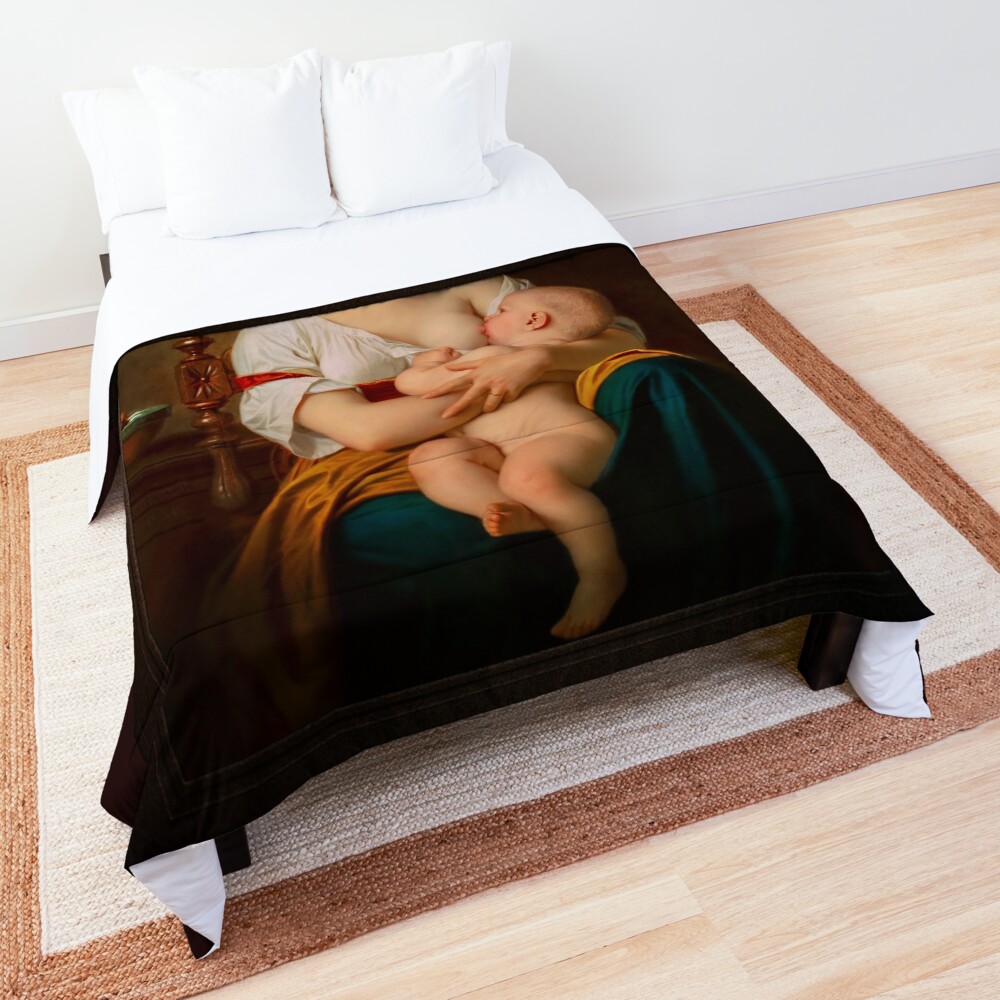
“Young Mother Nursing Her Baby,” barruan margotuta 1865 artista frantsesaren eskutik Hugues Merle (1822 – 1881), is an exemplary work of genre painting that portrays a deeply intimate and tender moment between a mother and her child. Merle, who was well-regarded for his sensitive and realistic portrayals of human subjects, employs his characteristic naturalism in this painting, capturing both the physical and emotional intimacy of motherhood. Eszena, focused entirely on the mother and child, exemplifies the artist’s ability to evoke a quiet, yet poignant narrative through a simple domestic moment.
Edukien taula
Gai nagusia: The Mother and Child
At the heart of this composition is the mother, depicted as a youthful, serene woman, tenderly nursing her infant. Her expression is one of deep affection, marked by a gentle smile as she gazes lovingly at her child, whose eyes remain closed in the bliss of nourishment.
The bond between the two is palpable, captured in the delicate way her hands cradle the child and guide it to her breast. Her slightly bowed head and the softness in her facial expression emphasize the maternal devotion that defines this moment. Umea, in stark contrast, is a symbol of vulnerability and innocence, its plump form fully exposed in the close embrace of the mother. This contrast between the mother’s mature serenity and the baby’s trusting vulnerability highlights the theme of motherhood and its sacred, natural role in human life.
The composition exudes tenderness, eta Merlek haien elkarrekintzaren xehetasunei arreta handiz ematen dien arreta eszenaren erresonantzia emozionala areagotzeko balio du.. Irudien arteko lotura bero eta harmoniatsua euren jarrera eta keinu sotilekin indartzen da. Amaren biguna, oraindik helburuz, bere umearen besarkadak indarra eta zaintza iradokitzen ditu, umea berriz, bere besoetan habiatuta, bake eta segurtasun sentsazioa dario. Hemen azaltzen den une lasaiak giza-baldintzari buruz hitz egiten du: amaren eta haurraren arteko lotura betiko eta unibertsalari buruz..
Ezarpena: Background and Surroundings
Margolanaren atzealdea, nahiz eta ez lehen irakasgaiak bezain landuak, testuinguru atmosferikoa ematen dio eszena intimoari. Isildu bat, kolore leuneko gelak etxeko lasaitasun sentsazioa sortzen du, altzarien eskema ahulak eta urruneko elementuekin, soft light that suggests the presence of a window, possibly offering a glimpse of natural light. The simplicity of the setting directs the viewer’s attention to the emotional weight of the moment between mother and child, highlighting the universal nature of the act of nursing in any time or place. The soft tones of the room contrast with the rich, more vibrant colors worn by the mother, particularly the luxurious red and green of her attire.
The scene is not bound by any grand historical or geographical reference but instead focuses on an intimate domestic world. The space is not filled with distractions; baizik, it is subdued, allowing the figures of the mother and child to dominate the composition. Ingurunearen izaera urri baina intimoak gaien arteko berotasuna eta hurbiltasuna areagotzen ditu.
Materialak eta Teknika
Pintura honetan Merleren teknikak XIX. mendearen erdialdeko arte frantsesean nagusi den estilo akademikoaren adierazgarri da., bereziki frantses errealismoaren tradizioaren barruan. Argia eta itzala maneiatzeko duen ikuspegia da bere ezaugarrietako bat. Koadro honetako argiztapen leun baina aberatsak distira sortzen du figuren inguruan, amaren aurpegiaren ingerada azpimarratuz, bere azalaren leuntasuna, eta haurraren formaren xalotasun mamitsua. Artistak argiaren erabilerak sakontasuna sortzeaz gain, eszenari kalitate etereoa gehitzen dio, ia zifrak amaren maitasunez eta berotasunez dirdira egingo balute bezala.
The textures in the painting are rendered with a remarkable attention to detail. The folds of the mother’s clothing, the softness of the infant’s skin, and the glint of light on her hair are all painted with a careful, realistic touch. Merle’s brushwork creates an almost tactile sense of the materials, from the smoothness of the mother’s breast to the soft, baby-like form of the child. The fine detailing in the faces of both figures adds to the lifelike realism of the painting, grounding it in the tangible world while also conveying the emotional depth of the moment.
Estilo, Gai, eta umorea
The style of the painting is rooted in the naturalistic tradition that dominated the academic art scene during Merle’s time. The artist employs a highly refined technique that reflects the precision and careful attention to anatomical accuracy that were hallmarks of academic training. The subjects are depicted realistically, with an emphasis on natural beauty and physical authenticity. The softness and warmth of the color palette, with its delicate flesh tones and rich fabrics, serve to emphasize the humanity and tenderness of the scene.
The theme of the painting centers around the intimate and sacred act of motherhood. Nursing, as depicted in the painting, is not just a physical act but also an emotional exchange between mother and child. The painting captures not only the physical nourishment being provided but also the emotional and psychological bond that is fostered during this moment. The scene embodies themes of care, zaurgarritasuna, nurturing, and the deep connection between a mother and her infant, which transcend time and cultural boundaries.
The mood evoked by “Young Mother Nursing Her Baby” is one of peace, tenderness, and devotion. The viewer is invited to share in the private moment of motherhood, and through this quiet, intimate act, the artist speaks to the universal experience of love and care that defines the human condition. The serene expressions of both mother and child, paired with the gentle composition, convey a sense of warmth and tranquility, making the viewer feel as though they are peering into a sacred, timeless moment.
Bukaera
“Young Mother Nursing Her Baby” is a powerful portrayal of maternal love, captured through the refined brushstrokes and emotional depth characteristic of Hugues Merle’s work. The painting not only serves as an example of 19th-century academic realism but also offers a timeless reflection on the universal experience of motherhood. Through the depiction of this intimate moment, Merle invites the viewer to witness the profound connection between mother and child, emphasizing the beauty and purity of this human bond.
Behind the pair is a wooden table that has a green and brown ceramic bowl resting on top, with something in it.
Young Mother Nursing Her Baby is a retouched digital art old masters reproduction of a public domain image that is available as a mihise inprimatu sarean.
Arte digitalaren sorkuntza hau, Xzendor7 webgunean aurki daitezkeen artelan guztiak bezala sarean erosteko eskuragarri dago hainbat material formatutan, mihise inprimatuak barne., estanpatu akrilikoak, metal estanpatuak, egur estanpatuak, marko estanpatuak, kartelak, eta ijetzitako mihise estanpatu gisa hainbat tamainatan 12 zentimetroetara 72 hazbeteko artelanaren eta artea erosteko aukeratzen duzun eskaeraren arabera inprimatzeko dendaren tamainaren arabera.
Artelana gizonezkoen eta emakumezkoen arropa sorta zabal batean ere eskuragarri dago, katiluak, totes, zapiak, koadernoak eta aldizkariak eta etxeko dekorazio produktu ugari.
Artistaren biografia
Beheko informazioatik eratorria da Wikipedia.org eta Rehs.com
Hugues Merle urtean jaio zen 1822 La Zonen, Frantzia eta urte inguruan 21 Parisera heldu zen, Frantzian, non pintura ikasi zuen Léon Cogniet margolari historiko eta erretratu frantsesaren eskutik (1794 – 1880).
Huguesen hasierako bizitzari buruz ezer gutxi ezagutzen den arren, uste da Parisera heldu baino lehen arte hezkuntzaren bat jaso zuela. 1843; because he began exhibiting at the Paris Salon in 1847 with his piece Portrait de L’auteur and in 1848 he exhibited the piece Légende des Willis.
Denborak aurrera egin ahala Hugues erretratugile gisa ospea nabarmen hazi zen 1850eko hamarkadan; eta margolari arrakastatsu eta nabarmen gisa beren arte bildumak eraiki nahi zituzten arte-zale serioak erakarri ahal izan zituen..
Lehen arte-biltzaile horietako bat Hertfordeko 4. Markesa izan zen, Richard Seymour-Conway (1800-1870); nork bere apaindegiko bidalketa erosi zuen Reading the Bible in 1859.
1860ko hamarkadan zehar, Hugues bildumagileen bezeroen zerrenda Europako kontinenteko pertsonak ez ezik, baina baita bildumagile amerikarrak ere, hala nola, Baltimoreko William Waltersek The Scarlet Letter enkargatu zuena.