

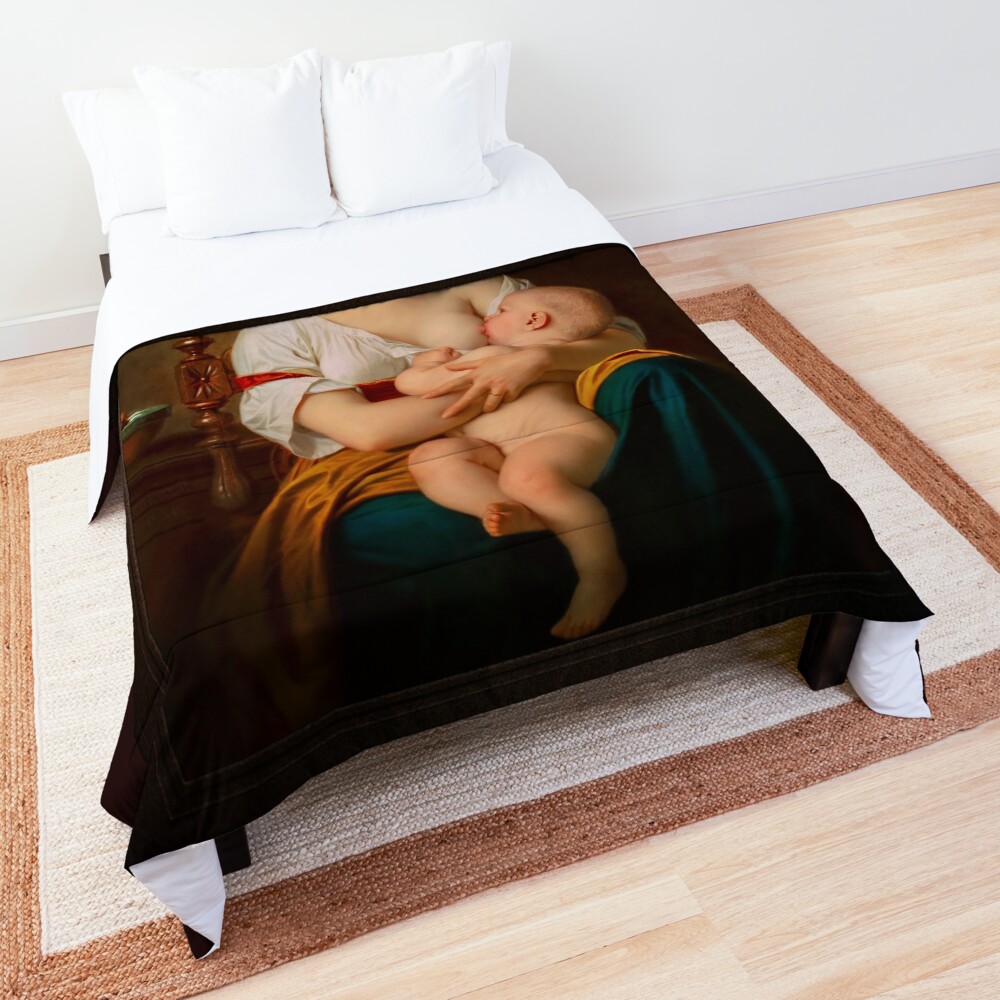
Ung móðir sem hjúkrir barninu sínu
“Ung móðir sem hjúkrir barninu sínu,” málað í 1865 eftir franska listamanninn Hugues Merle (1822 – 1881), er til fyrirmyndar tegundarmálverk sem sýnir innilega innilegt og blíðlegt augnablik milli móður og barns hennar. Merle, sem var vel metinn fyrir næmar og raunsæjar lýsingar á mannlegum viðfangsefnum, beitir einkennandi náttúruhyggju sinni í þessu málverki, fanga bæði líkamlega og tilfinningalega nánd móðurhlutverksins. Atriðið, einbeitt sér alfarið að móður og barni, sýnir hæfileika listamannsins til að kalla fram kyrrð, en þó hrífandi frásögn í gegnum einfalt heimilislegt augnablik.
Efnisyfirlit
Aðalefni: Móðirin og barnið
Kjarninn í þessari samsetningu er móðirin, lýst sem ungmenni, kyrrlát kona, hjúkraði barninu sínu blíðlega. Svipbrigði hennar er djúp ástúð, einkennist af blíðlegu brosi þegar hún horfir ástúðlega á barnið sitt, hvers augu eru lokuð í sælu næringar.
Tengslin á milli þeirra tveggja eru áþreifanleg, fangað á fínlegan hátt sem hendur hennar vögga barnið og leiða það að brjósti hennar. Lítið hneigt höfuð hennar og mýkt í andliti hennar undirstrikar þá móðurhollustu sem skilgreinir þessa stund.. Barnið, í algjörri andstæðu, er tákn um varnarleysi og sakleysi, þykkt form hennar að fullu afhjúpað í nánum faðmi móðurinnar. Þessi andstæða á milli þroskaðrar æðruleysis móður og trausts varnarleysis barnsins undirstrikar þemað móðurhlutverkið og heilagt þess., eðlilegt hlutverk í lífi mannsins.
Samsetningin gefur frá sér eymsli, og nákvæm athygli Merle á smáatriðum í samskiptum þeirra er til þess fallin að magna upp tilfinningalega ómun vettvangsins. Hið hlýja og samræmda samband milli fígúranna styrkjast af fíngerðum stellingum þeirra og látbragði. Móðirin er mjúk, samt markviss, faðmlag barnsins gefur til kynna bæði styrk og umhyggju, meðan barnið, hreiðrað um sig í fanginu á henni, geislar af friði og öryggi. Hið kyrrláta augnablik sem hér er lýst segir mikið um mannlegt ástand - um tímalaus og alhliða tengsl móður og barns.
Umgjörðin: Bakgrunnur og umhverfi
Bakgrunnur málverksins, þó ekki eins vandað og frumgreinarnar, veitir innilegu atriðinu andrúmsloftið samhengi. A þögguð, mjúkt herbergi skapar tilfinningu fyrir heimilisró, með þætti eins og daufum útlínum húsgagna og fjarlæg, soft light that suggests the presence of a window, possibly offering a glimpse of natural light. The simplicity of the setting directs the viewer’s attention to the emotional weight of the moment between mother and child, highlighting the universal nature of the act of nursing in any time or place. The soft tones of the room contrast with the rich, more vibrant colors worn by the mother, particularly the luxurious red and green of her attire.
The scene is not bound by any grand historical or geographical reference but instead focuses on an intimate domestic world. The space is not filled with distractions; frekar, it is subdued, allowing the figures of the mother and child to dominate the composition. The sparse but intimate nature of the environment enhances the warmth and the closeness between the subjects.
Efni og tækni
Merle’s technique in this painting is indicative of the academic style prevalent in mid-19th-century French art, particularly within the tradition of French realism. His approach to the handling of light and shadow is one of his defining features. The soft but rich lighting in this painting creates a glow around the figures, emphasizing the contours of the mother’s face, the softness of her skin, and the fleshy innocence of the baby’s form. The artist’s use of light not only creates depth but also adds an ethereal quality to the scene, almost as if the figures are glowing with maternal love and warmth.
The textures in the painting are rendered with a remarkable attention to detail. The folds of the mother’s clothing, the softness of the infant’s skin, and the glint of light on her hair are all painted with a careful, realistic touch. Merle’s brushwork creates an almost tactile sense of the materials, from the smoothness of the mother’s breast to the soft, baby-like form of the child. The fine detailing in the faces of both figures adds to the lifelike realism of the painting, grounding it in the tangible world while also conveying the emotional depth of the moment.
Stíll, Þema, og skap
The style of the painting is rooted in the naturalistic tradition that dominated the academic art scene during Merle’s time. The artist employs a highly refined technique that reflects the precision and careful attention to anatomical accuracy that were hallmarks of academic training. The subjects are depicted realistically, with an emphasis on natural beauty and physical authenticity. The softness and warmth of the color palette, with its delicate flesh tones and rich fabrics, serve to emphasize the humanity and tenderness of the scene.
The theme of the painting centers around the intimate and sacred act of motherhood. Nursing, as depicted in the painting, is not just a physical act but also an emotional exchange between mother and child. The painting captures not only the physical nourishment being provided but also the emotional and psychological bond that is fostered during this moment. The scene embodies themes of care, varnarleysi, nurturing, and the deep connection between a mother and her infant, which transcend time and cultural boundaries.
The mood evoked by “Ung móðir sem hjúkrir barninu sínu” is one of peace, tenderness, and devotion. The viewer is invited to share in the private moment of motherhood, and through this quiet, intimate act, the artist speaks to the universal experience of love and care that defines the human condition. The serene expressions of both mother and child, paired with the gentle composition, convey a sense of warmth and tranquility, making the viewer feel as though they are peering into a sacred, timeless moment.
Niðurstaða
“Ung móðir sem hjúkrir barninu sínu” is a powerful portrayal of maternal love, captured through the refined brushstrokes and emotional depth characteristic of Hugues Merle’s work. The painting not only serves as an example of 19th-century academic realism but also offers a timeless reflection on the universal experience of motherhood. Through the depiction of this intimate moment, Merle invites the viewer to witness the profound connection between mother and child, emphasizing the beauty and purity of this human bond.
Behind the pair is a wooden table that has a green and brown ceramic bowl resting on top, with something in it.
Young Mother Nursing Her Baby is a retouched digital art old masters reproduction of a public domain image that is available as a strigaprentun á netinu.
Þessi stafræna listsköpun, eins og með öll listaverkin sem finna má á Xzendor7 vefsíðunni er hægt að kaupa á netinu í ýmsum efnissniðum þar á meðal strigaprentun, akrýl prentun, málmprentun, viðarprentanir, innrömmuð prentun, veggspjöld, og sem rúlluð strigaprentun í ýmsum stærðum frá 12 tommur til 72 tommur eftir stærð raunverulegu listaverksins og prentunarversluninni sem þú velur að kaupa listina frá.
Listaverkin eru einnig fáanleg á breitt úrval af herra- og kvenfatnaði, krúsar, töskur, trefla, minnisbækur og dagbækur og margar heimilisskreytingarvörur.
Listamaður Bio
Upplýsingarnar hér að neðan eru fengnar úr Wikipedia.org og Rehs.com
Hugues Merle fæddist í 1822 í La Zone, Frakklandi og um aldur 21 kominn til Parísar, Frakklandi þar sem hann lærði málaralist undir franska sögu- og portrettmálaranum Léon Cogniet (1794 – 1880).
Þrátt fyrir að lítið sé vitað um æsku Hugues er gert ráð fyrir að hann hafi fengið einhverja listmenntun áður en hann kom til Parísar í 1843; vegna þess að hann byrjaði að sýna á Parísarstofu í 1847 með verki sínu Portrait of the author and in 1848 hann sýndi verkið Légende des Willis.
Eftir því sem tíminn leið jókst orðstír Hugues sem portretthöfundar verulega á 1850.; og sem farsæll og áberandi málari gat hann laðað að sér alvarlega listunnendur sem voru að leita að því að byggja upp listasöfn sín.
Einn af þessum fyrstu listasöfnurum var 4th Marquess of Hertford, Richard Seymour-Conway (1800-1870); sem keypti stofuuppgjöf hans Reading the Bible in 1859.
Á 1860, Viðskiptavinalisti Hugues yfir safnara innihélt ekki aðeins einstaklinga frá meginlandi Evrópu, en einnig bandarískir safnarar, eins og William Walters frá Baltimore sem lét gera The Scarlet Letter.