

Young Woman with Flowers in Her Hair c1734
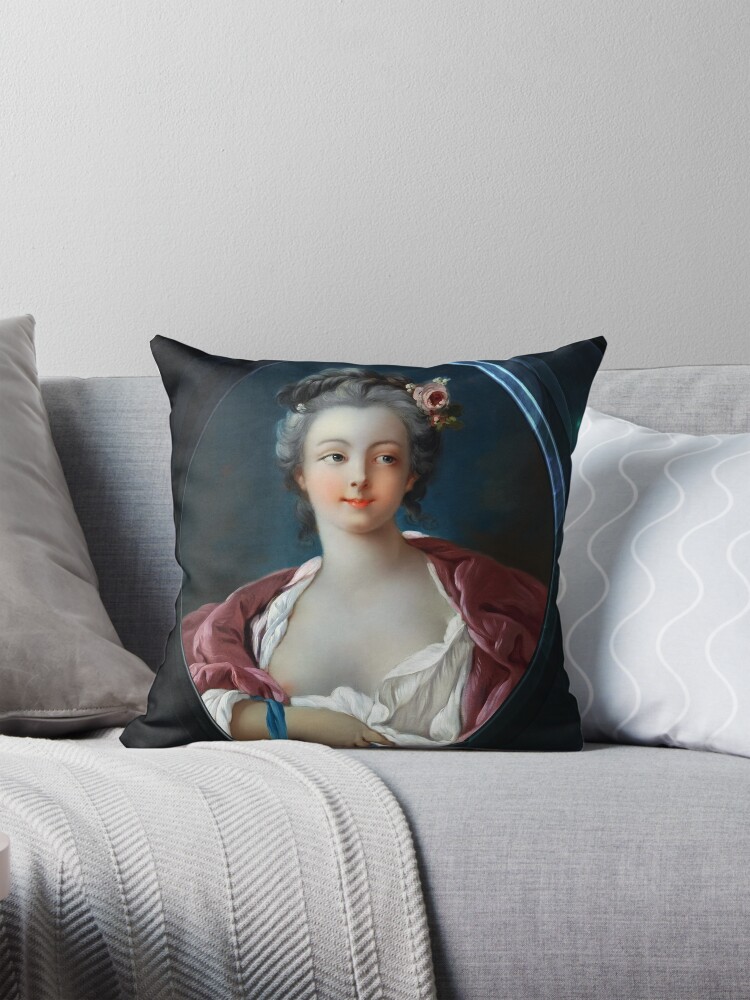
L'opera d'arte Giovane donna con fiori tra i capelli was created in 1734 dal famoso pittore francese Francois Boucher (1703 – 1770). Boucher, celebrated for his role in the Rococo movement, presents in this painting a portrait of youthful beauty and elegance, characteristic of his ability to capture both the grace and sensuality of his subjects. This work is a delicate and refined depiction of a young woman, bathed in soft light and surrounded by elements that evoke a sense of opulence and ease, typical of the Rococo era. The artist’s brushwork, combined with the vivid detail of the subject’s attire and facial features, places the painting firmly within the context of 18th-century French aristocracy and fashion.
Sommario
Il soggetto e la composizione
In questo ritratto, Boucher expertly showcases a young woman dressed in a luxurious ensemble of flowing fabrics, with her face framed by soft curls and adorned with flowers. The woman is depicted in an intimate and almost wistful pose, her soft gaze directed slightly off-center, as if lost in contemplation. The simplicity of her pose, with one hand resting gently at her chest, invites the viewer to focus on her delicate features and the grace of her attire. The subtle contrast between the intricate folds of her luxurious robe and the softness of her skin enhances the natural elegance of the subject.
I suoi capelli, styled in an elaborate updo, is adorned with vibrant roses and delicate blossoms, a signature detail of Boucher’s work that celebrates both the natural world and the beauty of femininity. The arrangement of flowers in her hair, combined with the gentle expression on her face, speaks to the Rococo theme of idealized beauty and sensuality, set within a world of nature and grace.
The Use of Color and Light
Boucher’s use of color in this portrait is notable for its subtlety and richness. The soft pastel hues of her gown, composed of muted pinks, bianchi, e creme, contrast beautifully with the deeper, darker tones of the background. These color choices serve to enhance the subject’s youthful beauty, as her face and attire seem to almost glow against the dark, blurred backdrop. The gentle play of light on her skin and fabric adds depth to the composition, highlighting the textures of her clothing and the soft contours of her face. The muted tones of the background also create a sense of ethereal space, focusing all attention on the subject’s figure and face.
The Rococo Style and Mood
Quella di François Boucher Giovane donna con fiori tra i capelli encapsulates the defining characteristics of the Rococo style, which flourished in France during the early 18th century. Rococo, marked by its ornate, playful, and often sensual aesthetic, sought to evoke lightness and pleasure, moving away from the more somber tones of the Baroque period. In questo dipinto, the delicate treatment of the subject’s features, il fluire, almost billowy fabrics, and the soft color palette all exemplify Rococo’s emphasis on grace and beauty.
The mood of the portrait is one of calm and serenity, with a hint of coquettish charm. The subject’s gentle smile and distant gaze suggest an inner world of thoughtfulness, while her elegant pose exudes both confidence and femininity. The flowers in her hair act as a metaphor for youth and beauty, reinforcing the Rococo fascination with fleeting moments of pleasure and the cultivation of beauty.
Symbolism and Materiality
The young woman’s attire and the surrounding elements in the painting are not only a reflection of her social status but also a symbol of the prevailing tastes of the time. Il suo vestito, made of luxurious fabrics such as silk or velvet, is depicted with great attention to texture, emphasizing the wealth and refinement of the subject. The folds and draping of the fabric are painted with precision, showcasing Boucher’s skill in rendering the material as though it were tangible.
The flowers in her hair carry additional meaning, often seen as symbols of youth, bellezza, and transience in 18th-century art. Rose, in particolare, have long been associated with love and passion, and their inclusion here suggests a connection between the subject’s outward beauty and the emotions she may evoke. The overall composition, with its focus on beauty and sensuality, aligns with the themes of ephemeral pleasure and the celebration of youth that were central to the Rococo movement.
Conclusione
Quella di François Boucher Giovane donna con fiori tra i capelli is an exemplary work of Rococo portraiture, capturing the essence of the period through its delicate portrayal of feminine beauty and sensuality. The artist’s ability to blend texture, leggero, and color creates an image that not only reflects the fashion and ideals of 18th-century French aristocracy but also invites the viewer into a world of serene grace and elegant charm. Attraverso questo dipinto, Boucher immortalizes the subject’s youth, bellezza, e femminilità, while also showcasing the opulent tastes and refined aesthetics of the time.
Giovane donna con fiori tra i capelli è una riproduzione artistica digitale ritoccata di un'immagine di pubblico dominio.
Biografia dell'artista
Informazioni di seguito derivate da Wikipedia.org
Nativo di Parigi, Boucher era il figlio di un pittore meno noto Nicolas Boucher, che gli diede la sua prima formazione artistica. All'età di diciassette anni, un dipinto di Boucher è stato ammirato dal pittore François Lemoyne. Lemoyne in seguito nominò Boucher suo apprendista, ma dopo soli tre mesi, andò a lavorare per l'incisore Jean-François Cars.
Nel 1720, ha vinto l'elite Grand Prix de Rome per la pittura, ma non colse la conseguente opportunità di studiare in Italia fino a cinque anni dopo, a causa di problemi finanziari alla Royal Academy of Painting and Sculpture.[1] Al ritorno dagli studi in Italia viene ammesso alla rifondata Académie de peinture et de sculpture il 24 novembre 1731. Il suo pezzo di ricezione (pezzo di ricezione) era il suo Rinaldo e Armida di 1734.
Boucher ha sposato Marie-Jeanne Buzeau in 1733. La coppia ha avuto tre figli insieme. Boucher è diventato un membro della facoltà in 1734 e la sua carriera da questo punto accelerò quando fu promosso Professore e poi Rettore dell'Accademia, diventando ispettore presso la Royal Gobelins Manufactory e infine Premier Peintre du Roi (Primo pittore del re) nel 1765. Ritratto di Marie-Louise O'Murphy c. 1752
Boucher è morto il 30 Maggio 1770 nella sua nativa Parigi. Il suo nome, insieme a quello della sua mecenate Madame de Pompadour, era diventato sinonimo dello stile rococò francese, portando i fratelli Goncourt a scrivere: “Boucher è uno di quegli uomini che rappresentano il gusto di un secolo, chi esprime, personificarlo e incarnarlo.”
Boucher è famoso per aver detto che la natura è “troppo verde e poco illuminato” (troppo verde e male illuminato).
Boucher era associato all'incisore di pietre preziose Jacques Guay, cui ha insegnato a disegnare. Fu anche mentore del pittore moravo-austriaco Martin Ferdinand Quadal e del pittore neoclassico Jacques-Louis David in 1767.[4] Dopo, Boucher ha realizzato una serie di disegni di opere di Guay che Madame de Pompadour ha poi inciso e distribuito come un volume finemente rilegato ai cortigiani favoriti.