

Молодая женщина с гортензиями
Молодая женщина с гортензиями (Молодая женщина с гортензиями) Молодая женщина с гортензиями (1874 – 1953); Молодая женщина с гортензиями; чьи работы включали аллегорические сюжеты, мистицизм и символизм, портреты и пейзажи.
The painting Young Woman with Hydrangeas (c. 1900) by the French artist Elisabeth Sonrel presents a delicate and contemplative scene, one that radiates the essence of late 19th-century European sensibilities and aesthetic charm. Through her thoughtful use of soft, natural tones, нежное освещение, и классические темы, Sonrel offers a portrayal of beauty that captures the spirit of the Belle Époque era, a period marked by its appreciation for nature, женственность, and delicate elegance.
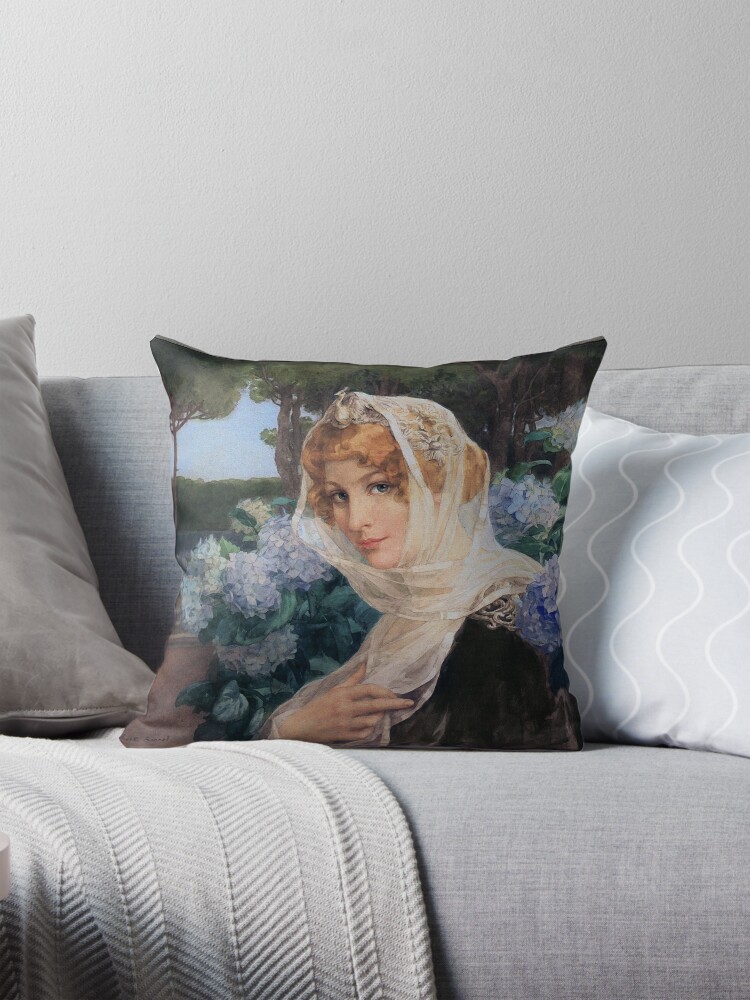
At the heart of this artwork is a молодая женщина, poised with grace and serenity. She occupies the foreground of the composition, the viewer’s gaze immediately drawn to her as the central figure. The woman’s face is framed by soft, wavy hair that spills gently down her shoulders, with subtle hints of warmth in the light brown and auburn hues.
Ее взгляд, though not directed outward, carries an air of introspection, as if she is lost in a private, peaceful reverie. Her eyes are soft and her expression serene, conveying a deep sense of tranquility. This sense of calm is enhanced by her posture; she is seated with one hand delicately holding a cluster of hydrangeas, their intricate, multi-toned petals painted with precision and grace.
The hydrangeas, символ красоты, милость, and abundance, are not merely decorative in this piece but rather serve as a reflection of the subject’s character and the mood of the composition. They are rendered with exquisite detail, each flower appearing to bloom under a soft, ambient light.
The colors range from rich, deep purples to soft pinks and blues, creating a vivid contrast with the more muted tones of the young woman’s attire. These flowers seem to breathe life into the portrait, making them an essential component in conveying the overall theme of natural beauty and the fleeting, ephemeral nature of youth and femininity.
The woman’s clothing also plays a key role in the narrative of the painting. Ее платье, adorned with subtle lace and floral patterns, evokes the restrained elegance typical of the late 19th century. The soft hues of her dress—pale creams and whites—complement the colors of the hydrangeas, creating a harmonious relationship between the figure and her floral surroundings. The fabric of her gown is portrayed with remarkable texture, conveying its delicacy and fine quality.
The drapery falls in soft folds around her body, further enhancing the sense of grace that pervades the entire composition. Ее платье, with its refined cut and high collar, suggests a degree of modesty, in keeping with the values of the time, yet the soft detailing allows for an undercurrent of sensuality and softness to emerge.
За темой, the background provides a serene, natural landscape that enhances the intimate, Мирное настроение живописи. The artist has opted for a slightly blurred and ethereal rendering of the surrounding foliage, with the soft light filtering through the trees and casting a warm, diffused glow over the figure.
The background is not overpowering but serves to frame the young woman in a gentle embrace of nature, suggesting a deep connection between the subject and her environment. The interplay of light and shadow on the leaves and flowers subtly echoes the light touch and serenity that pervades the figure, creating a seamless balance between subject and surroundings.
The artist’s choice to depict the woman against this natural backdrop also suggests a celebration of the harmony between human life and nature. The quietude of the landscape complements the figure’s pensive demeanor, evoking themes of renewal, рост, and cyclical beauty. Мягкий, muted greens of the foliage, together with the delicate tones of the hydrangeas, contribute to the painting’s overall sense of stillness and calm.
The palette used in Young Woman with Hydrangeas is another important feature of the artwork. Sonrel’s use of light, pastel tones—pale blues, гвоздики, зелень, and soft yellows—creates an atmosphere of ethereal elegance, lending the scene a dreamlike quality. The composition is bathed in a soft, почти золотой свет, lending a sense of timelessness to the scene.
The colors are not bold or jarring but rather gentle and soothing, contributing to a sense of peace and refinement. These soft hues are paired with more subdued, натуральные цвета, creating a perfect balance between warmth and coolness, свет и тень.
С точки зрения стиля, Sonrel’s painting reflects the highly refined academic tradition that was popular in France during the late 19th century. Her work demonstrates technical mastery, especially in the detailed rendering of the hydrangeas and the folds of the woman’s gown. Мягкий, almost luminous quality of the work, achieved through the artist’s nuanced application of paint, demonstrates an intimate knowledge of how to capture light and texture.
There is an emphasis on fine detail, particularly in the treatment of the flowers and the fabric of the woman’s dress, which invites the viewer to appreciate the careful craftsmanship behind the scene. В то же время, the soft blending of colors and the gentle modeling of light create an almost impressionistic atmosphere, with an emphasis on mood rather than strict realism.
The theme of the painting is one of natural beauty, невиновность, и самоанализ. The hydrangeas, symbolizing both abundance and the transience of life, are paired with the figure of the young woman, who seems to embody the fleeting nature of youth and beauty. Мягкий, glowing light and gentle colors emphasize the theme of fragility, reminding the viewer of the ephemeral nature of time and the beauty it bestows. The mood of the painting is calm and contemplative, suggesting a moment of stillness in which the subject is lost in thought or quietly appreciating the beauty of her surroundings.
В заключение, Young Woman with Hydrangeas by Elisabeth Sonrel is a work that captures the delicate interplay between beauty, природа, и течение времени. Through her meticulous attention to detail, the artist has created a piece that speaks to the viewer on both an emotional and aesthetic level, evoking a sense of serenity and timelessness that transcends the boundaries of the canvas.
Молодая женщина с гортензиями - это ретушированная репродукция старых мастеров в цифровом искусстве изображения, являющегося общественным достоянием..
Информация ниже от Wikipedia.org
Элизабет Сонрель (1874 Туры - 1953 Уплотнения) был французским художником и иллюстратором в стиле модерн.. Ее работы включали аллегорические сюжеты., мистицизм и символизм, портреты и пейзажи.
Она была дочерью Николаса Стефана Сонреля., художник из Тура, и получила от него раннее обучение. Для дальнейшего обучения она отправилась в Париж в качестве ученицы Жюля Лефевра в Ecole des Beaux-Arts..
В 1892 она нарисовала свою дипломную работу, «Pax et Labor», работа, которую можно увидеть в Musée des Beaux-Arts de Tours. С тех пор она выставлялась в Salon des Artistes Français между 1893 и 1941, ее фирменные работы - большие акварели в прерафаэлитской манере., которую она приняла после поездки во Флоренцию и Рим, открытие художников эпохи Возрождения – некоторые из ее работ с явным подтекстом Боттичелли. Ее картины часто были вдохновлены романами о короле Артуре., "Божественная комедия" Данте Алигьери’ и "Новая жизнь", библейские темы, и средневековые легенды. Среди ее мистических работ «Эймс эрантес»’ (Салон 1894) и «Духи бездны»’ (Салон 1899) и "Молодая женщина с гобеленом".
На Всемирной выставке 1900, основной темой которого был модерн, ее 1895 картина «Сон Богородицы»’ (Сон Богородицы), был награжден бронзовой медалью, и премию Анри Лемана 3000 франков Академии художеств.[3] Из 1900 Впоследствии она ограничилась своей живописью портретами, живописные пейзажи Бретани, и случайное цветочное исследование.
Она совершала регулярные поездки в Бретань для рисования., вдохновленный лесом Brocéliande, и из 1910 в различные места на побережье, такие как Конкарно, Plougastel, Пон-л'Аббе и Локтуди, часто останавливаются в гостиницах в сопровождении одного или двух студентов. Она написала несколько работ в Le Faouët, прежде чем построить виллу в La Baule в 1930-х годах.. Работаю в основном акварелью и гуашью., она обнаружила готовый набор моделей среди молодых девушек в этом районе, и обнаружил, что бретонцы в целом дружелюбны, честный и уверенный в себе.
Ее последняя выставка в Салоне была в 1941 в возрасте 67. Есть также запись о том, что она выставлялась в Ливерпуле.. В ранние годы Сонрель выпускала плакаты., открытки и иллюстрации, в стиле модерн.