

In Fee Is Makke Fan De moaiste Dingen
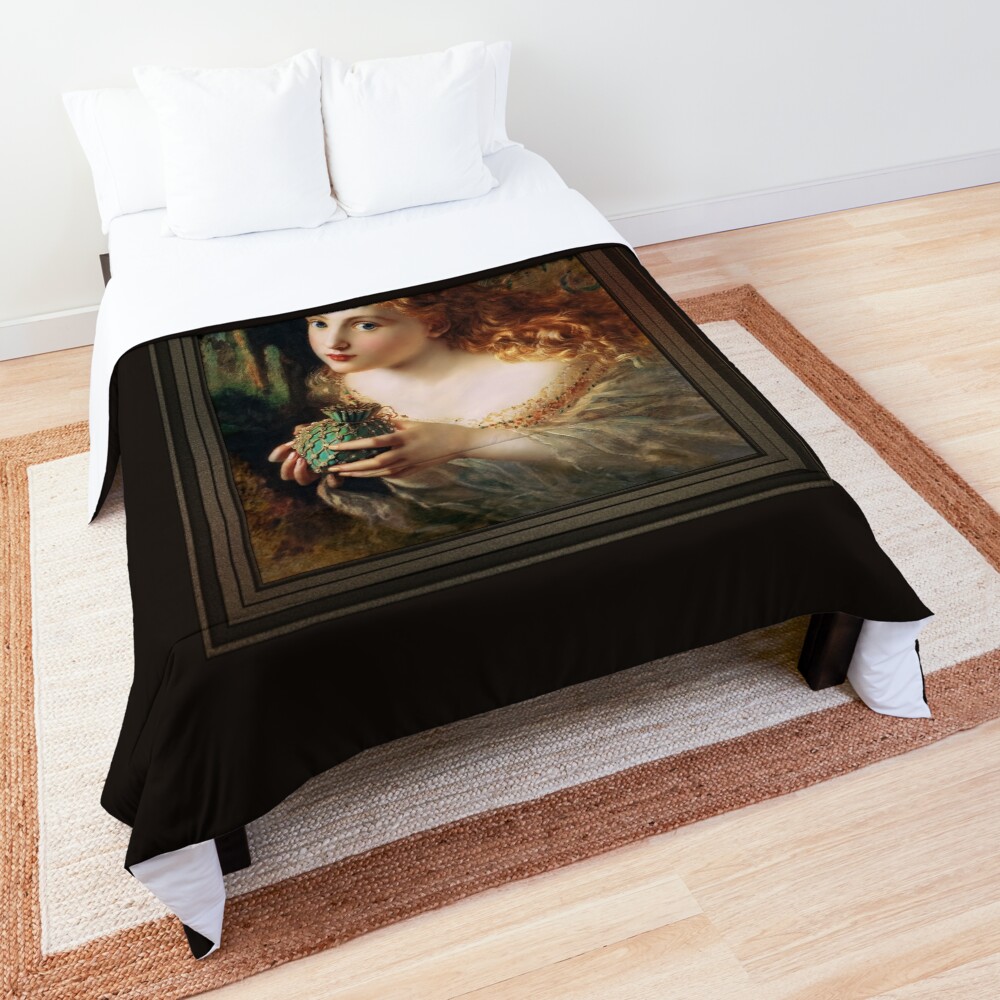
Sophie Gengembre Anderson (1823 – 1903) skilderij In Fee Is Makke Fan De moaiste Dingen vangt de delikate, etheryske skientme fan in betsjoenende fee, it naadloos mingen fan de oanhing fan de keunstner foar mytologyske tema's mei har hannelsmerk Romantyske styl. It keunstwurk ropt in djip gefoel fan wûnder, dêr't de grins tusken it magyske en it echte altyd sa tin is. Mei syn dreamlike kwaliteit en yngewikkelde detaillearring, Anderson makket in sêne dy't sjoggers lûkt yn in hast mytyske wrâld.
It ûnderwerp fan it skilderij is in jonge fee, har teare trekken en ekspressive eagen boeije de sjogger. De fee, set yn in weelderige natuerlike omjouwing, is gepositioneerd yn in sierlike, sêfte pose, mei in lyts objekt yn har hannen. De gouden lokken fan 'e fee falle har skouders del, framing her soft, youthful face. She is adorned with a crown made of colorful butterflies, a motif that suggests the lightness and freedom associated with both the insect and the fairy realm. Har wjukken, though delicate and finely detailed, have a subtle translucence, hinting at the airy nature of her existence. These elements combine to create a fairy whose innocence and grace are strikingly portrayed.
Ynhâldsopjefte
The Setting and Surrounding Details
The setting of the artwork is equally as significant as the subject, blending the fairy’s delicate form with a rich, lush background. A shadowy, dark terrain envelops the scene, with hints of foliage and rocks. The depth of the natural world is contrasted with the fairy’s glowing presence, enhancing her almost otherworldly appearance. Anderson has masterfully rendered the fairy’s surroundings, ensuring the environment complements the mystical quality of her character.
The fairy is positioned against a rock or stone formation, which could symbolize a threshold between the earthly and the ethereal. This connection is emphasized by the fairy’s tender grasp on a small, intricately designed object she holds—likely a precious artifact that suggests both beauty and fragility. It is draped in elaborate patterns, beads, and fine detailing, which suggests that it is an object of importance, perhaps a talisman or magical item that further connects her to her world.
De artistike styl en technyk
Sophie Gengembre Anderson stie bekend om har prachtige oandacht foar detail, en In Fee Is Makke Fan De moaiste Dingen is in treflik foarbyld fan har masterskip. Har romantyske styl is te sjen yn 'e sêftens fan' e ôfbylding fan 'e figuer, likegoed as de klam op idealisearre skientme. It realisme wêrmei't se it hier fan 'e fee skilderet, facial eigenskippen, en yngewikkeld kostúm sprekt ta de keunstner syn technyske feardichheden. Anderson syn kar fan kleur fierder fersterket de dreamlike kwaliteit fan it skilderij. De sêfte pasteltinten fan 'e klean fan' e fee mingje naadloos mei de libbendige flinters dy't har kroan fersiere, it meitsjen fan in algemien gefoel fan harmony en lykwicht.
De sêfte, hast ljochte kwaliteit fan 'e hûd en delikate hichtepunten op it gesicht fan' e fee jouwe har in angelyske aura. The artist’s delicate brushwork brings out the soft glow of the fairy’s complexion and emphasizes the fragile, ethereal nature of her character. Anderson’s meticulous technique in portraying textures—such as the intricate folds in the fairy’s clothing and the shimmering, iridescent wings—highlights her skill in rendering both the material and immaterial elements of her subject.
The Themes and Mood
The overall mood of the painting is one of reverence and admiration for beauty and innocence. The fairy’s youthful gaze, combined with her serene expression, evokes a sense of purity and delicate grace. This portrayal is in keeping with the Romantic movement, which often idealized the natural world, the supernatural, and the innocence of childhood. The painting invites viewers to imagine a world of fantasy, where such mythical beings live in harmony with nature, untouched by the harsh realities of the human world.
The use of butterflies, symbols of transformation and freedom, also speaks to themes of metamorphosis and the fleeting beauty of life. These creatures are often associated with spiritual growth and liberation, adding a layer of depth to the fairy’s character. The fairy’s interaction with these butterflies—both adorning her crown and fluttering around her—suggests that she is a part of a greater, interconnected world.
While the overall tone of the painting is gentle and whimsical, there is an undercurrent of mystery, particularly in the object the fairy holds in her hands. This item, intricately beaded and carefully held, could represent an important relic or key to a magical world, adding an element of intrigue to the otherwise peaceful scene.
The Materials and Techniques
The artist employed oil paints on canvas to achieve the soft yet vibrant hues in In Fee Is Makke Fan De moaiste Dingen. Anderson’s use of oil paints allows for the fluid, almost translucent effect of the fairy’s wings, as well as the soft blending of tones in her face and clothing. The fine details, such as the butterfly crowns and the texture of the object the fairy holds, are expertly rendered to provide a lifelike yet fantastical element to the composition.
Anderson’s ability to blend light and shadow effectively enhances the three-dimensionality of her figures, allowing the viewer to feel as though they are peering into a three-dimensional world. De ljochtboarnen lykje sêft út de fee sels te kommen, fersterkjen har bûtenwrâld, hast godlike kwaliteit.
Konklúzje
Yn In Fee Is Makke Fan De moaiste Dingen, Sophie Gengembre Anderson bringt in mystike en betsjoenende wrâld ta libben, dêr't de natuerlike en boppenatuerlike inoar ferweve. Troch har sekuere technyk en trochtochte gebrûk fan symbolyk, Anderson noeget de sjogger út yn in wrâld fan suvere skientme, ûnskuld, en mystearje. De fee, mei har flinterkroan, delikate wjukken, en etheryske oanwêzigens, tsjinnet as sawol in symboal fan ûnskuld as in oantinken oan de kwetsbere, mar dochs prachtige aard fan it bestean. De rike, detaillearre lânskip en de ynteraksje fan de mearke mei har omjouwing fersterkje it fantastyske tema fan it skilderij fierder, wêrtroch't it in boeiend wurk dat bliuwt te resonearjen mei sjoggers.
A Fairy Is Made Of Most Beautiful Things cUnbekend troch Frânsk-berne Britske skilder Sophie Gengembre Anderson (1823 – 1903); dy't him spesjalisearre yn neoklassike en Italjaanske sjenreskilderjen fan froulju en bern, algemien yn plattelân ynstellings.
Nim it Fair Face of Woman, en Sêft Suspending, Mei Butterflies, Blommen, en Jewels Attending, Sa is dyn fee makke fan de moaiste dingen
Dit is in retoucheerde reproduksje fan âlde masters fan digitale keunst fan in ôfbylding yn it iepenbier domein dat te keap is as in online art print.