

A Girl With A Dead Canary
“A Girl With A Dead Canary,” painted by French artist Jean-Baptiste Greuze (1725 – 1805), is a poignant and thought-provoking work that reflects the artist’s skill in capturing human emotion through delicate and detailed expressions. Created in the latter half of the 18th century, this piece exemplifies the Rococo and early Neoclassical styles that defined much of Greuze’s career. The emotional intensity of the painting, paired with its subject matter, explores themes of loss, oskuld, and the fragile nature of life, common concerns of the time.
Innehållsförteckning
Huvudämnet
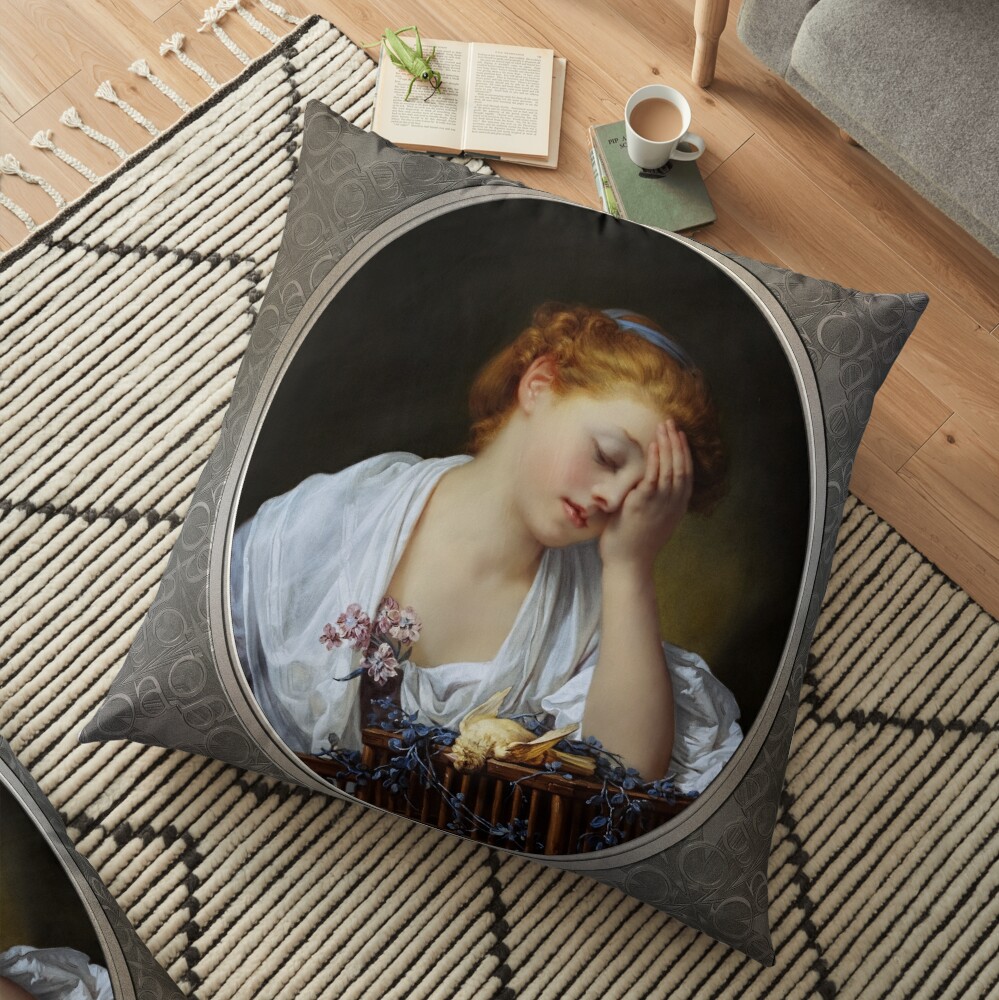
At the heart of this piece is the image of a young girl, her face marked by a deep sense of sorrow and contemplation. The girl is depicted with a naturalistic yet idealized beauty, characteristic of the Rococo style, med mjuk, delicate features and smooth skin. Her posture is languid yet graceful, with her right hand placed gently against her forehead, as if overwhelmed by grief or distress. The girl’s eyes are partially closed, her gaze directed downward in a moment of quiet sorrow, lending an air of introspection and melancholy to the scene.
Ämnet, though youthful and tender in appearance, conveys a mature emotional depth. The girl’s expression is filled with quiet resignation, possibly a reflection on the death of the canary in her hand, which becomes the central motif of the artwork. The girl’s lips are slightly parted, suggesting an inward focus or the beginning of a sigh, reinforcing the sense of loss that pervades the composition. She is dressed in simple yet elegant white attire, which enhances her ethereal quality and focuses the viewer’s attention on her expression and the symbolism surrounding her.
The Dead Canary
In the girl’s left hand rests a dead canary, its small body lifeless and limp, positioned delicately alongside the girl’s skin. The bird’s natural beauty contrasts sharply with its death, and its fragility is emphasized by the tender handling of its form. The canary, a symbol of innocence and fragility, was often associated with themes of loss during the 18th century, particularly in works of art where death or suffering was a focal point. The bird’s delicate feathers and vivid yellow hue, though faded in death, are stark against the girl’s pale skin and the muted tones of the background.
The placement of the canary in the composition creates a balance between the girl’s sorrow and the physical object she holds. It is almost as if the girl’s grief is intertwined with the fate of the bird, serving as an emotional metaphor for her own youth and innocence, now marred by the irreversible passage of time or the inevitability of mortality. The canary’s death becomes a poignant symbol of life’s impermanence, a theme that resonates deeply within the context of 18th-century art and culture.
The Terrain and Materials
The background of the painting is dark and unobtrusive, with a smooth gradient of deep brown and black tones that do not distract from the central subject. This subtle backdrop creates a stark contrast to the girl’s delicate skin tones and the bright yellow feathers of the canary, focusing all attention on the emotional expression and the symbolism conveyed through the subject and her gesture. The artist’s use of light and shadow emphasizes the softness of the girl’s features and the texture of her attire, adding to the overall atmosphere of fragility and vulnerability.
The artist’s material choice of oil paint allows for a smooth, almost velvety finish, with every detail of the girl’s skin, hår, and the canary rendered in exquisite realism. The texture of the girl’s white dress is particularly notable, its fine folds and delicate creases painted with careful attention to light and shadow. This technique reflects Greuze’s mastery in rendering fabrics and textures, which was a hallmark of his work. The oils also serve to capture the subtle play of light on the girl’s skin, lending her a soft, luminous quality that enhances the overall emotional impact of the piece.
The materials and the use of light within the painting create an almost lifelike sense of presence, drawing the viewer into the intimate moment captured by Greuze. The attention to detail in the girl’s facial expression and the posture of her hands further invites contemplation, making this artwork a deeply moving and introspective piece.
Stil, Tema, och humör
The Rococo style, known for its emphasis on grace, elegans, och känslomässig intensitet, is apparent in the lightness of the girl’s attire and the fine detail of the canary. i alla fall, Greuze’s painting moves beyond mere Rococo frivolity, with the artist adopting a more serious, reflective tone that aligns with the emerging Neoclassical interest in moral and emotional themes. The artist’s focus on human emotion, particularly the complex and often painful feelings associated with loss, suggests a transition from the lighter, more decorative themes of Rococo art to a more somber and introspective approach.
The mood of the painting is one of quiet sorrow, with the girl’s contemplation and the symbolism of the dead canary serving as a meditation on mortality, oskuld, och livets bräcklighet. The painting evokes a sense of empathy and introspection in the viewer, as the expression on the girl’s face suggests both vulnerability and the inevitability of loss. This emotional depth and subtlety are characteristic of Greuze’s work, which often sought to evoke strong, sentimental reactions from the viewer, particularly through the portrayal of youthful figures in moments of emotional intensity.
The theme of loss in “A Girl With A Dead Canary” speaks to the human experience of grief and the way in which small moments of sorrow can be amplified by emotional reflection. The girl’s sorrowful expression, paired with the delicate stillness of the dead bird, forms a visual metaphor for the fragility of innocence, ungdom, and life itself. It is a contemplative piece, encouraging the viewer to reflect on the transient nature of existence and the inevitable passage of time.
Slutsats
“A Girl With A Dead Canary” is a masterful example of Jean-Baptiste Greuze’s ability to evoke deep emotion and reflection through his detailed and expressive portraits. Genom att använda ljus, textur, och symbolik, Greuze captures the delicate balance between beauty and loss, innocence and mortality. The painting’s somber mood, paired with its exquisite technical execution, makes it a remarkable representation of the human experience and a poignant meditation on the fragility of life.
Detta är en remastrad digital konst reproduktion av en allmän egendomsbild som är tillgänglig för köp online som en rullat canvastryck.
Detta digitala konstskapande, som med alla konstverk som kan hittas på Xzendor7-webbplatsen finns att köpa online i en mängd olika materialformat inklusive canvastavlor, akryltryck, metalltryck, trätryck, inramade tryck, affischer, och som rullade canvastryck i en mängd olika storlekar från 12 tum till 72 tum beroende på storleken på det faktiska konstverket och den print on demand-butik du väljer att köpa konsten från.
Konstverket är också tillgängligt på ett brett utbud av herr- och damkläder, muggar, väskor, halsdukar, anteckningsböcker och tidskrifter och många heminredningsprodukter.
Photo Retouching Of Portrait Of A Girl With A Dead Canary
Om konstnären
Informationen nedan är härledd från NGA.gov
Jean föddes i Tournus, Frankrike i 1725 som den sjätte sonen till en kakelläggare som kände igen sin talang i mycket tidig ålder; skickar honom till Lyon, Frankrike för att studera med den franske porträttmålaren Charles Grandon (1691 – 1762).
Vid ungefär en ålder av 30 han lämnade Lyon, och reste till Paris, Frankrike för att studera vid Académie royale de peinture et de sculpture eller Royal Academy of Painture and Sculpture; som vid den tiden var Frankrikes främsta konstinstitution under senare delen av Ancien Régime (Gamla Regiem ~1500 till 1789), tills den avskaffades 1793 under franska revolutionen.
Fast mycket begåvad och mycket framgångsrik under 1760- och 1770-talen, med beskyddare av sådana som Marquise de Pompadour (1721 – 1764), Kejsarinnan Katarina II av Ryssland (r. 1762 – 1796), och Ange Laurent från La Live de Jully (1725 – 1779); hans rebelliska natur och konflikter med akademi- och salongtjänstemän skulle visa sig vara hans olycka; särskilt efter hans äktenskap med Anne Marie Babuty i 1759; vilket skulle visa sig vara en katastrof för honom, eftersom hon var känd för att ha haft olika affärer med hans elever och barnvakter, vilket orsakade honom inkomstbortfall och offentlig förnedring.
När äktenskapet tog slut 34 år senare fick hans hustru en betydande förlikning, vilket lämnade honom i svår ekonomisk situation och vid tiden för hans död i 1805 vid en ålder av 80 han var nästan pank.