

Head Of A Young Woman c1780s
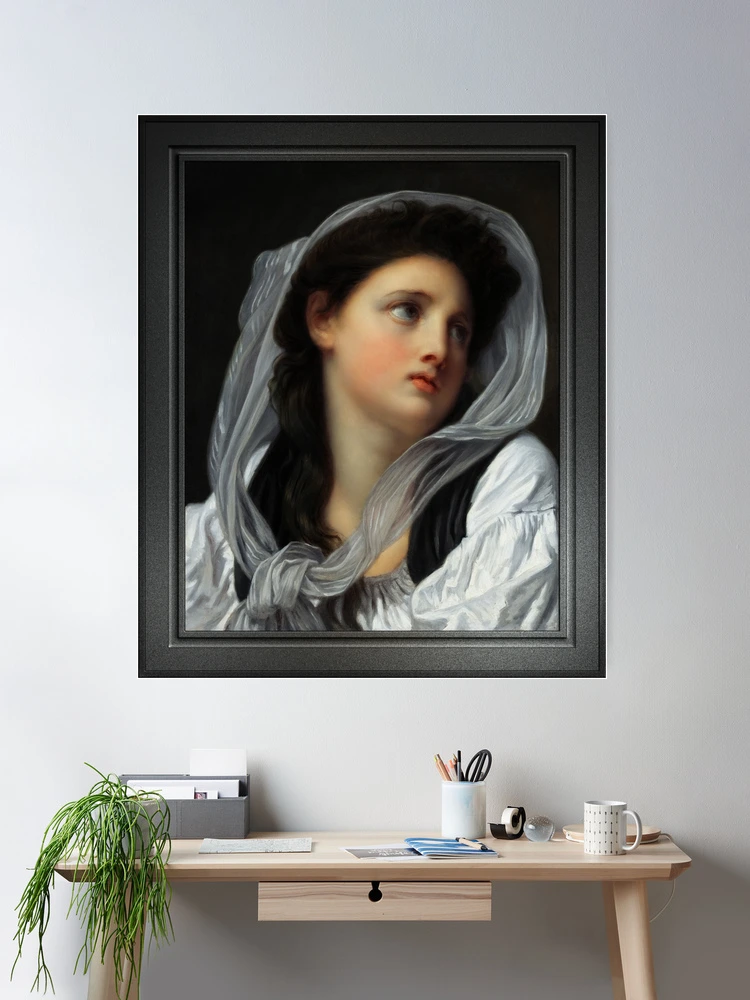
Konstverket “Head Of A Young Woman c1780s” was created by the renowned French artist Jean-Baptiste Greuze (1725 – 1805). Greuze, a master of the Rococo and Neoclassical movements, has long been celebrated for his emotional portrayal of the human form, particularly in his genre scenes and portraiture. I denna målning, Greuze presents a close-up view of a young woman, capturing her delicate features and emotional expression. The subject’s appearance and pose evoke a quiet sense of vulnerability and contemplation, typical of the artist’s focus on intimate, personal moments.
Innehållsförteckning
Ämnet: A Moment of Vulnerability
The young woman portrayed in this painting seems to be in a state of introspection, her gaze directed upward and slightly to the side, as though lost in thought or perhaps caught in a fleeting moment of emotion. Her head is slightly tilted, and her face, framed by flowing, soft fabric, adds an element of delicacy to the composition. The transparent veil-like material, which drapes gently over her head and shoulders, creates a soft contrast to the more defined features of her face, enhancing the subject’s fragile and ethereal quality. The veil’s soft folds suggest an underlying sense of modesty and demureness, qualities often emphasized in Greuze’s portraits of young women.
Her pale complexion, highlighted by soft brushstrokes, adds to the overall gentle mood of the piece. Hennes ögon, slightly wide, exude a quiet vulnerability. The expression is not one of distress but rather one of thoughtful quietude, inviting the viewer to engage with her internal world, though it remains shrouded in mystery. The subtle play of light on her face further enhances her youthful innocence and purity, while the deep shadows surrounding her create a mood of melancholy, emphasizing her isolation in this intimate moment.
Material och tekniker: A Masterful Rendering of Light and Texture
Greuze, known for his meticulous attention to detail, employed traditional oil painting techniques to create a strikingly realistic and textured portrait. The rendering of the young woman’s face and veil shows the artist’s exceptional ability to manipulate light and shadow, particularly in his treatment of the skin’s texture and the translucent fabric.
The artist’s mastery of chiaroscuro – the contrast between light and dark – creates a deep sense of volume in the subject’s face, allowing each delicate contour to emerge. The pale tones of her face are subtly warmed by the naturalistic application of color, creating a softness that feels almost tangible. Greuze’s use of the fine details in her hair and the transparent veil elevates the portrait beyond a simple likeness, offering instead a nuanced representation of the subject’s emotional depth.
Slöjan, a key element in the composition, is rendered with exceptional care. Each fold and layer is crafted to suggest a sense of weight and fluidity, and its lightness contrasts with the more defined features of the young woman’s face. The contrast between the smoothness of her skin and the texture of the veil emphasizes the artist’s understanding of fabric as both an element of fashion and a device to enhance the mood and meaning of the composition.
The Emotional Tone and Psychological Depth
Greuze’s work is often praised for its emotional depth, and this portrait of the young woman is no exception. The expression on her face hints at complex psychological states: she appears to be caught in a moment of emotional tension, one that does not necessarily suggest joy or sorrow but rather a contemplative or pensive state. The choice to depict the subject in such a vulnerable moment rather than in a more formal or rigid pose adds an element of relatability to the viewer, drawing them into the scene and inviting them to interpret her emotional state.
The mood created by the painting is one of quiet introspection, heightened by the somber dark background that isolates the young woman from her surroundings. This dark backdrop allows the viewer’s focus to remain entirely on the subject, further deepening the emotional resonance of the portrait.
The juxtaposition of light and dark, along with the contrast between the soft skin and the flowing fabric, creates a feeling of fragility that permeates the entire composition. This exploration of emotional depth was characteristic of the Rococo period, where portraiture was often used to convey not only the physical likeness of a subject but also their inner emotional life.
Slutsats: A Timeless Portrait of Youth and Vulnerability
“Head of a Young Woman” stands as a remarkable example of Jean-Baptiste Greuze’s skill in portraying the emotional complexity of the human figure. Through his masterful handling of light, skugga, och struktur, Greuze captures a moment of delicate beauty and introspection, inviting the viewer to contemplate not only the external features of the subject but also her internal world. The artwork is a testament to the artist’s ability to evoke complex psychological and emotional states through the medium of oil paint, offering a portrait that transcends time and remains poignant even today.
Detta digitala konstskapande, som med alla konstverk som kan hittas på Xzendor7-webbplatsen finns att köpa online i en mängd olika materialformat inklusive canvastavlor, akryltryck, metalltryck, trätryck, inramade tryck, affischer, och som rullade canvastavlor i en mängd olika storlekar från 12 tum till 72 tum beroende på storleken på det faktiska konstverket och den print on demand-butik du väljer att köpa konsten från.
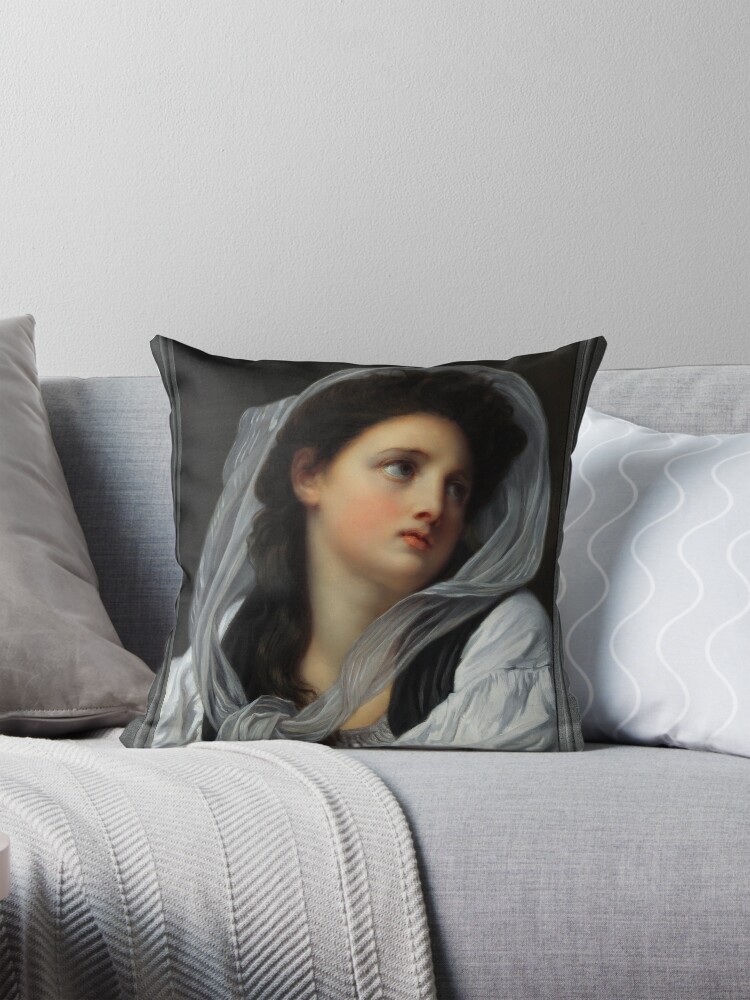
Konstverket är också tillgängligt på ett brett utbud av herr- och damkläder, muggar, väskor, halsdukar, anteckningsböcker och tidskrifter och många heminredningsprodukter.
Om konstnären
Informationen nedan är härledd från NGA.gov
Jean föddes i Tournus, Frankrike i 1725 som den sjätte sonen till en kakelläggare som kände igen sin talang i mycket tidig ålder; skickar honom till Lyon, Frankrike för att studera med den franske porträttmålaren Charles Grandon (1691 – 1762).
Vid ungefär en ålder av 30 han lämnade Lyon, och reste till Paris, Frankrike för att studera vid Académie royale de peinture et de sculpture eller Royal Academy of Painture and Sculpture; som vid den tiden var Frankrikes främsta konstinstitution under senare delen av Ancien Régime (Gamla Regiem ~1500 till 1789), tills den avskaffades 1793 under franska revolutionen.
Fast mycket begåvad och mycket framgångsrik under 1760- och 1770-talen, med beskyddare av sådana som Marquise de Pompadour (1721 – 1764), Kejsarinnan Katarina II av Ryssland (r. 1762 – 1796), och Ange Laurent från La Live de Jully (1725 – 1779); hans rebelliska natur och konflikter med akademi- och salongtjänstemän skulle visa sig vara hans olycka; särskilt efter hans äktenskap med Anne Marie Babuty i 1759; vilket skulle visa sig vara en katastrof för honom, eftersom hon var känd för att ha haft olika affärer med hans elever och barnvakter, vilket orsakade honom inkomstbortfall och offentlig förnedring.
När äktenskapet tog slut 34 år senare fick hans hustru en betydande förlikning, vilket lämnade honom i svår ekonomisk situation och vid tiden för hans död i 1805 vid en ålder av 80 han var nästan pank.