

Female Portrait Of A Young Woman
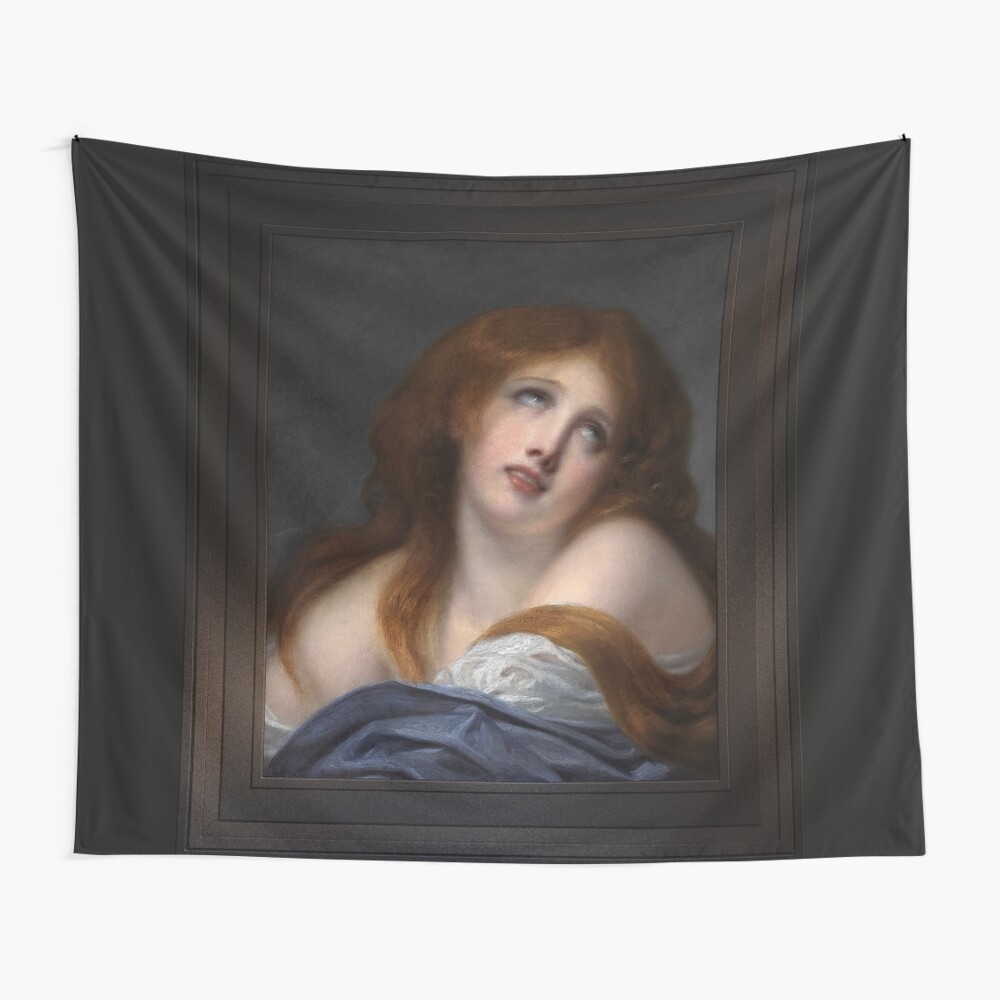
This exquisite portrait, betitlad Female Portrait Of A Young Woman, was painted by Jean-Baptiste Greuze, a renowned French painter active during the 18th century. Född i 1725 och går bort i 1805, Greuze was known for his tender and emotive portrayals of the human condition. His work often captured moments of profound emotional depth, och Female Portrait Of A Young Woman is a stunning example of this. Ämnet för porträttet, en ung kvinna, appears with her head slightly tilted, gazing upward with a melancholic expression that seems to embody a complex emotional state.
Innehållsförteckning
Stil och teknik
Greuze’s style is a blend of Rococo elegance and the emerging Neoclassical trends of his time. The delicate brushwork in this painting, along with the subtle use of light and shadow, highlights his mastery of chiaroscuro, a technique that plays with contrasts between light and dark to create a sense of depth and volume. Den mjuka, almost ethereal rendering of the woman’s skin and the luxurious folds of fabric surrounding her shoulders are characteristic of Greuze’s refined approach to portraiture. His choice of a muted, dark background further enhances the luminous quality of the figure, focusing all attention on the delicate features and graceful posture of the woman.
The artist’s use of light serves not only to model the figure, but also to emphasize the emotional intensity of the subject. The way the light gently caresses the skin of the subject, especially her face and shoulder, adds a layer of tenderness and vulnerability to the portrait. This technique is often seen in Greuze’s work, where light symbolizes emotional clarity, oskuld, or purity.
The Subject and Mood
The young woman depicted in the painting appears to be lost in thought, her expression caught in a moment of contemplation or introspection. Hennes ögon, slightly upturned, are soft and gazing into the distance, which could suggest a longing, a moment of pensive reflection, or even a quiet sorrow. The soft curves of her face, illuminated by the light, evoke a sense of fragility and grace, enhancing the feeling of emotional vulnerability. The woman’s slightly parted lips further add to her contemplative expression, as if she is on the verge of speaking but chooses instead to remain silent.
The mood of the painting can be interpreted as both serene and wistful. There is a subtle melancholy to the woman’s gaze, a suggestion of something unspoken. The portrait’s emotional depth is characteristic of Greuze’s work, which often explored themes of virtue, emotional turmoil, and human connection. Unlike more formal portraits of the time that focused on the outward grandeur and nobility of the subject, this portrait delves into the interior world of the figure, inviting the viewer to imagine the thoughts and emotions that lie behind the soft gaze.
Föremål och material
The primary focus of the painting is, självklart, the young woman herself, but the objects surrounding her also play a significant role in conveying the mood and context of the portrait. The fabric draped around her shoulders, possibly satin or silk, suggests a sense of aristocratic elegance. The fabric’s folds are meticulously rendered, each curve and crease captured with great precision, adding texture and depth to the image. The soft interplay of light on the fabric contrasts with the smoothness of her skin, further enhancing the contrast between her delicate figure and the luxurious materials she is draped in.
While the background is dark and unadorned, serving to accentuate the figure, the overall effect of the composition feels balanced. The simplicity of the background and the focus on the woman’s features suggest that she is the subject of utmost importance, both in terms of emotional significance and personal identity.
Färgpalett
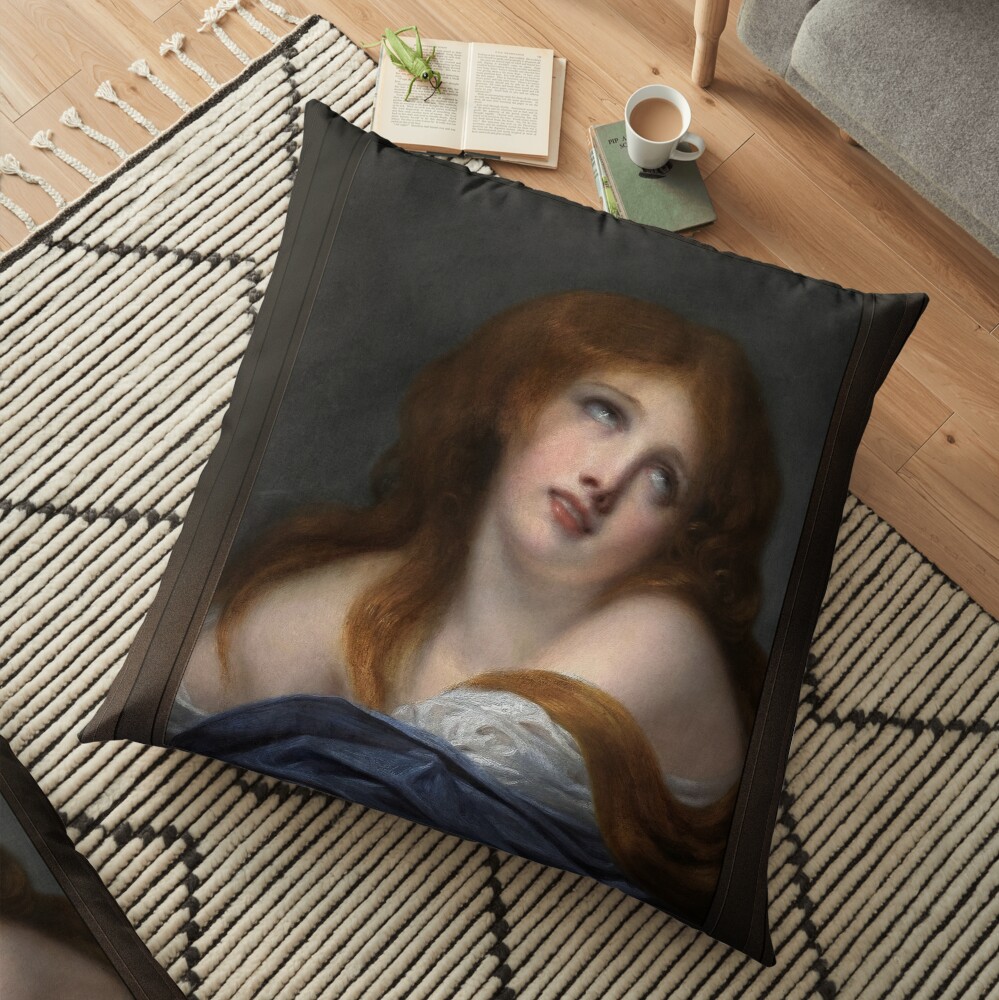
The color palette employed by Greuze is restrained but harmonious, med mjuk, muted tones that emphasize the delicate nature of the portrait. The colors of the fabric, a deep blue or grey, provide a subtle contrast to the pale complexion of the subject. The combination of blue and white gives the portrait an air of calm and tranquility, while the faint touches of warmth in the woman’s hair and skin tone create a sense of life and vitality. The careful application of these colors allows the subject to appear as if she is gently illuminated by a soft, naturlig ljus, giving the painting an almost lifelike presence.
Slutsats
Jean-Baptiste Greuze’s Female Portrait is a testament to his ability to capture the emotional subtleties of his subjects, conveying not just their physical likeness but also the deeper currents of their inner worlds. The delicate rendering of the subject, the serene but melancholic expression, och den mjuka, evocative use of light and shadow all work together to create a timeless piece of art that transcends the moment of its creation. The mood of the painting, suffused with a quiet sadness and introspection, invites the viewer to pause and reflect on the emotional complexities of the human experience. Greuze’s ability to infuse his portraits with such emotional depth makes this work a stunning example of 18th-century French portraiture.
Detta är en remastrad digital konst reproduktion av gamla mästare av en bild som är allmän egendom som är tillgänglig som canvastavla online.
Detta digitala konstskapande, som med alla konstverk som kan hittas på Xzendor7-webbplatsen finns att köpa online i en mängd olika materialformat inklusive canvastavlor, akryltryck, metalltryck, trätryck, inramade tryck, affischer, och som rullade canvastryck i en mängd olika storlekar från 12 tum till 72 tum beroende på storleken på det faktiska konstverket och den print on demand-butik du väljer att köpa konsten från.
Konstverket är också tillgängligt på ett brett utbud av herr- och damkläder, muggar, väskor, halsdukar, anteckningsböcker och tidskrifter och många heminredningsprodukter.
Om konstnären
Informationen nedan är härledd från NGA.gov
Jean föddes i Tournus, Frankrike i 1725 som den sjätte sonen till en kakelläggare som kände igen sin talang i mycket tidig ålder; skickar honom till Lyon, Frankrike för att studera med den franske porträttmålaren Charles Grandon (1691 – 1762).
Vid ungefär en ålder av 30 han lämnade Lyon, och reste till Paris, Frankrike för att studera vid Académie royale de peinture et de sculpture eller Royal Academy of Painture and Sculpture; som vid den tiden var Frankrikes främsta konstinstitution under senare delen av Ancien Régime (Gamla Regiem ~1500 till 1789), tills den avskaffades 1793 under franska revolutionen.
Fast mycket begåvad och mycket framgångsrik under 1760- och 1770-talen, med beskyddare av sådana som Marquise de Pompadour (1721 – 1764), Kejsarinnan Katarina II av Ryssland (r. 1762 – 1796), och Ange Laurent från La Live de Jully (1725 – 1779); hans rebelliska natur och konflikter med akademi- och salongtjänstemän skulle visa sig vara hans olycka; särskilt efter hans äktenskap med Anne Marie Babuty i 1759; vilket skulle visa sig vara en katastrof för honom, eftersom hon var känd för att ha haft olika affärer med hans elever och barnvakter, vilket orsakade honom inkomstbortfall och offentlig förnedring.
När äktenskapet tog slut 34 år senare fick hans hustru en betydande förlikning, vilket lämnade honom i svår ekonomisk situation och vid tiden för hans död i 1805 vid en ålder av 80 han var nästan pank.