

Ein Mädchen mit Blumen
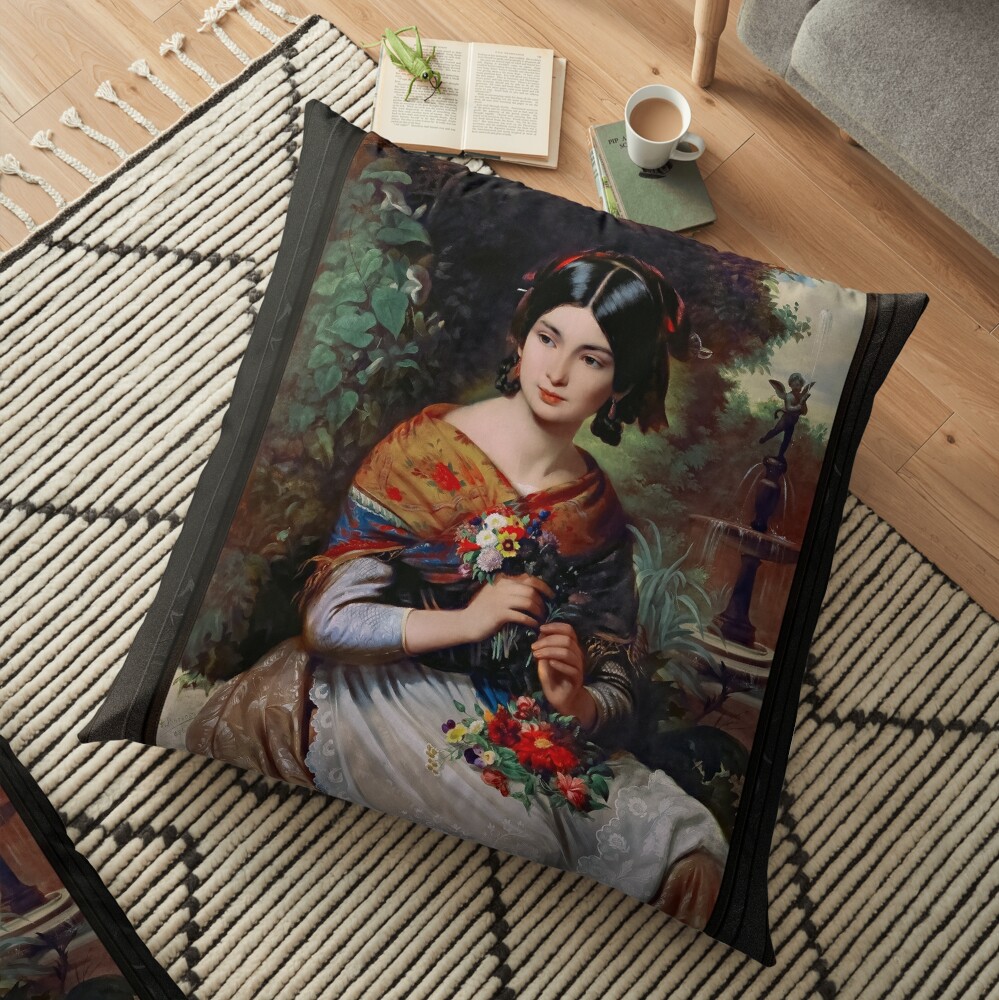
Hungarian painter József Borsos (1821 – 1883) captures a timeless moment in his artwork titled “Ein Mädchen mit Blumen,” created in the mid-19th century. Das Gemälde, characteristic of the Romantic and Realist movements of the time, embodies an exquisite portrayal of femininity, Jugend, and natural beauty, characteristic of Borsos’ arbeiten. The artist skillfully balances detailed realism with an emotionally evocative composition, using his mastery of oil paints to depict both the delicate nature of his subject and the lush surrounding environment. The atmosphere of the piece draws the viewer into a serene, almost idyllic world where the subject’s quiet grace dominates the scene.
Inhaltsverzeichnis
Hauptthema: The Girl
The focal point of the composition is a junges Mädchen, deren souveränes und anmutiges Auftreten ein Gefühl von Ruhe und natürlicher Schönheit hervorruft. Sie sitzt inmitten eines lebendigen Gartens, Ihre Haltung war elegant und dennoch entspannt, während sie sanft zur Seite blickt. Ihr Dunkel, Glattes Haar wird auf traditionelle Weise mit weichen Locken am Hinterkopf gestylt, Hervorhebung ihrer empfindlichen Eigenschaften. Am Hinterkopf ist ein rotes Band zu einer Schleife gebunden, was ihre Jugend und Weiblichkeit weiter betont.
In ihren Händen hält sie einen kleinen Strauß bunter Wildblumen, Dies dient sowohl als wörtliche als auch symbolische Darstellung ihrer Verbindung zur Natur. Die Blumen, sorgfältig arrangiert in ihren Händen, sind ein Symbol der Reinheit und der Flüchtigkeit der Jugend. Ihr zartes Aussehen kontrastiert wunderbar mit den weichen Falten des Kleides des Mädchens und ihrem gelassenen Gesichtsausdruck, was ein Gefühl von innerem Frieden oder Kontemplation suggeriert. The viewer can almost feel the subtle breeze that might be gently stirring the garden around her.
Clothing and Materials
The girl’s clothing is rendered with exceptional detail, reflecting the fashion of the early 19th century. She wears a white gown with a lace overlay, which provides a tactile sense of texture and fine craftsmanship. The delicate embroidery on the lace is particularly striking, showcasing Borsos’ meticulous attention to detail.
Over her gown, she dons a colorful shawl, its rich hues of orange, rot, and purple contrast with the softness of her dress. The shawl is adorned with floral patterns, echoing the natural beauty of the garden and enhancing the thematic unity of the piece. The combination of the shawl and gown is both elegant and simple, ein perfektes Spiegelbild der ruhigen, aber dennoch kultivierten Persönlichkeit des Mädchens.
Die Künstlerin hat sich dafür entschieden, den Stoff ihrer Kleidung so darzustellen, dass die zarte Textur betont wird, Jede Falte und jeder Faltenwurf ist sorgfältig bemalt. Diese Aufmerksamkeit für Stoff und Textur ist ein Markenzeichen von Borsos’ Werk und zeugt von seiner Fähigkeit, das Material in ein Erzählmittel umzuwandeln, was die Gesamtstimmung des Stücks verbessert.
Surrounding Environment: The Garden
Die Umgebung des Kunstwerks spielt eine entscheidende Rolle für die Stimmung und das Thema des Stücks. Der Hintergrund ist mit üppigem Grün gefüllt, Dargestellt ist ein gepflegter Garten, der sowohl den Wohlstand der Umgebung des Motivs als auch die detaillierte Darstellung der Natur durch den Künstler zum Ausdruck bringt. Groß, Laubbäume bilden die Kulisse, während ein kleiner, Der entfernte Brunnen verleiht der Szene einen Hauch von Eleganz und Ruhe. Der sanfte Wasserfluss des Brunnens, wenn auch subtil im Gemälde, führt ein Bewegungselement ein, das im Kontrast zur Stille des Mädchens steht, Vielleicht symbolisiert es den Lauf der Zeit oder die zyklische Natur des Lebens.
In der Ferne, Auf dem Brunnen steht eine kleine Statue eines Engels oder Cherubs, der Komposition eine klassische Note verleihen. Dieses Element bereichert die Arbeit zusätzlich, Verknüpfung der natürlichen Welt mit einer idealisierten Welt, fast mythologisches Reich. Der Brunnen, zusammen mit dem Grün und den Blumen im Vordergrund, schafft ein harmonisches Gleichgewicht zwischen Mensch und Natur, das zentrale Thema der Schönheit und Anmut in seiner reinsten Form bekräftigen.
Künstlerischer Stil: Romanticism and Realism
Borsos‘ Stil vereint Elemente der Romantik und des Realismus, with a focus on idealized beauty and meticulous attention to detail. His brushwork is soft yet defined, with fine details that bring the scene to life, such as the delicate petals of the flowers and the texture of the fabric. The romantic elements are evident in the serene expression of the girl and the dreamlike quality of the surrounding garden. There is an almost timeless aspect to the painting, as though it could belong to any era of history, yet it firmly captures the spirit of the 19th century.
The use of light and shadow is also notable in this piece. Borsos employs a gentle, diffused light that highlights the girl’s features and creates soft, ambient shadows that add depth to the composition. The painting’s color palette is warm, dominated by earthy tones of green, braun, und Gold, which give the work a grounded, naturalistic feel, while still maintaining an air of elegance.
Mood and Emotional Tone
The emotional tone of the painting is one of calm introspection. The girl’s serene expression and poised posture invite the viewer to share in a quiet moment of contemplation. The lush surroundings, coupled with the subtle, natural details, evoke a feeling of peace and harmony. There is a sense of timelessness to the scene, as though the girl’s moment of stillness is not bound by any specific era but instead exists in a timeless, idealized world.
The theme of beauty—both human and natural—is central to the emotional impact of the piece. The artist’s careful rendering of both the girl’s delicate features and the vibrant flowers speaks to a deep appreciation of nature’s grace and the fleeting, ephemeral quality of life. There is a sense that this moment of beauty, while fleeting, is meant to be savored and admired.
Abschluss
“Ein Mädchen mit Blumen” by József Borsos is a beautiful example of 19th-century Hungarian painting that blends the romance of nature with the realism of everyday life. Durch seine Liebe zum Detail, the artist creates a scene that is both grounded in reality and elevated by idealized beauty. The girl’s serene presence, combined with the lush garden and the subtle symbolism of the flowers, invites the viewer to contemplate the quiet beauty of life and the natural world.
Dies ist eine remasterte digitale Kunst-Reproduktion alter Meister eines gemeinfreien Bildes, das als verfügbar ist Leinwanddruck online.
Künstler Bio abgeleitet von Wikipedia.org
József stammte aus einer wohlhabenden Familie, sein Vater war Márton Borsos, ein Redakteur, Anwalt und Verleger und im Alter von 16 er wurde Schüler des ungarischen Malers József Károly Schöfft (1776 – 1851); in Budapest Ungarn.
Dann in 1840 Er zog nach Wien, um an der Akademie der Bildenden Künste bei dem österreichischen Maler Leopold Kupelwieser zu studieren (1796 – 1862) der oft mit der Nazarenerbewegung in Verbindung gebracht wurde.
Dann drei Jahre später in 1843 Er trat in eine private Akademie ein, die vom österreichischen Maler und Schriftsteller Ferdinand Georg Waldmüller betrieben wurde (1793 – 1865), gilt als einer der bedeutendsten Maler der Biedermeierzeit, die von dauerte 1815 zu 1848.
Obwohl sein künstlerisches Talent ihn finanziell erfolgreich machte, er verlor den größten Teil seines Geldes in Börsenspekulationen; Danach gab er die Malerei auf und eröffnete ein Fotostudio mit einem Maler und Fotografen namens Doctor Albert; und obwohl er dabei ein beachtliches Vermögen machte, Er gab das Geschäft auf und eröffnete das Restaurant Szép Juhászné; die er für den Rest seines Lebens betrieb.