

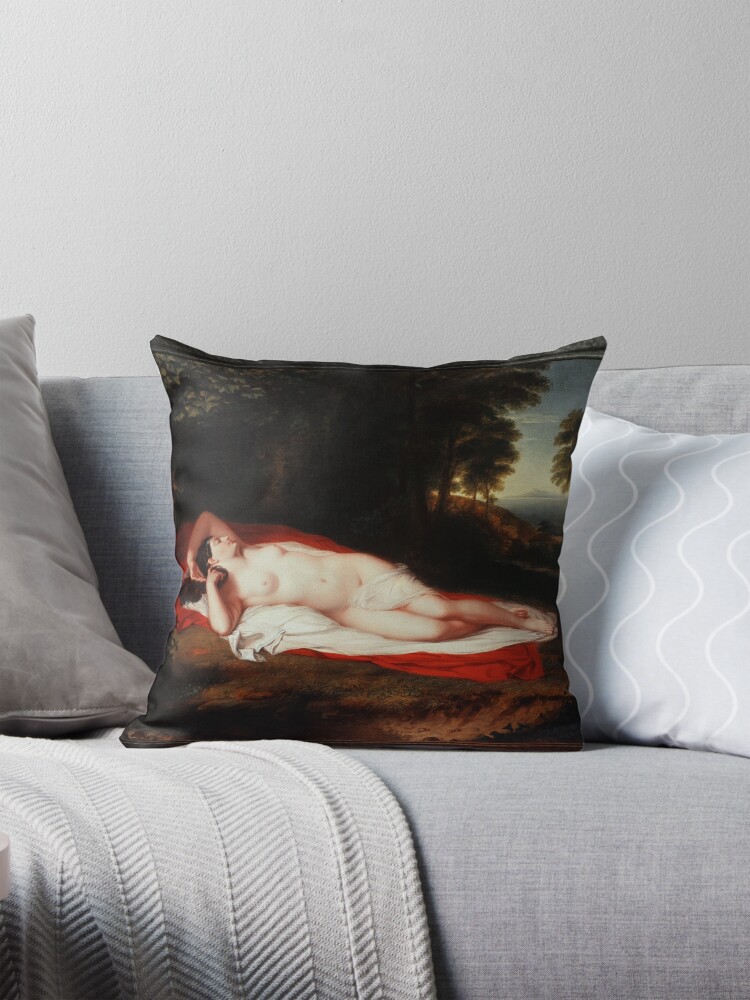
Ariadne
Ariadne c1831-35 von American Painter & Graveur Asher Brown Durand (1796 – 1886) war Teil der Romanticism Art Movement und war Absolvent der Hudson River School. Ashers Hauptaugenmerk lag auf Landschaftsbildern.
Dieses Gemälde von Ariadne von Asher stammt aus einer Kopie eines Gemäldes von John Vanderlyn (1776 – 1852) was er wie so oft in Vorbereitung auf den von ihm angefertigten Stich tat; er würde eine Ölleinwand in der Größe der beabsichtigten Gravur erstellen.
Ariadne ist die kretische Prinzessin der griechischen Mythologie, die von Theseus kurz geliebt wurde (der mythische König und Gründerheld von Athen), der sie auf der Insel Naxos zurückließ, nachdem er ihre Gesellschaft satt hatte.
Inhaltsverzeichnis
Überblick über “Ariadne” von Asher Brown Durand
Asher Brown Durand, ein amerikanischer Maler und Kupferstecher, gilt weithin als eine der zentralen Figuren der Landschaftsmalerei der Hudson River School, eine Bewegung, die die natürliche Schönheit der amerikanischen Landschaft feierte. jedoch, Durands Werk ging oft über Landschaften hinaus, wie in seinem zu sehen 1831 – 1835 malen Ariadne. Dieses Stück zeigt Durands Meisterschaft nicht nur darin, natürliche Formen einzufangen, sondern auch in seiner Fähigkeit, seinen Motiven etwas Ätherisches zu verleihen, fast mythologische Präsenz.
Das Thema des Kunstwerks: Ariadne
Im Zentrum von Durand’s Ariadne steht eine Frau in Ruhe, umgeben von üppiger Vegetation, ungestörte Wildnis eines alten, fast idyllische Landschaft. Das Thema des Gemäldes ist Ariadne, eine Figur aus der griechischen Mythologie, bekannt für ihre Verbindung zum Mythos von Theseus und dem Minotaurus. Ariadne wird oft als Symbol der Liebe dargestellt, Verlust, und Verrat, und Durand fängt sie in einem Moment gelassener Kontemplation ein.
Ariadnes Haltung ist träge und nachdenklich, Sie liegen auf einem Bett aus roten Vorhängen, die einen Kontrast zu den sanften Farbtönen der umgebenden Natur bilden. Die Figur wirkt entspannt, fast schlafend, mit sanft zur Seite gedrehtem Kopf. Ihr Körper ist fließend drapiert, durchscheinendes weißes Tuch, Der satte purpurrote Stoff unter ihr vermittelt ein Gefühl von Luxus und Opulenz. Trotz ihrer zurückgelehnten Position, Die Konturen ihres Körpers bleiben anmutig, wobei die Malerin die natürlichen Kurven ihrer Form mit großer Sorgfalt und Sensibilität einfängt. Ihr Gesicht, obwohl teilweise durch ihre Positionierung verdeckt, scheint friedlich, suggeriert eine tiefe innere Ruhe oder Selbstbeobachtung.
Die Landschaft und die natürliche Umgebung
Der Hintergrund des Gemäldes ist üppig, grüne Landschaft, die sich in die Ferne erstreckt, getaucht in den sanften Schein eines Abend- oder frühen Morgenlichts. Die Szene ist geprägt von sanften Hügeln, dichte Bäume, und ein entferntes Gewässer. Durands Liebe zum Detail bei der Darstellung der Natur spiegelt sein Engagement für die Prinzipien der Hudson River School wider, wo die natürliche Welt verehrt und idealisiert wurde. Das Laub ist reich bemalt, tiefes Grün, während der Himmel darüber eine zarte Mischung aus sanften Blau- und warmen Gelbtönen ist, trägt zu einer Atmosphäre der Ruhe und Nostalgie bei.
Der Fernblick über das Wasser vermittelt ein Gefühl von Tiefe und Weite, lädt den Betrachter ein, sich die Weite der Szene vorzustellen. Besonders hervorzuheben ist der Einsatz von Licht in diesem Gemälde; Die sorgfältige Wiedergabe von Schatten und Glanzlichtern durch den Künstler erzeugt ein Gefühl von Volumen und Textur, Dies verleiht sowohl der Figur der Ariadne als auch der umgebenden Landschaft eine nahezu dreidimensionale Qualität. Das Licht scheint die Figur zu umhüllen, wirft einen sanften Glanz auf ihre Haut und die Falten ihrer Vorhänge, während die schattigen Bereiche das Gefühl der Einsamkeit und Besinnung vertiefen.
Die Symbolik des Vorhangs
Der rote Vorhang unter Ariadne ist nicht nur ein visuelles, sondern auch ein symbolisches Element. In der klassischen Kunst, Vorhänge dienten oft als Mittel, um sowohl den emotionalen Zustand des Subjekts als auch seine physische Form auszudrücken. In diesem Fall, Der tiefrote Stoff kann als Symbol der Leidenschaft interpretiert werden, Liebe, oder sogar opfern. Ariadne, wurde von Theseus verlassen, nachdem er ihm bei der Flucht aus dem Labyrinth geholfen hatte, könnte als Verkörperung von Themen wie Verlust und emotionalem Aufruhr angesehen werden, doch ihre friedliche Ruhe und die Üppigkeit, Die fruchtbare Landschaft um sie herum deutet auf eine Art stille Entschlossenheit oder Akzeptanz hin.
Das weiße Tuch, in das sie gehüllt ist, kann als Symbol der Reinheit oder eines Neuanfangs angesehen werden, Das ist passend, wenn man bedenkt, dass der Mythos der Ariadne oft mit Transformation in Verbindung gebracht wird; both in the literal sense of her life being changed by her relationship with Theseus and in the mythological sense, where her fate takes a turn after her abandonment.
Der künstlerische Stil und die Technik
Durand’s Ariadne is painted in a classical Romantic style, where realism and idealism merge to create a vision of beauty that transcends the ordinary. The artist employs a fine balance of realism in the portrayal of both the figure and the landscape, yet there is an underlying idealization that makes the scene feel timeless. Durand’s technical skill is evident in the delicate rendering of light and shadow, the softness of the fabric, and the naturalistic details of the landscape.
The figures and forms are modeled with great precision, und die sanften Farbübergänge deuten auf das tiefe Verständnis des Künstlers für den menschlichen Körper und das Lichtspiel auf verschiedenen Oberflächen hin. Durands feine Liebe zum Detail erstreckt sich über die menschliche Form hinaus bis hin zur natürlichen Umgebung, wo jedes Blatt, Zweig, und der Fels ist sorgfältig bemalt, Sie tragen zum Gesamtgefühl des Gemäldes von Realismus und Harmonie bei.
Stimmung und emotionale Atmosphäre
Die Stimmung von Ariadne ist eine der Ruhe, Einsamkeit, und stilles Nachdenken. Das sanfte Licht, sanfte Landschaft, und die lässige Haltung des Motivs schaffen zusammen eine Atmosphäre gelassener Kontemplation. Die Art und Weise, wie die Figur in der natürlichen Umgebung ruht, vermittelt ein Gefühl stiller Schönheit, was sowohl eine innige Verbindung zur Natur als auch eine kontemplative Flucht aus dem Tumult der mythologischen Welt suggeriert.
While the figure of Ariadne is deeply associated with themes of abandonment, betrayal, and emotional pain in the myth, Durand’s portrayal focuses on a more introspective aspect of her character. The absence of a direct narrative moment, such as her abandonment or subsequent marriage to Dionysus, allows the viewer to contemplate Ariadne in a state of quiet resolution. Her calm expression and relaxed pose suggest an emotional distance from her previous life’s trials and tribulations, allowing for a more meditative engagement with her figure.
Abschluss
Im Ariadne, Asher Brown Durand merges his skill in landscape painting with his sensitivity to human emotion, producing a work that is both visually stunning and emotionally resonant. The painting is a delicate balance of idealized beauty and reflective solitude, Er greift auf die klassischen Traditionen der Mythologie und Landschaftsmalerei zurück und verleiht der Szene gleichzeitig eine einzigartig romantische Sensibilität. Durch dieses Stück, Durand lädt den Betrachter ein, nicht nur über die mythische Figur Ariadne nachzudenken, sondern auch über die ewige Schönheit der Natur, die einen ruhigen Zufluchtsort vor dem Tumult des menschlichen Lebens bietet.

Im Hintergrund hinter den Bäumen und dem Hügel, auf dem sie ruht, sehen wir ein Boot am Ufer eines Sees, Menschen und ein Hund am Ufer, mit dem Rauch eines Lagerfeuers, der in die Luft steigt; Schließlich sehen wir in weiter Ferne etwas, das wie eine große Insel aussieht.
Dies ist eine retuschierte digitale Kunst-Reproduktion alter Meister eines gemeinfreien Bildes, das Sie als erwerben können gerollter Leinwanddruck online.
Info unten von Wikipedia.org
Durand wurde in Maplewood geboren und starb schließlich in Maplewood, New Jersey (dann Jefferson Village genannt). Er war das achte von elf Kindern. Durands Vater war Uhrmacher und Silberschmied.
Durand machte eine Lehre bei einem Graveur von 1812 zu 1817 und ging später eine Partnerschaft mit dem Eigentümer des Unternehmens ein, Charles Cushing Wright (1796–1854), der ihn bat, das New Yorker Büro des Unternehmens zu leiten.
Er gravierte die Unabhängigkeitserklärung für John Trumbull während 1823, was Durands Ruf als einer der besten Graveure des Landes begründete.
Durand half bei der Organisation der New York Drawing Association während 1825, aus der die National Academy of Design werden sollte; er würde der Organisation als Präsident dienen von 1845 zu 1861.
Ashers Gravuren auf Banknoten wurden als Porträts für Amerikas erste Briefmarken verwendet, das 1847 Serie. Zusammen mit seinem Bruder Cyrus gravierte er auch einige der Nachfolge 1851 Themen.
Sein Hauptinteresse wechselte vom Kupferstich zum Ölgemälde über 1830 mit der Ermutigung seines Gönners, Luman Reed. Während 1837, er begleitete seinen Freund Thomas Cole auf einer Skizzierexpedition zum Schroon Lake in den Adirondacks Mountains und begann sich bald darauf auf die Landschaftsmalerei zu konzentrieren.
Er verbrachte den Sommer damit, in den Catskills zu skizzieren, Adirondack, und die White Mountains von New Hampshire, Hunderte von Zeichnungen und Ölskizzen anfertigen, die später in fertige Akademiestücke eingearbeitet wurden, die dazu beitrugen, die Hudson River School zu definieren.
Durand ist vor allem für seine detaillierten Baumdarstellungen in Erinnerung geblieben, Felsen, und Laub. Er war ein Befürworter dafür, mit so viel Realismus wie möglich direkt aus der Natur zu zeichnen. Durand hat geschrieben, “Lassen [der Künstler] akzeptiere gewissenhaft was auch immer [Natur] präsentiert ihn, bis er, in einem grad, sind mit ihrer Unendlichkeit vertraut geworden ... lass ihn niemals ihre Heiligkeit entweihen durch eine absichtliche Abweichung von der Wahrheit.”
Wie andere Künstler der Hudson River School, Durand glaubte auch, dass die Natur eine unbeschreibliche Manifestation Gottes ist. Dieses Gefühl und seine allgemeinen Meinungen zur Kunst drückte er in seinem Essay aus “Briefe zur Landschaftsmalerei” in Der Wachsmalstift, eine New Yorker Kunstzeitschrift aus der Mitte des 19. Jahrhunderts. Schrieb Durand, “[T.]ie wahres Gebiet der Landschaftskunst ist die Darstellung des Werkes Gottes in der sichtbaren Schöpfung…”
Durand ist bekannt für seine 1849 Malen von Kindred Spirits, das seinen Kollegen Thomas Cole und den Dichter William Cullen Bryant in einer Landschaft der Catskills Mountains zeigt. Dies wurde als Hommage an Coles Tod während des Todes von Cole gemalt 1848, und als Geschenk an Bryant.