

A Girl With Flowers
Hungarian painter József Borsos (1821 – 1883) captures a timeless moment in his artwork titled “A Girl With Flowers,” makke yn 'e midden fan' e 19e ieu. It skilderij, characteristic of the Romantic and Realist movements of the time, embodies an exquisite portrayal of femininity, jeugd, en natuerlike skientme, characteristic of Borsos’ work. The artist skillfully balances detailed realism with an emotionally evocative composition, using his mastery of oil paints to depict both the delicate nature of his subject and the lush surrounding environment. The atmosphere of the piece draws the viewer into a serene, almost idyllic world where the subject’s quiet grace dominates the scene.
Ynhâldsopjefte
Haad ûnderwerp: The Girl
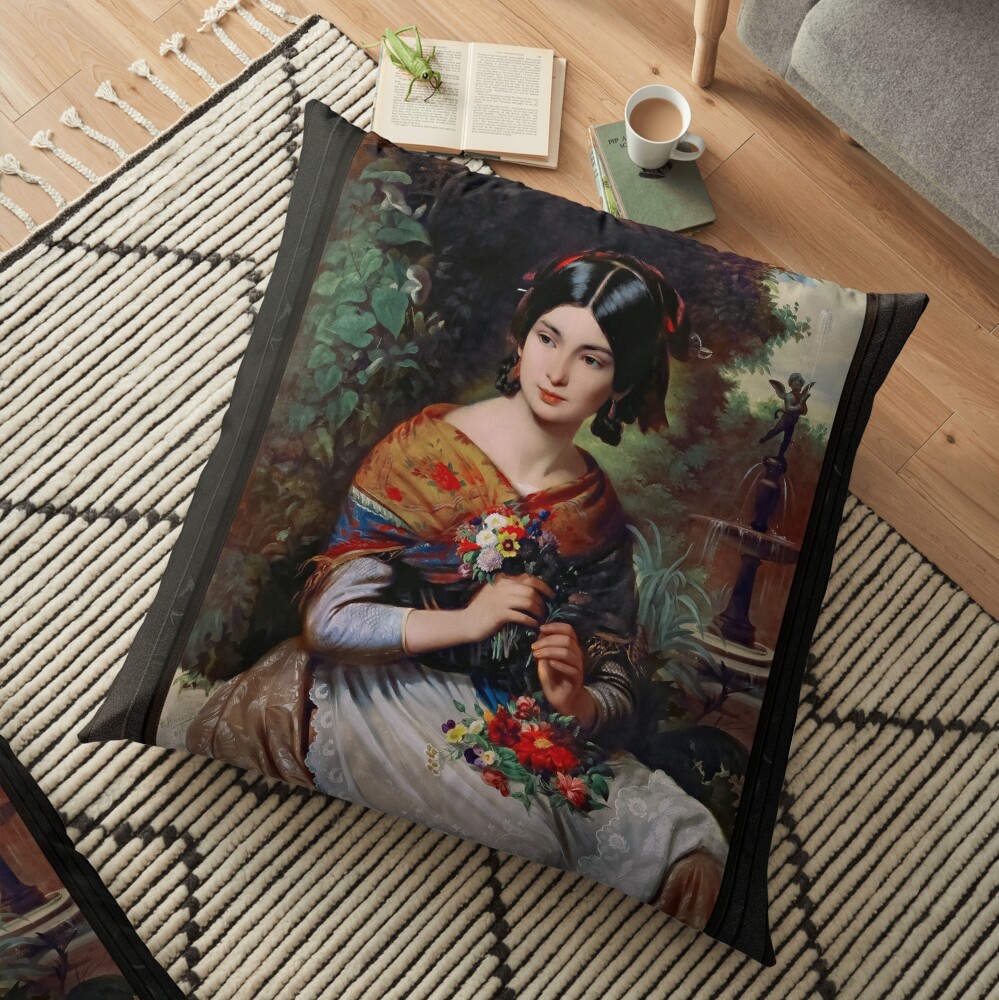
It fokuspunt fan de komposysje is a Jong famke, waans lykwichtige en sierlike hâlding in gefoel fan kalmte en natuerlike skientme opropt. Se sit midden yn in libbene tún, har postuer elegant noch ûntspannen, wylst se sêft nei de kant sjocht. Har tsjuster, glêd hier wurdt stylearre op in tradisjonele manier mei sêfte krullen op 'e rêch, markearje har delikate funksjes. In read lint is bûn yn in strik oan 'e efterkant fan har holle, fierder aksintuearje har jeugd en froulikens.
Se hâldt in lyts boeket kleurige wylde blommen yn har hannen, dy't tsjinnet as sawol in letterlike as symboalyske foarstelling fan har ferbining mei de natuer. De blommen, foarsichtich yn har hannen regele, binne in symboal fan suverens en de flechtige aard fan jeugd. Har delikate uterlik kontrastearret prachtich mei de sêfte plooien fan 'e jurk fan it famke en har serene útdrukking, wat suggerearret in gefoel fan ynderlike frede of kontemplaasje. De sjogger kin hast de subtile wyn fiele dy't de tún om har hinne soepel roerje kin.
Kleding en materialen
De klean fan it famke wurdt werjûn mei útsûnderlik detail, reflektearje de moade fan 'e iere 19e ieu. Se draacht in wite jurk mei in kant oerlay, dat soarget foar in tactile gefoel fan tekstuer en fyn fakmanskip. It delikate borduerwurk op 'e kant is benammen opfallend, showcasing Borsos 'seilige oandacht foar detail.
Oer har jas, se docht in kleurige sjaal oan, syn rike tinten fan oranje, read, en pears kontrast mei de sêftens fan har jurk. De sjaal is fersierd mei florale patroanen, de natuerlike skientme fan 'e tún werhelje en de tematyske ienheid fan it stik ferbetterje. De kombinaasje fan sjaal en jurk is sawol elegant as ienfâldich, in perfekte wjerspegeling fan it famke syn stille noch ferfine persoanlikheid.
De keunstner hat der foar keazen om de stof fan har klean op in manier út te byldzjen dy't de delikate tekstuer beklammet, mei elke fold en drape foarsichtich skildere. Dizze oandacht foar stof en tekstuer is in skaaimerk fan Borsos’ wurk en is yndikatyf fan syn fermogen om it materiaal om te foarmjen yn in fertelmiddel, it ferbetterjen fan de algemiene stimming fan it stik.
Surrounding Environment: The Garden
De setting fan it keunstwurk spilet in krúsjale rol yn de stimming en it tema fan it stik. De eftergrûn is fol mei weelderich grien, depicting a well-maintained garden that speaks to both the prosperity of the subject’s environment and the artist’s detailed rendering of nature. Lang, leafy trees provide the backdrop, while a small, distant fountain adds a touch of elegance and tranquility to the scene. The fountain’s gentle flow of water, although subtle in the painting, introduces an element of movement that contrasts with the stillness of the girl, perhaps symbolizing the passage of time or the cyclical nature of life.
Yn 'e fierte, a small statue of an angel or cherub stands atop the fountain, adding a classical touch to the composition. This element further enriches the work, linking the natural world to a more idealized, almost mythological realm. The fountain, along with the greenery and flowers in the foreground, creates a harmonious balance between the human and natural worlds, reinforcing the central theme of beauty and grace in its purest form.
Artistike styl: Romanticism and Realism
Borsos’ style merges elements of both Romanticism and Realism, with a focus on idealized beauty and meticulous attention to detail. His brushwork is soft yet defined, with fine details that bring the scene to life, such as the delicate petals of the flowers and the texture of the fabric. The romantic elements are evident in the serene expression of the girl and the dreamlike quality of the surrounding garden. There is an almost timeless aspect to the painting, as though it could belong to any era of history, yet it firmly captures the spirit of the 19th century.
The use of light and shadow is also notable in this piece. Borsos employs a gentle, diffused light that highlights the girl’s features and creates soft, ambient shadows that add depth to the composition. The painting’s color palette is warm, dominated by earthy tones of green, brún, en goud, which give the work a grounded, naturalistic feel, while still maintaining an air of elegance.
Mood and Emotional Tone
The emotional tone of the painting is one of calm introspection. The girl’s serene expression and poised posture invite the viewer to share in a quiet moment of contemplation. The lush surroundings, coupled with the subtle, natural details, evoke a feeling of peace and harmony. There is a sense of timelessness to the scene, as though the girl’s moment of stillness is not bound by any specific era but instead exists in a timeless, idealized world.
It tema fan 'e skientme - sawol minsklik as natuerlik - stiet sintraal yn 'e emosjonele ynfloed fan it stik. De soarchfâldige werjefte fan 'e keunstner fan sawol de delikate skaaimerken fan it famke as de libbene blommen sprekt ta in djippe wurdearring fan' e genede fan 'e natuer en it flechtich, efemere kwaliteit fan it libben. Der is in gefoel dat dit momint fan skientme, wylst flechtich, is bedoeld om te genietsjen en te bewûnderjen.
Konklúzje
“A Girl With Flowers” troch József Borsos is in prachtich foarbyld fan 19e-ieuske Hongaarske skilderij dy't de romantyk fan 'e natuer kombinearret mei it realisme fan it deistich libben. Troch syn soarchfâldige oandacht foar detail, de keunstner makket in sêne dy't sawol grûn yn 'e realiteit is en ferheven is troch idealisearre skientme. De serene oanwêzigens fan it famke, kombinearre mei de weelderige tún en de subtile symbolyk fan de blommen, invites the viewer to contemplate the quiet beauty of life and the natural world.
Dit is in remastered digitale keunst âlde masters reproduksje fan in byld yn it iepenbier domein dat is beskikber as in canvas print online.
Artist Bio ôflaat fan Wikipedia.org
József came from a well to do family as his father was Márton Borsos an editor, lawyer and publisher and at the age of 16 he became a student of Hungarian Painter József Károly Schöfft (1776 – 1851); in Budapest Hungary.
Dan yn 1840 he moved to Vienna to study at the Academy of Fine Arts under Austrian Painter Leopold Kupelwieser (1796 – 1862) who was often associated with the Nazarene movement.
Dan trije jier letter yn 1843 he entered a private academy that was operated by Austrian Painter and Writer Ferdinand Georg Waldmüller (1793 – 1865), considered to be one of the most important painters of the Biedermeier period which lasted from 1815 nei 1848.
Though his artistic talent made him financially successful, he lost most of his money in stock market speculation; dêrnei joech er it skilderjen op en iepene er in fotoateljee mei in skilder en fotograaf bekend as dokter Albert; en ek al makke er in beskôgje fortún yn 'e stribjen, hy joech it bedriuw op en iepene in restaurant de Szép Juhászné; dy't er de rest fan syn libben operearre.