

Ariadne
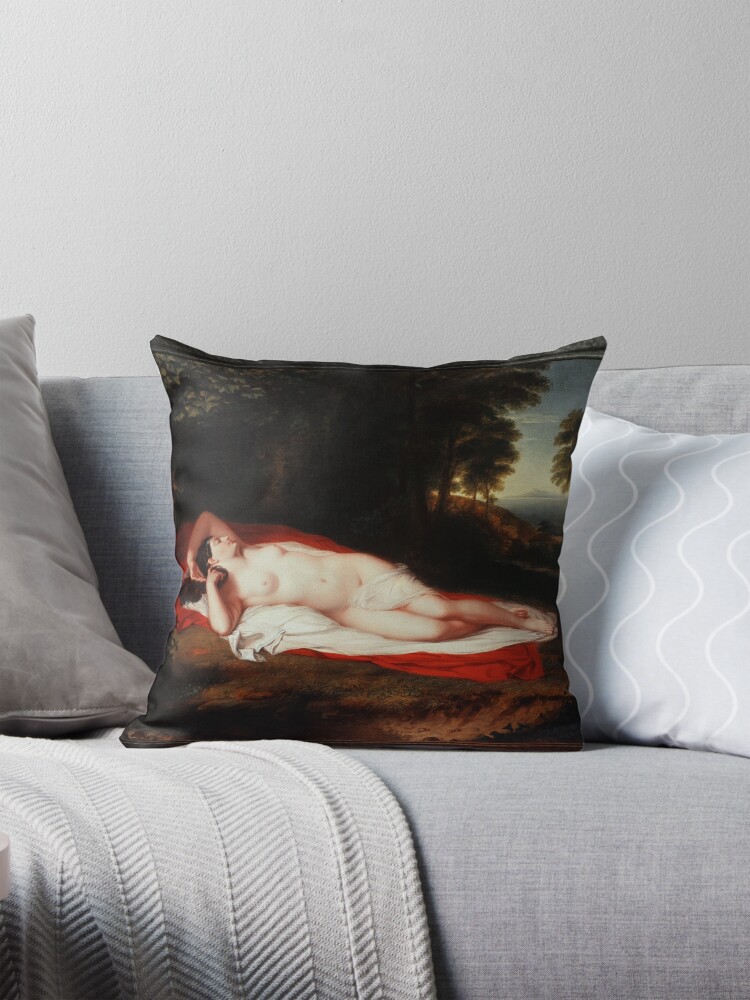
Ariadne c1831-35 troch American Painter & Graveur Asher Brown Durand (1796 – 1886) wie diel fan 'e Romantyk Keunstbeweging en wie in ôfstudearre oan 'e Hudson River School. Asher syn haadfokus wie op lânskipsskilderijen.
Dit skilderij fan Ariadne troch Asher is fan in kopy fan in skilderij fan John Vanderlyn (1776 – 1852) dy't er die as tarieding op de gravuere dy't er makke sa't faaks it gefal wie; hy soe in oaljedoek meitsje fan de grutte fan de bedoelde gravuere.
Ariadne is de Kretaanske prinsesse fan 'e Grykske mytology dy't koart leaf waard troch Theseus (de mytyske kening en stifter-held fan Atene), dy't har op it eilân Naxos ferlitten hie nei't er har nocht hie fan har selskip.
Ynhâldsopjefte
Oersjoch fan “Ariadne” troch Asher Brown Durand
Asher Brown Durand, in Amerikaansk skilder en graveur, wurdt rûnom beskôge as ien fan 'e sintrale figueren yn 'e Hudson River School fan lânskipsskilderij, in beweging dy't de natuerlike skientme fan it Amerikaanske lânskip fierde. lykwols, Durand syn wurk rûn faak út bûten lânskippen, lykas sjoen yn syn 1831 – 1835 skilderij Ariadne. Dit stik ûntbleatet Durand syn behearsking net allinich yn it fêstlizzen fan natuerlike foarmen, mar ek yn syn fermogen om syn ûnderwerpen mei in etheryske, hast mytologyske oanwêzigens.
It ûnderwerp fan it keunstwurk: Ariadne
Yn it sintrum fan Durand's Ariadne stiet in frou yn rêst, omjûn troch de weelderige, ûnfersteurde woastenije fan in âlde, hast idyllysk lânskip. It ûnderwerp fan it skilderij is Ariadne, in figuer út de Grykske mytology, bekend om har ferbining mei de myte fan Theseus en de Minotaurus. Ariadne is often depicted as a symbol of love, ferlies, and betrayal, and Durand captures her at a moment of serene contemplation.
Ariadne’s pose is languid and contemplative, lying on a bed of red drapery that contrasts with the soft hues of the surrounding natural world. The figure appears relaxed, almost sleeping, with her head gently turned to the side. Her body is draped in a flowing, translucent white cloth, with the rich crimson fabric beneath her evoking a sense of luxury and opulence. Despite her reclined position, the contours of her body remain graceful, with the painter capturing the natural curves of her form with great care and sensitivity. Har gesicht, though partially obscured by her positioning, seems peaceful, suggesting a deep inner calm or introspection.
It Lânskip en Natuerlike Omjouwing
The backdrop of the painting is a lush, verdant landscape that stretches into the distance, bathed in the soft glow of an evening or early morning light. The scene is characterized by gently rolling hills, dense trees, and a distant body of water. Durand’s attention to detail in the depiction of nature reflects his dedication to the principles of the Hudson River School, where the natural world was revered and idealized. The foliage is painted in rich, deep greens, while the sky above is a delicate blend of soft blues and warm yellows, contributing to an atmosphere of tranquility and nostalgia.
The distant view across the water provides a sense of depth and space, inviting the viewer to imagine the vastness of the scene. The use of light in this painting is particularly notable; the artist’s careful rendering of shadows and highlights creates a sense of volume and texture, lending an almost three-dimensional quality to both the figure of Ariadne and the surrounding landscape. The light appears to envelop the figure, casting a soft glow on her skin and the folds of her drapery, while the shadowed areas deepen the sense of solitude and reflection.
De symbolyk fan 'e drapery
The red drapery beneath Ariadne is not just a visual element but also a symbolic one. In classical art, drapery often served as a vehicle for expressing both the subject’s emotional state and their physical form. In this case, the deep red fabric can be interpreted as a symbol of passion, leafde, or even sacrifice. Ariadne, having been abandoned by Theseus after helping him escape the labyrinth, might be seen as embodying themes of loss and emotional turmoil, yet her peaceful repose and the lush, fertile landscape around her suggest a kind of quiet resolution or acceptance.
The white cloth she is draped in can be viewed as a symbol of purity or a new beginning, which is fitting given that the myth of Ariadne is often associated with transformation; both in the literal sense of her life being changed by her relationship with Theseus and in the mythological sense, where her fate takes a turn after her abandonment.
De artistike styl en technyk
Durand’s Ariadne is painted in a classical Romantic style, where realism and idealism merge to create a vision of beauty that transcends the ordinary. The artist employs a fine balance of realism in the portrayal of both the figure and the landscape, yet there is an underlying idealization that makes the scene feel timeless. Durand’s technical skill is evident in the delicate rendering of light and shadow, the softness of the fabric, and the naturalistic details of the landscape.
The figures and forms are modeled with great precision, and the soft transitions of color suggest the artist’s deep understanding of the human body and the play of light across different surfaces. Durand’s fine attention to detail extends beyond the human form to the natural environment, where every leaf, branch, and rock is meticulously painted, contributing to the painting’s overall sense of realism and harmony.
Stimming en emosjonele sfear
De stimming fan Ariadne is one of tranquility, iensumens, and quiet reflection. The soft light, gentle landscape, and languid pose of the subject all combine to create an atmosphere of serene contemplation. There is a sense of quiet beauty in the way the figure rests within the natural surroundings, suggesting both an intimate connection to nature and a contemplative escape from the tumult of the mythological world.
While the figure of Ariadne is deeply associated with themes of abandonment, betrayal, and emotional pain in the myth, Durand’s portrayal focuses on a more introspective aspect of her character. The absence of a direct narrative moment, such as her abandonment or subsequent marriage to Dionysus, allows the viewer to contemplate Ariadne in a state of quiet resolution. Her calm expression and relaxed pose suggest an emotional distance from her previous life’s trials and tribulations, allowing for a more meditative engagement with her figure.
Konklúzje
Yn Ariadne, Asher Brown Durand merges his skill in landscape painting with his sensitivity to human emotion, producing a work that is both visually stunning and emotionally resonant. The painting is a delicate balance of idealized beauty and reflective solitude, drawing upon the classical traditions of mythology and landscape painting while imbuing the scene with a uniquely Romantic sensibility. Through this piece, Durand invites the viewer to contemplate not only the mythical figure of Ariadne but also the eternal beauty of the natural world, which offers a quiet sanctuary from the tumult of human life.

In the background past the trees and the hill she is resting on we can see a boat on the bank of a lake, people and a dog on the shore, with the smoke of a campfire rising into the air; lastly in the far distance we can see what appears to be a large island.
This is a retouched digital art old masters reproduction of a public domain image that you can purchase as a opgerold canvas print online.
Info hjirûnder Fan Wikipedia.org
Durand waard berne yn en stoar úteinlik yn Maplewood, New Jersey (doe neamd Jefferson Village). Hy wie de achtste fan alve bern. Durand syn heit wie in horloazjemakker en in sulversmid.
Durand waard learling oan in graveur út 1812 nei 1817 en letter in gearwurkingsferbân oangien mei de eigner fan it bedriuw, Charles Cushing Wright (1796–1854), dy't him frege om it kantoar fan it bedriuw yn New York te behearjen.
Hy gravearre Ferklearring fan Unôfhinklikens foar John Trumbull tidens 1823, dy't Durand syn reputaasje fêstige as ien fan 'e moaiste graveurs fan it lân.
Durand holp by it organisearjen fan de New York Drawing Association tidens 1825, dy't de National Academy of Design wurde soe; hy soe tsjinje de organisaasje as foarsitter fan 1845 nei 1861.
Asher syn gravueres op bankbiljetten waarden brûkt as de portretten foar Amearika syn earste postsegels, de 1847 searje. Tegearre mei syn broer Cyrus gravearre er ek guon fan 'e opfolgjende 1851 saken.
Syn wichtichste belangstelling feroare fan gravuere nei oaljeferve oer 1830 mei de oanmoediging fan syn beskermhear, Luman Reed. Tidens 1837, hy begeliede syn freon Thomas Cole op in sketsekspedysje nei it Schroon Lake yn 'e Adirondacks Mountains en koart nei't er him begûn te konsintrearjen op lânskipsskilderij.
Hy brocht simmers sketsen yn 'e Catskills, Adirondacks, en de Wite Bergen fan Nij-Hampshire, it meitsjen fan hûnderten tekeningen en oaljesketsen dy't letter waarden ferwurke yn ôfmakke akademystikken dy't holpen om de Hudson River School te definiearjen.
Durand is remembered particularly for his detailed portrayals of trees, rotsen, and foliage. He was an advocate for drawing directly from nature with as much realism as possible. Durand wrote, “Let [the artist] scrupulously accept whatever [natuer] presents him until he shall, in a degree, have become intimate with her infinity…never let him profane her sacredness by a willful departure from truth.”
Like other Hudson River School artists, Durand also believed that nature was an ineffable manifestation of God. He expressed this sentiment and his general opinions on art in his essay “Letters on Landscape Painting” in The Crayon, a mid-19th century New York art periodical. Wrote Durand, “[T]he true province of Landscape Art is the representation of the work of God in the visible creation…”
Durand is noted for his 1849 skilderjen Kindred Spirits dy't kollega Hudson River School-keunstner Thomas Cole en dichter William Cullen Bryant toant yn in lânskip fan Catskills Mountains. Dit waard skildere as earbetoan oan Cole by Cole syn dea tidens 1848, en as in kado oan Bryant.