

A Pompeian Lady c1904
La obra de arte titulada “A Pompeian Lady c1904” by the British painter John William Godward (1861 – 1922) is a captivating example of the neoclassical style that was prevalent during the late 19th and early 20th centuries. Godward was renowned for his portraits of women in classical attire, often placed within luxurious, ancient Roman or Greek settings. Esta pieza en particular, pintado 1904, encapsulates his meticulous attention to detail and his skill in capturing the elegance of the human form. It exemplifies the artist’s dedication to classical antiquity, with his subjects often portrayed in serene and introspective moods.
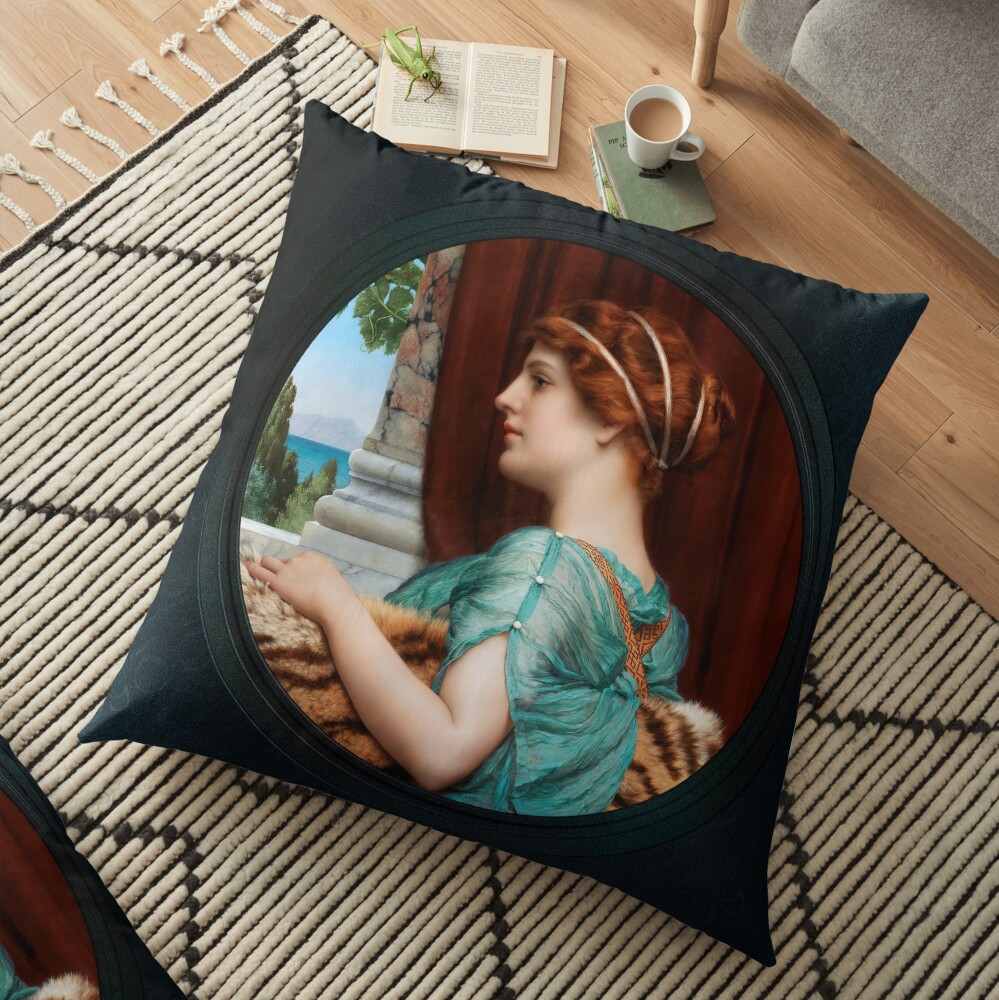
Tabla de contenido
The Subject of the Artwork
En “A Pompeian Lady c1904,” El tema principal es una mujer joven vestida con un opulento, vestido. Su atuendo es claramente de estilo romano antiguo o pompeyano., que recuerda a las clásicas prendas drapeadas que se ven en los frescos y esculturas de Pompeya. La postura de la mujer es elegante y contemplativa., mientras mira a lo lejos con un ligero giro de cabeza. Esta pose irradia un sentido de gracia., mientras su expresión permanece tranquila y serena. Las suaves ondas de su cabello castaño rojizo tienen un estilo intrincado., adornado con delicadas diademas que enfatizan la estética clásica de la época.
Su mirada se dirige hacia la belleza natural que se encuentra fuera del marco del cuadro., sugiriendo un momento de reflexión tranquila. The painting’s composition draws attention to the delicate interplay between the figure’s posture and the surrounding environment. The softness of her features is contrasted against the sharp and detailed depiction of the materials in her attire, the textures of the background, and the natural elements in the landscape.
The Setting and Landscape
The setting of the painting features an outdoor terrace with a view of a lush, serene landscape. The woman is placed against a grand column made of marble, which serves to frame her figure while simultaneously grounding her within the classical world of ancient Rome. The background reveals an idyllic view of a coastal scene, where the sea meets the horizon under a clear, soft blue sky. Verdant trees and a tranquil landscape suggest a peaceful, secluded place, contributing to the overall sense of calm and elegance that pervades the work.
The architectural elements of the setting further emphasize the classical influence, with Roman-style columns and arches that evoke the grandeur of ancient structures. These elements are skillfully rendered, with Godward’s attention to detail in the textures of the stone, El juego de la luz y la sombra, and the intricate detailing on the column itself. The warm tones of the stone, combined with the cool colors of the sky and the distant sea, create a harmonious atmosphere that enhances the timeless beauty of the figure.
The Mood and Themes of the Painting
El estado de ánimo de “A Pompeian Lady c1904” is one of tranquil elegance and quiet introspection. The woman’s serene expression, coupled with her elegant posture, conveys a sense of peace and grace. There is no urgency or tension in her demeanor; bastante, the painting invites the viewer to appreciate the moment and the beauty of the scene. Lo suave, natural light illuminating her face and gown enhances this peaceful mood, with subtle gradients that highlight her delicate features.
The themes of classical beauty, tranquilidad, and the idealized femininity of ancient Rome are central to the painting. Godward often portrayed women as the epitome of grace and purity, Y esta pintura no es la excepción. The subject is not just a woman in classical attire; she represents an ideal of feminine beauty that transcends time and place. Her thoughtful expression and poised stance suggest a woman who is at peace with herself and her surroundings, embodying the refined elegance of a bygone era.
The landscape also plays a vital role in setting the tone of the painting. The natural elements—lush greenery, clear skies, and calm seas—serve as a backdrop that complements the subject’s calm demeanor. The connection between the figure and the natural world creates a sense of harmony and balance, reinforcing the classical theme of unity between humanity and nature.
Materiales y Técnicas
John William Godward’s use of oil paints is evident in the depth and richness of the colors throughout the painting. His technique is highly detailed, with a particular emphasis on texture and realism. The woman’s gown is rendered in exquisite detail, with each fold and drape carefully painted to capture the movement of the fabric. The translucency of the fabric adds a sense of lightness to the figure, contrasting with the solidity of the stone column and the softness of the natural landscape.
Godward’s brushwork is smooth and controlled, allowing him to create delicate textures such as the soft sheen of the woman’s hair, the smoothness of her skin, and the intricate patterns on her gown. The realism with which he captures light and shadow is particularly striking, as it adds dimension and depth to the figure and the surrounding environment. The artist’s skillful use of light also enhances the sense of realism, with highlights on the woman’s face and gown giving the impression of sunlight filtering through the space.
Conclusión
A Pompeian Lady c1904 by John William Godward is a quintessential example of the neoclassical style, showcasing the artist’s mastery in portraying idealized femininity, classical attire, and serene landscapes. The painting exudes a sense of tranquility and grace, capturing a moment of timeless beauty in the ancient world.
The careful rendering of the figure, su atuendo, and the surrounding environment reveals Godward’s technical skill and his deep appreciation for the classical world. This artwork not only reflects the artist’s personal style but also his reverence for the classical ideals that inspired much of his work. A través de esta pintura, Godward immortalizes the elegance and beauty of the ancient world, inviting viewers to step into a space where time stands still.
A Pompeian Lady is a remastered digital art old masters reproduction of a public domain image that is available as a lienzo, madera, impresión acrílica y metálica..
Esta creación de arte digital, al igual que todas las obras de arte que se pueden encontrar en el sitio web de Xzendor7, están disponibles para su compra en línea en una variedad de formatos de materiales, incluidas impresiones en lienzo, impresiones acrílicas, impresiones de metal, impresiones de madera, láminas enmarcadas, carteles, y como lienzos enrollados en una variedad de tamaños, desde 12 pulgadas a 72 pulgadas según el tamaño de la obra de arte real y la tienda de impresión bajo demanda en la que elija comprar la obra de arte.
La obra de arte también está disponible en una amplia gama de prendas de vestir para hombres y mujeres., tazas, totalizadores, bufandas, cuadernos y diarios y muchos productos de decoración del hogar..
Biografía del artista
Información debajo de Wikipedia.org
John William Godward era el mayor de cinco hijos., y fue nombrado en honor a su padre John y su abuelo William.
Expuso en la Real Academia de 1887. Cuando se mudó a Italia con una de sus modelos en 1912, su familia rompió todo contacto con él e incluso cortó su imagen de las fotografías familiares. Godward regresó a Inglaterra en 1921, murio en 1922, y está enterrado en el cementerio de Brompton, oeste de Londres.
Uno de sus cuadros más conocidos es Dolce far Niente (1904), que fue comprado para la colección de Andrew Lloyd Webber en 1995. Como en el caso de varias otras pinturas., Godward pintó más de una versión; en este caso, una anterior (y menos conocido) 1897 versión con más 1906 versión.
Se suicidó a la edad de 61 y se dice que escribió en su nota de suicidio que “el mundo no es lo suficientemente grande para [ambas cosas] yo y un picasso”.
Su familia separada, que había desaprobado que se convirtiera en artista, se avergonzaron de su suicidio y quemaron sus papeles. Solo se sabe que sobrevive una fotografía de Godward.
Godward fue un neoclásico victoriano, y por lo tanto, En teoria, un seguidor de Frederic Leighton. sin emabargo, está más estrechamente aliado estilísticamente a Sir Lawrence Alma-Tadema, con quien compartía una inclinación por la interpretación de la arquitectura clásica, en particular, Características del paisaje estáticas construidas con mármol..
La gran mayoría de las imágenes existentes de Godward muestran a mujeres con vestimenta clásica posando contra elementos del paisaje.; aunque hay algunas figuras semidesnudas y completamente desnudas incluidas en su obra, un ejemplo notable es “En el Tepidarium c1913”.
Un título compartido con una controvertida pintura de Alma-Tadema del mismo tema que reside en el “Galería de arte Lady Lever”. Los títulos reflejan la fuente de inspiración de Godward; que fue la civilizacion clasica, más notablemente el de la antigua Roma; un tema que vincula a Godward estrechamente con Alma-Tadema artísticamente.
Dado que la erudición clásica estaba más extendida entre la audiencia potencial de sus pinturas durante su vida que en la actualidad., la investigación meticulosa de los detalles fue importante para lograr una posición como artista en este género.
Alma-Tadema fue arqueóloga además de pintora, quien asistió a sitios históricos y coleccionó artefactos que luego usó en sus pinturas: Hacia Dios, también, estudió detalles como la arquitectura y la vestimenta, para asegurar que sus obras llevaran el sello de autenticidad.
Además, Godward concienzudamente y meticulosamente representó otras características importantes en sus pinturas., pieles de animales de las cuales las pinturas “Descanso del mediodía c1910” y “Un retiro fresco c1910” contiene ejemplos de dicha interpretación, así como flores silvestres “Nerissa c1906” y “Flores de verano c1903”.
La aparición de hermosas mujeres en poses estudiadas en muchos de los lienzos de Godward hace que muchos recién llegados a sus obras lo clasifiquen erróneamente como prerrafaelita., particularmente porque su paleta es a menudo de colores vibrantes. La elección del tema (civilización antigua versus, por ejemplo, leyenda artúrica) es más propiamente la del neoclásico victoriano.
En común con numerosos pintores contemporáneos a él., Godward era un 'soñador alto victoriano', producir imágenes de un mundo idealizado y romantizado que, en el caso de Godward y Alma-Tadema, llegó a ser criticado como una visión del mundo de los victorianos en togas.
Hacia Dios “rápidamente estableció una reputación por sus pinturas de mujeres jóvenes en un escenario clásico y su capacidad para transmitir con sensibilidad y maestría técnica la sensación de texturas contrastantes de la carne., mármol, pieles y telas.
La inclinación de Godward por crear obras de arte ambientadas en el período clásico probablemente provino del período de tiempo en el que nació.; ya que fue el último renacimiento clásico a gran escala en pinturas occidentales, que floreció en Inglaterra desde la década de 1860 hasta la de 1890.