

Una ghjovana bellezza
A Young Beauty c1865 by Italian Painter Eugen von Blaas (1843 – 1931); also known as Eugene de Blaas of the Academic Classicism Period. Ancu s'ellu hà spessu pittatu scene veneziane; pintò ancu parechji ritratti è opere d'arti religiose.
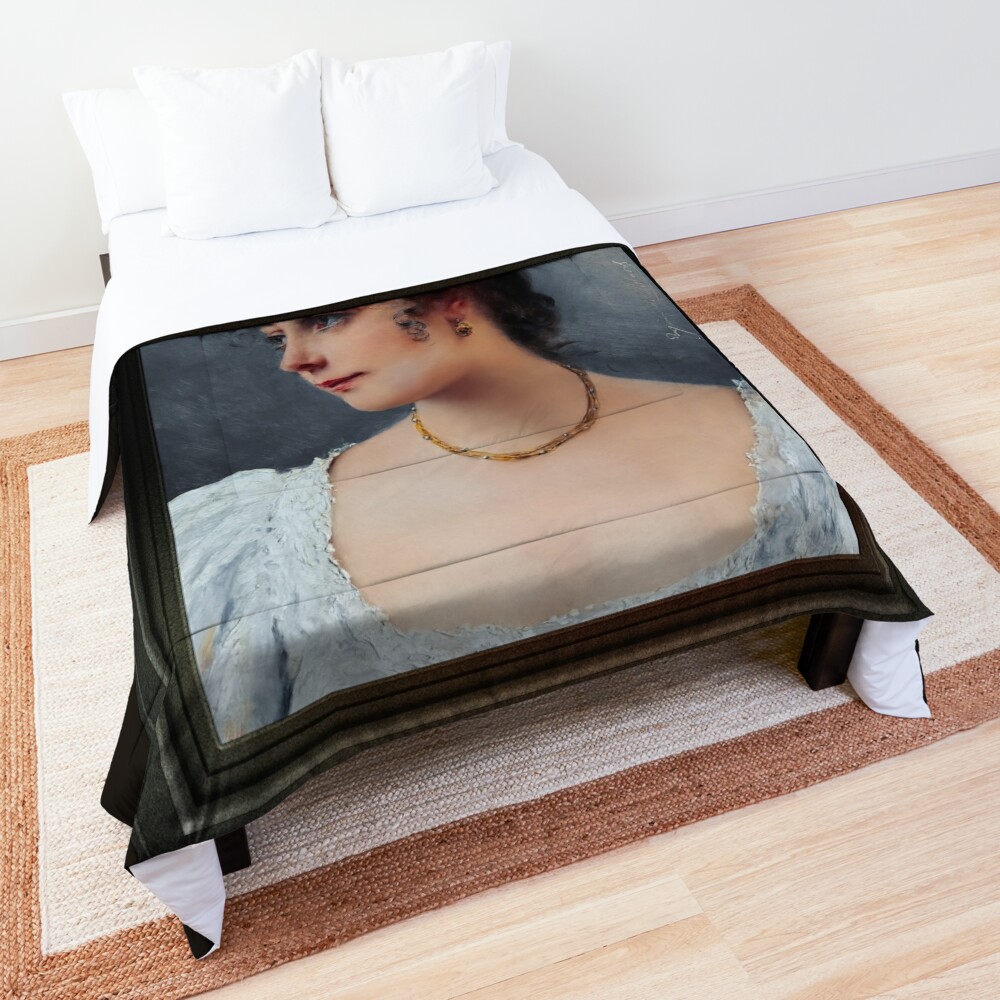
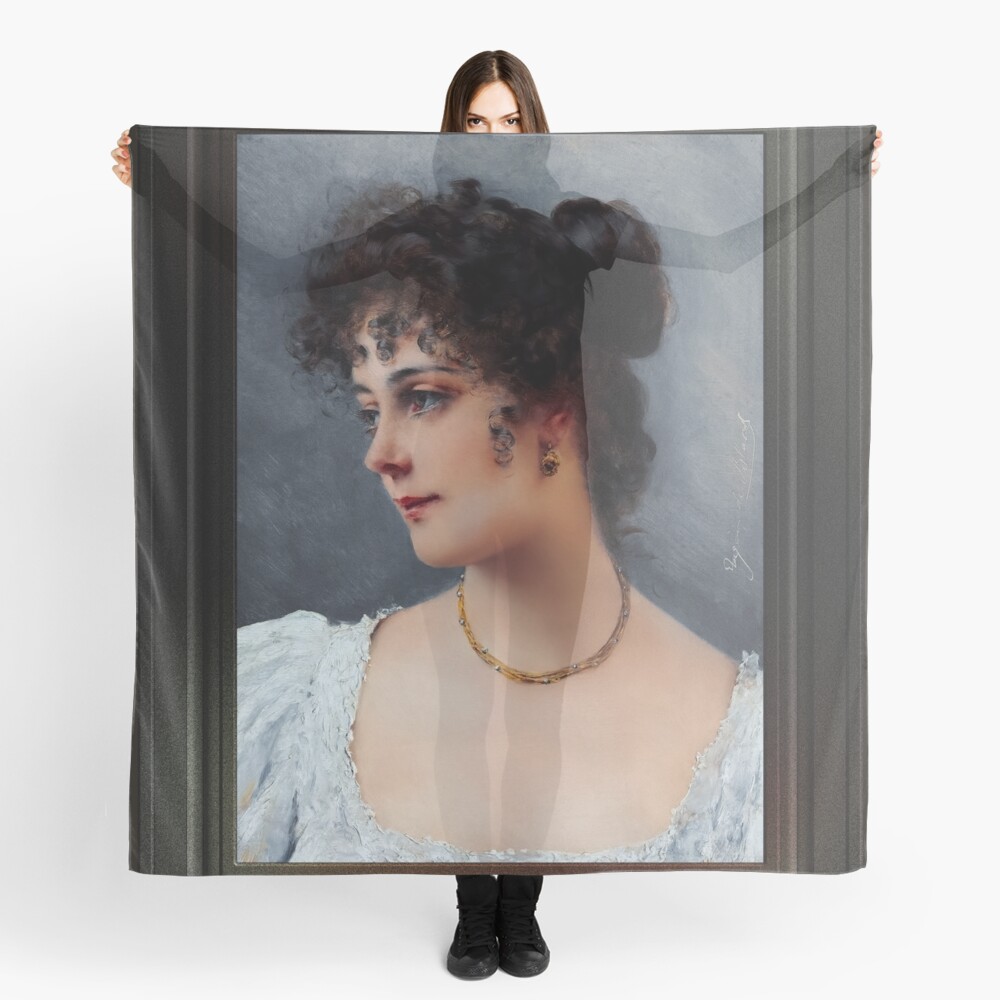
This is a splendid portrait of an attractive young Italian beauty with rich dark hair that is curly along the front and sides of her head and tied into a bun on the top back of her head.
She is looking to her right, into the far distance with a beautiful tranquil smile on her face as though she is in deep thought.
She is wearing a simple white ruffled like dress with a deep wide collar, a gold colored cloth necklace with embedded silver studs, and gold earrings.
She is posed against a slate blue wall with a little more than a side profile view, such that we can clearly see both of her eyes.
Questa hè una ripruduzzione di l'antichi maestri d'arte digitale rimasterizzata di una maghjina di duminiu publicu chì hè dispunibule cum'è a stampa su tela arrotolata in linea.
Info sottu Derivatu da Wikipedia.org
Eugen von Blaas was born at Albano, vicinu à Roma, à un babbu tirolese è mamma italiana. U so babbu Karl, ancu un pittore, era u so maestru. A so mamma, Agnesina Auda, era una donna rumana benestante. A famiglia si trasfirìu a Venezia quandu Karl divintò prufessore à l'Accademia di Venezia. Spessu pittò scene in Venezia, ma dinù ritratti è pitture religiose.
Frà e so opere sò a forma di matrimoniu in sacristia; Le bingo à Campielo à Venise; Una scena di burattini in un educanciatu; è a Ninetta. Le critique d'art Luigi Chirtani, Quandu u Pittura hè stata mostrata à l'Esposizione Naziunale di Venezia, l'hà descrittu cum'è Bella, lusinghi, bellucciu, accarezzatu, pulita, lucidatu, lavanderia in un dipintu di Mr. Vesica, u ritrattu predilettu di i grandi aristocratici veneziani, vestitu di satin di gala, gioielli brillanti, acconciature di i ricchi.
E so imagine culurite è piuttostu teatrali di a sucetà veneziana, p.e. Nantu à u Balcone (1877; Cullezzione privata), eranu assai diffirenti paragunatu à i pastelli delicati è incisioni di i cortili, balconi è canali di a Venezia muderna.
Eugène de Blaas’ i dipinti sò stati esposti à l'Accademia Reale, Società di Belle Arti, New Gallery è Arthur Tooth and Sons Gallery in Londra, è ancu à a Walker Art Gallery in Liverpool