

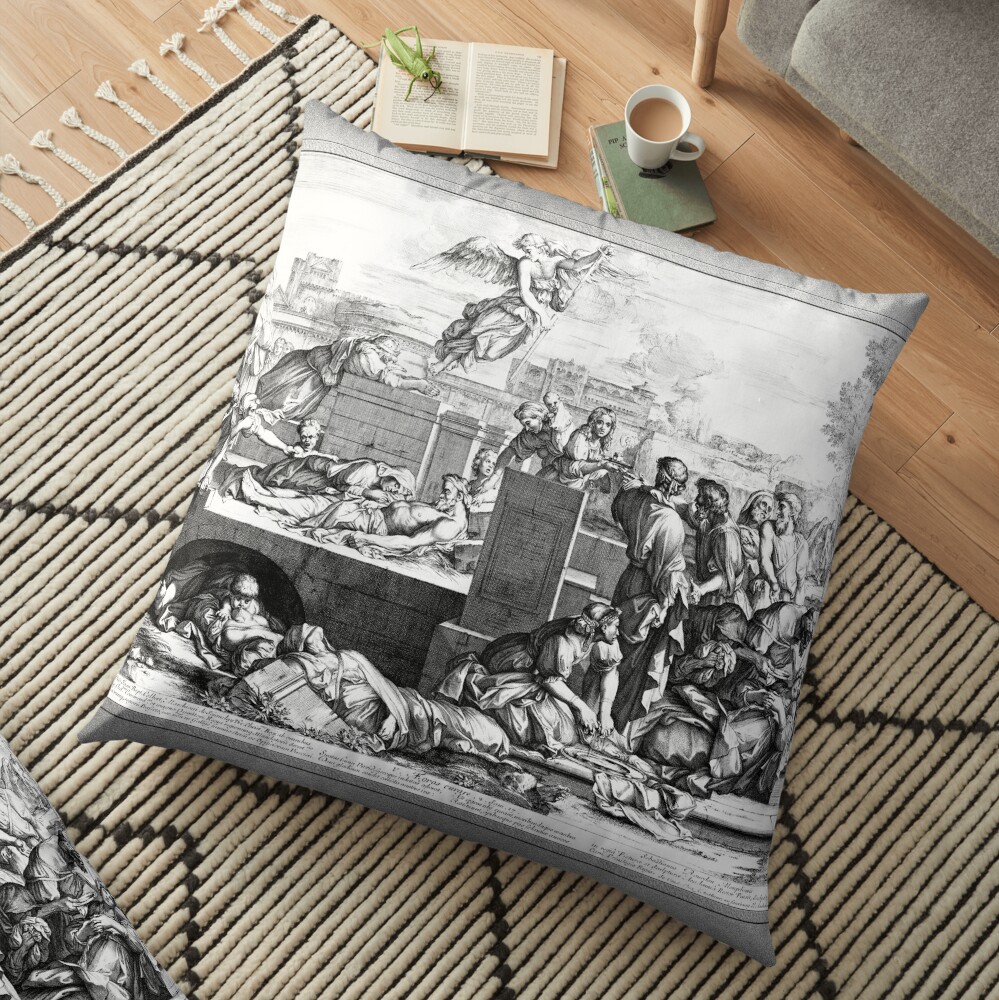
Sich um die Kranken kümmern (Titel der Serie – Sieben Taten der Barmherzigkeit) um 1665-70
“Sich um die Kranken kümmern (Um die Kranken zu heilen),” Teil der renommierten Serie “Sieben Taten der Barmherzigkeit,” entstand zwischen 1665 und 1670 vom französischen Kupferstecher Sébastien Bourdon (1616 – 1671). Dieses meisterhafte Stück, in erlesener Detailtreue wiedergegeben, bringt eine überzeugende Interpretation des Themas der Barmherzigkeit hervor, Ein besonderer Schwerpunkt liegt auf der Fürsorge für Kranke und Leidende. Als Werk aus der Barockzeit, Es verkörpert sowohl die emotionale Tiefe als auch den komplexen Erzählstil, die für diese Zeit charakteristisch sind. Das Gravur fängt die feierliche und mitfühlende Essenz einer Person ein, die Fürsorge leistet, Positionierung innerhalb einer breiteren Erzählung von Barmherzigkeit und göttlichem Eingreifen.
Inhaltsverzeichnis
Hauptfach und Komposition
Das zentrale Motiv der Gravur zeigt einen Engel, der die Pflege der Kranken überwacht, mit einer Auswahl menschlicher Figuren, die in verschiedenen Krankheits- oder Schwächezuständen dargestellt sind. Markant in der Mitte ist eine liegende Figur positioniert, scheinbar am Rande des Todes, der als Mittelpunkt der Szene dient. Um diese zentrale Figur herum stehen mehrere andere Personen, einige in ähnlichen Krankheitszuständen, während andere scheinbar mit tröstenden oder fürsorglichen Handlungen beschäftigt sind.
Die Komposition ist so strukturiert, dass sie den Blick des Betrachters in einen kreisförmigen Fluss lenkt, Vom oben schwebenden Engel zu den Figuren unten. Der Engel, in einer göttlichen Haltung balanciert, streckt seine Hände in einer Geste spiritueller Hilfe und Trost aus. Diese himmlische Präsenz steht im Kontrast zu dem alltäglichen Leiden, das auf der Erde dargestellt wird, subtile Andeutung eines göttlichen Eingreifens in das menschliche Leiden.
Gelände und Hintergrund
The background of the piece is rich with Baroque architectural elements, hinting at a Roman-inspired setting. The cityscape seen in the distance provides a sense of context, perhaps linking the narrative of mercy to the broader world outside the confines of the immediate scene. The far-off structures appear faded and distant, emphasizing the solemn nature of the foreground where the acts of mercy are taking place.
Das Gelände, visible beneath the central figure, is uneven and fragmented, almost as if the earth itself is in disarray. This serves as a visual metaphor for the suffering and fragility of human life. The lower portions of the engraving show figures lying on the ground, some prone and others sitting or standing with expressions of sorrow and distress. Diese Zahlen, although suffering, are being tended to by others who are portrayed as compassionate caregivers.
Stil und Technik
Bourdon’s technique is emblematic of the Baroque style, characterized by dramatic contrasts of light and shadow, a clear delineation of figures, and a deep emphasis on emotional expression. This particular engraving uses intricate line work to create sharp contrasts between the figures and the background, allowing each character to stand out in its own defined space. The heavy use of chiaroscuro enhances the three-dimensional quality of the figures, creating a sense of depth that pulls the viewer into the scene.
Die Zahlen, though not overly idealized, are beautifully rendered, capturing the human condition with precision and empathy. Bourdon’s engravings often convey both an intellectual understanding of space and form, as well as an emotional grasp of human suffering. The engraved lines create textures that lend a tactile sense to the scene, bringing the viewer closer to the gritty reality of the illness and mercy depicted.
Thema und Symbolik
Das Thema von “Sich um die Kranken kümmern” (Caring for the Sick) is one of the Seven Acts of Mercy, and it focuses on the compassion inherent in caring for the ill. The engraving emphasizes mercy as a divine command, demonstrating how human suffering can be alleviated through both physical and spiritual aid. The angel in the scene can be seen as a symbol of God’s mercy, guiding and overseeing the actions of those performing the act of mercy.
The sick individuals in the foreground represent the vulnerable and the suffering members of society, while the caregivers symbolize the compassionate individuals who, through divine will or personal volition, tend to the afflicted. The emotional weight of the engraving is enhanced by the presence of death, as the central figure lies at the cusp of life and death, suggesting that even in the face of mortality, mercy and compassion can offer solace and comfort.
The work also has a broader moral and religious message, urging viewers to reflect on their own capacity for mercy and charity toward the suffering in society. The engraving’s focus on the vulnerability of the human condition, paired with the hope and solace brought by mercy, encourages a profound spiritual reflection.
Stimmung und emotionale Wirkung
The mood of the engraving is somber, reflektierend, and deeply emotional. The suffering of the individuals is palpable, and the viewer is drawn into the intimate act of caregiving. jedoch, the presence of the angel and the divine guidance it represents offer a sense of hope and comfort. This duality of suffering and mercy creates a tension that enhances the emotional impact of the scene.
The figures are drawn with a deep sense of humanity; their expressions and postures evoke empathy and a connection to the viewer. The viewer is not merely an observer of the scene but is invited to share in the emotions of the figures, whether it be the sorrow of the sick or the compassion of the caregivers. The use of light and dark, particularly the illuminating figure of the angel, also adds a spiritual dimension to the work, suggesting that mercy is a light in the darkness of human suffering.
Abschluss
Zusammenfassend, “Sich um die Kranken kümmern” by Sébastien Bourdon is a powerful and emotive engraving that captures the profound themes of mercy, suffering, and divine intervention. Through the careful arrangement of figures, dramatic contrasts of light and shadow, and intricate engravings, Bourdon creates a scene that not only depicts an act of mercy but also invites the viewer into a deeper moral reflection. The work stands as a testament to both the artistic mastery of the Baroque period and the enduring relevance of the themes it explores.
Dies ist eine remasterte digitale Kunst-Reproduktion alter Meister eines gemeinfreien Bildes, das als verfügbar ist Leinwanddruck online.