

Allegory of Fortune
Allegory of Fortune: A Study in Transience by Salvator Rosa
Salvator Rosa’s “Allegory of Fortune,” painted between 1658 and 1659, is a compelling example of Baroque allegory, showcasing the artist’s signature dramatic style and exploration of human condition within a turbulent world. The painting resides within the collection of the Museo di Capodimonte in Naples, Italy, and offers a complex visual narrative centered around the capricious nature of fate and its impact on mortal affairs. Rosa, known for his landscapes and depictions of bandits, brings a unique intensity to this allegorical work, departing from more conventional portrayals of Fortune as a serene or benevolent figure.
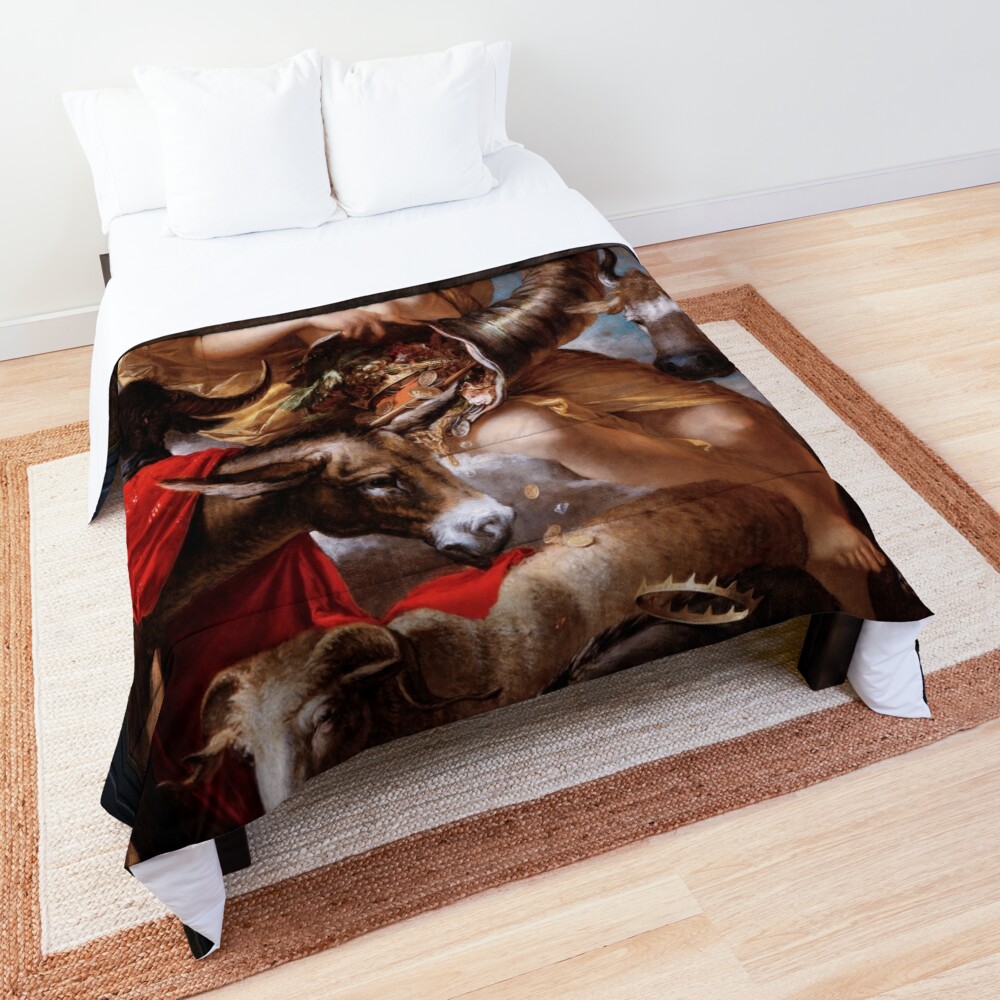
Table of Contents
Compositional Dynamics & Central Figure
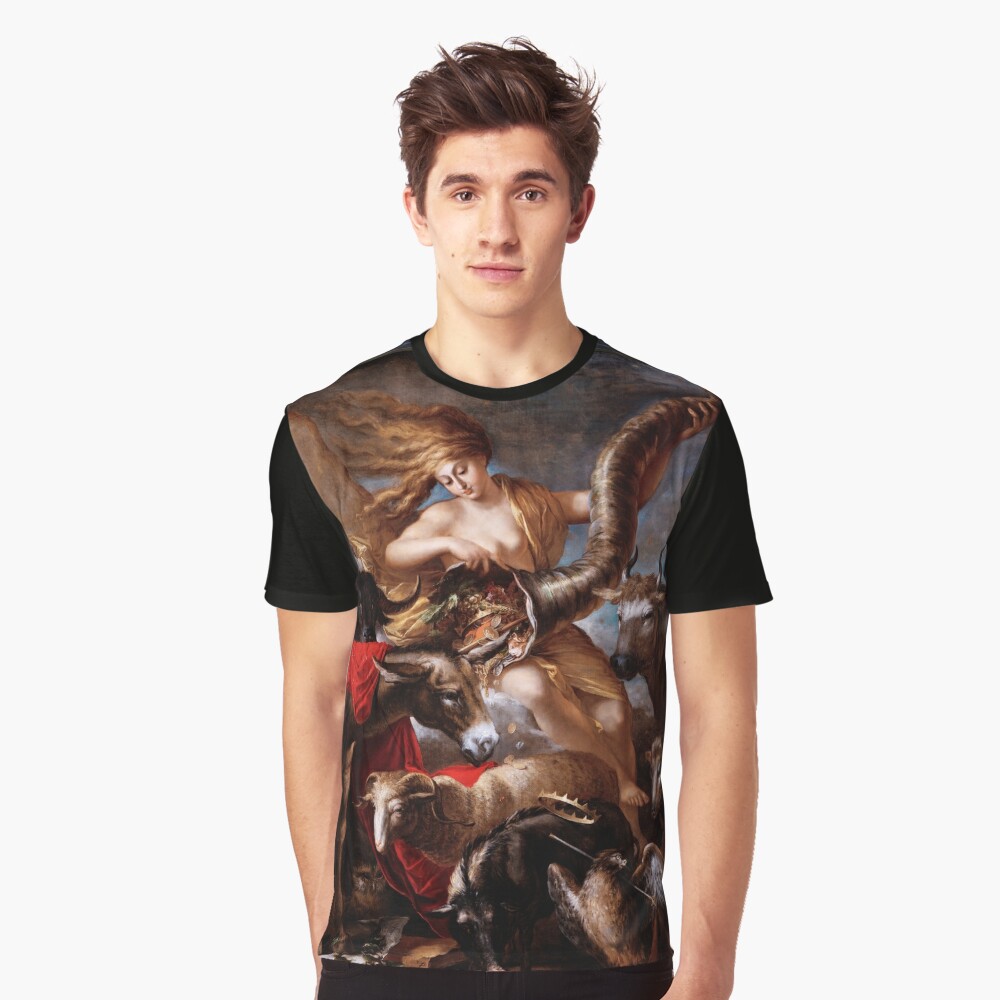
The composition is dominated by a central female figure representing Fortune – not depicted in the traditional guise of a graceful goddess, but rather as an active and almost frenzied force. She strides forward with purposeful energy, her body angled dynamically across the canvas. Her flowing hair whips around her face, suggesting movement and instability. She holds aloft a cornucopia overflowing with a chaotic assortment of objects: fruits, flowers, coins, and even skulls – symbols representing both abundance and mortality. This juxtaposition immediately establishes the painting’s core theme: the fleeting nature of earthly possessions and the inevitability of decay.
The Animalistic Chaos & Symbolic Landscape
Beneath Fortune’s feet lies a scene of unrestrained animal activity. A diverse group of animals—sheep, goats, pigs, and cattle—are depicted in various states of disarray. Some are huddled together, seemingly frightened; others appear to be struggling or fleeing. This chaotic menagerie serves as a powerful metaphor for the unpredictable forces that govern human existence. The landscape itself is rugged and somewhat desolate, with rocky terrain and sparse vegetation, further reinforcing the sense of instability and hardship. The background fades into a murky darkness, suggesting an uncertain future.
Rosa’s Artistic Style & Baroque Influences
Rosa’s style in “Allegory of Fortune” is distinctly Baroque, characterized by dramatic lighting, dynamic composition, and intense emotional expression. The use of chiaroscuro – the contrast between light and dark – heightens the drama and draws attention to key elements within the scene. The strong diagonal lines created by Fortune’s posture and movement contribute to a sense of dynamism and instability. Rosa’s brushwork is loose and expressive, adding to the overall feeling of unrestrained energy. The painting reflects the Baroque period’s fascination with themes of mortality, transience, and the power of fate.
Interpretation & Historical Context
The “Allegory of Fortune” can be interpreted as a commentary on the precariousness of human life and the futility of seeking lasting happiness or security in material possessions. Fortune is not portrayed as an active agent bestowing blessings; rather, she seems to embody the random and often destructive forces that shape our destinies.
The inclusion of skulls within the cornucopia serves as a stark reminder of mortality, while the chaotic animal scene symbolizes the unpredictable nature of life itself. Painted during a period of political and social upheaval in Italy, the painting may also reflect anxieties about instability and change. Rosa’s work often explored themes of rebellion and disorder, and “Allegory of Fortune” can be seen as an extension of these concerns.
Color Palette & Technical Details
The color palette is dominated by earthy tones—browns, ochres, and grays—which contribute to the painting’s somber mood. However, splashes of red – notably in the draped cloth held by Fortune – provide a striking contrast and draw attention to key elements within the composition. Rosa’s skillful use of color enhances the dramatic impact of the scene. The canvas measures approximately 124 x 97 cm (48.8 x 38.2 inches). The painting is executed in oil on canvas, demonstrating Rosa’s mastery of this medium.
Legacy & Significance
“Allegory of Fortune” stands as a significant work within Salvator Rosa’s oeuvre and a compelling example of Baroque allegory. It showcases his unique artistic vision and his ability to convey complex philosophical ideas through powerful visual imagery. The painting continues to resonate with viewers today, reminding us of the enduring themes of fate, mortality, and the fleeting nature of earthly existence. Rosa’s departure from traditional allegorical conventions makes this work particularly noteworthy, establishing him as a distinctive voice within the Baroque artistic landscape.
Some Information About The Artwork
In this image of fortune (normally depicted with a blindfold), Salvator Rosa shows her bestowing the symbols of wealth status and power through a cornucopia (which is generally shown pointing upwards), on to animals that have no need for them and can not understand what is being given to them.
The animals in the painting trample the attributes of art and learning which are shown in the books and painters palette on the floor; while the ass that is draped in a cloak of cardinal red (the color of the catholic church), which shields an owl, that is considered to be the symbol of wisdom from the light.
Rosa who was bitter over his exclusion of papal patronage, includes references to that fact with a book that has his monogram, and a pig that is stepping on a rose that alludes to his name.
This painting was a satire of Pope Alexander the VII nepotistic artistic patronage and it nearly got him sent to prison. After a private showing in his studio, he flagrantly disregarded all the advice he was given not to exhibit the painting, and exhibited the piece publicly in 1659 at the Pantheon.
The piece raised so much furor, that only through the intervention of the pope’s brother was Rosa saved from from being thrown into prison.
This is a retouched digital art old masters reproduction of a public domain image that is available for purchase online as a rolled canvas print.