

Amarilla
Amarilla by British Painter Frederic Leighton (1830 – 1896); margolaria eta eskultorea izan zen, Akademikoaren parte zena, Mugimendu estetiko neoklasikoak eta britainiarrak; baita politikaria ere.
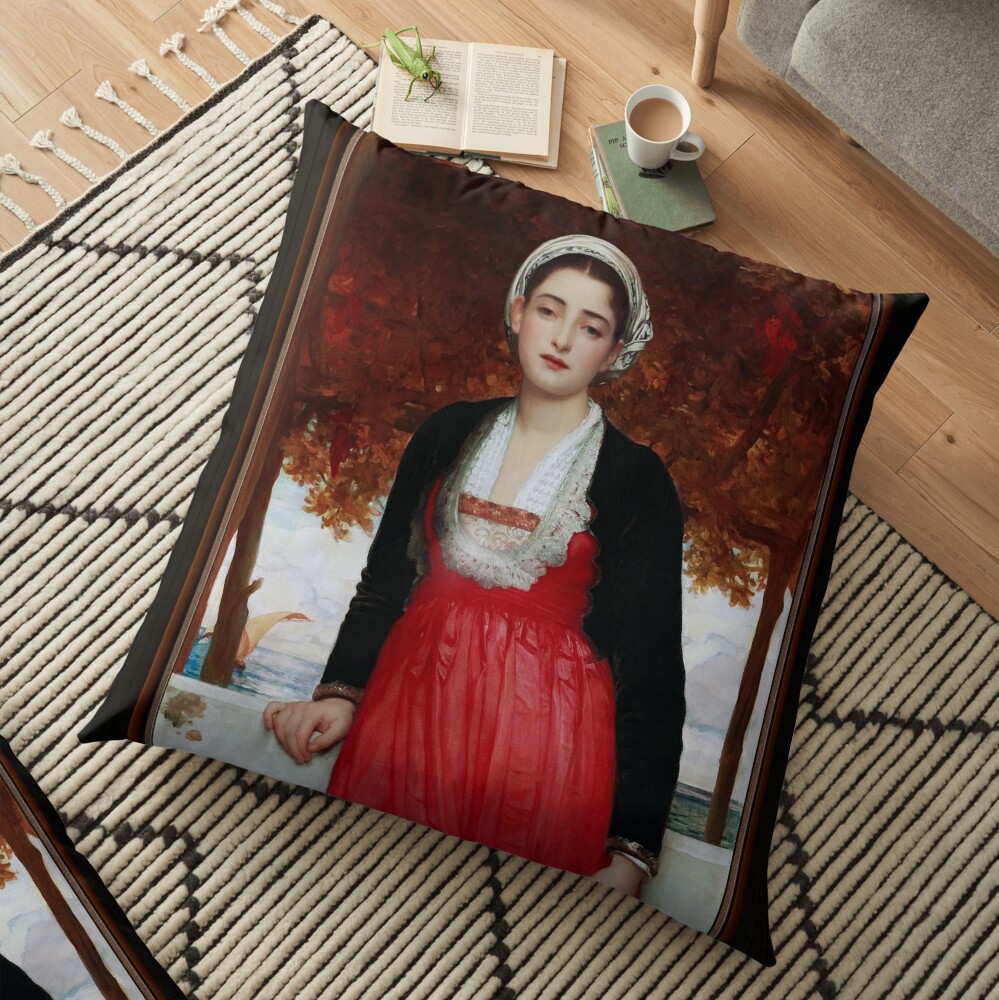
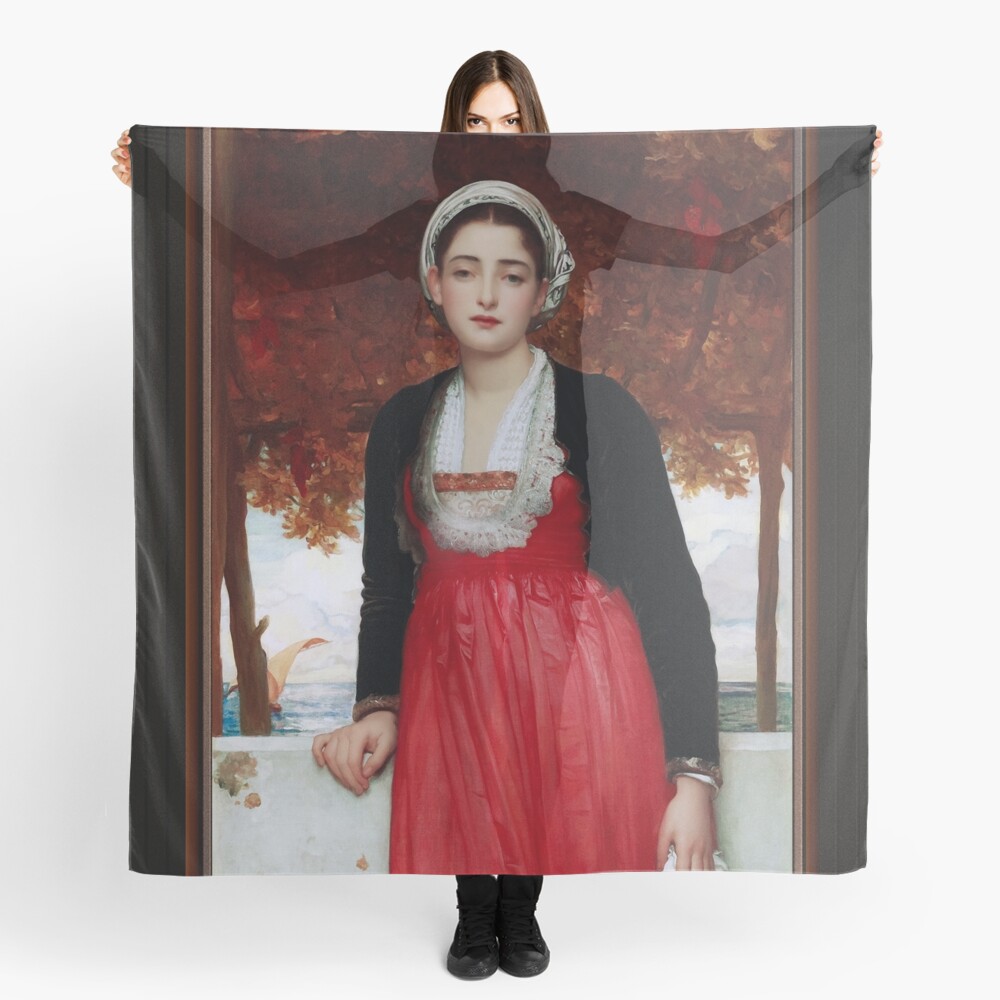
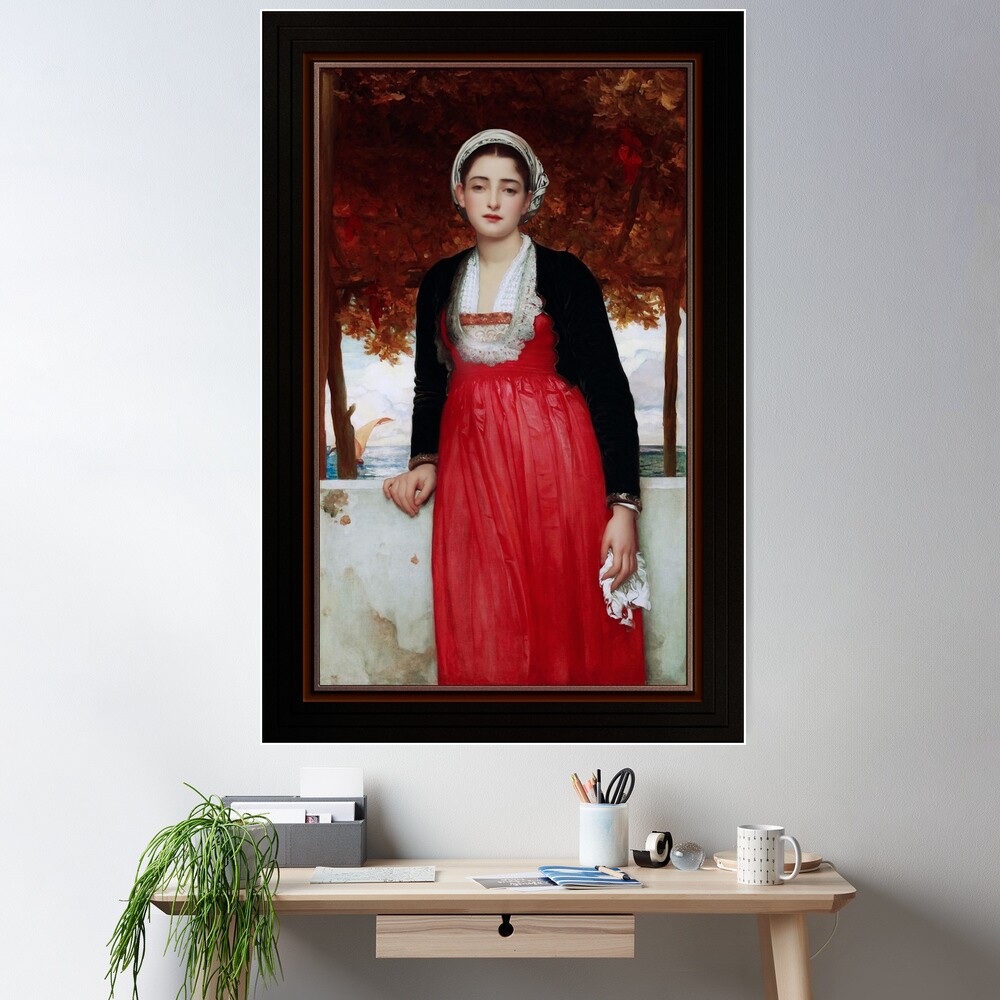
This is a beautiful portrait of a young alluring brunette girl with a sad look on her face posing by a stone wall that overlooks the ocean and a shoreline of green foliage.
Directly behind her are two large trees with brown leaves and some red leaves, that indicate the fall season has arrived; and just off to her right we can see small sailboat coming towards the shore.
She has wrapped around her head a white kerchief with a black line pattern along its edge, a white blouse, a full length red dress, a black velour vest jacket; and is holding a handkerchief in her left hand, with her right hand resting on the ledge of the stone wall.
Domeinu publikoko irudi baten erreprodukzioa da mihise inprimatu sarean.
Beheko informazioa Wikipedia.org
Leighton Scarborough-en jaio zen Augusta Susan eta Dr. Frederic Septimus Leighton. Bi ahizpa zituen Robert Browningen biografoa zen Alexandra barne.[2] University College School-en ikasi zuen, Londres.
Ondoren, bere prestakuntza artistikoa Europako kontinentean jaso zuen, lehenengo Eduard von Steinlerena eta gero Giovanni Costarena. Adinarekin 17, urteko udan 1847, Arthur Schopenhauer filosofoa ezagutu zuen Frankfurten eta bere erretratua egin zuen, grafitoan eta gouache paperean – bizitzatik egindako Schopenhauer-i buruz egindako ikerketa luze ezagun bakarra.
zenean 24 Florentzian zegoen; Arte Ederren Akademian ikasi zuen, eta Cimabue Madonnaren prozesioa margotu zuen Borgo Allegritik barrena. Bertatik 1855 to 1859 Parisen bizi zen, bertan Ingres ezagutu zuen, Delacroix, Corot eta Millet.
In 1860, Londresera joan zen bizitzera, non prerrafaeliteekin lotu zuen. Elizabeth Barrett Browningen hilobia diseinatu zuen Robert Browningentzat Ingalaterrako hilerrian, Florentzian 1861. In 1864 Errege Akademiako bazkide egin zen eta urtean 1878 bertako presidente bihurtu zen (1878–96).
Bere 1877 eskultura, Atleta Python batekin borrokan, bere garaian Britainia Handiko eskultura garaikidean berpizkunde bat inauguratzeko pentsatu zen, Eskultura Berria deitzen zaio. Earl Shinn arte kritikari estatubatuarrak aldarrikatu zuen garai hartan “Leighton izan ezik, ez dago Kensington Museoko arkupean fresko irudi zuzen bat jartzeko gai den inor”. Bere margolanek Britainia Handian irudikatzen zuten 1900 Parisko Erakusketa.
Leighton Windsorren zaldun izendatu zuten 1878, eta baronet bat sortu zen, Holland Park Road-ko St Mary Abbots parrokian, Kensington, Middlesex konderrian, zortzi urte geroago. Bera izan zen parekidea eman zioten lehen margolaria, urtean 1896 Urte Berriko Ohoreak.
Baron Leighton sortu zuen patentea, Strettoneko Shropshire konderrian, egunean eman zen 24 Urtarrila 1896; Leighton hurrengo egunean hil zen bularreko anginaz.
Haren heriotzan bere baronia itzali egin zen, egun bakarra egon ondoren; hau Peerageko diskoa da. Bere etxea Holland Park-en, Londres museo bihurtu da, Leighton House Museum.
Bere marrazki eta margolan asko biltzen ditu, baita bere antzinako arte bilduma batzuk maisu zaharren eta bere garaikideen lanak barne, hala nola Sir John Everett Millais-ek Leighton-i eskainitako margolana..
Etxeak Leighton-en inspirazio asko ere baditu, tartean, bere Iznik fitxa bilduma. Bere erdigunea Arabiar Areto bikaina da. Aretoa Cornucopia aldizkariaren hamargarren zenbakian agertzen da. Plaka urdin batek Leighton oroitzen du Leighton House Museum-en.